Tag Archives: History

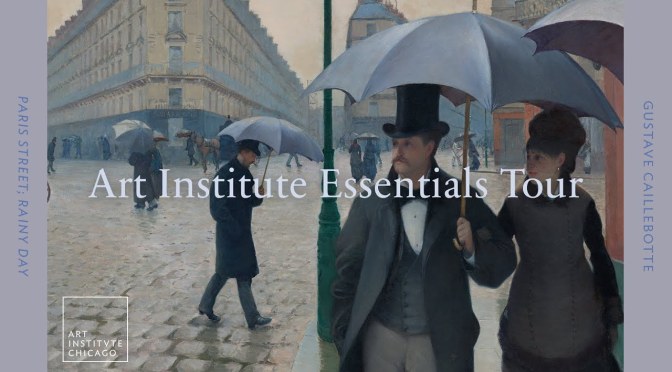
Art Videos: “El Greco: Ambition And Defiance” (Art Institute Chicago)

Art Institute ChicagoExplore the exhibition “El Greco: Ambition and Defiance” with curator Rebecca Long and research associate Jena Carvana. Follow along as they lead you through the galleries and share some of the reasons El Greco and his work continue to fascinate us.

Website

Top Podcasts: Alexander Von Humboldt – “The Last Man Who Knew It All”

Smithsonian Sidedoor PodcastAlexander von Humboldt might not be a name you know, but you can bet you know his ideas. Back when the United States were a wee collection of colonies huddled on the eastern seaboard, colonists found the wilderness surrounding them scary. 

It took a zealous Prussian explorer with a thing for barometers to show the colonists what they couldn’t see: a global ecosystem, and their own place in nature. In this The Invention of Nature Alexander von Humborldt's New World Andrea Wulfepisode, we learn how Humboldt—through science and art—inspired a key part of America’s national identity.

More fascinating Humboldt facts:

  • He strongly opposed slavery in the early 19th century, calling it the “greatest of all the evils which have afflicted mankind.”
  • He was the first to theorize human caused climate change by changing how water flows through a landscape, on a local level, and warned about deforestation.
  • He invented isotherms, the lines on a weather map that we still use today. He used them to show which parts of the world were experiencing similar temperatures.
  • He made the world’s most detailed map of Mexico and the American west.
  • He nearly summited what was then thought to be the world’s tallest mountain (while wearing 18th century wools, no less.).
  • Another thing Humboldt and Jefferson bonded over? Mastodons. Humboldt was the first to discover remains of a species now known as Cuvieronius hyodon in Ecuador, which were similar to the “giant elephants” being found in Ohio. The teeth Humboldt found were the clue that these weren’t modern elephants; they looked pretty different. And because these teeth looked sharp, Jefferson and some American scientists thought they were for meat eating! Eventually Georges Cuvier, a French scientist who was friends with Humboldt, proved that these were different from Indian and African elephants, and even woolly mammoths—and the species eventually ended up renamed after him. One of the few eponymous misses for our friend Humboldt!

If you’re interested in learning more about the life and times of Alexander von Humboldt, I’d recommend reading Andrea Wulf’s book The Invention of Nature: Alexander von Humboldt’s New World.

Travel & Quarantines: Author Frances Mayes Writes Of Poet John Keats In Naples, Italy In 1820 (NYT)

From the New York Times (March 26, 2020):

I have seen Naples from his vantage of a ship anchored offshore — one of the most sublime locations in the world, that sweep of coast stacked with apricot, carmine, azure and rose villas; the blue, blue U of the harbor; the emphatic Vesuvius anchoring the view. 

Frances Mayes
Frances Mayes

In October of 1820, typhus raged in Naples. With his artist friend, Joseph Severn, the British poet John Keats rocked in the city’s harbor for 10 days, not nearly the quaranta giorni — 40 days — that give us our word quarantine.

Before this journey, Keats always felt intense melancholy. In “On Seeing the Elgin Marbles for the First Time,” he wrote “… mortality / Weighs heavily on me like unwilling sleep.” (And in the smooth pentameter of “Ode to a Nightingale”: “I have been half in love with easeful death.”) Not a holiday, this voyage out of England was a desperate trip to the sunny climate of Italy. His cough had grown steadily worse. Since the morning he’d seen a splotch of blood on his pillow, he knew he had little chance of surviving the consumption that had invaded his lungs. His last-ditch: Go to Rome. Meanwhile, exile at sea.

Read full article

Culture & Sports: “The Adidas Archive” – 100 Years Of “Three-Stripe Thrills” (Taschen, May 2020)

100 years ago the brothers Adolf (“Adi”) and Rudolf Dassler made their first pair of sports shoes. Hundreds of groundbreaking designs, epic moments, and star-studded collabs later, this book presents the first visual review of the adidas shoe through more than 350 models including never-before-seen prototypes and one-of-a-kind originals.

To further develop and tailor his products to athletes’ specific needs, Dassler asked them to return their worn footwear when no longer needed, with all the shoes eventually ending up in his attic (to this day, many athletes return their shoes to adidas, often as a The Adidas Archive Taschen May 2020thank you after winning a title or breaking a world record). This collection now makes up the “adidas archive”, one of the largest, if not the largest archive of any sports goods manufacturer in the world—which photographers Christian Habermeier and Sebastian Jäger have been visually documenting in extreme detail for years.

Shot using the highest reproduction techniques, these images reveal the fine details as much as the stains, the tears, the repair tape, the grass smudges, the faded autographs. It’s all here, unmanipulated and captured in extremely high resolution—and with it comes to light the personal stories of each individual wearer. We encounter the shoes worn by West Germany’s football team during its “miraculous” 1954 World Cup win and those worn by Kathrine Switzer when she ran the Boston Marathon in 1967, before women were officially allowed to compete; custom models for stars from Madonna to Lionel Messi; collabs with the likes of Kanye WestPharrell WilliamsRaf SimonsStella McCartneyParley for the Oceans or Yohji Yamamoto; as well as the brand’s trailblazing techniques and materials, like its pioneering use of plastic waste that is intercepted from beaches and coastal communities.

The Adidas Archive Three-Stripe Thrills Taschen March 2020

Accompanied by a foreword by designer Jacques Chassaing and expert texts, each picture tells us the why and the how, but also conveys the driving force behind adidas. What we discover goes beyond mere design; in the end, these are just shoes, worn out by their users who have loved them—but they are also first-hand witnesses of our sports, design, and culture history, from the beginnings of the Dassler brothers and the founding of adidas until today.

Concept and photography by

Christian Habermeier has been working as a photographer and designer since 1989. He taught communication design and has taught photography and digital illustration from 2000 to 2006. His own projects span from Cuba, Kenya, Nepal, India, Switzerland, to Hong Kong. In 2000 he founded studio waldeck photographers and was able to realize his long cherished vision of a CO2-neutral studio in 2013.

Sebastian Jäger studied design at the Georg-Simon-Ohm University of Applied Sciences in Nuremberg, focusing on moving images and photography, where he met former lecturer Christian Habermeier in 2005. Their joint company studio waldeck photographers serves customers from industry and the cultural sector. Since 2011, they have been creating a visual record of the holdings of the historical adidas archive.

Read more or purchase

Auto Racing Nostalgia: “Targa Florio” Endurance Race In Sicily (1906 – 1977)

1951 Targa Florio PosterThe Targa Florio was an open road endurance automobile race held in the mountains of Sicily near the island’s capital of Palermo. Founded in 1906, it was the oldest sports car racing event, part of the World Sportscar Championship between 1955 and 1973. While the first races consisted of a whole tour of the island, the track length in the race’s last decades was limited to the 72 kilometres (45 mi) of the Circuito Piccolo delle Madonie, which was lapped 11 times.

After 1973, it was a national sports car event until it was discontinued in 1977 due to safety concerns. It has since been run as a rallying event, and is part of the Italian Rally Championship.

1967 Targa Florio PosterThe race was created in 1906 by the wealthy pioneer race driver and automobile enthusiast, Vincenzo Florio, who had started the Coppa Florio race in BresciaLombardy in 1900. The Targa also claimed to be a worldly event not to be missed. Renowned artists, such as Alexandre Charpentier and Leonardo Bistolfi, were commissioned to design medals. A magazine was initiated, Rapiditas, which aimed to enhance, with graphic and photographic reproductions of the race, the myth of the car and the typical character of modern life, speed.[1]

1973 Targa Florio PosterOne of the toughest competitions in Europe, the first Targa Florio covered 3 laps equalling 277 miles (446 km) through multiple hairpin curves on treacherous mountain roads, at heights where severe changes in climate frequently occurred. Alessandro Cagno won the inaugural 1906 race in nine hours, averaging 30 miles per hour (50 km/h).

By the mid-1920s, the Targa Florio had become one of Europe’s most important races, as neither the 24 Hours of Le Mans nor the Mille Miglia had been established yet. Grand Prix races were still isolated events, not a series like today’s F1.

After winning the race several times, Porsche named the hardtop convertible version of the 911 after the Targa. The name targa means plaque or plate, see targa top.

From Wikipedia

Podcast Profiles: Irish Architect And Designer Eileen Gray (1878 – 1976)

Monocle 24 On Design LogoUnderappreciated in her lifetime, the career of late Irish architect and designer Eileen Gray is the subject of a timely new exhibition at The Bard Graduate Center Gallery in New York. Jennifer Goff, curator of the Eileen Gray collection at the National Museum of Ireland, tells us more.

Eileen Gray (born Kathleen Eileen Moray Smith; 9 August 1878 – 31 October 1976) was an Irish architect and furniture designer and a pioneer of the Modern Movement in architecture. Over her career, she was associated with many notable European artists of her era, including Kathleen Scott, Adrienne Gorska, Le Corbusier, and Jean Badovici, with whom she was romantically involved. Her most famous work is the house known as E-1027 in Roquebrune-Cap-Martin, France.

Eileen Gray website

From 1922/1923 to 1926 Gray created an informal architectural apprenticeship for herself as she never received any formal training as an architect. She studied theoretical and technical books, took drafting lessons, and arranged to have Adrienne Gorska take her along to building sites. She also traveled with Badovici to study key buildings and learned by reworking architectural designs.

E-1027 table by Eileen Gray

In 1926, she started work on a new holiday home near Monaco to share with Badovici. Because a foreigner in France couldn’t wholly own property, Gray bought the land and put it in Badovici’s name, making him her client on paper. Construction of the house took three years and Gray remained on site while Badovici visited occasionally.

Renewed interest in Gray’s work began in 1967 when historian Joseph Rykwert published an essay about her in the Italian design magazine Domus. After the publishing of the article many “students began to ring at her door” as eager to learn from the now famous designer.

At a Paris auction of 1972, Yves Saint Laurent bought ‘Le Destin’ and revived interest in Gray’s career.

The first retrospective exhibition of her work, titled ‘Eileen Gray: Pioneer of Design’, was held in London in 1972. A Dublin exhibition followed the next year. At the Dublin exhibit, the 95 year old Gray was given an honorary fellowship by the Royal Institute of the Architects of Ireland.

In 1973 Gray signed a contract to reproduce the Bibendum chair and many of her pieces for the first time. They remain in production.

Eileen Gray died on Halloween 1976. She is buried in the Père Lachaise cemetery in Paris, but because her family omitted to pay the licence fee her grave is not identifiable.

From Wikipedia

Top Travel Videos: “Aerial America – Alabama” (Smithsonian Channel)


Discover Alabama’s rich history as we reveal the vast discoveries that forged a path to equality for millions. The story of the Cotton State has as many dramatic turns as the tracks of the Talladega Superspeedway.

Website

Archaeology: “Blombos Cave”, South Africa – First Human “Technological Innovations” (Video)

See the first laboratory on Earth – Blombos Cave. Here our ancestors conducted the first chemistry experiments.

Blombos Cave is an archaeological site located in Blomboschfontein Nature Reserve, about 300 km east of Cape Town on the Southern Cape coastline, South Africa. The cave contains Middle Stone Age (MSA) deposits currently dated at between c. 100,000 and 70,000 years Before Present (BP), and a Late Stone Age sequence dated at between 2000 and 300 years BP. The cave site was first excavated in 1991 and field work has been conducted there on a regular basis since 1997, and is ongoing.

The excavations at Blombos Cave have yielded important new information on the behavioural evolution of anatomically modern humans. The archaeological record from this cave site has been central in the ongoing debate on the cognitive and cultural origin of early humans and to the current understanding of when and where key behavioural innovations emerged among Homo sapiens in southern Africa during the Late Pleistocene. Archaeological material and faunal remains recovered from the Middle Stone Age phase in Blombos Cave – dated to ca. 100,000–70,000 years BP – are considered to represent greater ecological niche adaptation, a more diverse set of subsistence and procurements strategies, adoption of multi-step technology and manufacture of composite tools, stylistic elaboration, increased economic and social organisation and occurrence of symbolically mediated behaviour.

The most informative archaeological material from Blombos Cave includes engraved ochre, engraved bone ochre processing kits, marine shell beads, refined bone and stone tools and a broad range of terrestrial and marine faunal remains, including shellfish, birds, tortoise and ostrich egg shell and mammals of various sizes.[20][21][22] These findings, together with subsequent re-analysis and excavation of other Middle Stone Age sites in southern Africa, have resulted in a paradigm shift with regard to the understanding of the timing and location of the development of modern human behaviour.

From Wikipedia

History: “The Destruction of Pompeii and Its Aftermath” (Penn Museum)

When Mount Vesuvius erupted in 79 CE, it buried Pompeii, Herculaneum, and the surrounding settlements under nearly 20 feet of volcanic ash and pumice. Pliny the Elder, a Roman writer, documented his eyewitness account of the disaster, supporting the archaeological evidence uncovered there in the last two centuries.

Penn Museum Logo

This Great Lecture reviews how these buried cities and their exploration have had a lasting impact on European and American culture. C. Brian Rose, Ph.D., Curator-in-Charge, Mediterranean Section, Penn Museum; Immediate Past President, Archaeological Institute of America; Trustee, American Academy in Rome