
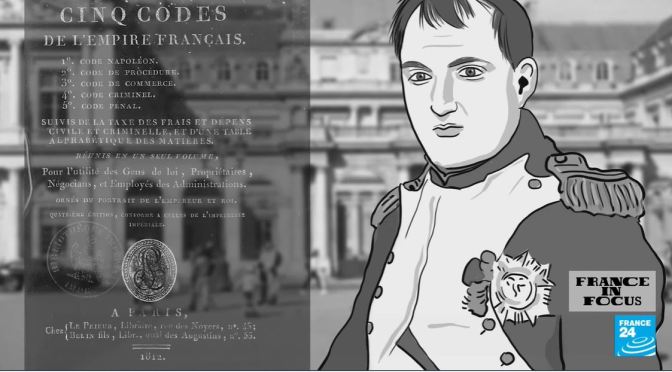
This week, you find us outside #Paris’ military museum, the #Invalides. It is the final resting place of one of France’s most famous and most controversial figures, #Napoleon #Bonaparte. As 2021 marks the bicentenary of the emperor’s death, his military, social and political legacy have sparked a heated debate, both here and abroad… proving a pickle for the government’s commemorative plans. We take a look back at this multi-faceted leader.
Tag Archives: History
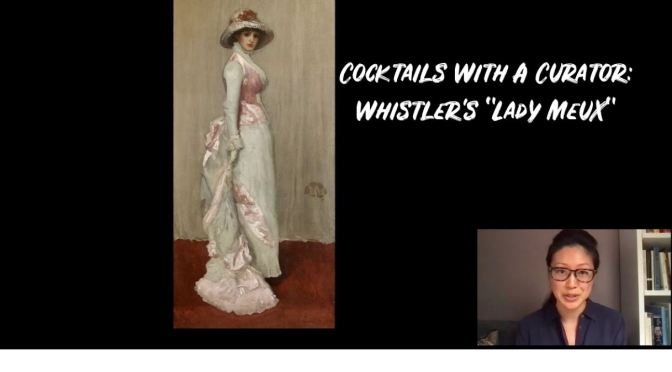
Cocktails with a Curator: Whistler’s “Lady Meux”
In this week’s episode of “Cocktails with a Curator,” Curator Aimee Ng explores the turbulent life of the woman portrayed in James McNeill Whistler’s serene “Harmony in Pink and Gray: Portrait of Lady Meux,” currently on view on the fourth floor of Frick Madison. A former bartender and actress, Lady Meux was shunned by London polite society even after she married Sir Henry Bruce Meux, heir to a huge brewery fortune. This week’s complementary cocktail is a refreshing Mummy, a nod to her extensive collection of some 1,800 Egyptian and Assyrian objects, including an infamous mummy of Nesmin.
To view this painting in detail, please visit our website: https://www.frick.org/ladymeux
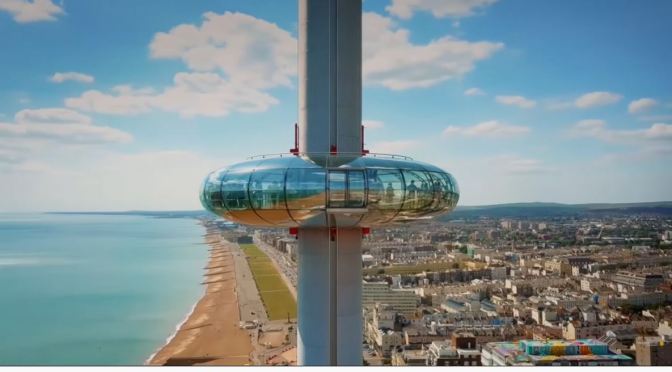
Engineering: The ‘British Airways i360 Viewing Tower In Brighton (Video)
British Airways i360 is a 162 m observation tower on the seafront of Brighton, East Sussex, England at the landward end of the remains of the West Pier. The tower opened on 4 August 2016. From the fully enclosed viewing pod, visitors experience 360-degree views across Brighton, the South Downs and the English Channel.
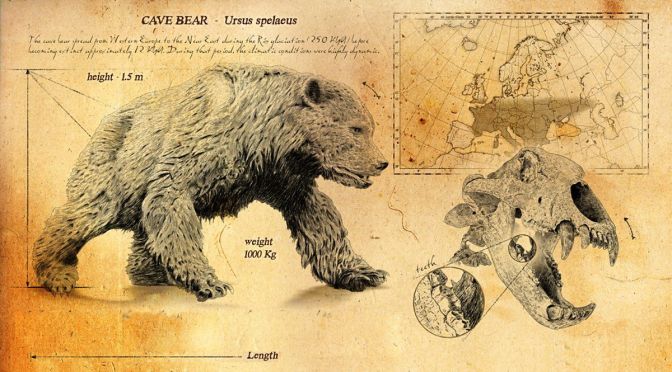
Animals & Wildlife: ‘The Evolution Of Bears’
Bears are able to live and sometimes thrive from the North Pole to the tropical rainforests around the equator and although they are largely confined to the forests nowadays, in the not too distant past they dominated grassy plains as well. And in overcoming the challenges of each new habitat they migrated into presented, they have evolved to drastically change diets. Bears evolved from small carnivorous animals and yet have become omnivorous, insect eaters, or have a diet occupied entirely of plant foods. So how have bears been able to evolve to eat almost any food in a very small amount of time.
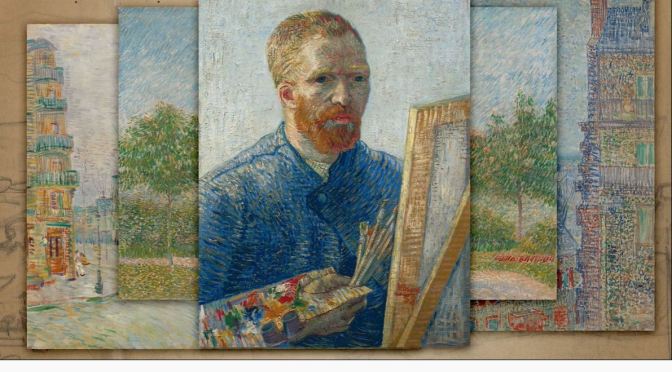
Profiles: Dutch Painter Vincent Van Gogh (Video)
Vincent Willem van Gogh was a Dutch post-impressionist painter who posthumously became one of the most famous and influential figures in the history of Western art. In a decade, he created about 2,100 artworks, including around 860 oil paintings, most of which date from the last two years of his life.

Cocktails With A Curator: ‘Saint-Porchaire Ware’
In this week’s episode of “Cocktails with a Curator,” join Deputy Director and Peter Jay Sharp Chief Curator Xavier F. Salomon as he delves into the mystery of three rare Saint-Porchaire objects currently on view in a room featuring enamels and clocks on the third floor of Frick Madison. Much remains unknown about 16th-century Saint-Porchaire ware—exquisite pieces inlaid with colored clay and embellished with three-dimensional reliefs—but an ongoing Frick research project recently identified an exciting potential link between the great French ceramicist Bernard Palissy and a lizard on one of the ewers at the Frick. This week’s complementary cocktail is a classic French American drink, the Boulevardier.
To view this painting in detail, please visit our website: https://www.frick.org/stporchaireware

Views: London’s ‘Royal Albert Hall’ At 150 Years
Over the 150 years that have passed since this opening, the Royal Albert Hall has established itself as one of the most important public venues in Britain, instantly recognisable as a backdrop to everything from the BBC Proms to comedy shows and from sporting events to theatre.


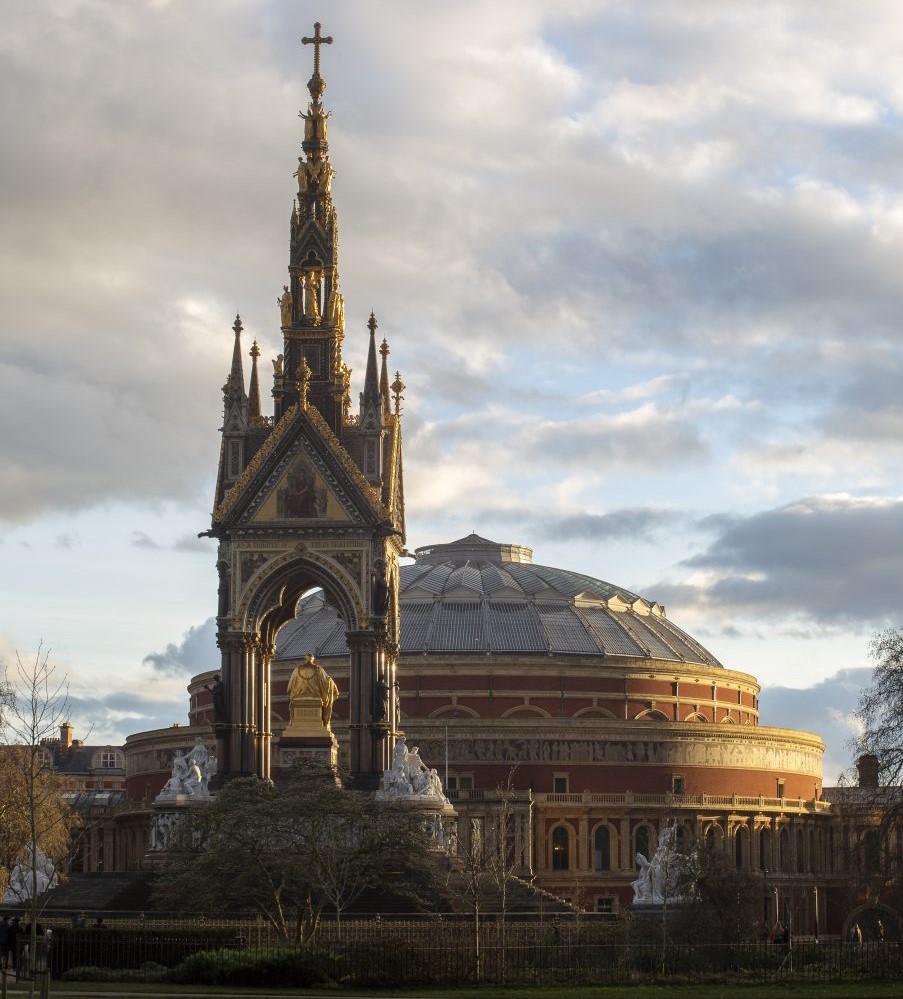


As described by Marcus Binney (COUNTRY LIFE, March 25, 1971) and The Survey of London, vol 38 (1975), the future Royal Albert Hall was one product of this initiative. The idea of building a music hall on the estate was first proposed in 1853, but, two years later, Prince Albert suggested something more ambitious: a music hall within an enclosing quadrangle of shops and flats inspired by the Palais Royale. He also directed that his exiled compatriot, Gottfried Semper, the architect of the Dresden opera house, design it.
Artistry: Making ‘Hikihaku Obi’ Textile In Japan (Video)
Nishijin-ori textiles are known for their exquisite detail, and have been made in the Nishijin area of Kyoto, Japan for over 1,200 years. Follow the intricate process involved in creating obi (the sash worn with traditional Japanese clothing), using a specialised technique called hikikaku – weaving with precious metallic thread. From the making of the thread itself, to the weaving on the loom, watch as three obis are made – one from 100-year-old silver foil, one from mother of pearl, and one from the semi-precious stone, lapis lazuli.
Processes: Silver foil obi: 1:26 Mother of pearl obi: 4:17 Lapis lazuli obi: 6:35
Nishijin-ori (西陣織, Nishijin fabric) is a traditional textile produced in the Nishijin (西陣) district of Kamigyō-ku in Kyoto, Japan.
Originating in Heian-kyōto over 1200 years ago, Nishijin weaving is known for its highly-decorative and finely-woven designs, created through the use of tedious and specialised production processes. It is well-regarded for the high quality and craftsmanship of the resulting fabrics, commonly used for high-quality obi and kimono.
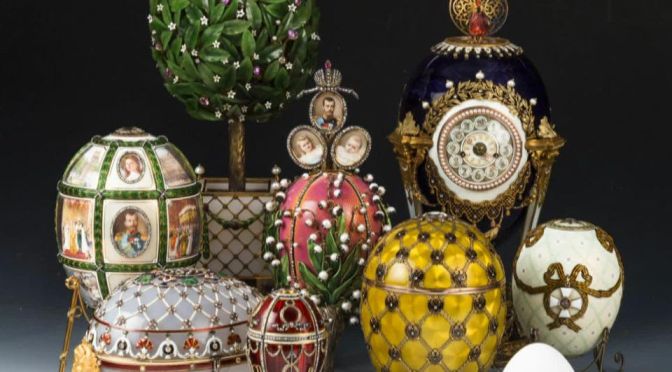
Artistry: ‘The Lore Of Fabergé Eggs’ (Video)
In the era of the Russian tsars, Peter Carl Fabergé’s jewel-studded objets d’art were a royal riff on a much humbler Easter tradition of ordinary folk giving each other colored hens’ eggs. Correspondent Elizabeth Palmer reports on the lore of Fabergé eggs, from opulent originals to sparkling counterfeits.
The celebrated series of 50 Imperial Easter eggs was created for the Russian Imperial family from 1885 to 1916 when the company was run by Peter Carl Fabergé. These creations are inextricably linked to the glory and tragic fate of the last Romanov family. They were the ultimate achievement of the renowned Russian jewellery house and must also be considered the last great commissions of objets d’art . Ten eggs were produced from 1885 to 1893, during the reign of Emperor Alexander III; 40 more were created during the rule of his dutiful son, Nicholas II, two each year, one for his mother, the dowager, the second for his wife.

French History: ‘The Paris Commune’ Of 1871 (Video)
This week we’re up on the hill of Montmartre, as we put the focus on a little-known, yet defining chapter of French history: the Paris Commune. Walking around the picturesque area today, there’s little trace of the chaotic and deadly scenes that played out here just 150 years ago: a brutal civil war that came hot on the heels of a deadly Prussian siege. We look back at the Paris Commune and explore its legacy today. We also hear from historian Ludivine Bantigny.
The Paris Commune was a revolutionary socialist government that controlled Paris from 18 March to 28 May 1871. During the events of the Franco-Prussian War, Paris had been defended by the National Guard, where working class radicalism grew among soldiers.
 Boomers Daily