Sotheby’s upcoming cross-category Evening Auction ‘Rembrandt to Richter’ (28 July | London), features many of the key British avant-garde movers and shakers of their day.
In this video, discover titans of British Modernism such as Ben Nicholson and Barbara Hepworth; artists such as Christopher Wood and Marlow Moss who found their inspiration amongst the belle monde of Paris; Stanley Spencer and Cedric Morris whose inspiration remained resolutely closer to home; and a bold new generation of artists including Frank Auerbach who forged their careers in London in the aftermath of the Second World War.
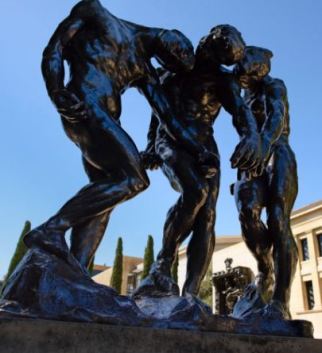
The Three Shades is among the works in the Rodin Sculpture Garden, adjacent to the Cantor Arts Center. The sculpture uses three separate casts of the same figure that has been rotated into different positions. (Image credit: L.A. Cicero)
The enduring appeal of Rodin, the modernity of his work, has to do with the way in which he makes visible an aesthetic of process – how, in other words, he takes traditional sculpture apart and puts it back together again in new and daring ways. Strategies of multiplication, scalability, fragmentation and recombinatory modes of assembly and display constitute some of the hallmarks of Rodin’s artistic practice.
Works by Rodin on view at the Cantor are often utilized by students and scholars from a range of disciplines, including medicine. In this moment, with outbreak of disease across the globe, what can Rodin’s works teach us about the relationship between art and nature?
It’s interesting that Rodin attracts so much attention from medical experts, especially here at Stanford, who have used his hands for diagnostic purposes. It’s true that Rodin was intensely interested in exploring pathologies of the body, especially now-discredited understandings of female hysteria. But there is also the irony that Rodin became furious after a critic accused him of making his first life-size figure through life casting, rather than modeling it himself. It should go without saying, but Rodin’s hands are not hands – not real ones, anyway – and their expressive forms don’t align neatly with the anatomical reality of hands in flesh and blood or even their more naturalistic counterparts. But the very fact that they elicit such responses demonstrates the power of art to provoke challenging questions that drive innovative paths of research that cut across disciplines, particularly in a university setting.
In this week’s episode of “Cocktails with a Curator,” get up close to one of the Frick’s three beloved Vermeer paintings, “Officer and Laughing Girl,” with Curator Aimee Ng. While enjoying your Kopstootje—a shot of jenever (a traditional Dutch liquor) paired with a pint of beer—join Aimee in examining the artist’s masterful skill at portraying light and exploring the complex histories behind a seemingly simple hat.
Johannes Vermeer, in original Dutch Jan Vermeer van Delft, was a Dutch Baroque Period painter who specialized in domestic interior scenes of middle class life. During his lifetime, he was a moderately successful provincial genre painter, recognized in Delft and The Hague.
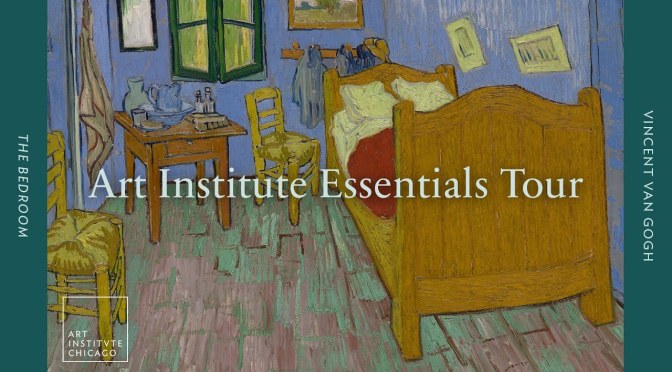
On this episode of Art Institute Essentials Tour, take a closer look at The Bedroom, painted by Vincent van Gogh in 1889. Vincent van Gogh painted three versions, including this one, of his bedroom in the “Yellow House” in Arles, France. To van Gogh, this picture symbolized relaxation and peace. However, to our eyes the canvas seems to teem with nervous energy, instability, and turmoil—an effect heightened by the sharply receding perspective.
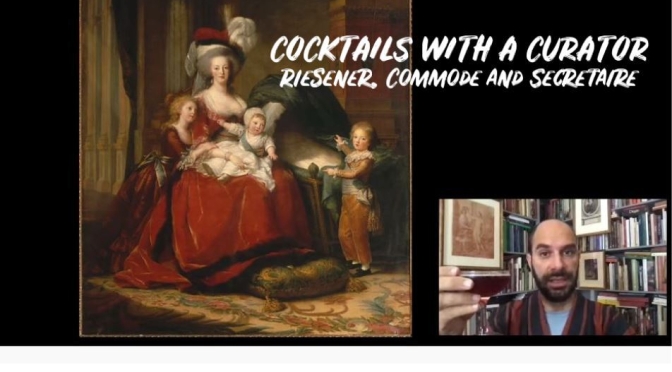
In this week’s episode of “Cocktails with a Curator,” join Deputy Director and Peter Jay Sharp Chief Curator Xavier F. Salomon as he explores the royal provenance of two pieces of furniture at the Frick made by Jean-Henri Riesener. Sometimes overlooked by visitors, Xavier encourages us to take a closer look at this exquisite commode and secrétaire set. In celebration of these works of art and the upcoming Bastille Day, this week’s complementary cocktail is the Kir Royale.
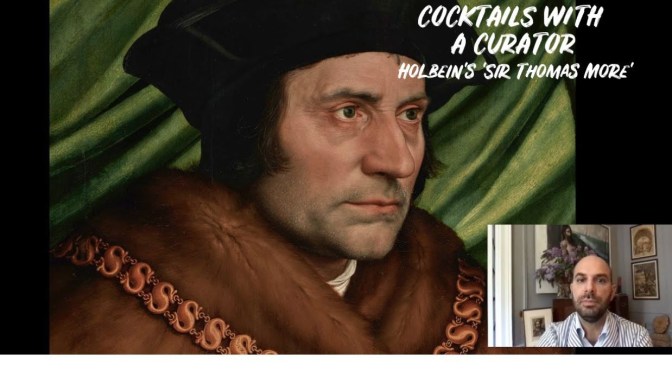
In this week’s episode of “Cocktails with a Curator,” Xavier F. Salomon, Deputy Director and Peter Jay Sharp Chief Curator, examines one of the Frick’s most beloved paintings, Hans Holbein’s “Sir Thomas More.” Xavier considers More’s relationship to humanist circles and the role of “friendship portraits” in making the absent present. In the words of More’s devoted friend, Desiderius Erasmus, “life without a friend is no life.” As a nod to the turbulent times of Tudor England, Xavier pairs this episode with a Bloody Mary cocktail.
On August 10, 1628, the Swedish warship Vasa, billed as the most advanced warship in the world, set sail on its maiden voyage from Stockholm Harbor. Within a mile, it had sunk to the bottom of the ocean. From the Series: Combat Ships: Doomed Vessels
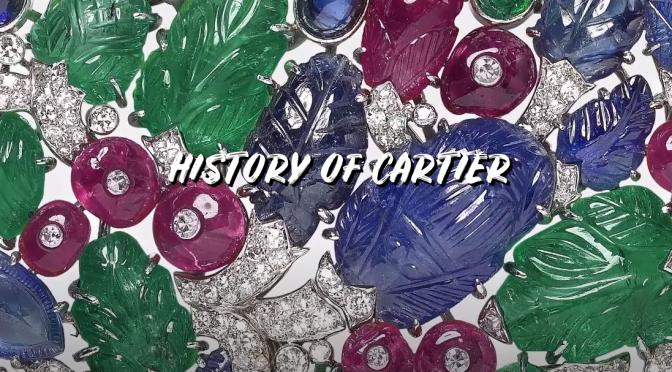
Meet Pascale Lepeu, Curator of the Cartier Collection, and see the incredible trove of historic Cartier jewellery that is held within. From elegant diamond tiaras of the Belle Époque to remarkable Art Deco tutti frutti bracelets and more, discover the enormous influence that Cartier has had on the world of high jewellery. An extract from the Christie’s Education online course, History of Jewellery Design: 1880–Now.
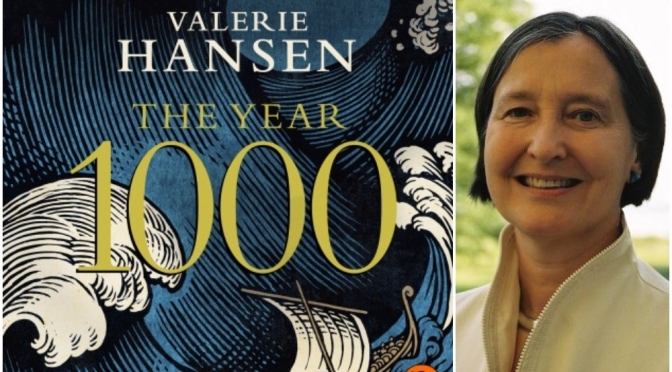
Valerie Hansen explores these early economic and cultural exchanges and their long-term impact in her new book “The Year 1000: When Explorers Connected the World―and Globalization Began”, which originated as a college course co-taught with Mary Miller, director of the Getty Research Institute. In this episode, Hansen and Miller discuss the state of the world around the year 1000.
From celebrated Yale professor Valerie Hansen, a groundbreaking work of history showing that bold explorations and daring trade missions connected all of the world’s great societies for the first time at the end of the first millennium.
People often believe that the years immediately prior to AD 1000 were, with just a few exceptions, lacking in any major cultural developments or geopolitical encounters, that the Europeans hadn’t yet reached North America, and that the farthest feat of sea travel was the Vikings’ invasion of Britain. But how, then, to explain the presence of blonde-haired people in Maya temple murals at Chichén Itzá, Mexico? Could it be possible that the Vikings had found their way to the Americas during the height of the Maya empire?
Valerie Hansen, an award-winning historian, argues that the year 1000 was the world’s first point of major cultural exchange and exploration. Drawing on nearly thirty years of research, she presents a compelling account of first encounters between disparate societies, which sparked conflict and collaboration eerily reminiscent of our contemporary moment.
For readers of Jared Diamond’s Guns, Germs, and Steel and Yuval Noah Harari’s Sapiens, The Year 1000 is an intellectually daring, provocative account that will make you rethink everything you thought you knew about how the modern world came to be. It will also hold up a mirror to the hopes and fears we experience today.
In this week’s episode of “Travels with a Curator,” travel with Xavier F. Salomon, Peter Jay Sharp Chief Curator, to Valenciennes, the birthplace of the Rococo painter Jean-Antoine Watteau. Delve into the historical events surrounding Watteau’s “Portal at Valenciennes” (ca. 1710–11), a scene of soldiers at rest near the ramparts of the town. Known for his depictions of garden frolics, Watteau seldom portrayed military life—“The Portal” is one of only three such paintings that survive today.
Valenciennes is a commune in the Nord department in northern France. It lies on the Scheldt river. Although the city and region experienced a steady population decline between 1975 and 1990, it has since rebounded.
News, Views and Reviews For The Intellectually Curious


 Sotheby’s upcoming cross-category Evening Auction ‘Rembrandt to Richter’ (28 July | London), features many of the key British avant-garde movers and shakers of their day.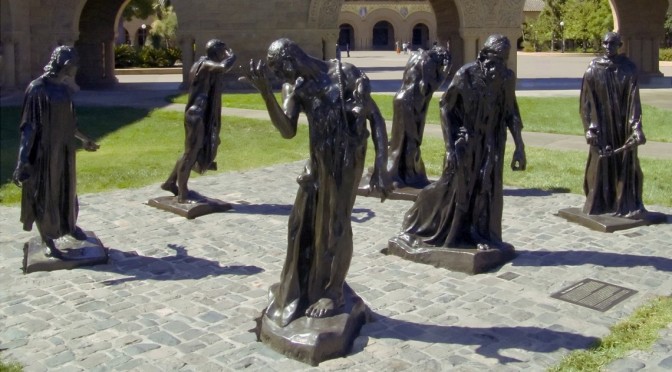
 It’s interesting that Rodin attracts so much attention from medical experts, especially here at Stanford, who have used his hands for diagnostic purposes. It’s true that Rodin was intensely interested in exploring pathologies of the body, especially now-discredited understandings of female hysteria. But there is also the irony that Rodin became furious after a critic accused him of making his first life-size figure through life casting, rather than modeling it himself. It should go without saying, but Rodin’s hands are not hands – not real ones, anyway – and their expressive forms don’t align neatly with the anatomical reality of hands in flesh and blood or even their more naturalistic counterparts. But the very fact that they elicit such responses demonstrates the power of art to provoke challenging questions that drive innovative paths of research that cut across disciplines, particularly in a university setting.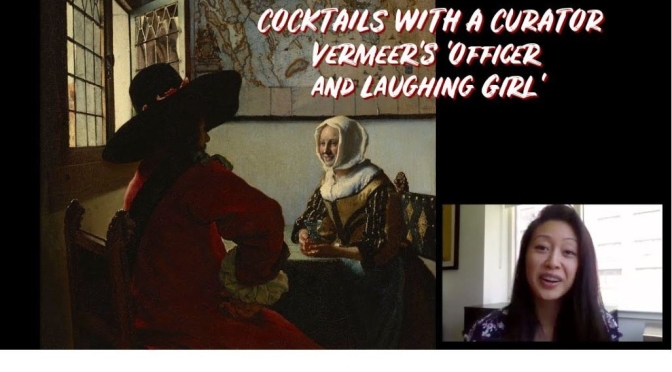

 Valerie Hansen explores these early economic and cultural exchanges and their long-term impact in her new book “The Year 1000: When Explorers Connected the World―and Globalization Began”, which originated as a college course co-taught with Mary Miller, director of the Getty Research Institute. In this episode, Hansen and Miller discuss the state of the world around the year 1000.
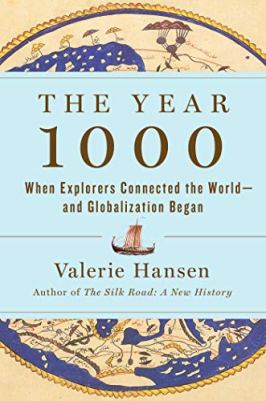 From celebrated Yale professor Valerie Hansen, a groundbreaking work of history showing that bold explorations and daring trade missions connected all of the world’s great societies for the first time at the end of the first millennium.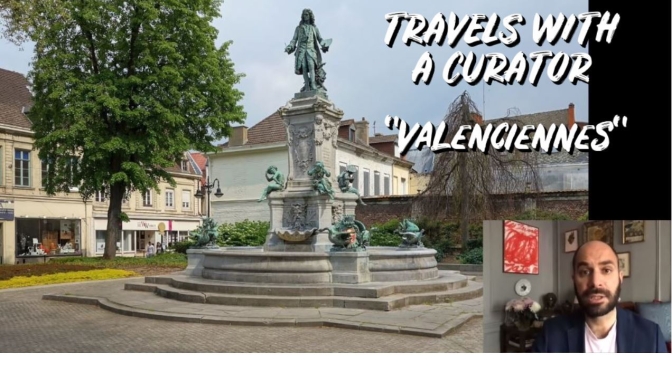
 Boomers Daily