Tag Archives: Europe

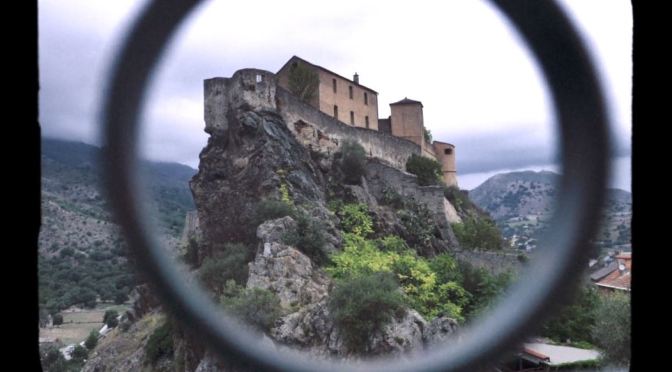
Top Poetic Travel Videos: “NIÑO – Corse Roadtrip” In Italy By Sebastian Linda

“NIÑO – Corse Roadtrip” is Cinematic Poems Travel Short Film In Italy Featuring Poem by Kahlil Gibran Directed by Sebastian Linda.

Filmed, Edited and Directed by: Sebastian Linda

Original Music by: Sebastian Linda (Spotify)

Here is the new music and film from our Roadtrip to the beautiful island of corse.

On the way we listened together as a family to the poetry from Kali Gibran and the Poem “On Children” really stuck with us, while watching the beauty of Corse unfolding in front of our eyes.

I wrote the song about a year ago and recorded it, but I needed more time to understand my inner thoughts to create the combination of reality and fantasy children have.

Maybe some childhood dreams awake from your side. It’s important to create a great life for your children, but don’t forget. Your children, are not your children.

“On Children” by Kahlil Gibran (1883 – 1931)

And a woman who held a babe against her bosom said, Speak to us of Children.
And he said:
Your children are not your children.
They are the sons and daughters of Life’s longing for itself.
They come through you but not from you,
And though they are with you yet they belong not to you.

You may give them your love but not your thoughts,
For they have their own thoughts.
You may house their bodies but not their souls,
For their souls dwell in the house of tomorrow, which you cannot visit, not even in your dreams.
You may strive to be like them, but seek not to make them like you.
For life goes not backward nor tarries with yesterday.
You are the bows from which your children as living arrows are sent forth.
The archer sees the mark upon the path of the infinite, and He bends you with His might that His arrows may go swift and far.
Let your bending in the archer’s hand be for gladness;
For even as He loves the arrow that flies, so He loves also the bow that is stable.

Website

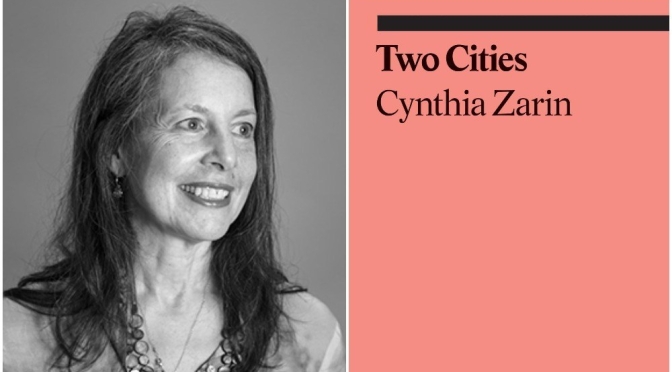
Interviews: American Poet & Writer Cynthia Zarin On Her New Book “Two Cities”

Cythia Zarin Two Cities VeniceA conversation with the acclaimed poet and New Yorker writer Cynthia Zarin that transports us to two of her favorite cities, Venice and Rome, in a celebration of Italy as the country begins to loosen the longest coronavirus-related lockdown in Europe. The episode features evocative readings from her forthcoming book,Two Cities, which captures the meditative yet constantly surprising nature of travel from a deeply personal point of view. 

David Zwirner Books Logo

From acclaimed poet and New Yorker writer Cynthia Zarin comes a deeply personal meditation on two cities, Venice and Rome—each a work of art, both a monument to the past—and on how love and loss shape places and spaces.

Here we encounter a writer deeply engaged with narrative in situ—a traveler moving through beloved streets, sometimes accompanied, sometimes solo. With her, we see, anew, the Venice Biennale, the Lagoon, and San Michele, the island of the dead; the Piazza di Spagna, the Tiber, the view from the Gianicolo; the pigeons at San Marco and the parrots in the Doria Pamphili. As a poet first and foremost, Zarin’s attention to the smallest details, the loveliest gesture, brings Venice and Rome vividly to life for the reader.

READ AN EXCERPT HERE

The sixteenth book in the expanding, renowned ekphrasis series, Two Cities creates space for these two historic cities to become characters themselves, their relationship to the writer as real as any love affair.

ekphrasis

Dedicated to publishing rare, out-of-print, and newly commissioned texts as accessible paperback volumes the ekphrasis series is part of David Zwirner Books’s ongoing effort to publish new and surprising pieces of writing on visual culture.

Cynthia Zarin

Cynthia Zarin is the author of five books of poetry, most recently, Orbit (2017), as well as five books for children and a collection of essays, An Enlarged Heart: A Personal History (2013). Her honors and awards include a Guggenheim Fellowship for Literature, the Ingram Merrill Award, and the Los Angeles Times Book Prize for Poetry. A longtime contributor to The New Yorker, Zarin teaches at Yale University.

Read more or purchase book

International Podcasts: Switzerland Eases Its Lockdown Restrictions

Monocle on Sunday logoMonocle 24 checks in on Switzerland’s plans to further ease coronavirus restrictions and ask whether the country is setting an example that others should follow.

Plus: the weekend’s newspapers and top stories. From Milan: Salone highlights, interviews and a daily running guide.

Website

Top New Travel Videos: “Archaeological Park – Appia Antica” In Rome

Director: Ippolito Simion

Taking every day inspiration from my city, I compose this video with a mixture of techniques, like a tribute to the history and the beauty of the Archeological Park of Appia Antica in Rome.

Camera: Federico Marchi, Lorenzo Giordano
Drone: Tommaso Chiriatti
Music: Gregorio de Luca Comandini
Sound Fx: Inti d’Ayala Valva
Graphics: Sara Taigher, Alessandro Strichner
Actress: Antonella Britti

Website

Top Travel Videos: “Bath In Lockdown” By Jack Fisher

Directed, Filmed and edited by Jack Fisher

Music by Cinematic Orchestra – To Build a home
Drone Operator – Sam Gillespie
Drone Camera Operator – Jack Fisher
Graphic design – Lucia Garcia

Since lockdown began, I’ve taken my camera with me on my daily dog walks. I wanted to try and capture the atmosphere and make a record of the effects COVID 19 is having on the city I was born in, and the city I call home.

Website

New Books: “The Louvre – The Many Lives Of The World’s Most Famous Museum” (James Gardner)

The Louvre James GardnerThe fascinating and little-known story of the Louvre, from its inception as a humble fortress to its transformation into the palatial residence of the kings of France and then into the world’s greatest art museum.

Some ten million people from all over the world flock to the Louvre each year to enjoy its incomparable art collection. Yet few of them are aware of the remarkable history of that place and of the buildings themselves―a fascinating story that historian James Gardner elegantly chronicles in the first full-length history of the Louvre in English.

More than 7,000 years ago, men and women camped on a spot called le Louvre for reasons unknown; a clay quarry and a vineyard supported a society there in the first centuries AD. A thousand years later, King Philippe Auguste of France constructed a fortress there in 1191, just outside the walls of a city far smaller than the Paris we know today. Intended to protect the capital against English soldiers stationed in Normandy, the fortress became a royal residence under Charles V two centuries later, and then the monarchy’s principal residence under the great Renaissance king François I in 1546.

It remained so until 1682, when Louis XIV moved his entire court to Versailles. Thereafter the fortunes of the Louvre languished until the tumultuous days of the French Revolution when, during the Reign of Terror in 1793, it first opened its doors to display the nation’s treasures. Ever since―through the Napoleonic era, the Commune, two World Wars, to the present―the Louvre has been a witness to French history, and expanded to become home to a legendary collection, including such masterpieces as the Mona Lisa and Venus de Milo, whose often-complicated and mysterious origins form a spectacular narrative that rivals the building’s grand stature.

James Gardner

James Gardner is an American art critic and literary critic based in New York and Buenos Aires. He is the author of six books, including Buenos Aires: The Biography of a City. His writings have appeared in the New York Times, the Wall Street Journal, the New Republic, and the British Spectator. He was the art critic at the New York Post and wrote architecture criticism for the New York Observer, before serving as the architecture critic at the New York Sun. He is now a contributing editor at The Magazine Antiques.

Read more or purchase

Travel Film: “Amsterdown” – A Portrait Of Amsterdam During Quarantine By Quentin van den Bossche

Produced/Directed/Shot/Edited by: Quentin van den Bossche

“Amsterdown” a portrait of Amsterdam during the global pandemic. As we explore life in a day of quarantined city, we journey through the usually energetic scene interrupted during an unprecedented time. Punctuated by a gentle bursts of local human activity.

The film was a cathartic exercise for a filmmaker left with very little purpose. Thematically, it’s a visual exploration of space and distance as set by our new way of life. Observing and examining what I could with what I had. Highlighting the contrast found in this emptiness, without comment.

The oral cover of Claire de Lune by the Swingle Singers, which I was attracted to very early on, was a piece that gave the edit a touch of humanity by filling the void left behind by people. We now live in a world that has been set on pause, as opposed to completely switched off – and there’s hope in that. Stay safe and healthy out there.

Prod. Co.: Radical Media

Executive Producer: Ben Schneider & Jodie Brooks
Prod. Coordinator: Lallie Doyle
Sound Design & Mix: Randall Macdonald @ Wave Studios

Art Books: “Velázquez – The Complete Works”

Velázquez The Complete Works Taschen 2020Manet called him “the greatest painter of all.” Picasso was so inspired by his masterpiece Las Meninas that he painted 44 variations of it. Francis Bacon painted a study of his portrait of Pope Innocent X. Monet and Renoir, Corot and Courbet, Degas and Dalí…for so many champions of art history, the ultimate soundboard was—and remains—Diego Rodríguez de Silva y Velázquez (1599-1660).

Velazquez The Complete Works
Las Meninas – Diego Velázquez (1656)

This updated catalog raisonné brings together Velázquez’s complete works, jaw-droppingly reproduced in extra-large format, with a selection of enlarged details and brand new photography of recently restored paintings, achieved through the joint initiative of TASCHEN and Wildenstein. The book’s dazzling images are accompanied by insightful commentary from José López-Rey on Velázquez’s interest in human life and his equal attention to all subjects, from an old woman frying eggs to a pope or king, as well as his commitment to color and light, which would influence the Impressionists over two centuries later.

Taschen Logo

The authors

José López-Rey (1905–1991) taught Italian Renaissance at the University of Madrid and worked as an art advisor for the Spanish Ministry of Education. Before the end of the Spanish Civil War, he emigrated to the USA, where he resumed his teaching career at the Institute of Fine Arts, New York. In 1973 he was awarded emeritus status. López-Rey was a corresponding member of the Hispanic Society of America and a consultant and contributor to several international art journals, including the Gazette des Beaux Arts and Art News.

Odile Delenda, graduate of the École du Louvre, served as professor there, and then as deputy head of the department of paintings at the Musée du Louvre until 2007. She has collaborated on several exhibitions of old master paintings. A research fellow at the Wildenstein Institute in Paris since 1990, she has continued her study of Spanish art from the Siglo de Oro. She is, among other works, the author of Vélasquez, peintre religieux (1993) and, under the auspices of the Wildenstein Institute, the first critical catalogue raisonné of the painted oeuvre of Francisco de Zurbarán and his studio (2009/10).

Read more or purchase

Interviews: 83-Year Old Danish Urban Designer Jan Gehl (Monocle 24)

The Urbanist PodcastAndrew Tuck brings you a special interview with Jan Gehl, perhaps the world’s best-known urban designer. Now 83, he’s waiting this pandemic out while isolating at home, enjoying spring from his garden.

Jan Gehl Hon. FAIA is a Danish architect and urban design consultant based in Copenhagen whose career has focused on improving the quality of urban life by re-orienting city design towards the pedestrian and cyclist. He is a founding partner of Gehl