Tag Archives: Europe

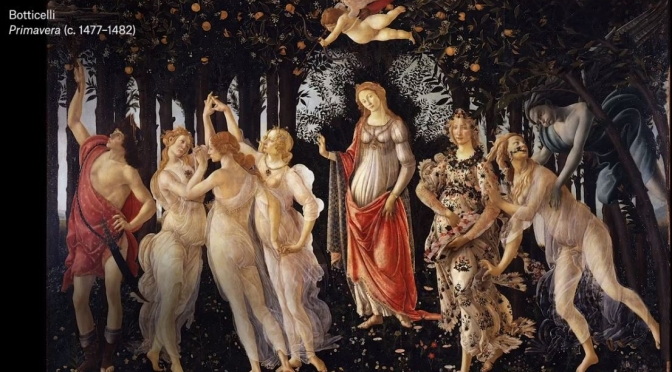
Art History Videos: Italian Early Renaissance Painter Sandro Botticelli (15th C.)

An extract from the Christie’s Education online course, The Great Masters of European Art 1350–1850. Florence in the 1400s, a city of wealthy guilds and merchants, in particular the Medici family, who commissioned astonishing works of art to show off their success and cultivation.

Here we are introduced to one of the great artists the Medicis favoured: Sandro Botticelli, and his most famous works: ‘Primavera’ and ‘The Birth of Venus’.

Alessandro di Mariano di Vanni Filipepi (c. 1445 – May 17, 1510), known as Sandro Botticelli, was an Italian painter of the Early Renaissance. He belonged to the Florentine School under the patronage of Lorenzo de’ Medici, a movement that Giorgio Vasari would characterize less than a hundred years later in his Vita of Botticelli as a “golden age”. Botticelli’s posthumous reputation suffered until the late 19th century; since then, his work has been seen to represent the linear grace of Early Renaissance painting.

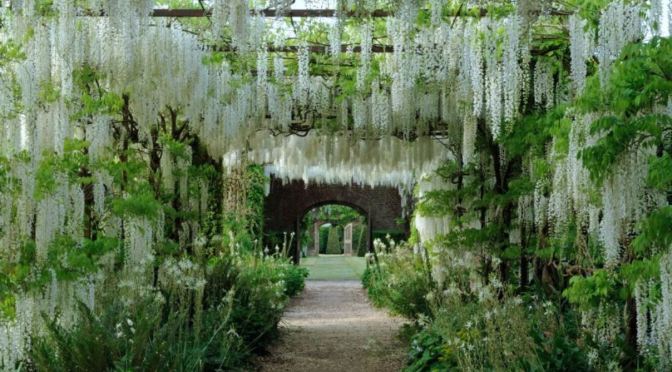
Top Gardens: Astonishing “Wisteria Pergolas” Of Petworth House, England

From Country Life Magazine (May 31, 2020):

The Private Gardens at Petworth House West Sussex Photos by Val Corbett Country LifeThe wisteria at Petworth’s private garden is simply astonishing. Non Morris takes a look at how it’s done, with pictures by Val Corbett.
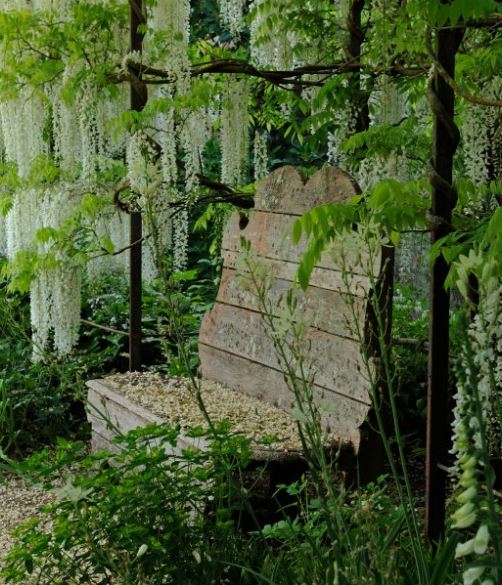
The beautiful pergolas in the Cloister Garden are trained with Wisteria floribunda Alba, a white Japanese wisteria selected for the tantalising length of its racemes — up to 24in — and the way the flowers open gradually along the stem, which prolongs its flowering period. The wisteria is pruned once only, in September.

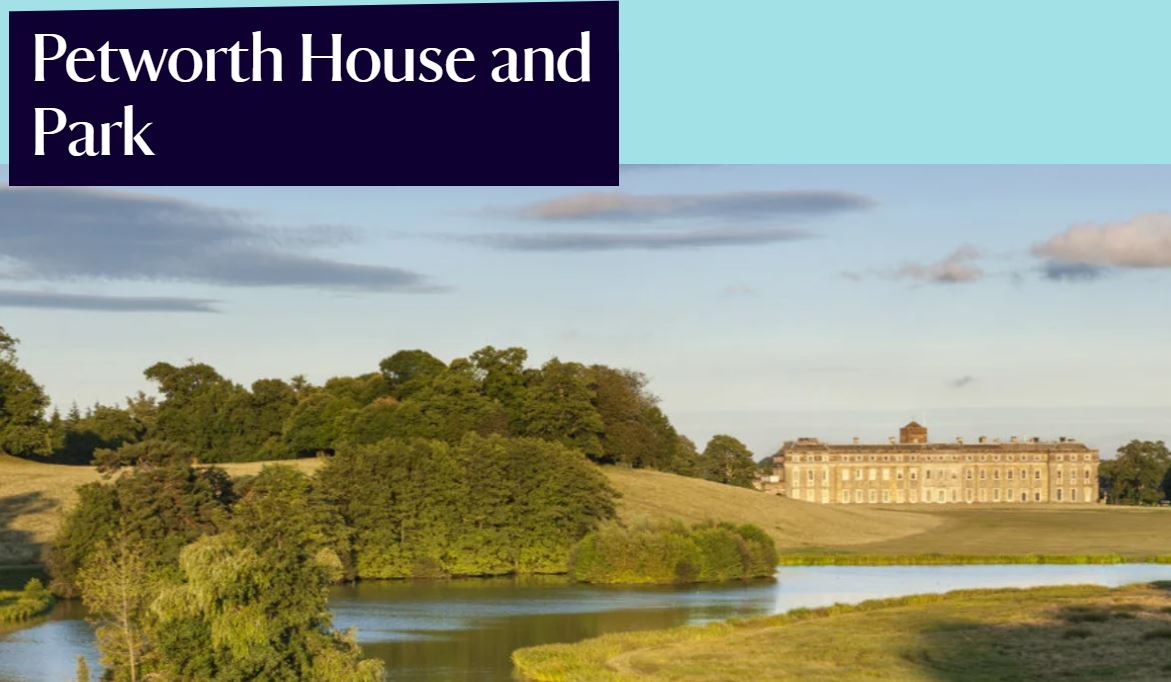
Petworth House and Park England
Website

Read full article

Podcast Profiles: Author Georges Simenon, Creator Of Inspector Maigret (LRB)

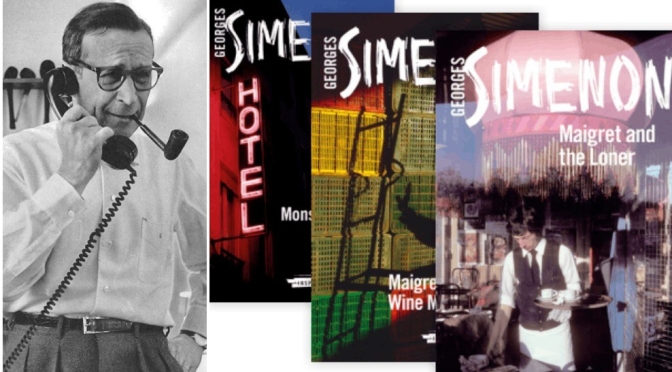
London Review of Books’ John Lanchester talks to Thomas Jones about Georges Simenon, whose output was so prodigious that even he didn’t know how many books he wrote.

Georges Simenon - Maigret ReturnsTRANSCRIPT

Thomas Jones: Hello, and welcome to the London Review of Books podcast. My name is Thomas Jones, and today I’m talking to John Lanchester, who’s written a piece in the current issue of the LRB about Georges Simenon and his 75 Maigret novels, which Penguin have just finished reissuing in new translations. Hello, John.

John Lanchester: Hi Tom. Thanks for having me.

TJ: Thank you for joining me. And I thought we could begin where you begin your piece with Simenon’s ‘colossal output’, as you put it, and that nobody knows how many books he actually wrote, though it was probably more than four hundred, which is fewer than Barbara Cartland, but still puts the rest of us to shame.

JL: He didn’t half crack on, that’s true. Yes, he started as a young man in Liège, his home town in Belgium. And he got a job as a reporter on the local paper. I think he was not quite 16, which is properly strange. It’s like something out of a high concept kid’s TV show, you know, Georges Simenon – Boy Reporter, and very early on latched onto the idea of making money through writing.He began writing when he was 18, his first book came out when he was 19. He started writing every sort of potboiler, thrillers, romances, sort of semi-porn westerns, things like that, at an absolutely astounding rate of productivity. And his target was eighty pages a day, typewritten, and even on the assumption that the pages … I mean, a short page would be 150 words and it could well have been more, but it was 10,000 words a day, and he did that every single day. And then he’d write eighty pages, and then he’d go and be sick. Just from the physical and mental exertion and the strain. That was in the morning. And then he’d recover and do a bit of light reading and pottering about. And then the next day he did the same again, over and over and over for about seven years. And in that period, as you’ve mentioned, we don’t know exactly how many, because he forgot, and he had multiple pseudonyms. The main one being Georges Sim, which was how he was known when he began writing the Simenon novels. People thought that Simenon was a pseudonym because George Sim was so well known, but he seems to have written about 150 or more books in this seven-year burst. It  makes you feel peculiar even to think about what that must have been like.

Read full transcript

Travel & Adventure Film: “Pathfinder” In Norway By Adam Rubin, Dan Lior (2020)

Created by: Adam Rubin and Dan Lior
Production Company: Raised by Wolves

Pathfinder is a tale about the human spirit.

The film follows six world-class slack-liners on a mission deep into the Norwegian mountains to attempt something that’s never been seen before: Walking a thin line, elevated in the vastness between two colossal cliffs, illuminated only by the mystical northern lights.

The yearning that drives adventurers and explorers to climb the highest peaks, sail endless oceans, and cross vast deserts in the name of progress, is the same passion that drives these slack-liners to attempt what has still been unclaimed.

Through the extreme conditions and endless challenges, we learn about their elemental desire to explore the limits of humankind.

Producer: Adam Rubin
Second Producer: Dan Lior
Assistant producer: Ariel Hadar
Scriptwriting: Dan Lior
Cinematography: Adam Rubin and Dan Lior
Additional Cinematography: Kfir Amir
Timelapse photography: Guy Gefen

Website

Lockdown Art: Italian Illustrator Pierpaolo Rovero – “Rooftop Views”

Pierpaolo Rovero - London Drinks Tea“Imagine all the people” is a project by Turin-based artist and illustrator Pierpaolo Rovero that fantasizes about the way people around the word spend their time in quarantine. Depicting a diverse range of metropolitan panoramas, from New York and Paris, to Jerusalem, to Tokyo, Rovero imagines the citizens of each city indulging in the same activity while stuck at home, allowing viewers to catch glimpses through windows, balconies and skylights. 

Pierpaolo Rovero Athens Plays Sports

Website


Podcast Interviews: Vanity Fair Italia Editor In Chief Simone Marchetti

The StackMonocle 24’s “The Stack” speaks with ‘Vanity Fair Italia’ editor in chief Simone Marchetti. 

Plus Andrew Trotter from ‘Openhouse’ magazine and Liz Schaffer from travel title ‘Lodestars Anthology’.

Top New Travel Videos: “The Majesty Of Turkey”

https://vimeo.com/424122421

Filmed and Produced by: An Otter Studio

A few months ago we traveled to Turkey to follow the magic of this land. Once there we noticed the majesty of this beautiful country for their arts, history, colours and specially, for their people.

Seduced by the music, the food, the sights and the beauty behind the variety of their culture. We were fascinated by it and that´s why we wanted to show you this video.

Music by Light in Babylon – “Baderech El Hayam”.

Website

Top New Travel Videos: “An Ode To Arezzo” In Italy By Rob Whitworth (2020)

Filmed and Edited by: Rob Whitworth

The little Tuscan town of Arezzo is everything the world wants Italy to be: ancient grandeur, natural abundance and high culture, basking sun and brimming with passion.

I was therefore thrilled at the opportunity to make a flow-motion promoting Arezzo and its most quintessential festival: the ancient Saracen Joust.

As we look ahead, I hope this little film is reminder of what we have to look forward to.

Website

Covid-19 Podcasts: “Is Banning Certain Events the Key to Reopening?”

WSJ PodcastsA bar in the Swiss Alps. A megachurch in South Korea. Scientists are focusing on certain superspreading events that might be responsible for an outsized portion of coronavirus cases.

Bojan Pancevski explains how this understanding could be key to reopening.

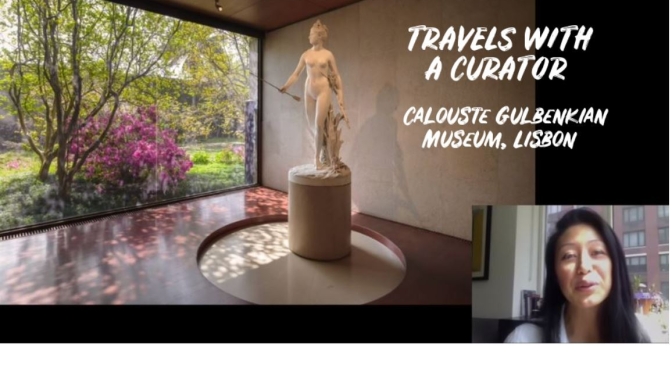
Travels With A Curator: “Santa Maria delle Carceri, Prato” (The Frick)

In this episode of “Travels with a Curator,” Xavier F. Salomon, Peter Jay Sharp Chief Curator, brings us to the church of Santa Maria delle Carceri in Prato, Italy, to explore the original home of one of the Frick’s spectacular bronzes, “St. John Baptizing” by Francesco da Sangallo. Discover the family connections that link this important sculpture to the church and retrace the history of the bronze from its creation in the sixteenth century to its acquisition by Henry Clay Frick in 1916.