


Tag Archives: Culture
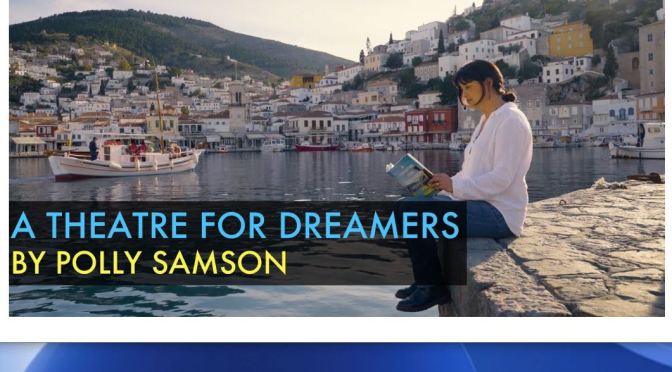
Travel & Culture: Greek Island Of Hydra In 1960’s – “A Theatre For Dreamers” By Novelist Polly Samson
From The Guardian (May 23, 2020):
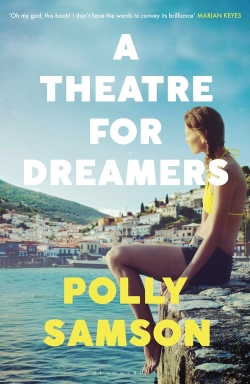 I first went to Hydra six years ago, when it was simply a beautiful Greek island and not a place I went to commune with its ghosts. I don’t think I was even aware that it was the island Leonard Cohen had lived on, and knew nothing of Charmian Clift, George Johnston and the bohemian community they fostered.
Bloomsbury Publishers: 1960. The world is dancing on the edge of revolution, and nowhere more so than on the Greek island of Hydra, where a circle of poets, painters and musicians live tangled lives, ruled by the writers Charmian Clift and George Johnston, troubled king and queen of bohemia. Forming within this circle is a triangle: its points the magnetic, destructive writer Axel Jensen, his dazzling wife Marianne Ihlen, and a young Canadian poet named Leonard Cohen.
Into their midst arrives teenage Erica, with little more than a bundle of blank notebooks and her grief for her mother. Settling on the periphery of this circle, she watches, entranced and disquieted, as a paradise unravels.
Burning with the heat and light of Greece, A Theatre for Dreamers is a spellbinding novel about utopian dreams and innocence lost – and the wars waged between men and women on the battlegrounds of genius.
Polly Samson is an English novelist, lyricist and journalist. She is married to musician David Gilmour, and has written the lyrics to many of Gilmour’s works, both as a solo artist and with the group Pink Floyd.
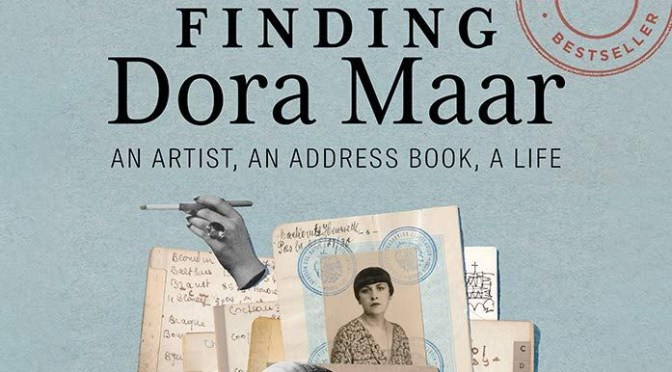
New Art History Books: “Finding Dora Maar – An Artist, An Address Book, A Life” – Brigitte Benkemoun
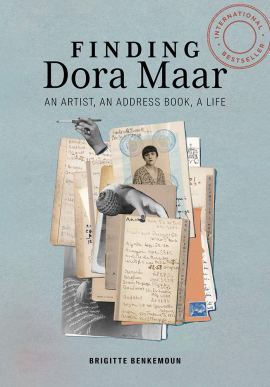 In search of a replacement for his lost Hermès agenda, Brigitte Benkemoun’s husband buys a vintage diary on eBay. When it arrives, she opens it and finds inside private notes dating back to 1951—twenty pages of phone numbers and addresses for Balthus, Brassaï, André Breton, Jean Cocteau, Paul Éluard, Leonor Fini, Jacqueline Lamba, and other artistic luminaries of the European avant-garde.
After realizing that the address book belonged to Dora Maar—Picasso’s famous “Weeping Woman” and a brilliant artist in her own right—Benkemoun embarks on a two-year voyage of discovery to learn more about this provocative, passionate, and enigmatic woman, and the role that each of these figures played in her life.
Longlisted for the prestigious literary award Prix Renaudot, Finding Dora Maar is a fascinating and breathtaking portrait of the artist.
Brigitte Benkemoun is a journalist and writer. She is the author of La petite fille sur la photo (2012) and Albert le Magnifique (2016). Jody Gladding is a poet and translator. She has translated some thirty books from French, including, most recently, Roland Barthes’s Album: Unpublished Correspondence and Texts (2018), Michel Pastoureau’s Yellow: The History of a Color (2019), and Jean Giono’s Occupation Journal (2020).
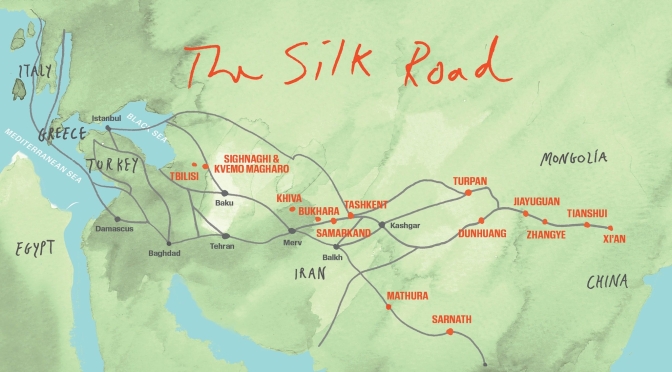
Travel: “The New York Times Style Magazine” – The Silk Road (May 2020)
A Poetic Journey Through Western China
For years, Silk Road travelers made the grueling trek past towering mountain ranges and ancient cities now lost to time. Centuries later, one writer attempts to retrace the journey.

This year, T’s spring Travel issue is devoted to just five stories, each an account of its writer’s journey along a different section of the Silk Road — the ancient network of trade routes that until the 15th or 16th century spanned some 4,000 miles of the globe, from Central Asia across the Middle East to Southern Europe, and formed a vital conduit for both new commodities and new ideas. While venturing to faraway places might seem like a distant possibility now, a year after this issue began to take shape, as we reckon with the global pandemic, these pieces are a powerful reminder of our innate desire to move and explore.
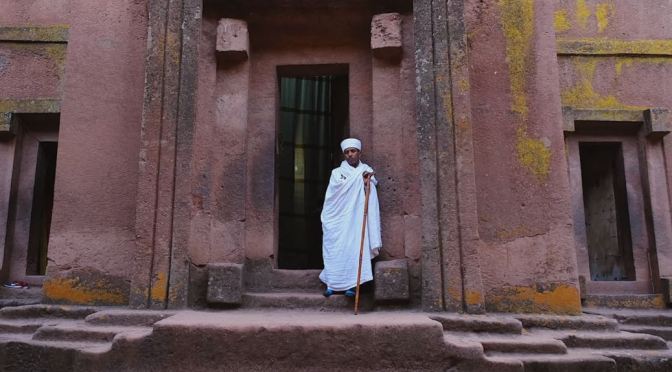
Travel & Culture Videos: “Ethiopia – Natural Utopia” By Florence Lepavec (2020)
Filmed and Edited: Florence Lepavec
.
Ethiopia, the ‘Roof of Africa’, the ’Cradle of Humanity’, the ‘Promised Land of Zion’…
It had been already given quite many designations.
Another one I also heard before going there for the first time, was ‘Ethiopia, the Africa for Beginners’. ??
Was it because, for the most part, Ethiopians are genuinely friendly, generous and rather naturally relax?
Was it because, as occidentals, we share a common religious identity, rooted in mutual values? Was it because
it is mainly safe for travellers?
For whatever reason it was, I did find the expression suiting me right down to the ground because apart
from Morocco, I had not yet stepped foot in deep Africa.
And actually, now that I am back, I could personally add another title: ‘Ethiopia, the Natural Utopia’.
Is that for its breath-taking Nature? For its colourful Spiritual Identity? For its beautiful People?
Or is that for all of these?
For this abundant land offering an incredible diversity of eco-systems and landscapes, going from arid
desert regions to Afroalpine up-lands breaking down into vertiginous abyss. A land combining peaks reaching
above 4000m and depressions as low as 125m below sea level. Mountains, forests, lakes, meadows, deserts and swamplands.
A diversity also found in the fauna, with some interesting endemic species like the Gelada, the red-hearted baboon
-a peaceful grass-heater with impressive canines.
Or either, for this fascinating primal religious form of Christianity, tinged with animist rituals and colourful arts.
A religious belief deeply infused into the People living according to spiritual principles and values. People trying
their best to give you their best. Everywhere I went, I left it with brothers and sisters. With a sense of home given
by their genuine gentleness and education and their natural sensitive and respectful nature, in deep connection with
Nature Itself. I left with lots of good memories and friends. Filled with Humanity.
The same Humanity our ancestor ‘Lucy’ and her siblings might have been creating some 3.2 million years ago, on the same lands.
On this antic land rich of a unique history and culture.
Those are all the reasons why I called my Ethiopia, ‘the Natural Utopia’: a land that potentially possesses
ideal (or perfect) qualities for People…
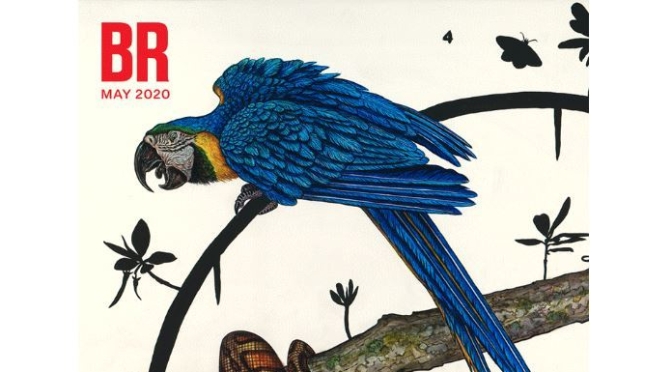
Top Digital Magazines: “The Brooklyn Rail – May 2020” – Arts & Culture

AUDREY FLACK with Charles Duncan
“When you’re alone in the studio, and your life is turned upside down by something, it’s you and the work.”
Art In Conversation
HENRI LOYRETTE with Joachim Pissaro
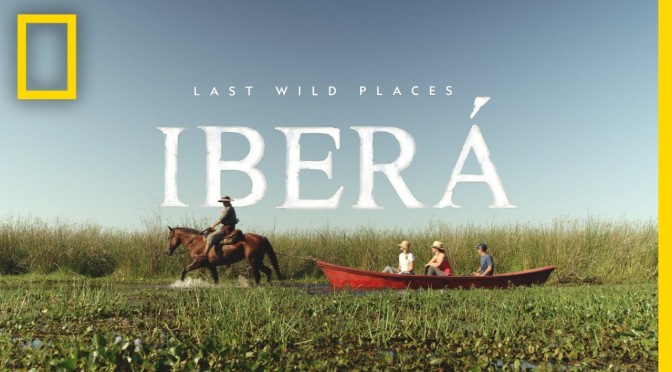
Top New Travel Videos: “Last Wild Places – Iberá” In Argentina (NatGeo)
Iberá National Park in northeastern Argentina is part of one of the largest wetlands in South America, but much of its wildlife went extinct in the 20th century due to widespread hunting and habitat loss. Now, a dedicated team of conservationists is working hand in hand with local communities to reintroduce many of the keystone species that were lost, while also helping to preserve the region’s unique cultural heritage.
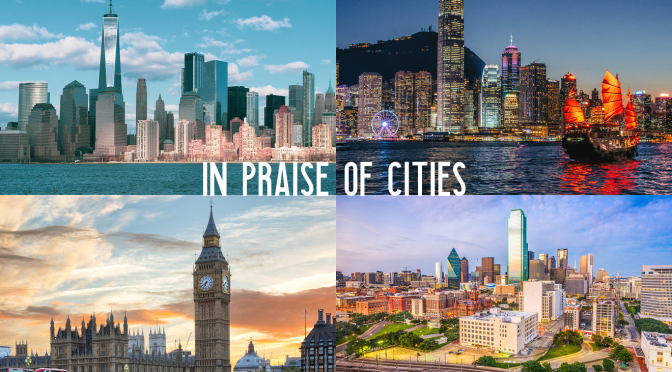
City Praise: “London, Hong Kong, Toronto, Milan & Rio de Janeiro” (Podcast)
 We ask our housebound editors and correspondents across the globe to reflect on what they cherish about the places in which they live and to pen a love letter to their cities: London, Hong Kong, Rio de Janeiro, Toronto and Milan.
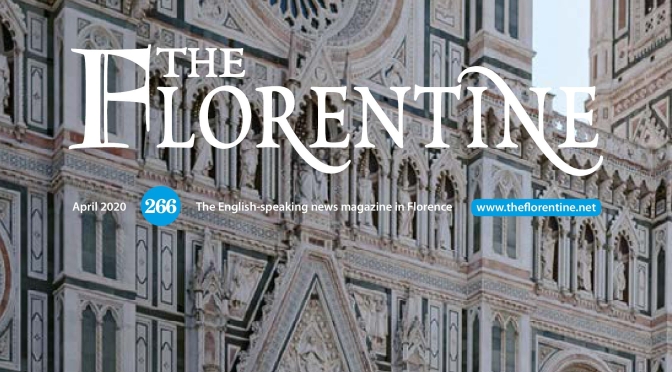
International Magazines: “The Florentine” – Italy April 2020 Issue Released
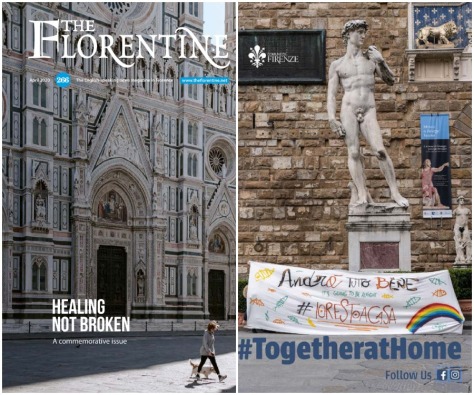
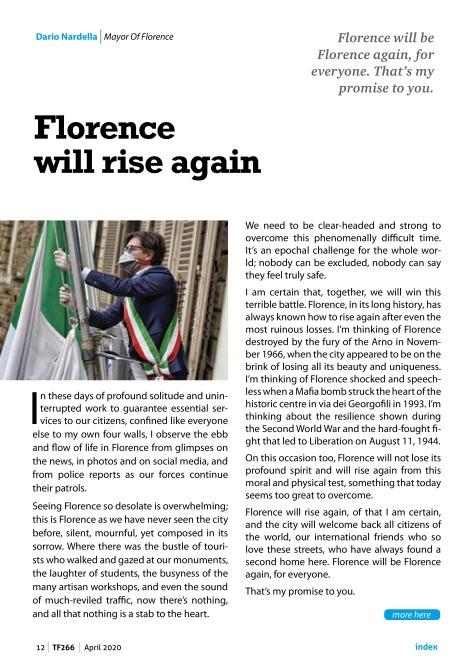
In this special Covid-19 edition of The Florentine, rejoice in a renewed humanism from Florence, of learning, words, thoughts and creativity, with articles, poems and short stories penned by the city’s international community, plus ideas and considerations for the future from Tuscany’s leaders and institutional figures, all interspersed with iconic photography of Florence at its most restful.
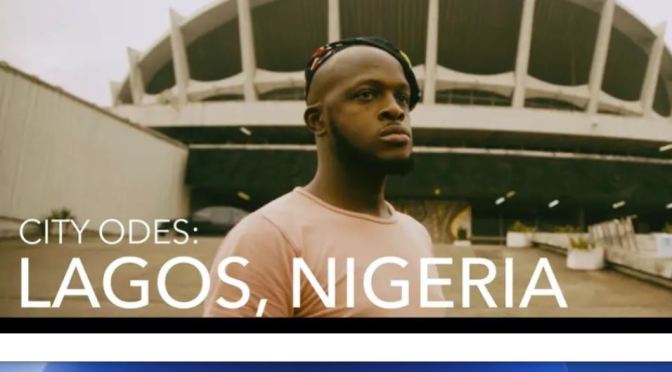
New Travel Videos: “City Odes – Lagos, Nigeria” By Sheldon Chau (2020)
Directed, shot, edited by // Sheldon Chau
Produced by // Ella Utomi, Jide Adewale
Poem by // Ntongha Ekot
Starring, voiceover by // Jide Adewale
Music composed by // John Corlis
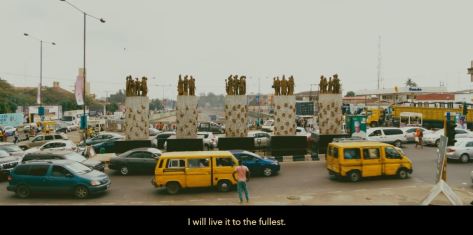
“Eko ile”
A man straddles a love-hate relationship with Lagos in which he attempts to not only grasp both the intensity and comfort that the city has to offer, but also to embrace it as his home.
—-
The City Odes Project is a passion project in which I collaborate with my composer, a poet and an actor to create a humanist, emotional, and visual story amidst the backdrop of a specific city. “Eko ile” is the second entry into this series and takes place in one of the most intense, vibrant, and overwhelming places I have ever been – Lagos, Nigeria.
The title “Eko ile” translates to “Lagos is home” in Yoruba, one of the primary languages in the country. For this piece, I wanted to capture the city in the language I encountered most when I was there – Pidgin English (which is sort of a local slang) as well as plain English, both of which my lead actor Jide Adewale (who also happens to be one of the producers) speaks as he narrates the poem. I wanted to create a character who personifies the feeling of living in Lagos in which the hustle is as real as it gets and the frenetic pace is nonstop. Lagos truly is one of a kind.
The final result here features the work of Ntongha Ekot – a Nigerian poet – who eloquently captures these push-and-pull feelings through her words, and my frequent collaborator John Corlis – an LA-based musician and composer – who complements the poetry with his emotional piano piece “Into the Atmosphere” from his latest album of the same title. My incredible producers Jide and Ella Utomi made it all happen by finding the locations, security and logistics; they took care of me during my memorable time there.
 Boomers Daily