
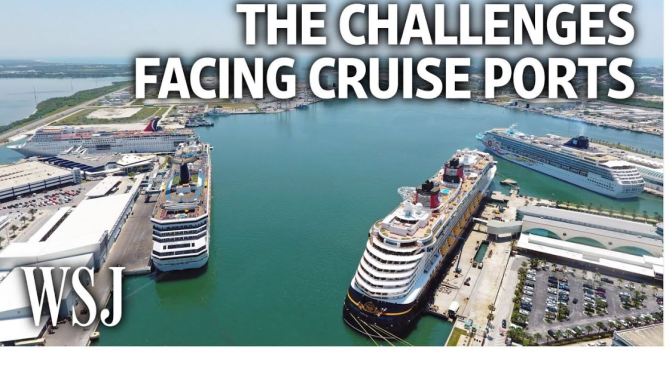
The shutdown of cruise lines during the pandemic has had far-reaching economic consequences for America’s ports. In this video, WSJ reporter Julie Bykowicz visits Port Canaveral’s once-bustling cruise terminal to learn about what’s next for the industry.
Tag Archives: Business
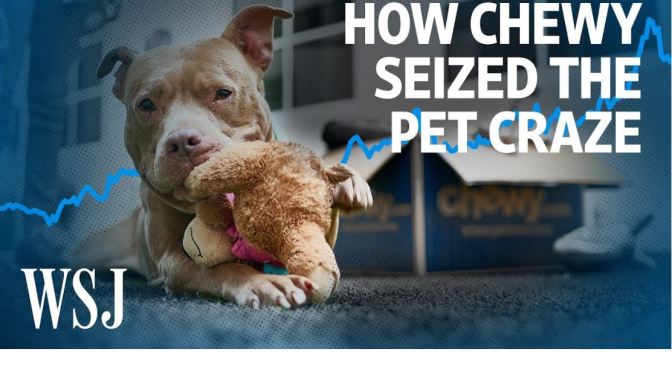
Online Business: How ‘Chewy’ Harnessed The Pandemic Pet Boom
Online pet retailer Chewy has seen a surge of growth over the past year as millions adopted new pets. WSJ spoke with Chewy’s CEO to learn how the company handled the pandemic pet boom. Illustration: Jacob Reynolds/WSJ

Views: Greece & Portugal Reopen For Business
Greece and Portugal are beginning to reopen parts of their countries and economies, even while other European countries enforce stricter lockdowns. Small retailers in most of #Greece reopened on Monday, with a limit of 20 people indoors at a time. Critics say it is a paradox to reopen shops while Covid-19 cases continue to rise and hospitals remain under pressure. Meanwhile in #Portugal, café terraces, gyms and secondary schools are opening.
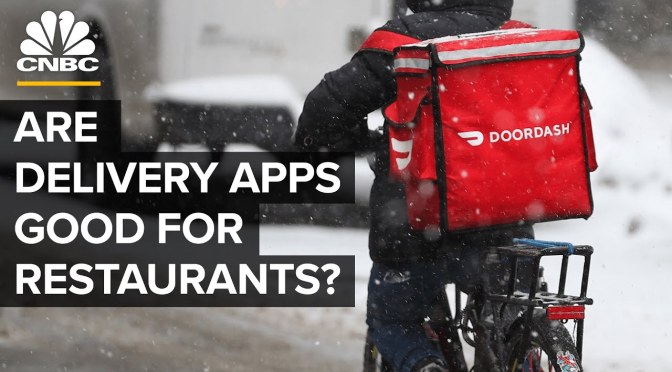
Analysis: Are Delivery Apps Good For Restaurants?
While indoor dining has dropped way down during the pandemic, food delivery has grown considerably. DoorDash and Uber Eats, the two largest delivery apps by market share both saw their sales double from the end of 2019 to the end of 2020.
But while it might be an easy decision for customers to use these third-party delivery apps, the decision for restaurants is not so easy. There is a lot to consider, and it’s not a one-size-fits-all solution.
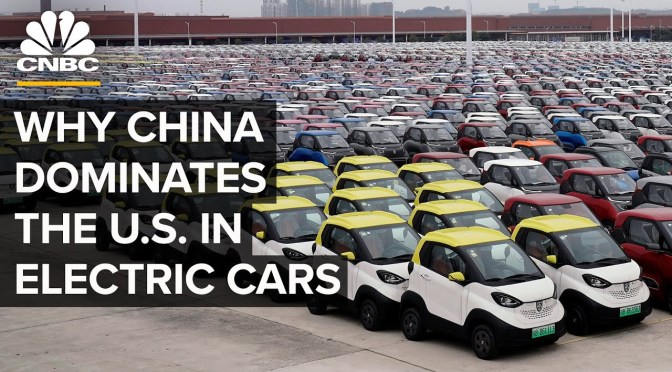
Analysis: Why China Is Dominating The U.S. In Electric Cars (Video)
The global electric vehicle market is heating up and China wants to dominate. The country has invested at least $60 billion to support the EV industry and it’s pushing an ambitious plan to transition to all electric or hybrid cars by 2035. Tesla entered the Chinese market in 2019 and has seen rapid growth.
China sold roughly one million more EVs than the U.S. in 2020. But there are signs the U.S. is getting more serious about going electric. President Joe Biden announced a goal to reach net-zero emissions by 2050 and investments in green infrastructure. Watch the video to find out how China came to dominate the market and whether it’s too late for the U.S. to catch up.
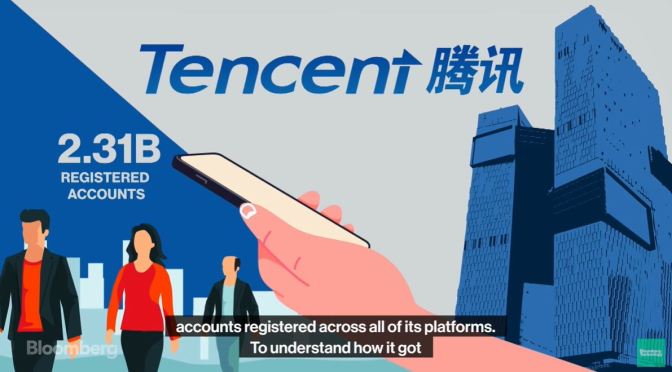
Analysis: ‘Tencent – China’s Most Valuable Company’
Mar.23 — In the space of two decades, Tencent Holdings Ltd. has become China’s most valuable company and Asia’s largest conglomerate. But with Chinese authorities stepping up scrutiny of the internet sector and cracking down on monopolies. it’s not clear if the WeChat owner will still have the same freedom to expand. Bloomberg Television’s David Ingles reports.
Analysis: Is Texas Now The New California? (Video)
Tesla’s gigafactory and Apple’s second-largest campus aren’t the only big businesses coming to Texas. From Oracle to Hewlett Packard Enterprise, Elon Musk to Joe Rogan, Texas has lured an increasing number of big businesses and billionaires away from California since the pandemic began. While California’s population and job growth both slowed to a trickle, Texas added more residents than any other state in 2020. CNBC talks to those moving and longtime Texans about the reasons behind the trend and what it could mean for the future of the Lone Star State.
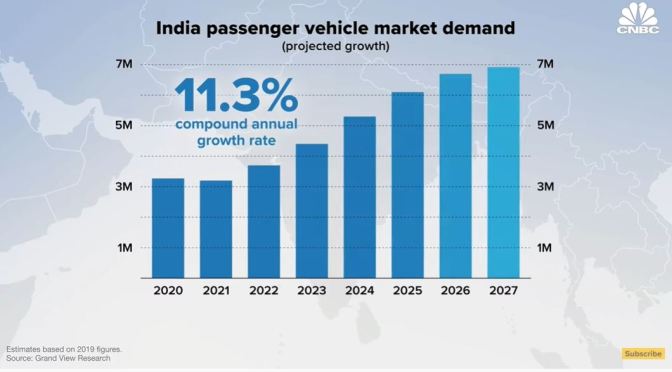
Electric Cars: ‘Can Tesla Succeed In India’ (Video)
As Tesla looks to expand to new markets, rumors are circulating that India could be next. While the 5th largest auto market could be big for the ev manufacturer, it’s filled with challenges and increasing competition.
There is an electric vehicle revolution sweeping the world, but India is lagging behind. Elon Musk has said that Tesla will enter India this year, but it’s not clear if that will actually happen. On January 8th, Tesla took its first step towards launching in the country, registering Tesla Motors India and Energy Private Limited in Bengaluru.
But when Tesla does eventually come to India, it won’t be easy. The electric vehicle industry is in its infant stages there, lacking much of the infrastructure needed for widespread adoption. And the most popular vehicles are motorcycles, rickshaws and budget passenger cars. Watch the video to find out what Tesla will be up against in India.
Candy Business: ‘How Wrigley’s Dominated Chewing Gum’ (Video)
Gum lines the pockets of most Americans and has been a staple in American culture for centuries. For some, gum is all about flavor, and for others, it’s about fear of bad breath, curbing hunger, or alleviating anxiety. For nearly 130 years, the brand Wrigley’s has become synonymous with chewing gum.
Since its start, the gum maker has dominated the chewing gum market, spawning brands from Juicy Fruit to Orbit to 5 Gum. But it hasn’t always been smooth sailing for the William Wriglely Jr. Co.; over its storied past, the brand has faced turbulent years. Since the early 2000s, the chewing gum market has seen a decline in public sentiment, which hurt significant players. In 2006, the company ended its long-standing tradition of being a family run business with William Wrigley Jr. stepping down as CEO.
By 2008, Wrigley’s faced increasing global competition and was acquired by Mars along with Warren Buffett’s Berkshire Hathaway. According to Euromonitor International, the gum industry’s market value hit $18.6 billion in 2020. Since 2015, Mars Wrigley has held 25% of the global brand share for chewing gum and a 40% portion in the U.S. The Covid-19 pandemic since it began in March 2020 has negatively impacted gum’s most prominent players and could negatively affect Mars Wrigley gum brands’ future.
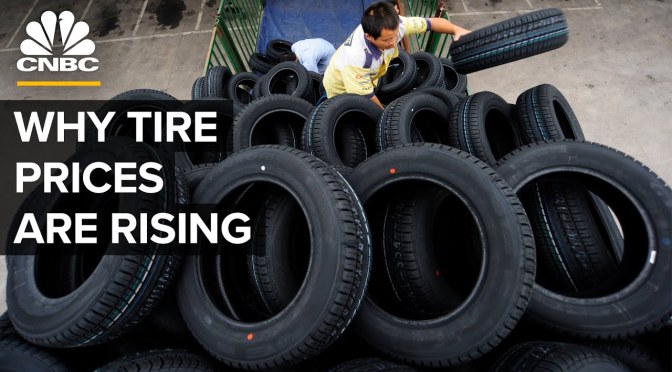
Analysis: ‘Why Tire Prices Are Rising’ (CNBC Video)
Along with the pandemic, big tire brands are facing unique challenges. While trends have increasingly shifted online due to Covid, the tire market has been more hesitant to growing its e-commerce presence. Trade tariffs and the growing popularity of SUV’s and electric vehicles are also driving up the price of tires, posing an issue with attracting focus-savings consumers. Existing in a competitive market, many of the world’s biggest tire brands are focused on standing out to customers.
 Boomers Daily