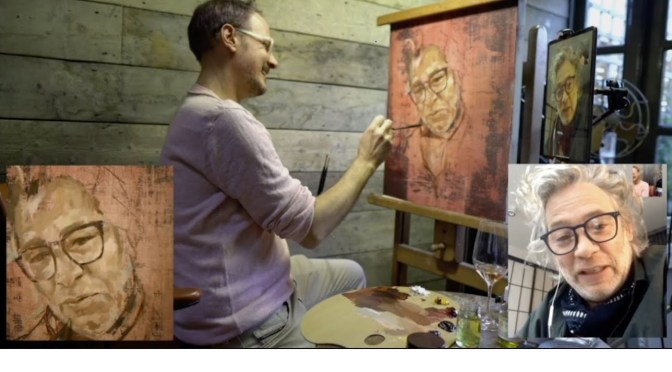
Since lockdown started in the UK, British artist Jonathan Yeo began a ‘FaceTime Portraits’ series where sittings have been filmed by his household, offering viewers a live glimpse into his portrait painting process.
Here he tells us about the pros and cons of painting faces by digital means and how he sees the future of portraiture as technologies continue to evolve.
Jonathan Yeo is a British artist who rose to international prominence in his early 20s as a contemporary portraitist, having painted Kevin Spacey, Dennis Hopper, Cara Delevingne, Damien Hirst, Prince Philip, Erin O’Connor, Tony Blair, and David Cameron among others.
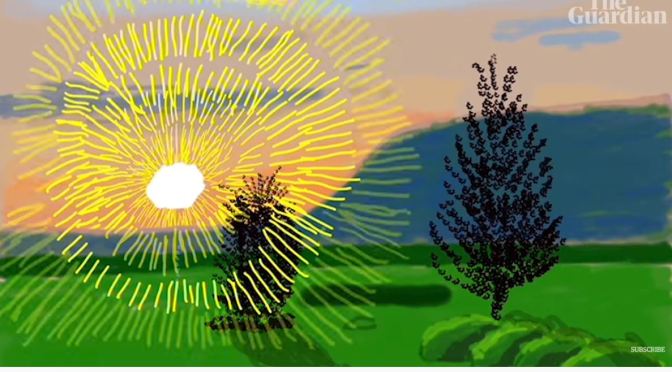
David Hockney created a glorious depiction of a sunrise on his iPad in April and emailed it from his lockdown in Normandy to the Guardian’s art critic Jonathan Jones. He has made pictures from nature every day through this bitter spring as his artistic stand against despair – and what is more hopeful than the sun coming up? Jones describes how the picture reminded him of all the sunrises shut away inside the National Gallery, in London. From Bellini to Monet, Titian to Turner, a private view of some of the greatest masters’ sunrises
Painted in 1996, David Hockney’s “30 Sunflowers” is a bold and luscious still life of contemporary times. In this episode of Expert Voices, discover how Hockney was inspired to paint “30 Sunflowers” after a decade hiatus, and hear Hockney himself explain the influence of the Old Masters in this vivid work.
In this short and uplifting video, the influential British painter David Hockney talks about looking and painting for more than 60 years – and shares a story that made him reflect on our time.
“The world is very, very beautiful if you look at it. But most people don’t look very much. They scan the ground in front of them so they can walk, but they don’t really look at things incredibly well, with intensity. I do, and I’ve always known that.” In March 2020, Hockney sent out his iPad drawing ‘Do Remember They Can’t Cancel the Spring’ (2020) in response to the coronavirus outbreak. In this video, he shares the story of how a philosopher on a news program was asked how he could be optimistic with the current news: “And he said: Well, that’s television. Bad news sells.” The reporter then inquired what the good news was, to which the philosopher responded: “Well, the arrival of spring,” Hockney continues laughing.
In the video, you also get to experience the world premiere of an animation technique, which Hockney himself calls “time-based brush painting.”
David Hockney (b.1937) is a British painter, printmaker, photographer and stage designer, who is considered among the most influential and versatile British artists of the 20th century. Hockney is a notable contributor to the pop art movement in Britain, both in its foundation and growth, beginning with his participation in an annual exhibition called ‘Young Contemporaries’ in 1960, which also marked the start of his recognition in the art world. Hockney is the recipient of several prestigious awards including the Praemium Imperiale for Painting (1989), and the Lifetime of Artistic Excellence Award (Pratt Institute) in 2018.
His work can be found in numerous collections worldwide, including National Gallery of Australia in Canberra, National Portrait Gallery and Tate Gallery in London, Museum of Modern Art and Metropolitan Museum of Art in New York, Centre Pompidou in Paris, De Young Museum in San Francisco, Louisiana Museum of Modern Art in Humlebæk, and Museum of Contemporary Art in Tokyo.
David Hockney was interviewed by Marc-Christoph Wagner at his home in France in March 2019.
Many thanks to David Hockney for providing the works and the animation shown in the video. Camera: Jakob Solbakken Edited by Roxanne Bagheshirin Lærkesen Produced by Marc-Christoph Wagner Copyright: Louisiana Channel, Louisiana Museum of Modern Art, 2020 Supported by Nordea-fonden
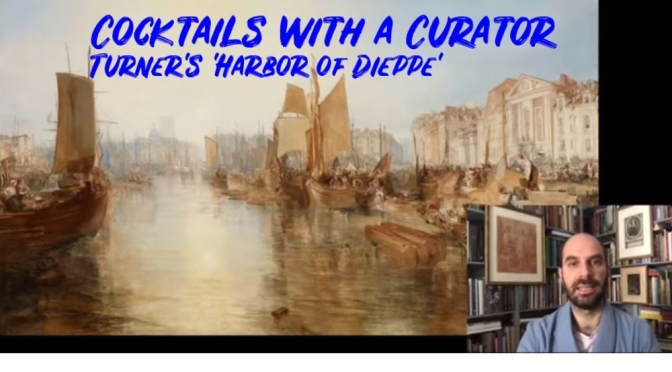
In this episode of “Cocktails with a Curator,” Xavier F. Salomon, Peter Jay Sharp Chief Curator, discusses the French port city depicted in J. M. W. Turner’s painting “Harbor of Dieppe: Changement de Domicile,” and how the artist’s extensive travel throughout Europe helped to develop his affinity for harbors. The complementary cocktail is the Widow’s Kiss, a French drink traditionally given to women who had lost their husbands at sea.
Minton had gone on to produce a series of spectacularly colourful oil paintings of Corsica on his return to London, exhibiting them at the Lefevre Gallery in 1949. Many of them depicted fruit and fish and other ingredients for Mediterranean cuisine, and so confirmed Minton as the obvious choice for the David commission.
David delightedly recalled that: ‘In the shop windows [Minton’s] brilliant blue Mediterranean bay, his tables spread with white cloths and bright fruit, bowls of pasta and rice, a lobster, pitchers and jugs and bottles of wine, could be seen far down the street.’
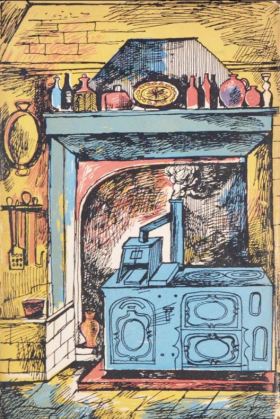
Variations on these two images were used for the double-page spread on which the title appeared in David’s second book, French Country Cooking (1951), while the wrap-around image on the dust jacket depicted the interior of a well-stocked kitchen, many of its utensils borrowed from the author to ensure accurate representation.
Francis John Minton (25 December 1917 – 20 January 1957) was an English painter, illustrator, stage designer and teacher. After studying in France, he became a teacher in London, and at the same time maintained a consistently large output of works. In addition to landscapes, portraits and other paintings, some of them on an unusually large scale, he built up a reputation as an illustrator of books.
In the mid-1950s, Minton found himself out of sympathy with the abstract trend that was then becoming fashionable, and felt increasingly sidelined. He suffered psychological problems, self-medicated with alcohol, and in 1957 died by suicide.
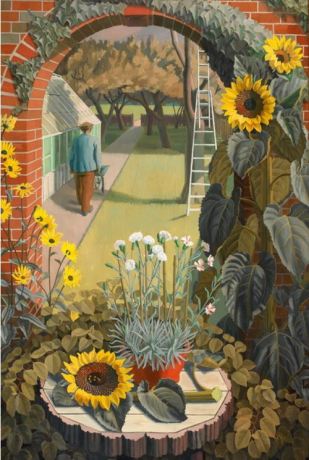
Charles Mahoney,(18 November 1903 – 11 May 1968): Painter, muralist, draughtsman and teacher, born Cyril Mahoney in London – his fellow-student Barnett Freedman re-christened him Charlie at the Royal College of Art, which he attended 1922-6 after a period at Beckenham School of Art under Percy Jowett. Early on, Mahoney established a reputation as a conscientious teacher.
He was at the Royal College 1928-53, from 1948-53 as a painting tutor, and was noted there for his concern for academic discipline.
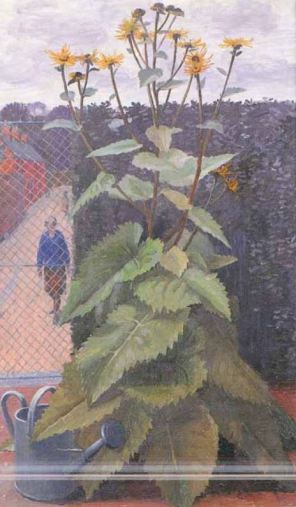
Charles Mahoney, Composite Plant 1954
His portrait is included in Rodrigo Moynihan’s celebrated Teaching Staff of the Painting School at the Royal College of Art, 1949-50. From 1954 to 1963 he taught at the Byam Shaw School of Drawing and Painting and from 1961 to 1968 at the Royal Academy Schools. He painted murals at Morley College 1928-30 with his colleagues Eric Ravillious and Edward Bawden.
Unfortunately these murals were destroyed during World War II. The work led to further murals: at Brockley School, Kent, with Evelyn Dunbar; and at Campion Hall Lady Chapel, Oxford. His oil paintings are frequently of a religious nature. He was a skilled botanist, and many of his drawings depict his garden at Wrotham, Kent.
He exhibited at NEAC and the RA, being made an RA elect in 1968. He is represented in the Tate Gallery and other public collections. The Ashmolean Museum, Oxford, held a memorial exhibition in 1975. Exhibitions were held in 2000 at the Harris Museum and Art Gallery, Preston, Royal Museum and Art Gallery, Canterbury, and the Fine Art Society plc in association with Liss Fine Art.
“The art world is the same as the rest of the world,” says British artist, writer, and punk-rocker Billy Childish. “What it requires is new, more, and now.” Childish has worked defiantly and prolifically outside of the mainstream since his expulsion from art school in the early 1980s. To the polymath—whose paintings, poems, novels, and music draw heavily from his autobiography—art is a deeply personal experience that should not rely on external validation, whether from critics or audiences. From his painting studio located on a historic dockyard in Kent, United Kingdom, Childish speaks passionately about the freedom that comes with self-validation. When asked about his perspective on the future of art, he demurs. “People think we’re continually ascending a mountain to success or to enlightenment,” he says. “It’s here and now and this is it.”
Miller’s Penguin book covers and ironic titles catch the art world’s eye
These covers are closer to still life studies, rather than two-dimensional posters. Experimenting with different paper sizes and angles, he occasionally shows their spines, and the shadows they cast. It is a celebration of books as treasured objects. His drawings – in particular his studies for his large-scale oil paintings with their notes scribbled down the margins – are some of his most intimate works to date.
The ensuing images are humorous, sardonic and nostalgic at the same time, while the painting style hints at the dog-eared, scuffed covers of the Penguin classics themselves.
Starting with Jay Jopling in 1996, when Miller exhibited in a group show at London’s Institute of Contemporary Art, his works have garnered many a famous fan. Amongst which are AC/DC’s guitarist Angus Young, David Bailey, and Elton John – whose work amusingly, if a little painfully, bears the title ‘International Lonely Guy.’
George Michael, with his Harland Miller piece ‘Incurable Romantic Seeks Dirty Filthy Whore‘ commanded £237,500 in the posthumous auction of his art collection last year.

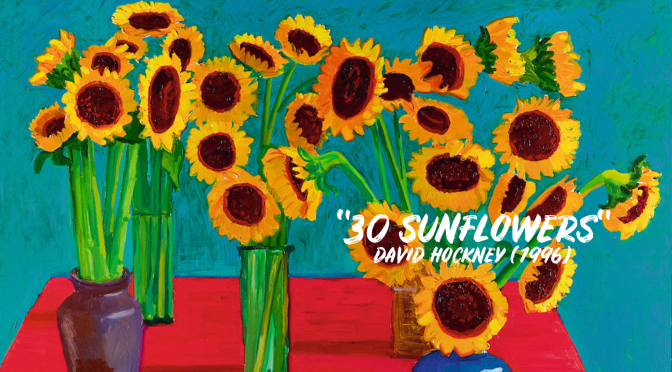
 Painted in 1996, David Hockney’s “30 Sunflowers” is a bold and luscious still life of contemporary times. In this episode of Expert Voices, discover how Hockney was inspired to paint “30 Sunflowers” after a decade hiatus, and hear Hockney himself explain the influence of the Old Masters in this vivid work.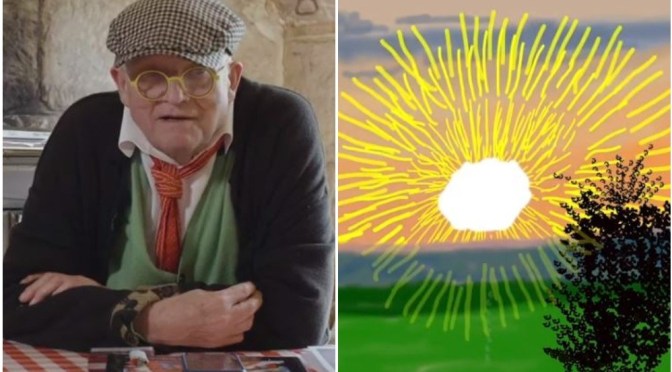


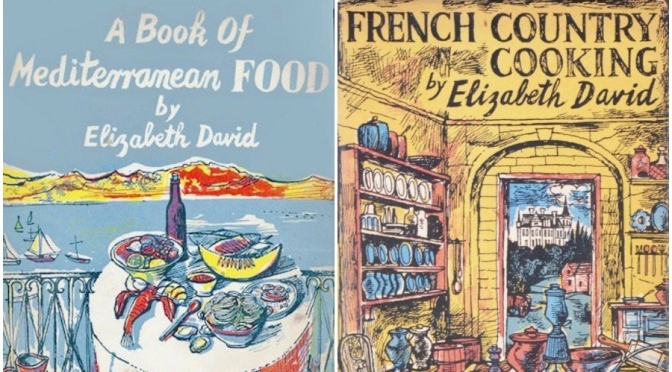
 Minton had gone on to produce a series of spectacularly colourful oil paintings of Corsica on his return to London, exhibiting them at the Lefevre Gallery in 1949. Many of them depicted fruit and fish and other ingredients for Mediterranean cuisine, and so confirmed Minton as the obvious choice for the David commission.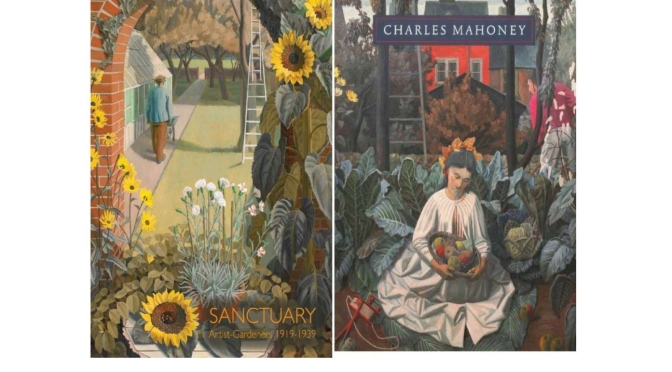
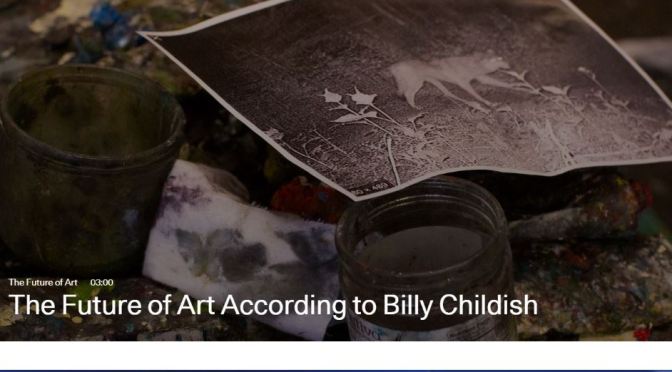
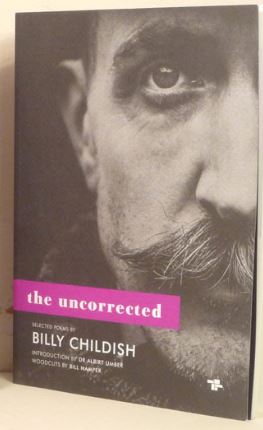 “The art world is the same as the rest of the world,” says British artist, writer, and punk-rocker Billy Childish. “What it requires is new, more, and now.” Childish has worked defiantly and prolifically outside of the mainstream since his expulsion from art school in the early 1980s. To the polymath—whose paintings, poems, novels, and music draw heavily from his autobiography—art is a deeply personal experience that should not rely on external validation, whether from critics or audiences. From his painting studio located on a historic dockyard in Kent, United Kingdom, Childish speaks passionately about the freedom that comes with self-validation. When asked about his perspective on the future of art, he demurs. “People think we’re continually ascending a mountain to success or to enlightenment,” he says. “It’s here and now and this is it.”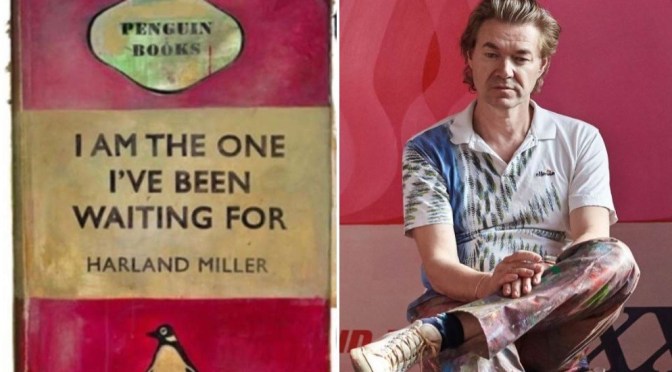
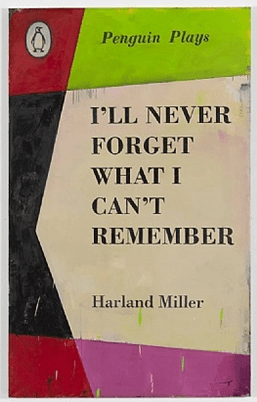 Miller’s Penguin book covers and ironic titles catch the art world’s eye
 Boomers Daily