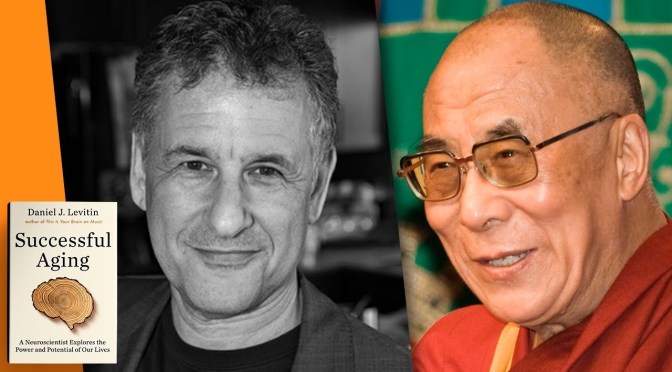
As a neuroscientist, professor emeritus of psychology, musician and best-selling author, Daniel Levitin has extensively studied the brain and its impact on aging. His latest book, “Successful Aging,” explores the questions: what happens in the brain as we age and what are the keys to aging well? NewsHour Weekend’s Christopher Booker recently spoke to Levitin to learn more.
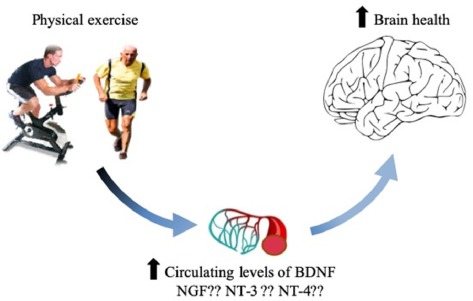
Therefore, promotion of adequate volumes and intensities of physical exercise (i.e., approximately 3 months of moderate-intensity aerobic exercise, with 2–3 sessions/week lasting not less than 30 min) represents an inexpensive and safe strategy for boosting BDNF (brain-derived neurotrophic factor) release that may preserve or restore cognitive function.
Taken together, the currently available data seemingly confirm the existence of a positive relationship between physical exercise and circulating BDNF levels, both in the short and long term, and also support the beneficial impact of training programs for amplifying the acute BDNF response.
‘Successful Aging’ uses research from developmental neuroscience and the psychology of individual differences to show that sixty-plus years is a unique developmental stage that, like infancy or adolescence, has its own demands and distinct advantages. Levitin looks at the science behind what we all can learn from those who age joyously, as well as how to adapt our culture to take full advantage of older people’s wisdom and experience. Throughout his exploration of what aging really means, Levitin reveals resilience strategies and practical, cognitive enhancing tricks everyone should do as they age.
Author of the iconic bestsellers This Is Your Brain on Music and The Organized Mind, Daniel Levitin turns his keen insights to what happens in our brains as we age, why we should think about health span, not life span, and, based on a rigorous analysis of neuroscientific evidence, what you can do to make the most of your seventies, eighties, and nineties today no matter how old you are now.
In our own study of more than 7,000 middle-aged to older adults in the U.K., published in 2019 in Brain Imaging and Behavior, we demonstrated that people who spent more time engaged in moderate to vigorous physical activity had larger hippocampal volumes. Although it is not yet possible to say whether these effects in humans are related to neurogenesis or other forms of brain plasticity, such as increasing connections among existing neurons, together the results clearly indicate that exercise can benefit the brain’s hippocampus and its cognitive functions.
In fact, a growing body of research suggests that exercise that is cognitively stimulating may indeed benefit the brain more than exercise that does not make such cognitive demands. For example, Gerd Kempermann and his colleagues at the Center for Regenerative Therapies Dresden in Germany explored this possibility by comparing the growth and survival of new neurons in the mouse hippocampus after exercise alone or after exercise combined with access to a cognitively enriched environment. They found an additive effect: exercise alone was good for the hippocampus, but combining physical activity with cognitive demands in a stimulating environment was even better, leading to even more new neurons. Using the brain during and after exercise seemed to trigger enhanced neuron survival.
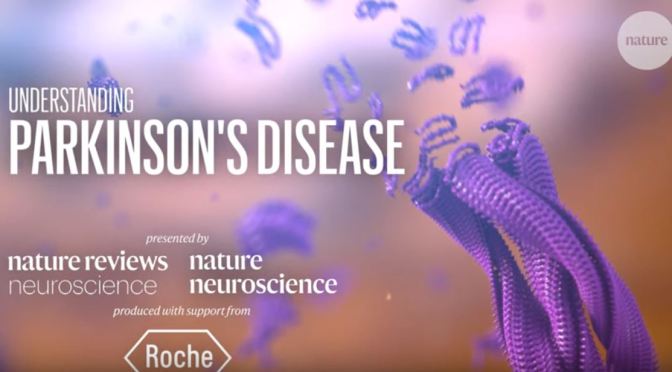
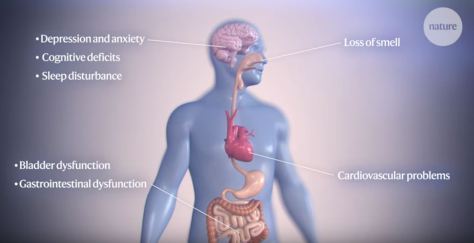
Parkinson’s disease is a neurological condition that affects the brain and other parts of the nervous system. The gradual loss of nerve cells leads to a suite of characteristic motor and non-motor symptoms.
What causes these cells to die and how the pathology develops in the nervous system are not yet clear but multiple lines of investigation are being pursued to answer these questions. In this animation, we explore some of the latest in Parkinson’s disease research.
“There are two important takeaways from this paper. One is that poor sleep is associated with brain immune dysregulation or dysfunction,” says Lim, the corresponding author for the paper.
“The second part is that dysfunction appears to be further associated with impaired cognition.”
The study shows that in adults with fragmented sleep – where people were waking up repeatedly instead of sleeping soundly – there was an effect on microglia, and the cells showed signs of accelerated aging and other abnormalities.
The researchers were then able to identify that these changes in the microglia could be associated with worse cognition in older adults, both with and without Alzheimer’s disease.
As a consultant, I had profoundly failed to appreciate the experience of fatigue and apathy among patients. More than excessive tiredness, the fatigue was overwhelming, turning simple activities into insurmountable, exhausting challenges. It was frustrating and I fell into the trap of overexertion when I did have energy, thus exhausting myself and sabotaging the day’s recovery plan. Had staff not been so adept at encouraging me when I lacked energy and holding me back when I tried to overdo things, I would have squandered much valuable rehabilitation time.
I was a consultant in neurological rehabilitation for acquired brain injury when, at the age of 62 years, I had a stroke. Running for a train, I experienced pain in the right side of my head and mild weakness and sensory loss in my left limbs. I thought I’d had a stroke, but I was remarkably calm. It was late and my instinct was to get home, where I went to the study. In the morning, I found myself on the floor, half-blind, half-paralysed, and terrified.
.
Scans showed a large intracerebral haemorrhage in the area of the right basal ganglia. My symptoms could be explained by the damage to my brain—my medical world was in order, something to hold on to. I discussed my diagnosis and treatment with my colleagues during brief waking periods, grateful that they still saw the person I was before my stroke. Meanwhile, my wife was in the good hands of staff who treated her with sensitivity, giving her plain facts and support.
From a Neuroscience News & Research online article:
“The link between antibiotic exposure and Parkinson’s disease fits the current view that in a significant proportion of patients the pathology of Parkinson’s may originate in the gut, possibly related to microbial changes, years before the onset of typical Parkinson motor symptoms such as slowness, muscle stiffness and shaking of the extremities. It was known that the bacterial composition of the intestine in Parkinson’s patients is abnormal, but the cause is unclear. Our results suggest that some commonly used antibiotics, which are known to strongly influence the gut microbiota, could be a predisposing factor,” says research team leader, neurologist Filip Scheperjans MD, Ph.D. from the Department of Neurology of Helsinki University Hospital.
Higher exposure to commonly used oral antibiotics is linked to an increased risk of Parkinson’s disease according to a recently published study by researchers from the Helsinki University Hospital, Finland.
The strongest associations were found for broad-spectrum antibiotics and those that act against anaerobic bacteria and fungi. The timing of antibiotic exposure also seemed to matter.
The study suggests that excessive use of certain antibiotics can predispose to Parkinson’s disease with a delay of up to 10 to 15 years. This connection may be explained by their disruptive effects on the gut microbial ecosystem.
From a Genetic Engineering & Biotechnology News release:
“These results show quite clearly that there’s a very specific part of the brain network that’s affected by inflammation,” noted Mazaheri. “This could explain ‘brain fog’.”
Raymond added that “this research finding is a major step forward in understanding the links between physical, cognitive, and mental health and tells us that even the mildest of illnesses may reduce alertness.”
Researchers at the University of Birmingham’s Centre for Human Brain Health in collaboration with the University of Amsterdam say they have uncovered a possible explanation for the mental sluggishness that often accompanies illness. The team investigated the link between “mental fog” and inflammation, the body’s response to illness. In a study (“Selective effects of acute low-grade inflammation on human visual attention”) published in Neuroimage, they showed that inflammation appears to have a particularly negative impact on the brain’s readiness to reach and maintain an alert state.
Dementia is a complicated disease that has multiple causes and risk factors, some of which remain unknown. Nevertheless, there is increasing evidence that people—even those who inherit genes that put them at greater risk of developing Alzheimer’s in later life—can improve their chances by adopting lifestyle changes.
“It’s not just about running three times a week,” says Sarah Lenz Lock, executive director of AARP’s Global Council on Brain Health. “Instead, it’s about a package of behaviors, including aerobic exercise, strength training, a healthy diet, sleep and cognitive training.”
When it comes to battling dementia, the unfortunate news is this: Medications have proven ineffective at curing or stopping the disease and its most common form, Alzheimer’s disease. But that isn’t the end of the story. According to a recent wave of scientific studies, we have more control over our cognitive health than is commonly known. We just have to take certain steps—ideally, early and often—to live a healthier lifestyle.
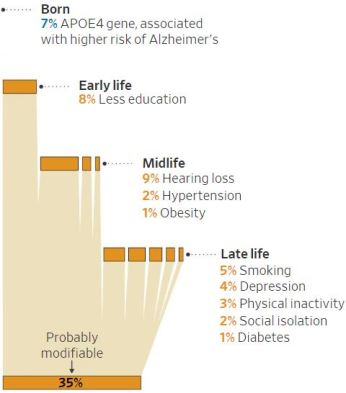
In fact, according to a recent report commissioned by the Lancet, a medical journal, around 35% of dementia cases might be prevented if people do things including exercising and engaging in cognitively stimulating activities. “When people ask me how to prevent dementia, they often want a simple answer, such as vitamins, dietary supplements or the latest hyped idea,” says Eric Larson, a physician at Kaiser Permanente in Seattle and one of a group of scientists who helped prepare the report. “I tell them they can take many common-sense actions that promote health throughout life.”

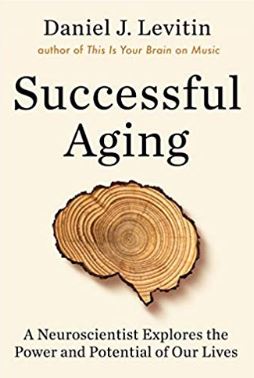 ‘Successful Aging’ uses research from developmental neuroscience and the psychology of individual differences to show that sixty-plus years is a unique developmental stage that, like infancy or adolescence, has its own demands and distinct advantages. Levitin looks at the science behind what we all can learn from those who age joyously, as well as how to adapt our culture to take full advantage of older people’s wisdom and experience. Throughout his exploration of what aging really means, Levitin reveals resilience strategies and practical, cognitive enhancing tricks everyone should do as they age.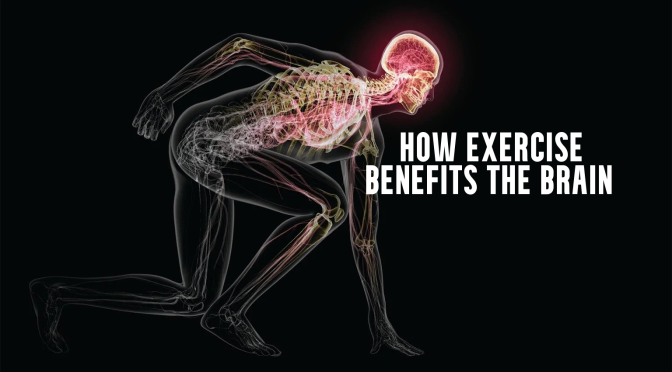
 In our own study of more than 7,000 middle-aged to older adults in the U.K., published in 2019 in Brain Imaging and Behavior, we demonstrated that people who spent more time engaged in moderate to vigorous physical activity had larger hippocampal volumes. Although it is not yet possible to say whether these effects in humans are related to neurogenesis or other forms of brain plasticity, such as increasing connections among existing neurons, together the results clearly indicate that exercise can benefit the brain’s hippocampus and its cognitive functions.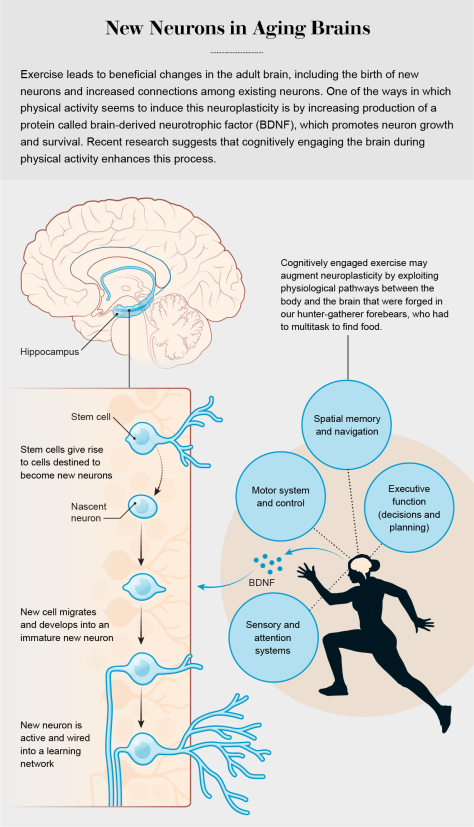

 “There are two important takeaways from this paper. One is that poor sleep is associated with brain immune dysregulation or dysfunction,” says Lim, the corresponding author for the paper.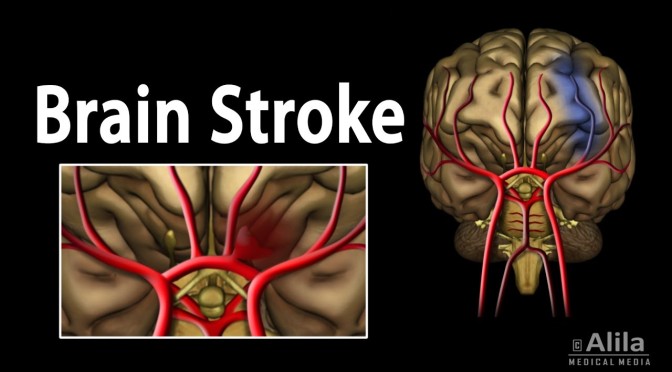
 As a consultant, I had profoundly failed to appreciate the experience of fatigue and apathy among patients. More than excessive tiredness, the fatigue was overwhelming, turning simple activities into insurmountable, exhausting challenges. It was frustrating and I fell into the trap of overexertion when I did have energy, thus exhausting myself and sabotaging the day’s recovery plan. Had staff not been so adept at encouraging me when I lacked energy and holding me back when I tried to overdo things, I would have squandered much valuable rehabilitation time.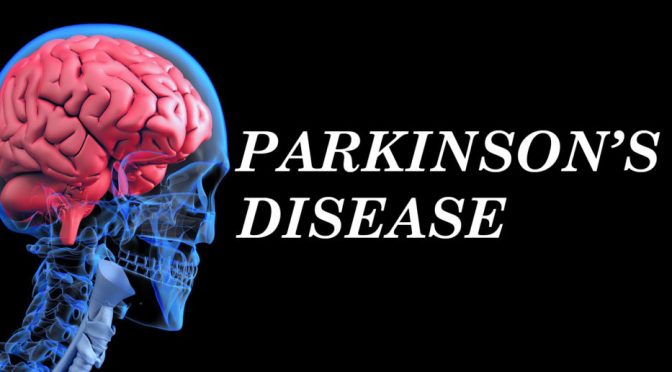
 “The link between antibiotic exposure and Parkinson’s disease fits the current view that in a significant proportion of patients the pathology of Parkinson’s may originate in the gut, possibly related to microbial changes, years before the onset of typical Parkinson motor symptoms such as slowness, muscle stiffness and shaking of the extremities. It was known that the bacterial composition of the intestine in Parkinson’s patients is abnormal, but the cause is unclear. Our results suggest that some commonly used antibiotics, which are known to strongly influence the gut microbiota, could be a predisposing factor,” says research team leader, neurologist Filip Scheperjans MD, Ph.D. from the Department of Neurology of Helsinki University Hospital.
 “These results show quite clearly that there’s a very specific part of the brain network that’s affected by inflammation,” noted Mazaheri. “This could explain ‘brain fog’.”
 Boomers Daily