
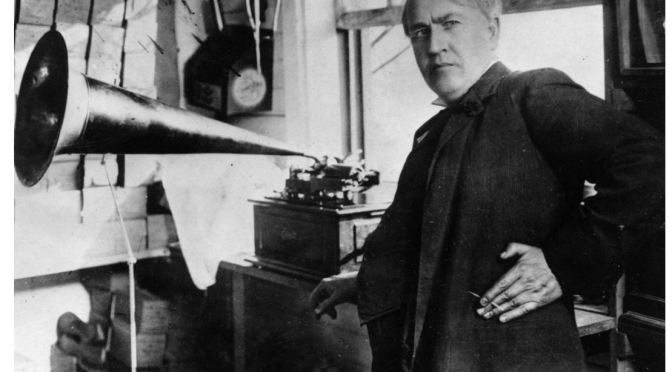
From a Wall Street Journal online review:
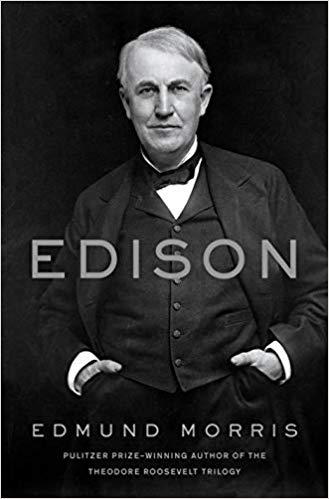 Not until July 16 did Edison feel that he had a device worth patenting. The application he signed that day specified multiple timpani that “reproduced” vocal inflections and a sibilant-sensitive diaphragm. But a laboratory visitor (spying for Bell) found the instrument more powerful than clear, with the word schism sounding more like kim.
“We have had terrible hard work on the Speaking telegraph,” Batchelor complained to his fellow inventor Ezra Gilliland. For the past five to six weeks, he added, Edison’s team had been “frequently working 2 nights together until we all had to knock off from want of sleep.”
Thomas Alva Edison’s self-proclaimed greatest invention, the phonograph, won him overnight fame. Journalists would marvel that such an acoustic revolution, adding a whole new dimension to human memory, could have been accomplished by a man half deaf in one ear and wholly deaf in the other.
In February 1877, the same month that saw Edison turn 30 and show his first streaks of silver hair, he and his fellow inventor Charles Batchelor began a new series of experiments on what they called, variously, the “telephonic telegraph,” the “speaking telegraph” and the “talking telephone.”
To read more: https://www.wsj.com/articles/the-making-of-thomas-edisons-miraculous-machine-11571324989

 A Booklover’s Guide to New York, by Cleo Le-Tan, with drawings by Pierre Le-Tan (Rizzoli)
 “Agent Running in the Field” is narrated by Nat, a 47-year-old spy for British intelligence—known not as “the Circus” of yore but, more prosaically, as “the Office”.
 Whereas most Wright biographies build from one structure to the next, this one caroms from one digression to the next. Mr. Hendrickson spins miniature biographies of the people who commissioned Wright to build their homes and office buildings. An array of midcentury figures appears: e.g., Glenway Wescott, the novelist and poet who rubbed shoulders with Gertrude Stein in Paris and whose sister commissioned one of Wright’s homes; and Clarence Darrow, the renowned lawyer, who waded into the murk of Wright’s personal life when a disgruntled housekeeper attempted to use the Mann Act to have Wright arrested. We also meet the little-known residents of various structures. Seth Peterson, for instance, dreamed of living in a Wright home so powerfully that he camped out in the one he commissioned as it was being built.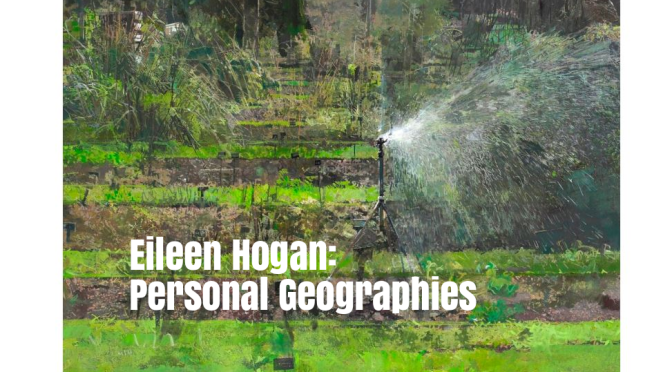
 I describe myself as an urban-based painter who is interested in green spaces. Painting and drawing have been seen as profoundly unfashionable for most of my working life, and I have felt sometimes that it was quite eccentric to be a figurative painter with conventional subject matter. Looking back, my insistence on maintaining my practice as a figurative painter now seems more radical than conventional.
 I was very blessed to have the opportunity to catch up with Hogan ahead of her Mayfair exhibition. I find myself entranced by her vibrant paintings that are dense with detail, filling the canvas from edge to edge with layers upon layers of paint. She has also established portraiture practice, her commissions including HRH The Prince of Wales. In a unique style, Hogan paints her sitters whilst they are deep in conversation, capturing unguarded gestures and expressions to create intricate portraits of both honesty and intimacy.
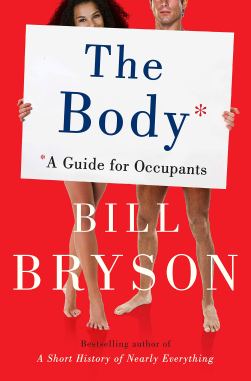 The single most astounding thing I found was that if you took all your DNA and formed it into a single fine strand, it would stretch to Pluto. I don’t think I’ve ever come across a fact that blew me away more than that — that there’s enough of me or you or anyone else to stretch to Pluto. There’s 10 billion miles of DNA inside you. That just seems unbelievable. The surprise is not that there’s so much to understand about the body but that we understand as much as we do.

 America’s most storied urban underdog, Brooklyn has become an internationally recognized brand in recent decades—celebrated and scorned as one of the hippest destinations in the world. In Brooklyn: The Once and Future City, Thomas J. Campanella unearths long-lost threads of the urban past, telling the rich history of the rise, fall, and reinvention of one of the world’s most resurgent cities.
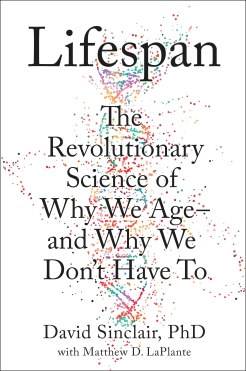 Lifespan, by geneticist David Sinclair and journalist Matthew LaPlante, provides a vision of a not-too-distant future in which living beyond 120 will be commonplace. For Sinclair and LaPlante, the answer lies in understanding and leveraging why we age…
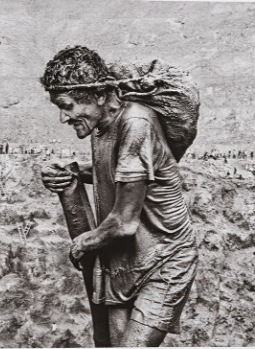 “Salgado’s photographs project an immediacy that makes them vividly contemporary. We know that the mine at Serra Pelada is now closed, yet the intense drama of the gold rush leaps out of these images.”
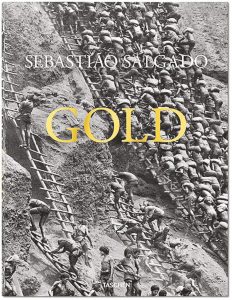 some 50,000 diggers in appalling conditions. Today, Brazil’s gold rush is merely the stuff of legend, kept alive by a few happy memories, many pained regrets—and
  Boomers Daily