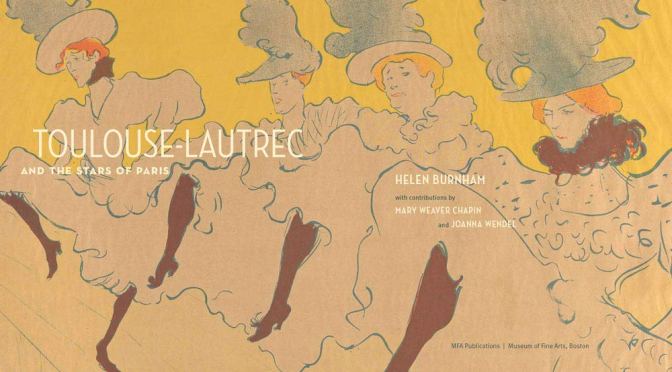
Curator Helen Burnham, Pamela and Peter Voss Curator of Prints and Drawings, introduces us to the celebrities of 19th-century Paris made famous by Henri de Toulouse-Lautrec and his contemporaries. The exhibition features the rich holdings of the MFA and its organizing partner, the Boston Public Library.
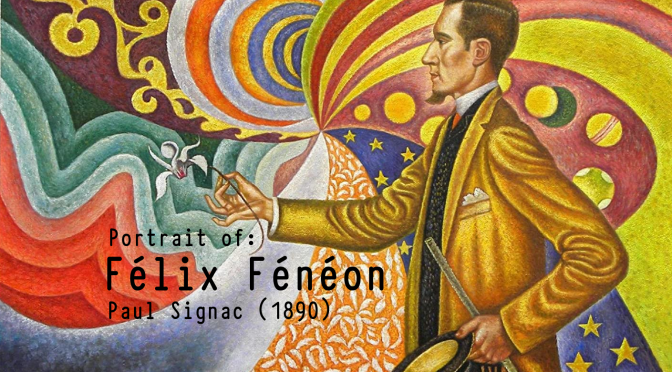
“It would not be a commonplace portrait at all, but a carefully composed picture, with very carefully arranged colors and lines. A rhythmic and angular pose. A decorative Félix, entering with his hat or a flower in his hand.”
With these words, in 1890, Paul Signac described to Félix Fénéon the extraordinary portrait he was dedicating to him. In it, Signac paid homage to Fénéon’s distinctive appearance, his generous but enigmatic personality, and his innovative approach to modernism.
This painting, a masterpiece in the Museum’s collection, will be the centerpiece of Félix Fénéon, the first exhibition dedicated to Fénéon (1861–1944). An art critic, editor, publisher, dealer, collector, and anarchist, Fénéon had a wide-ranging influence on the development of modernism in the late 19th and early 20th centuries.
In the late 1880s, he played a key role in defining the new movement known as Neo-Impressionism, a term he coined himself, whose artists, including Signac, used tiny dabs of color that would mix in the eye of the viewer. Over the next five decades, he championed the careers of artists from Georges-Pierre Seurat and Signac to Pierre Bonnard, Henri Matisse, and Amedeo Modigliani.
He amassed a renowned collection of paintings by these artists and many others, and he was also a pioneering collector of art from Africa and Oceania. The exhibition will feature some 130 objects, including major works that Fénéon admired, championed, and collected, as well as contemporary photographs, letters, and publications that trace key chapters in his biography. Together these works reveal the profound and lasting legacy of Fénéon’s keen eye and bold, forward-looking vision.
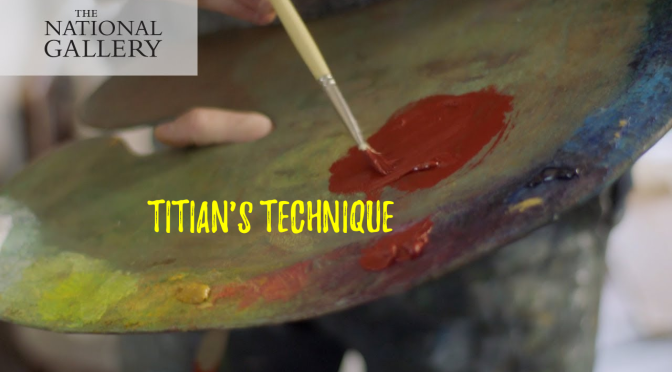
The way Titian painted was unlike other artists of his day. With little in the way of preliminary drawings, Titian worked very freely straight onto the canvas. Watch artist Andy Pankhurst show us how Titian would have worked.
Tiziano Vecelli or Vecellio, known in English as Titian, was an Italian painter during the Renaissance, considered the most important member of the 16th-century Venetian school. He was born in Pieve di Cadore, near Belluno. During his lifetime he was often called da Cadore, ‘from Cadore’, taken from his native region.
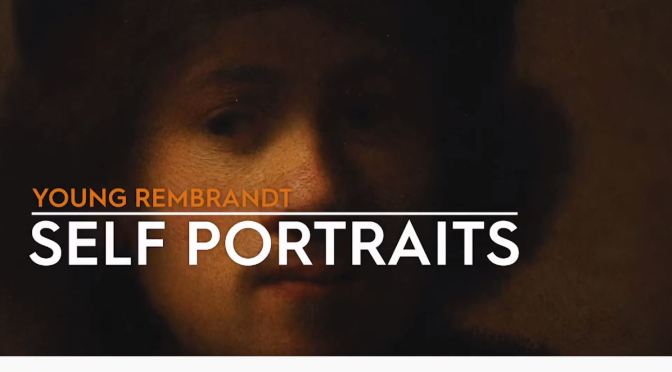
Rembrandt Harmenszoon van Rijn; 15 July 1606 – 4 October 1669) was a Dutch draughtsman, painter, and printmaker. An innovative and prolific master in three media, he is generally considered one of the greatest visual artists in the history of art and the most important in Dutch art history. Unlike most Dutch masters of the 17th century, Rembrandt’s works depict a wide range of style and subject matter, from portraits and self-portraits to landscapes, genre scenes, allegorical and historical scenes, and biblical and mythological themes as well as animal studies. His contributions to art came in a period of great wealth and cultural achievement that historians call the Dutch Golden Age, when Dutch art (especially Dutch painting), although in many ways antithetical to the Baroque style that dominated Europe, was extremely prolific and innovative and gave rise to important new genres. Like many artists of the Dutch Golden Age, such as Jan Vermeer of Delft, Rembrandt was also an avid art collector and dealer.
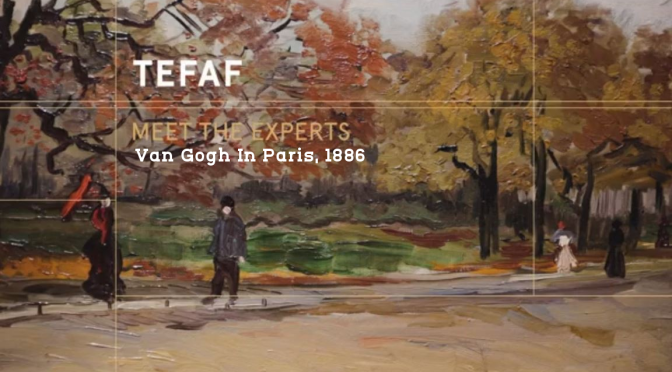
TEFAF’s Meet the Experts presents Howard Shaw from Hammer Gallery shares what Van Gogh would have most likely seen when he visited Paris in 1886. This period of Van Gogh’s life is pivotal to his works as an artist.
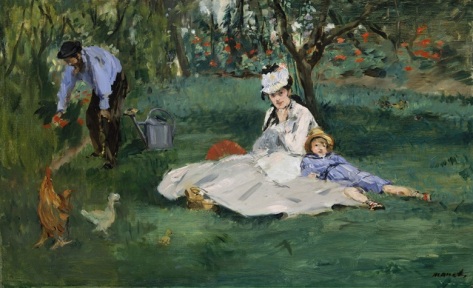
Joining an already impressive collection of Scandinavian art, one of the first French paintings Hansen acquired was Woman with a Fan, Portrait of Madame Marie Hubbard (1874) by Berthe Morisot. This gently ironic work set the tone for his perceptive and adventurous collecting style.
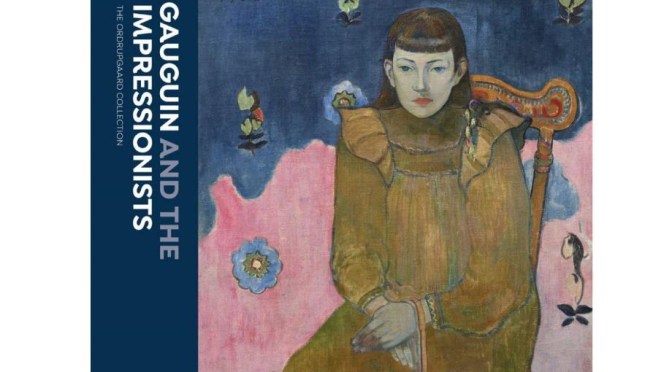
Drawn from the remarkable Ordrupgaard Collection of the Danish insurance broker and art lover Wilhelm Hansen, the masterpieces of 19th-century French painting in this volume represent the very best of French impressionism.
A burst of acquisitions from 1916 to 1918, during which he took advice from the influential critic Théodore Duret, saw his collection grow to include works by Cézanne, Courbet, Gauguin, Manet, Matisse, Monet, Renoir and Sisley.
With stunning reproductions of 60 works, the authors explore the history of the collection and provide detailed analysis of the works themselves.
Explore the exhibition “El Greco: Ambition and Defiance” with curator Rebecca Long and research associate Jena Carvana. Follow along as they lead you through the galleries and share some of the reasons El Greco and his work continue to fascinate us.
Take a visual journey into the mind of Michelangelo, a painter, sculptor, architect, draftsman, and one of the most creative and influential artists in the history of Western art. See how he used drawings to create, explore, and prepare for some of his most famous works of art. Produced for the J. Paul Getty Museum’s exhibition, “Michelangelo: Mind of the Master.” https://www.getty.edu/art/exhibitions…
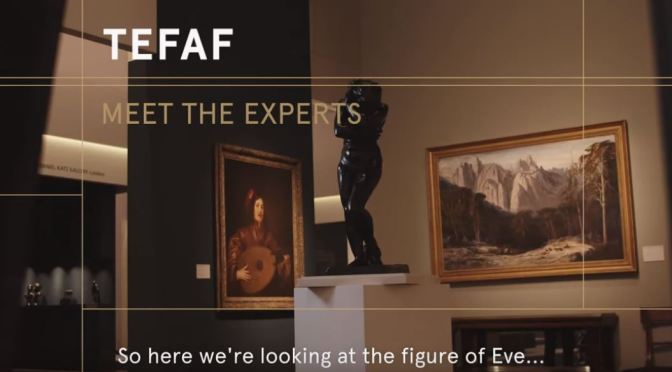
John Swarbrooke from Dickinson Gallery explains the beauty and play of light behind the cast of Auguste Rodin’s Eve.
François Auguste René Rodin (12 November 1840 – 17 November 1917) was a French sculptor. Although Rodin is generally considered the progenitor of modern sculpture, he did not set out to rebel against the past. He was schooled traditionally, took a craftsman-like approach to his work, and desired academic recognition, although he was never accepted into Paris’s foremost school of art.
Eve is a nude sculpture by the French artist Auguste Rodin. It shows Eve despairing after the Fall.
n 1880 Rodin was commissioned to produce The Gates of Hell, for which he exhibited Adam at the 1881 Paris Salon. In a sketch for Gates Rodin showed a central silhouette possibly intended as Eve (both the sketch and Gates are now in the Musée Rodin), but in October 1881 he decided to produce Eve as a pair for Adam, with the two sculptures flanking a huge high-relief bas-relief. This would be the first free-standing female sculpture he had produced since the destruction of his Bacchante in an accident between 1864 and 1870. He began Eve in 1881, later abandoning his intended colossal version of it when he realised his model, probably Adèle Abruzzesi, was pregnant. It was first exhibited to the public at the 1899 Paris Salon. It shows a strong influence from Michelangelo, picked up by Rodin in Italy in 1876.
He also produced an autograph white marble version in 1884 (now in the Museo Soumaya in Mexico City), a version in patinated plaster and a much-reproduced 71 cm high bronze version in 1883 (known as the Petite Ève or Little Eve, whose original is also in the Musée Rodin in Paris). He also reused the same figure of Eve in his marble Eve and the Serpent (1901) and his plaster Adam and Eve (1884).

 art lover Wilhelm Hansen, the masterpieces of 19th-century French painting in this volume represent the very best of French impressionism.

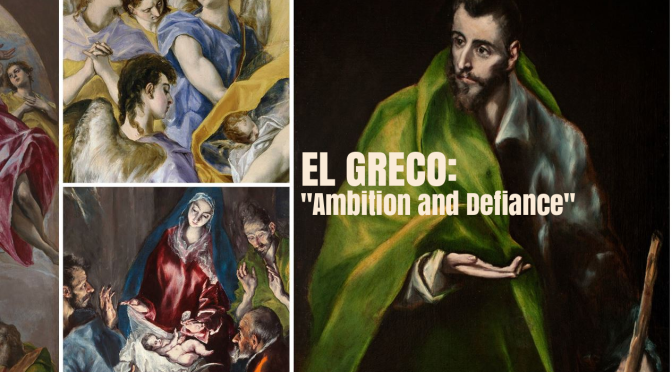
 Explore the exhibition “El Greco: Ambition and Defiance” with curator Rebecca Long and research associate Jena Carvana. Follow along as they lead you through the galleries and share some of the reasons El Greco and his work continue to fascinate us.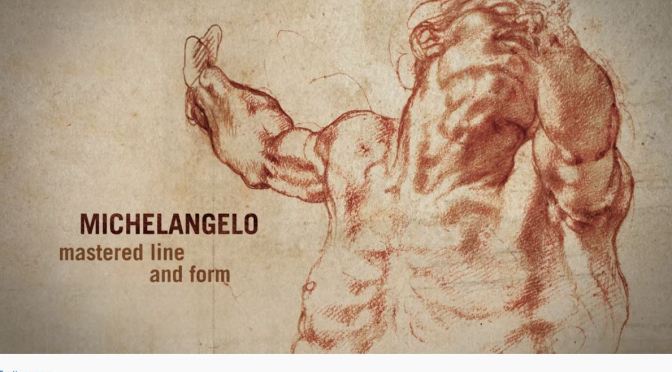
 Boomers Daily