
From an Apollo Magazine online article (March 31, 2020):
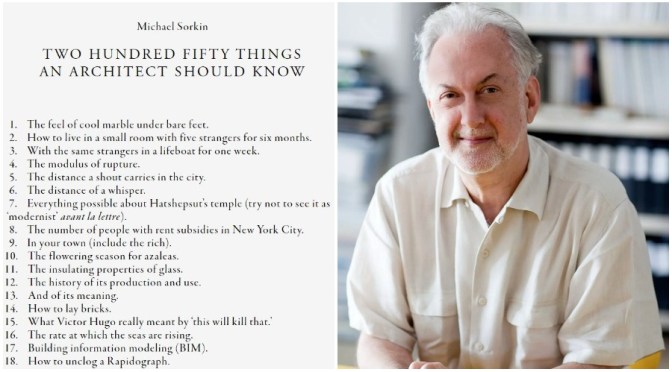
 Ultimately he was a humane critic of the contemporary city, a serious, funny and poetic voice defending the powerless against big capital and an articulator of how architecture should be used as a tool of resistance. He is indelibly associated with New York, a city he loved with a fervour despite its faults, and of which he defended every inch as a public good. Number 210 in his list was the medieval German phrase ‘Stadtluft macht frei’ – ‘city air makes you free’. He will survive through his magical writing, which makes us all a little freer.
Michael Sorkin, who died last week of complications due to Covid-19, gained his reputation as the architecture critic of The Village Voice in New York, which, in the 1980s, was a publication with a formidable reach and impact on a city just beginning to boom again. He launched fierce attacks against the banality of the contemporary city, the rapacity and greed of developers (notably the current president, including in a 1985 piece entitled ‘Dump the Trump’) and the loss of great landmarks. But he was no nostalgist; he revelled in the potential of architecture to catalyse change and excoriated his contemporaries for caving in to big business, for building prisons and being complicit in a denuded public realm.
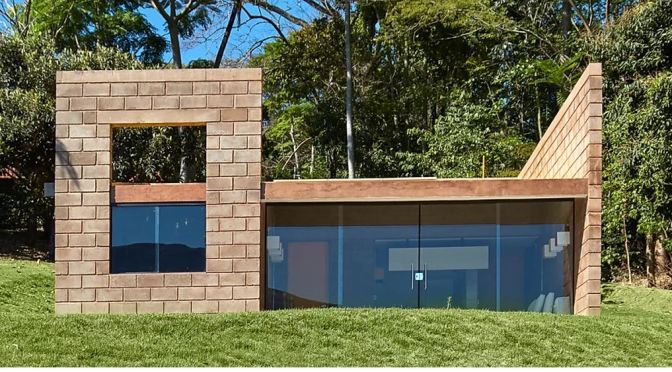
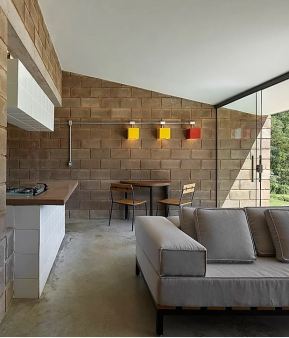 “Our SUSTAINABLE HOME is made of matter and spirit. The raw material, the unused by-products of the mining activity, is the main component: from it we take advantage of its qualities and properties. Finding an ecologically suitable use for this waste determines the unique character of the housing unit. In its spirit, the housing unit intends, in addition to its technical function, to be a home, a place for each person to feel valued, welcomed in their dreams, hopes and desire to live together. Each house, even in its simplicity, must be able to create a sense of pride and self-esteem ”, adds Gustavo Penna.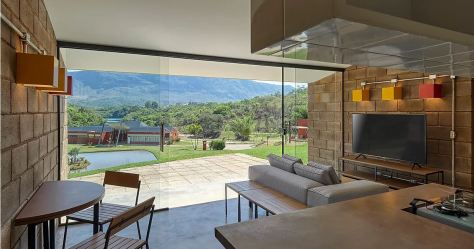
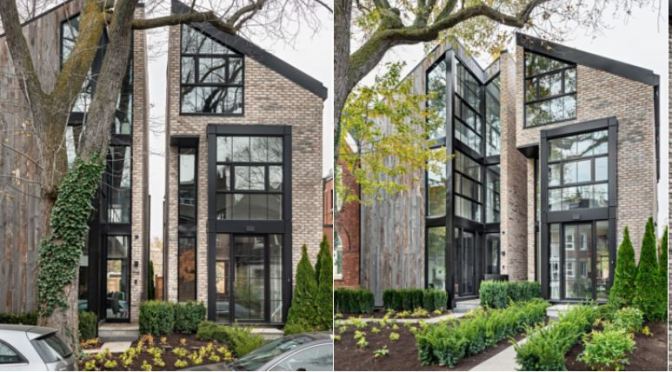
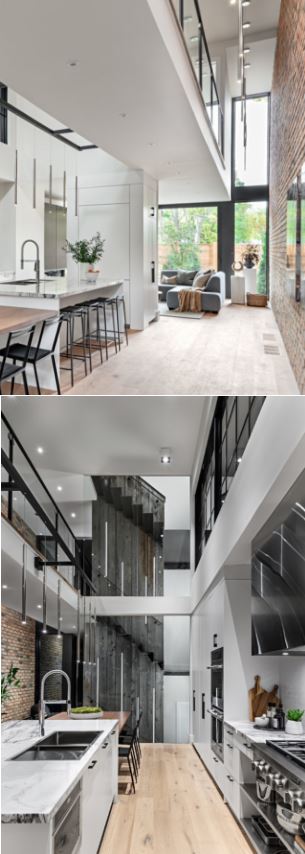 “The detached homes have been conceptualised to visually appear as one single volume defined by its traditional triangular architecture,” said the studio. “Only from up close will the observer notice a crisp breakpoint between the properties.”
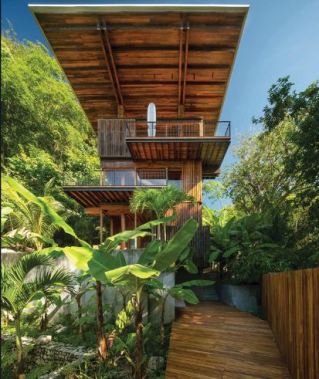 Striking, innovative, and dramatically sited, the twenty-nine projects in Tom Kundig: Working Title reveal the hand of a master of contextually astute, richly detailed architecture. As Kundig’s work has increased in scale and variety, in diverse locations from his native Seattle to Hawaii and Rio de Janeiro, it continues to exhibit his signature sensitivity to material and locale and to feature his fascinating kinetic “gizmos.”
 In a leafy Boston suburb, a place to park cars and repair vintage scooters grows into a bucolic sanctuary.
 Underappreciated in her lifetime, the career of late Irish architect and designer Eileen Gray is the subject of a timely new exhibition at The Bard Graduate Center Gallery in New York. Jennifer Goff, curator of the Eileen Gray collection at the National Museum of Ireland, tells us more.
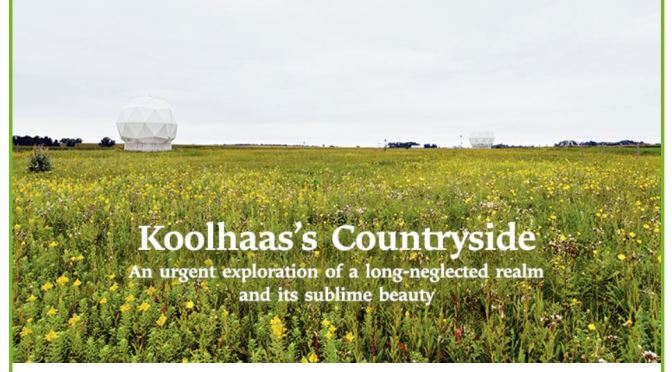
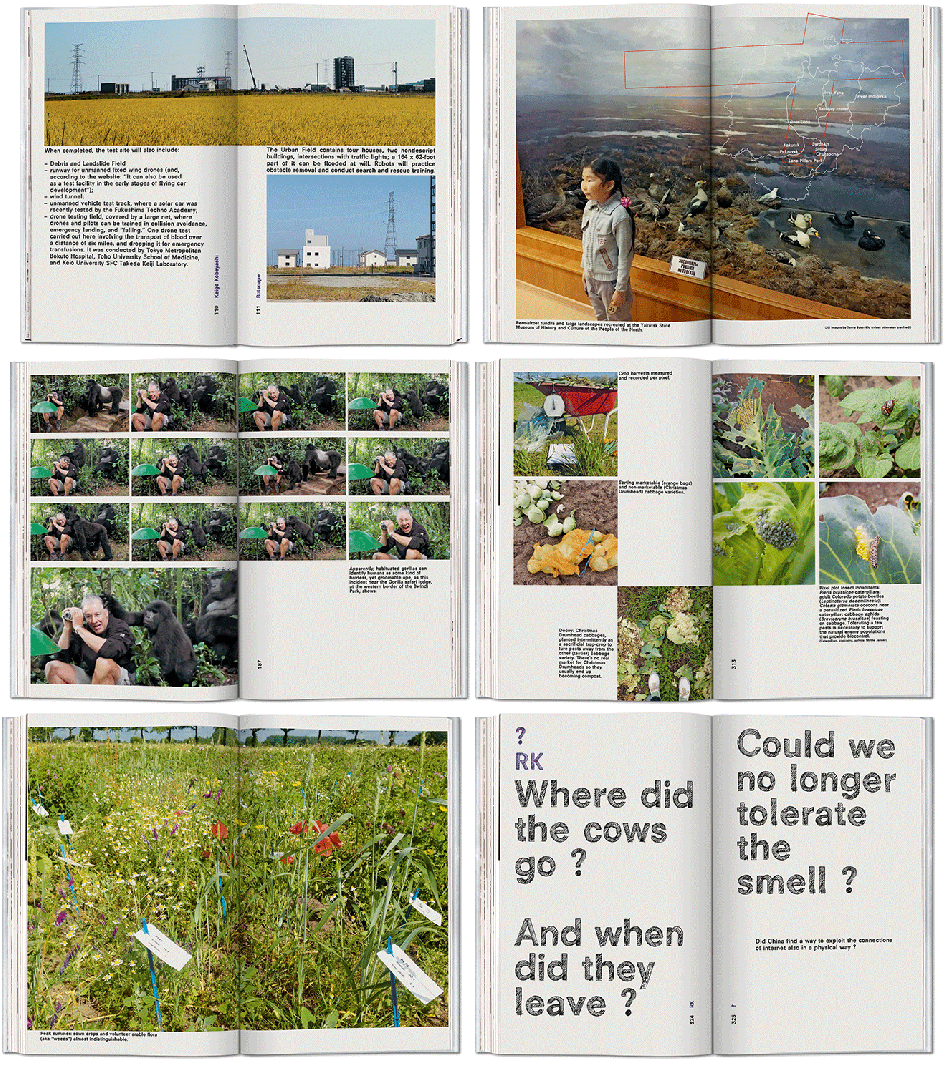
 In his latest publication, Rem Koolhaas explores the rapid and often hidden transformations underway across the Earth’s vast non-urban areas.Countryside, A Report gathers travelogue essays exploring territories marked by global forces and experimentation at the edge of our consciousness: a test site near Fukushima, where the robots that will maintain Japan’s infrastructure and agriculture are tested; a greenhouse city in the Netherlands that may be the origin for the cosmology of today’s countryside; the rapidly thawing permafrost of Central Siberia, a region wrestling with the possibility of relocation; refugees populating dying villages in the German countryside and intersecting with climate change activists; habituated mountain gorillas confronting humans on ‘their’ territory in Uganda; the American Midwest, where industrial-scale farming operations are coming to grips with regenerative agriculture; and Chinese villages transformed into all-in-one factory, e-commerce stores, and fulfillment centers.
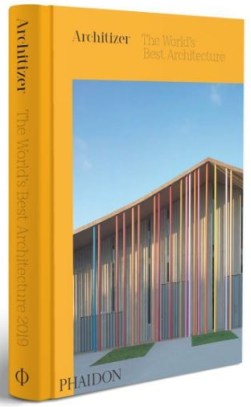 The Architizer A+Awards represent 2019’s best architecture and products, celebrated by a diverse group of influencers within and outside the architectural community. Entries are judged by more than 400 luminaries from fields as diverse as fashion, publishing, product design, real-estate development, and technology, and voted on by the public, culminating in a collection of the world’s finest buildings.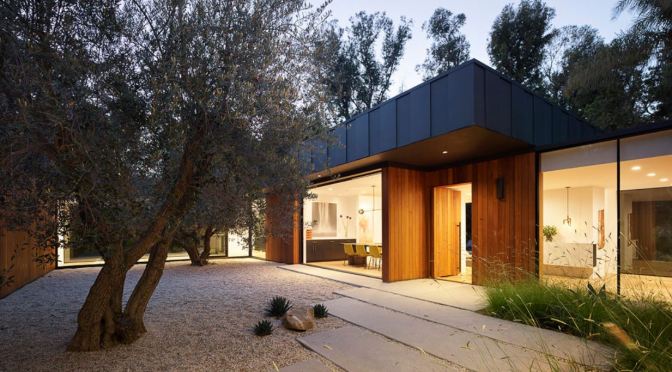
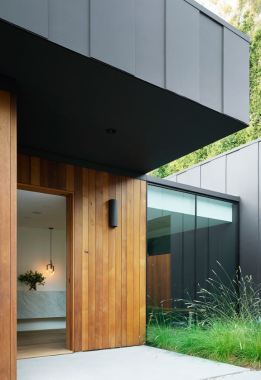 The Western Red Cedar lined guest house/garage pavilion establishes a datum line that carves and connects the two larger volumes of the living and sleeping pavilions, comprised of oversized charcoal-colored board, batten extira and cement board siding. A deep overhang mitigates solar heat gain and shields from the sun exposure.
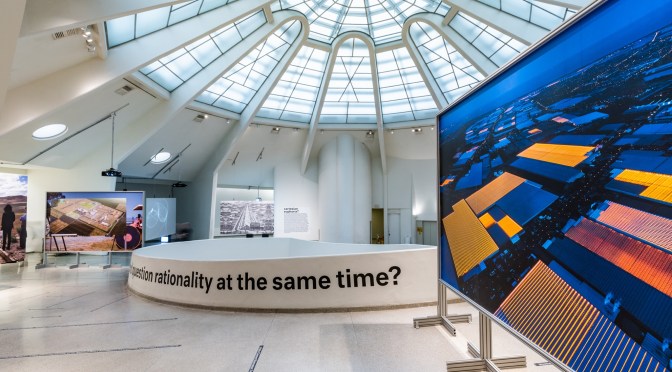
 by AMO, Koolhaas, with students at the Harvard Graduate School of Design; the Central Academy of Fine Arts, Beijing; Wageningen University, Netherlands; and the University of Nairobi. The exhibition will examine the modern conception of leisure, large-scale planning by political forces, climate change, migration, human and nonhuman ecosystems, market-driven preservation, artificial and organic coexistence, and other forms of radical experimentation that are altering landscapes across the world.
 Boomers Daily