Tag Archives: Analysis

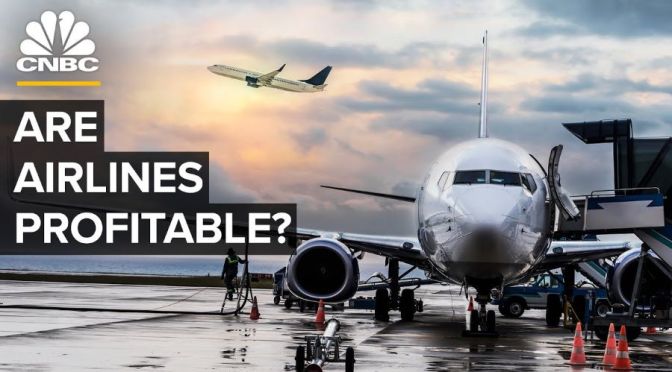
Analysis: Why Airlines Aren’t More Profitable

Passenger airlines are a crucial industry in the global economy, but the sector is also extremely volatile. Running a passenger airline is an asset-intensive industry with narrow profit margins.

Despite the risks, the industry has experienced some periods of consistent growth, which can lull investors into a false sense of security. Watch the video above to learn whether investors should steer clear of the sector and why passenger airlines struggle to stay profitable.

Video timeline: 0:00 – Introduction 1:35 – Industry shocks 6:16 – Business models 8:28 – Deregulation and consolidation 12:55 – Industry outlook

Billionaire investor Warren Buffett once called himself an “air-o-holic” because of how tempted he is to invest in commercial airlines. But he learned the hard way, twice, that the industry can be a risky bet. Airline stocks have been on a wild ride since the beginning of the pandemic, which shows just how volatile the sector can be. “It seems that airlines once or twice a decade are hit with these really hard-to-process exogenous shocks, whether it’s something like 9/11 or the Great Recession,” said Adam Gordon, managing director and partner at Boston Consulting Group’s Airline Practice. The passenger airline industry is already asset-intensive, with narrow profit margins. Despite the risks, the industry has experienced some periods of consistent growth. Airlines saw big growth in profits for about a decade prior to Covid, which analysts attribute to the airlines restructuring post-9/11. These periods can lull investors into a false sense of security. In 2017, the CEO of American Airlines said he was confident the business was never going to lose money again. Airline stocks may be appealing to investors because the industry is crucial to the global economy. “If you just step back and you think about what service airlines are offering, they’re putting you in a metal tube, taking you up to 40,000 feet, and transporting you in relative or absolute comfort at hundreds of miles an hour to get from point A to point B. And if you think about the substitutes for that service, like, there really aren’t any,” said Gordon. “So it’s kind of surprising to me that an industry that delivers that kind of a service and does it with an absolutely impeccable operational and safety record is able to come under such pressure,” he added.
Analysis: Russia’s New Era Of Repression, Assisted Dying, Bananas In Turkey

A selection of three essential articles read aloud from the latest issue of The Economist. This week, the consequences of Russia’s new era of repression, why too many are still denied the right to die assisted dying (09:19) and why Turkey is deporting refugees for eating bananas (17:09).

Watch The Economist’s new documentary film, “Fearless: the women fighting Putin”

Views: What 24 Hours In The Metaverse Feels Like

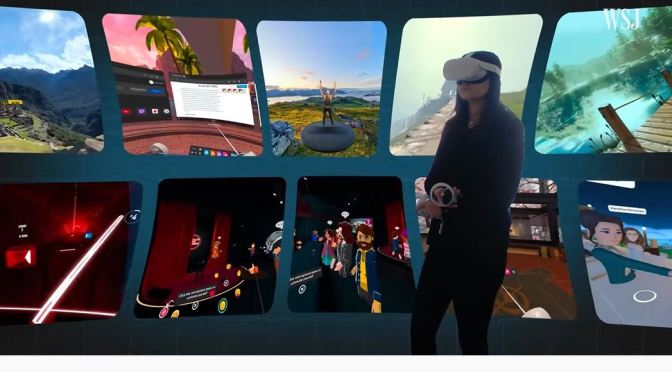
Everyone is blabbing about the metaverse. But what does this future digital world look like? WSJ’s Joanna Stern checked into a hotel and strapped on a virtual-reality headset for the day. She went to work meetings, hung out with new avatar friends and attended virtual shows. Photo illustration: Tammy Lian / The Wall Street Journal

Analysis: Why Dental Care Costs So Much In The U.S.

Americans have a tendency to avoid the dentist. More than 40% of Americans said they don’t see a dentist as often as they would like, according to a 2018 survey by the American Dental Association.

Their number one reason for skipping visits is cost, even among those with dental insurance. Dental insurance policies can be confusing and difficult to use, making some Americans wonder whether dental insurance is worth investing in at all. Watch the video to find out to learn what it actually costs to go to the dentist, whether dental insurance is worth investing in and what patients and policymakers can do about it.

Chapters 0:00 – Introduction 1:42 – How dental insurance works 4:15 – Dental care costs 6:17 – Is dental insurance worth it? 9:49 – Solutions Americans have a tendency to avoid the dentist. More than 40% of Americans said they don’t see a dentist as often as they would like, according to a 2018 survey by the American Dental Association. People have lots of reasons for not going, including fear, inconvenience and trouble finding a dentist who take their insurance. But the top reason Americans cite for avoiding the dentist is cost, with nearly 60% of Americans saying cost was the main reason they haven’t visited the dentist in the past 12 months. Cost remained the number one reason regardless of age, income level or type of insurance. Dental insurance can be confusing since it’s considered a separate service from medical insurance, which means it has different policies and procedures that many patients are not familiar with. From a lack of transparency about benefits to rules like annual maximums — which means plans stop paying for treatment after hitting a certain amount for the year — some patients question whether dental insurance is worth investing in at all. “There’s this misnomer that you need dental insurance to go to the dentist, you really don’t,” said Dr. Mark Vitale, a general dentist and owner of Edison Dental Arts in Edison, New Jersey. “Dental insurance is not the panacea that most people think it is.” But the industry landscape is shifting as more traditional health insurance companies are supplementing their medical plans with dental benefits. “Dental insurance is extremely profitable to the insurance companies, which is why many of the insured many of the major carriers offer dental insurance,” Vitale said.

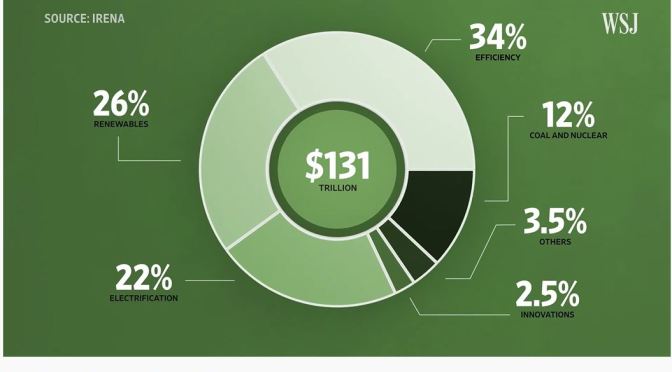
Analysis: $131 Trillion To Reduce Global Warming

Money is a sticking point in climate-change negotiations around the world. As economists warn that limiting global warming to 1.5 degrees Celsius will cost many more trillions than anticipated, WSJ looks at how the funds could be spent, and who would pay. Illustration: Preston Jessee/WSJ

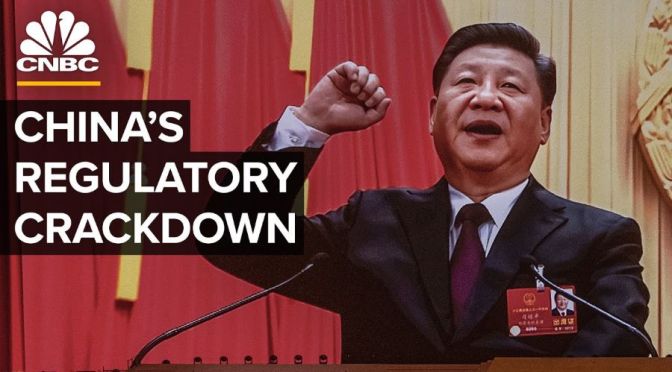
Analysis: China’s New Regulations On Tech

Big Tech, real estate, and even video games are being targeted by new regulations in China. This regulatory upheaval could be yet another sign that Xi Jinping and the Chinese Communist Party is trying to reign in the business sector.

News & Analysis: Real-Time Economics, Tumult In Nigeria, Corporations

A selection of three essential articles read aloud from the latest issue of The Economist. This week, the real-time revolution transforming economics, how insurgency, secessionism and banditry threaten Nigeria (10:06) and our Bartleby columnist on why corporate mission statements deserve more than an eye-roll (17:39).

Covid-19: How BioNTech Used Its Cancer Research To Create A Vaccine (CNBC)

Over a month and a half before the World Health Organization officially declared a pandemic, BioNTech CEO Uğur Şahin met with his wife, BioNTech’s co-founder and chief medical officer Özlem Türeci, and together they agreed to redirect most of the company’s resources to developing a vaccine. Up until that point, BioNTech was little-known internationally and primarily focused on developing novel cancer treatments. The founders were confident in the potential of their mRNA technology, which they knew could trigger a powerful immune response. That confidence wasn’t necessarily shared by the broader medical community. No mRNA vaccine or treatment had ever been approved before. But the couple’s timely breakthrough was actually decades in the making. CNBC spoke with Şahin and Türeci about how they, along with Pfizer, created a Covid-19 vaccine using mRNA.

Analysis: The Cargo Ship Congestion In Los Angeles

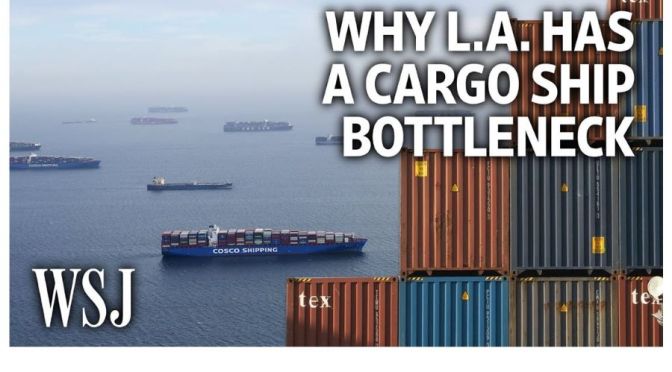
California’s Port of Los Angeles is struggling to keep up with the crush of cargo containers arriving at its terminals, creating one of the biggest choke points in the global supply-chain crisis. This exclusive aerial video illustrates the scope of the problem and the complexities of this process. Photo: Thomas C. Miller