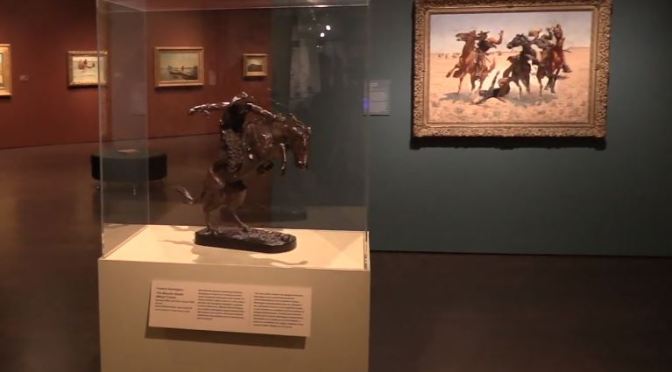
While the Denver Art Museum is temporarily closed, we are sharing this look at the Homer and Remington exhibition. Hear from DAM curators Thomas Brent Smith and Jennifer R. Henneman.

While the Denver Art Museum is temporarily closed, we are sharing this look at the Homer and Remington exhibition. Hear from DAM curators Thomas Brent Smith and Jennifer R. Henneman.
From Christie’s article (April 16, 2020):
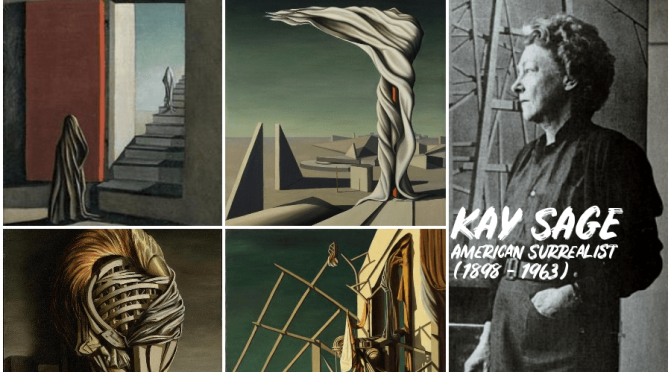
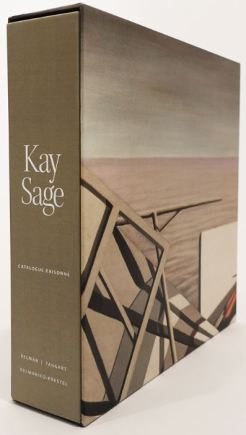 Sage is renowned for her empty, enigmatic, eerily lit landscapes. Human figures are markedly absent — their presence felt only by the monolithic, architectural structures and unidentifiable, draped objects they seem to have left behind. In this respect, 1945’s Other Answers is a quintessential Sage painting.
In 1939, with clouds of war hovering over Europe, Kay Sage returned to the United States after more than two decades away. Her lover and fellow Surrealist, Yves Tanguy, soon followed her across the Atlantic, despite the fact that both of them were married to other people. In Sage’s case to an Italian prince — her official title was La principessa di San Faustino.
 In the summer of 1940, Sage had her first solo show, at the influential Pierre Matisse Gallery in Manhattan. Then, in early 1943, she was part of the landmark Exhibition by 31 Women, curated and staged by Peggy Guggenheim in her Art of This Century Gallery.
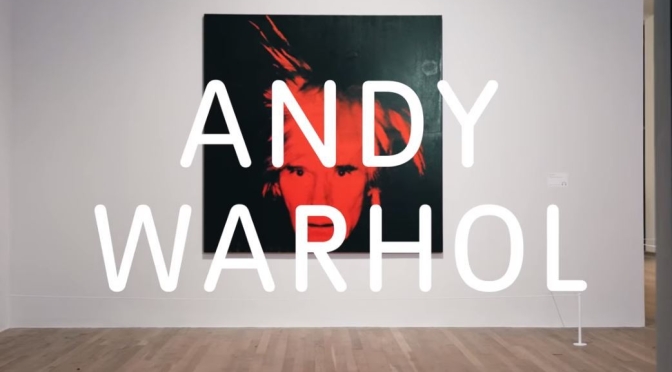
Although our galleries are temporarily closed we wanted to share the Andy Warhol exhibition at Tate Modern with you. Join Tate curators Gregor Muir and Fiontán Moran as they discuss Warhol through the lens of the immigrant story, his LGBTQI identity and concerns with death and religion.
Meet the man behind the brand. It’s a Warhol you might not know, with some artworks you may not have seen before.
Find out more about the exhibition here
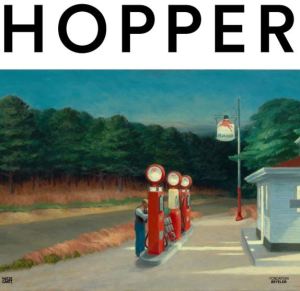 Edward Hopper’s world-famous, instantly recognizable paintings articulate an idiosyncratic view of modern life, unfolding in a world of lonely lighthouses, gas stations, movie theaters, bars and hotel rooms. With his impressive subjects, independent pictorial vocabulary and virtuoso play of colors, Hopper’s work continues to this day to color our memory and imaginary of the United States in the first half of the 20th century.
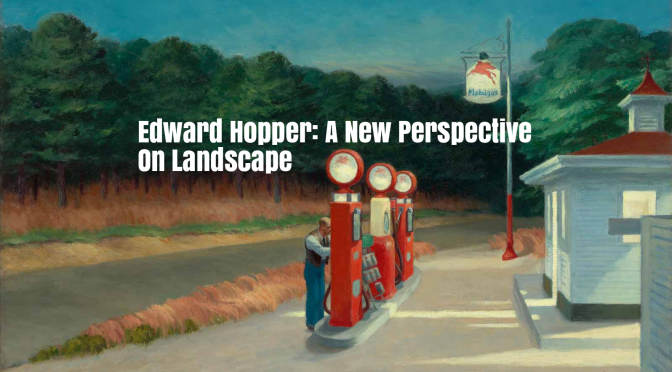
A fresh look at Hopper’s iconic vision of the American landscape—its gas stations, diners and highways.
Hopper began his career as an illustrator and became famous around the globe for his 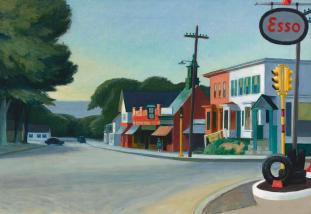 oil paintings. These paintings testify to the artist’s great interest in the effects of color and his mastery in depicting light and shadow, at work whether the artist was painting alienated figures in dreamlike interiors or desolate American landscapes.
Edward Hopper: A New Perspective on Landscape is published to accompany a major exhibition at the Fondation Beyeler of Hopper’s iconic images of the vast American landscape. The catalog gathers together paintings, watercolors and drawings made by the artist between the 1910s and the 1960s, and supplements them with essays by Erika Doss, David Lubin and Katharina Rüppell, focused on the subject of depicting the landscape.
Edward Hopper (1882–1967) was the master of American Realism. His paintings captured the mood and atmosphere of his era. His style of painting and subject matter became the stylistic foundation for a distinct type of American modernism. A source of inspiration for countless painters, photographers and filmmakers, Hopper’s body of work continues to be influential to this day.

“In my paintings, I try to capture the hidden beauty found in the unexpected places and fleeting moments of everyday life. I continue to be intrigued by the urban landscapes of inner cities – their active streets, time worn buildings and multiple layers of decay, renewal and adaptation – that proudly display the effects of age and use, which I see as testaments to strength, character and authenticity in contrast with modern society’s demand for newness, imitation, disposability and easy duplication.
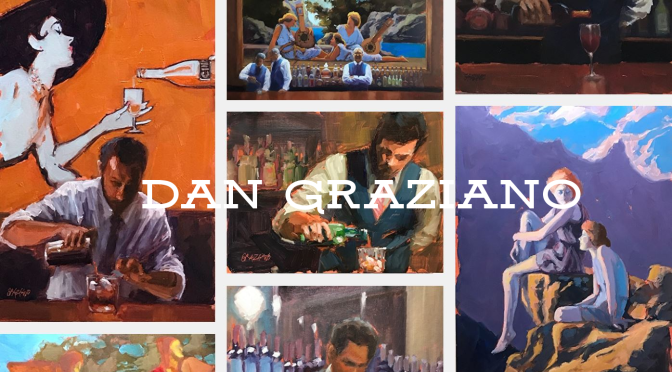
Dan Graziano is an award winning, nationally exhibited artist whose paintings capture the hidden beauty found in the unexpected places and fleeting moments of everyday life. Incorporating dramatic light, shadow, color and perspective, his compositions feature a diversity of subjects – from a simple still life to rugged coastlines, active urban life, lively cafes and bars, small rural towns and forgotten roadside relics. His work has been featured in numerous publications and is in the collections of private and corporate collectors throughout the world.
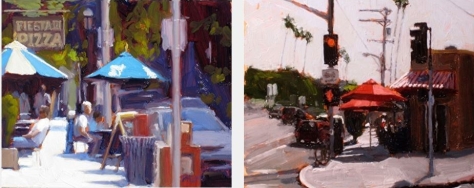
His artistic vision began taking shape in the 60’s, during America’s explosive political, cultural and artistic awakening. His first formal training focused on advertising and illustration, but a career opportunity in architecture and urban planning altered his original direction.
When he returned to painting, he was drawn to the rich complexity of the urban landscape – inspired by Edward Hopper and other urbanist painters. As an accomplished blues guitarist (his other great passion), he found the city streets, time worn buildings and multiple layers of decay and repair a visual parallel to the spirit and culture of the music.
“My work is influenced by the American realists such as Sargent, Hopper and the three generations of Wyeths along with California painters Wayne Thiebaud and Richard Diebenkorn.”
“I draw literally and figuratively from the natural world. My drawing and mark making refer to and derive from botanical and biological anatomies, including marine life, as well as, the structures of both macro and micro cosmologies and writing systems, such as logograms.”
Sigrid Burton is an American painter, long based in New York City, whose semi-abstract work is known for its use of expressive, atmospheric color fields and enigmatic allusions to natural and cultural realms. Burton has had solo exhibitions in New York City, Los Angeles, San Francisco, Chicago and Osaka, including at Artists Space and the Michael C. Rockefeller Arts Center, and been included in shows at A.I.R. Gallery, the John and Mable Ringling Museum of Art, and the Carnegie Art Museum, Oxnard. Her work belongs to the public collections of the Metropolitan Museum of Art, Rockefeller Foundation, and Palm Springs Desert Museum, and has been reviewed in Arts Magazine, Arts & Antiques, Jung Journal, Chicago Tribune and LA Weekly.
Writers most frequently observe that Burton’s atmospheric works recall artists such as J.M.W. Turner, Odilon Redon, Pierre Bonnard and Mark Rothko, as well as the light of her native California. Art & Antiques described her approach as “chromatic expressionism” in which color is “her undisputed protagonist”. Peter Frank observed, “The dialectic between color and form has always inflected, even impelled” Burton’s painting, with color the more omnipresent element, and form the more persistent. Art historian William C. Agee wrote, “The domains she explores […] meet, intersect, fuse, and then disappear, like apparitions, in liquid pools of mist and color. Her pictorial odyssey refers simultaneously to both a higher order, a timeless cosmic vastness, as well as to a private, interior world, abounding in personal histories and memories.” Burton has lived and worked in Pasadena, California since 2013.
From Wikipedia
My paintings on clay panels begin with thin veils of paint that drip, pool and congeal, and like nature, move out of my control, beautifully mysterious. I work intuitively within these initial drips and pools, searching for structure. Each successive stroke of paint or pencil mark continues to build a dreamlike otherworldly place. The mood is one of nature untamed, enchanting and rife with hidden secrets.
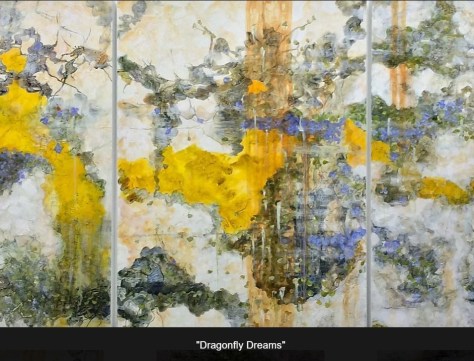
My paintings are my connection to the Earth, its nature and beautiful mysteries.  There is a sadness as I witness the loss of our last wild places. My paintings are an attempt to keep alive those places and offer my audience a sanctuary in which to reflect.
Riitta Klint is from Helsinki, Finland and currently lives in Fort Worth, Texas and maintains a studio in nearby Aledo. Between these two places is a lifetime spent traveling the world thanks to her father’s career with IBM. Living in her native Finland, as well as in Iran, Portugal, Indonesia, Germany, Mexico, and the United States, together with extensive travel in Asia and Europe has shaped her unique vision and palette. Her work offers the viewer a front seat to that journey, and a threshold to cross over into their own imagination.
Klint works primarily in acrylic and pencil on Claybord™, smooth kaolin clay covered panels that offer the ideal surface for her manipulation of color and medium.
From a Wall Street Journal online profile (March 3, 2020):
I had a handful of school friends, including Francis Ford Coppola, who was in the grade behind me. He was known then as Frank. He directed school plays, such as “Finian’s Rainbow.” That’s where I fell in love with the girl. She was a dancer in the cast.
Painting, music and poetry all spoke to me, especially music. I applied to the New England Conservatory of Music in Boston.
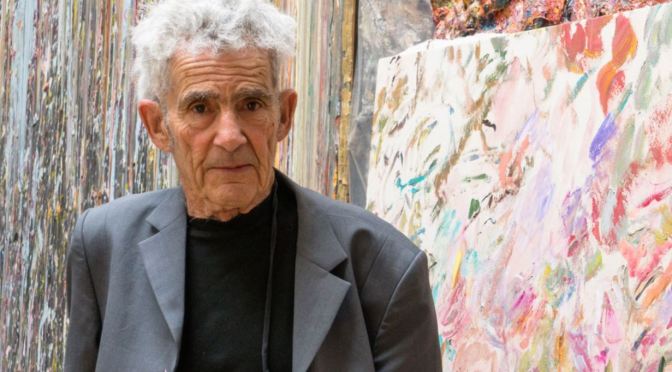
Larry Poons, 82, is an abstract painter best known for his “dot” and “throw” paintings. “Larry Poons” (Abbeville), a book-length monograph of his work from the 1950s to the present, will be published in September. He spoke with Marc Myers.
The first time I painted on canvas board, I was lovesick. I had a crush on a girl in high school and had just finished reading Irving Stone’s Van Gogh biographical novel, “Lust for Life.”
I took my easel to a nearby park and painted trees. As I worked the paint with a small brush, it helped get my feelings out.
George Bellows, Pennsylvania Station Excavation, c. 1907–08, oil on canvas, 79.2 x 97.1 cm (Brooklyn Museum), a Seeing America video.
 Speakers: Dr. Margarita Karasoulas, Assistant Curator, American Art, Brooklyn Museum and Dr. Steven Zucker
George Wesley Bellows (August 12 or August 19, 1882 – January 8, 1925) was an American realist painter, known for his bold depictions of urban life in New York City. He became, according to the Columbus Museum of Art, “the most acclaimed American artist of his generation”.
Bellows first achieved widespread notice in 1908, when he and other pupils of Henri organized an exhibition of mostly urban studies. While many critics considered these to be crudely painted, others found them welcomely audacious, a step beyond the work of his teacher. Bellows taught at the Art Students League of New York in 1909, although he was more interested in pursuing a career as a painter. His fame grew as he contributed to other nationally recognized juried shows.
Bellows’ urban New York scenes depicted the crudity and chaos of working-class people and neighborhoods, and satirized the upper classes. From 1907 through 1915, he executed a series of paintings depicting New York City under snowfall. In these paintings Bellows developed his strong sense of light and visual texture,[14] exhibiting a stark contrast between the blue and white expanses of snow and the rough and grimy surfaces of city structures, and creating an aesthetically ironic image of the equally rough and grimy men struggling to clear away the nuisance of the pure snow. However, Bellows’ series of paintings portraying amateur boxing matches were arguably his signature contribution to art history.[11] They are characterized by dark atmospheres, through which the bright, roughly lain brushstrokes of the human figures vividly strike with a strong sense of motion and direction.
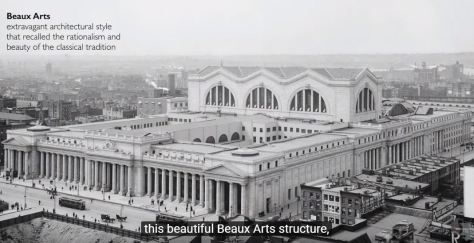
Pennsylvania Station, also known as New York Penn Station or Penn Station, is the main intercity railroad station in New York City and the busiest in the Western Hemisphere, serving more than 600,000 passengers per weekday as of 2019.mPenn Station is in Midtown Manhattan, close to Herald Square, the Empire State Building, Koreatown, and Macy’s Herald Square. Entirely underground, the station is located in Midtown South beneath Madison Square Garden, between Seventh and Eighth Avenues, and between 31st and 33rd Streets, with additional exits to nearby streets.
Penn Station has 21 tracks fed by seven tunnels (the two North River Tunnels, the four East River Tunnels, and the single Empire Connection tunnel). It is at the center of the Northeast Corridor, a passenger rail line that connects New York City with Boston, Philadelphia, Washington, D.C., and intermediate points. Intercity trains are operated by Amtrak, which owns the station, while commuter rail services are operated by the Long Island Rail Road (LIRR) and NJ Transit (NJT). Connections are available within the complex to the New York City Subway, and buses. An underground passageway formerly provided an indoor connection with the 34th Street–Herald Square subway station and 33rd Street PATH station.[7]
Penn Station is named for the Pennsylvania Railroad (PRR), its builder and original tenant, and shares its name with several stations in other cities. The current facility is the remodeled underground remnant of the original Pennsylvania Station, a more ornate station building designed by McKim, Mead, and White and considered a masterpiece of the Beaux-Arts style. Completed in 1910, it enabled direct rail access to New York City from the south for the first time. Its head house was torn down in 1963, galvanizing the modern historic preservation movement.[8] The rest of the station was rebuilt in the following six years, while retaining most of the rail infrastructure from the original station.
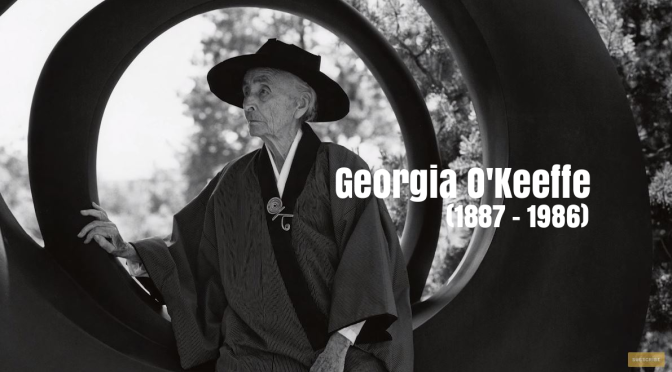
 In the final years of Georgia O’Keeffe’s nearly century-long life, she employed and befriended the young sculptor Juan Hamilton. The two would become inseparable, and upon her death in 1986, Hamilton inherited fine art and personal affects from the artist’s estate, including rarely seen pieces from the estate of O’Keeffe’s late husband, Joseph Stieglitz.
This March, Sotheby’s is honored to present these works in Alfred Stieglitz, Georgia O’Keeffe, Juan Hamilton: Passage, a dedicated auction in New York on 5 March 2020. In this episode of Expert Voices, Head of American Art Kayla Carlsen explores the stories behind this remarkable collection while highlighting exceptional works, including O’Keeffe’s Nature Forms – Gaspé, Stieglitz’s Hand and Wheel and Hamilton’s Untitled (Red Form).
(New York | 5 March 2020)



 Boomers Daily