

From a Rand.org online release:
 Many people (41 percent) indicated that they believed that news has become less reliable than in the past; a similar number (44 percent) said they believed there has been no change; and 15 percent said they thought news is more reliable now.
Different demographic groups get their news in different ways
- People whose primary news sources are social media and in-person contacts are generally younger and female, and they tend to have less education than a college degree and lower household incomes.
- People whose primary news sources are print publications and broadcast television tend to be be significantly older, and they are less likely to be married.
- People whose primary news source is radio are significantly more likely to be male, less likely to be retired, and more likely to have a college degree.
- People whose primary news sources are online platforms are significantly younger, more likely to be male and have a college degree and higher income, and less likely to be black.
Attitudes toward the reliability of news are mixed
- Overall, 44 percent reported that they believed “the news is as reliable now as in the past.”
- Nearly the same amount — 41 percent — reported a belief that the news has become less reliable.
- A minority (15 percent) said that they believed that the news is more reliable now.
- There was an association between news consumption profiles and perceptions of reliability — people who relied more heavily on online, radio, and social media/in-person platforms to obtain news were less likely to say that news is more reliable now than in the past.


To view full Rand Study: https://www.rand.org/pubs/research_reports/RR4212.html?utm_source=WhatCountsEmail&utm_medium=RAND%20Policy%20Currents+AEM:%20%20Email%20Address%20NOT%20LIKE%20DOTMIL&utm_campaign=AEM:631600804

 About one-third of people with epilepsy are treatment resistant. Up until now, epilepsy treatments have focused on taming seizures rather than the source of the disease and for good reason—so many roads lead to epilepsy: traumatic brain injury, extreme fever and infection, and genetic disorders, to name a few. Staff Writer Jennifer Couzin-Frankel talks with host Sarah Crespi about researchers that are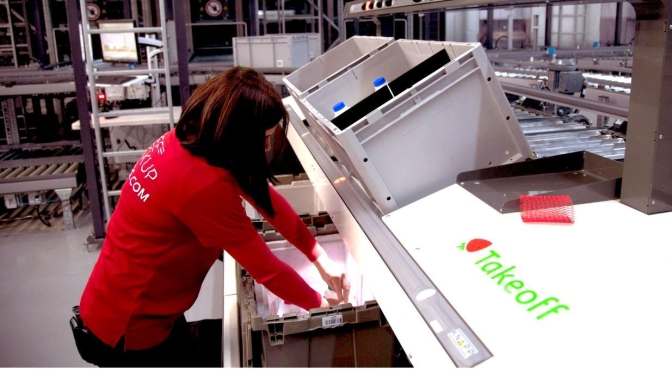
 “The micro-fulfillment center model is a key element in the store of the future,” said Vivek Sankaran, Albertsons Companies President and Chief Executive Officer. “It combines the efficiency of automation with the ease of meeting customers when and how they want to shop. In working with Takeoff, we can evolve how the MFC ties into our store and e-commerce ecosystems and accelerate our path to best serve our customers.”
 Albertsons Cos., which operates stores in 8 out of 10 of the largest MSA’s in the United States, has also agreed to purchase additional MFCs from Takeoff and is evaluating market expansion opportunities. Albertsons Cos. and Takeoff worked closely together on the successful implementation of the company’s first MFC in South San Francisco in October 2019.
 “The Academy Museum gives us the opportunity to honor the past while creating a building for the future—in fact, for the possibility of many futures. The historic Saban Building is a wonderful example of Streamline Moderne style, which preserves the way people envisioned the future in 1939. The new structure, the Sphere Building, is a form that seems to lift off the ground into the perpetual, imaginary voyage through space and time that is moviegoing. By connecting these two experiences we create something that is itself like a movie. You go from sequence to sequence, from the exhibition galleries to the film theater and the terrace, with everything blending into one experience.”
 Situated on the famed “Miracle Mile,” the museum will preserve and breathe new life into the former 1939 May Company department store, now re-named the Saban Building. Celebrating its history and imagining new possibilities, the additions to the building that date from 1946 have been removed and replaced with a spherical building that features the 1,000-seat David Geffen Theater and the Dolby Family Terrace with views towards Hollywood. The revitalized campus will feature more than 50,000 square feet of gallery space, two theaters, cutting-edge project spaces, an outdoor piazza, the rooftop terrace, an active education studio, a restaurant, and store.
 The City of Los Angeles has given the Green Light to Movable Tiny Homes as ADUs!
 Over the span of fifty years, Charles M. Schulz created a comic strip that is one of the indisputable glories of American popular culture—hilarious, poignant, inimitable. Some twenty years after the last strip appeared, the characters Schulz brought to life in Peanuts continue to resonate with millions of fans, their beguiling four-panel adventures and television escapades offering lessons about happiness, friendship, disappointment, childhood, and life itself.
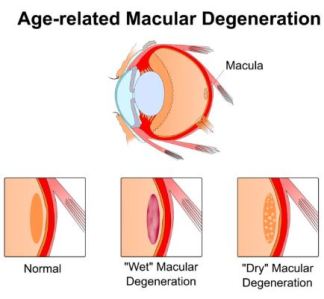 “Our work provides additional evidence that that diet matters,” Millen added. “From a public health standpoint, we can tell people that if you have early AMD, it is likely in your best interest to limit your intake of processed meat, fried food, refined grains, and high-fat dairy to preserve your vision over time.”
 Tourism has surged in recent decades, causing large-scale environmental degradation, dangerous conditions, and pricing-out locals at major tourist sites. In this episode of The Idea File, Atlantic staff writer Annie Lowrey explains over-tourism and what we can do to fix it.
 “There are two important takeaways from this paper. One is that poor sleep is associated with brain immune dysregulation or dysfunction,” says Lim, the corresponding author for the paper.
 The Salesforce Transit Center is a green infrastructure that enhances public transportation, reduces traffic congestion, and serves as an economic catalyst. As San Francisco’s new downtown gateway, it greets tens of thousands of residents, commuters, and visitors daily, providing a dynamic destination while engaging, enriching, and connecting people coming and going throughout the San Francisco Bay Area.
 Boomers Daily