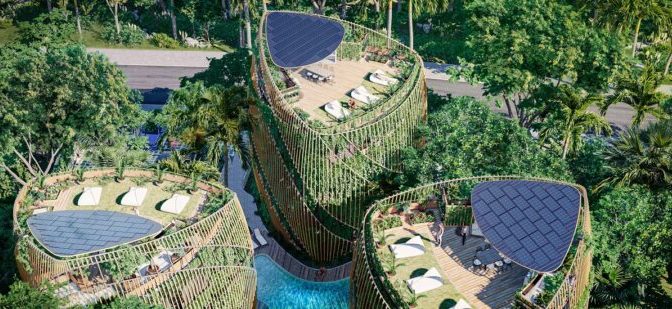
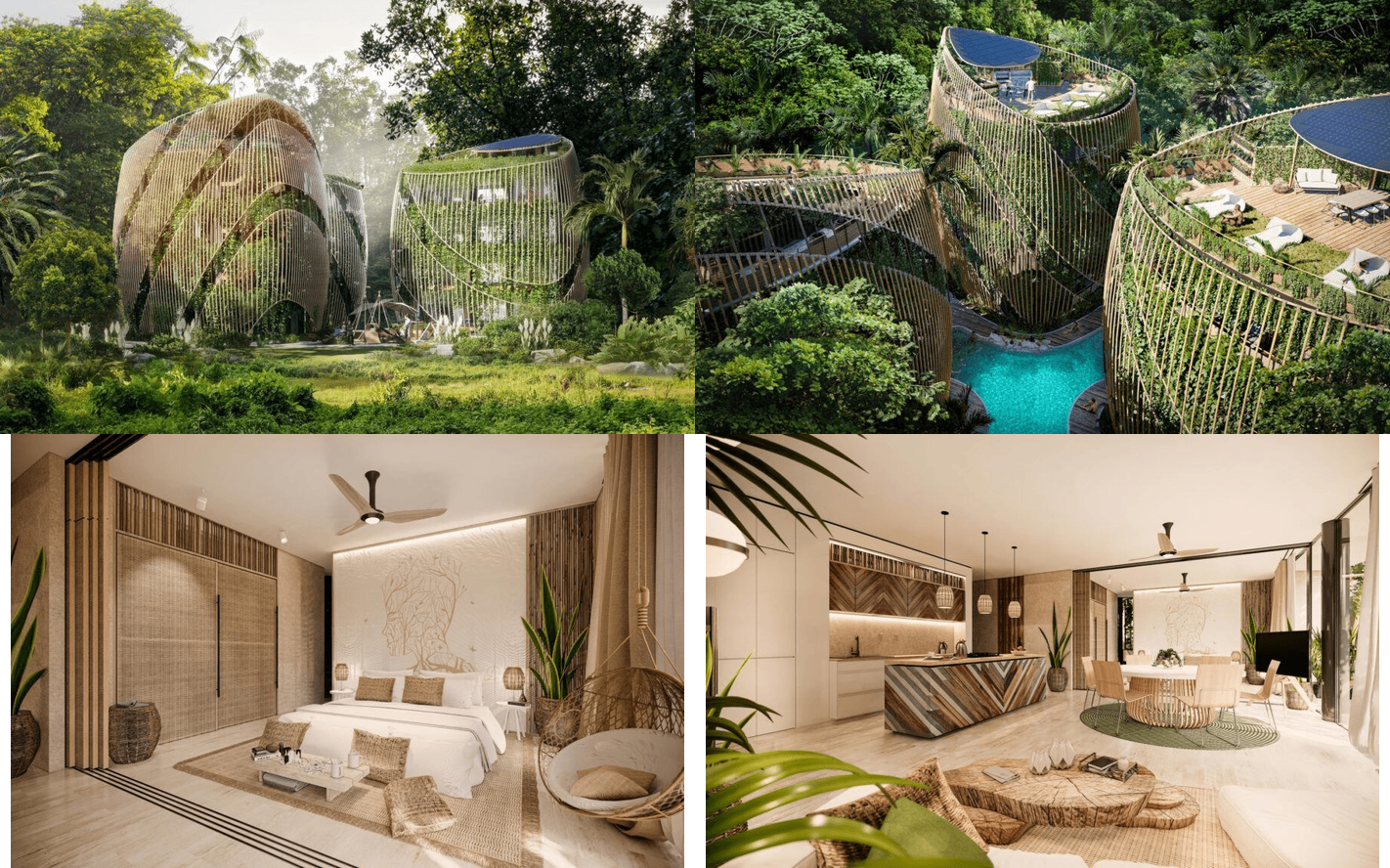
Living the Noom apartments look like giant bamboo bird cages bursting with green plantings. On top, shared roof decks boast deck chairs and community gardens where residents can grow food for the community or host a picnic. A pool sits on the axis between the apartment buildings, creating a natural landscape of green and blue.
As the world’s population grows, the need to feed billions of mouths mean our use of synthetic fertilisers will almost certainly increase significantly. The FT’s Anna Gross explores two innovative French companies that could ultimately reduce our reliance on artificial fertilisers by offering less carbon-intensive options. But how viable are these alternatives?
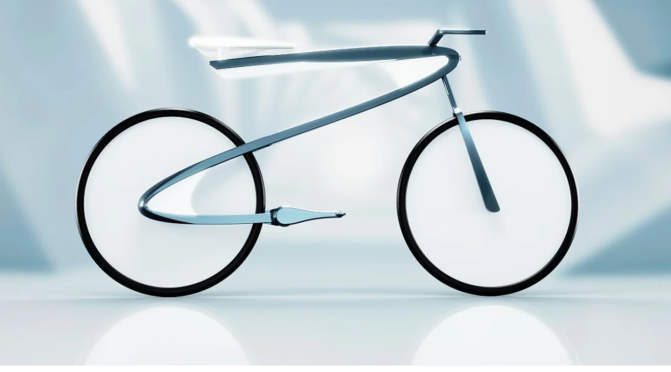
In 2021, living more sustainably and consciously should be a priority for all of us, – whether it’s making changes in our daily lives, consumption, or even our means of transportation. Our typical fossil-fuel-consuming means of transportation need to be replaced by greener and more environment-friendly alternatives, and Electric Bicycles are an appealing option!
Fossil fuels still supply about 80% of the world’s power. How can energy be produced and used more sustainably to meet climate targets? We answer your questions. film supported by @Infosys
Timeline: 00:00 – Why energy needs to become more sustainable 00:33 – How much energy should come from renewables? 01:19 – Why isn’t nuclear power used more widely? 02:19 – How can solar power be made more efficient? 03:34 – Will biofuels become widely used? 04:30 – Do electric vehicles make a difference? 05:10 – How heating and air conditioning can be more sustainable
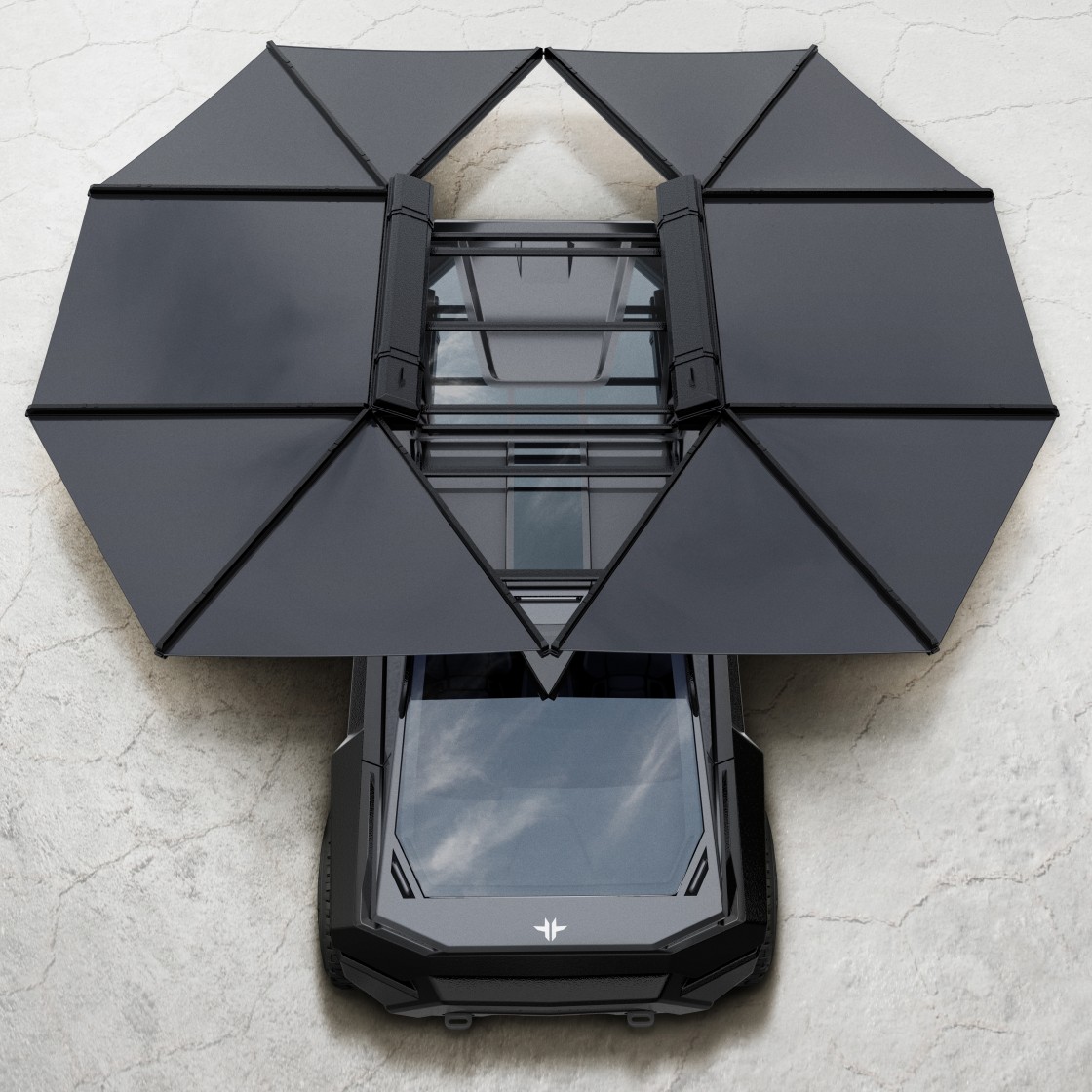
Creative agency wolfgang LA has unveiled the thundertruck, an electric offroader with futuristic looks. Although just a proposal for now, the multipurpose EV promises ‘superior on and off-road performance’ and ‘an entirely new level of versatility and functionality’, all with zero emissions.
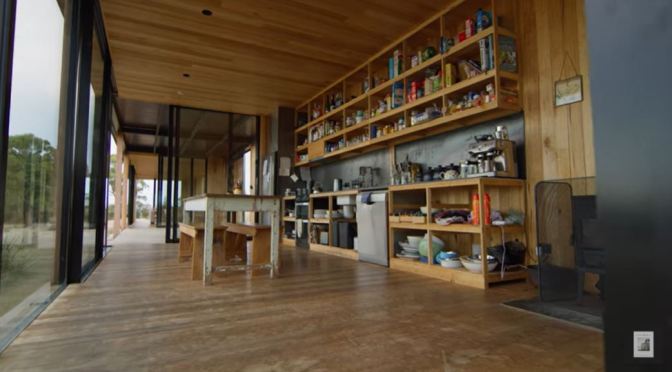
Located on the east coast of Tasmania, Australia, Pine Flat Lodge emerges from the environment as a place of retreat and immersion. The off the grid lodge is proposed as a minimal insertion within the landscape, a simple gesture that holds the space between the pines and the expansive view beyond the site. Imbued with a sense of belonging and placemaking, the off the grid lodge was approached in a deliberate manner, with focus placed on the conservation and rehabilitation of the land.
As a response, the architecture and interior design of the lodge accentuates an outward perspective, blurring the lines between indoors and out. The off the grid lodge is comprised of a series of modules within a continuous envelope, which in turn opens out to the landscape. The communal spaces are separated by decks and continue the structure’s discourse with the external environment, while the sleeping quarters represent an intended moment of quiet and retreat. The lodge tour also highlights Pine Flat Lodge’s solar power and rainwater collection, a physical reminder to visitors to be mindful when experiencing the space and landscape.
When designing a lodge, especially one that operates off grid, sustainability must inform each component. The material of the cabin is motivated by the surrounding context – sustainably sourced timber is used throughout the off the grid lodge. The structure utilises resources in an accountable way by pursuing efficient use of materials and minimising carbon footprint while supporting local craftsman. Bespoke details feature throughout the off the grid lodge, celebrating craft and the natural environment in an authentic and sustainable manner.
Hong Kong will develop a new metropolis in its northern part to accommodate 2.5 million people and better integrate itself into the overall development of the country, according to the annual policy address delivered Wednesday by Chief Executive of China’s Hong Kong Special Administrative Region Carrie Lam.
Hong Kong, officially the Hong Kong Special Administrative Region of the People’s Republic of China, is a city and special administrative region of China on the eastern Pearl River Delta in South China.
What we eat needs to be nutritious and sustainable. Researchers are trying to figure out what that looks like around the world. https://t.co/epWJyzHxRz








 Boomers Daily