Ok boomer, these are the moments that marked a generation. For this list, we’ll be looking at the cultural and political moments, events and trends that shaped the Baby Boomer generation, focusing on the US. The exact age range of various generations are debated, but we’ll be following the Pew Research definition, which identifies baby boomers as individuals born between 1946 and 1964. Welcome to WatchMojo, and today we’ll be counting down our picks for the Top 10 Defining Moments for Baby Boomers.
In this episode of “The Way I See It,” actor and comedian Steve Martin looks at paintings by two early pioneers of American abstraction and takes us on a journey of seeing—shape and color transform into mountains, sky, and water. Find “The Way I See It” on BBC Sounds or wherever you get your podcasts. https://www.bbc.co.uk/programmes/m000…
“We see in order to move; we move in order to see.” -William Gibson
There is perpetual, dynamic and never-ending motion all around us. And this motion has a rhythm to it. It is the rhythm of our life — a beat that has become so normal and day-to-day that few of us take the time to see and feel it and even fewer of us take the time to bask in it.
When we experience the world, we encounter this movement and rhythm happening at different tempos. Whether it is the movement within our own body — our heart beat, breathing, walking — or the the different speeds of the movement in the world and universe around us, the various tempos of motion are a polyphonic rhythm that create the symphony of life.
Some motion we perceive easily — the movement of people, cars, or the trees blowing in the wind. But some motion, such as the rotation of the stars or the changes in shadows and light, we, as humans, are not always aware of unless we take the time to notice. Time-lapse photography is a unique tool that can be used to help us see this movement and it can even help us see the motion we can perceive in a different way. And when we pair timelapse with dynamic polyphonic and polyrhythmic music, we can begin to feel that the rhythm of that motion deep in our soul. “Move II” is all about intertwining timelapse photography and music to see and feel that motion both in nature and in the city.
It was a true honor and privilege to collaborate with Robert Levin on the music for “Move II”. His beautiful original score blends together the rhythms and melodies of our world and perfectly captures the feeling of movement that surrounds us at all times. When I first met with Robert to begin working on the music for Move II, I knew it needed something that was unique and special in order to accentuate the movement of the universe, little did I know how perfectly he would capture that idea and deliver a magical and dynamic original score for the film.
A heartfelt thank you to Steve Bill, one of my musical mentors and a true friend over the past 20 years, for introducing me to Robert Levin and for allowing us to use his studio at Room 368 Productions to record the score for this video. Thank you to Ethan Bill for his time, talent and patience recording, mixing and engineering the music for the video. This was a huge undertaking and we could not have asked for anyone better to work with. I would also like to extend a huge thank you to all of the incredibly talented musicians who took part in the recording of the music and helped to breathe life into this film. Your talents and passion are second-to-none.
I am very excited to share with you “Move II”, a continuation of the original short-film “Move” that I released a few years ago. (vimeo.com/aaronkeigherphotography/move) Join me for a few moments to take a step back and experience the rhythm of the movement that surrounds us all.
_______________________________
Locations Include:
Acadia National Park, ME
Boy’s Ranch, Amarillo, TX
Buckeye Wind Farm, KS
Canyonlands National Park, UT
Capitol Reed National Park, UT
Chicago, IL
Colorado Canyon National Monument, CO
Dead Horse Point State Park, UT
Dinosaur National Monument, CO
Factory Butte, UT
Fantasy Canyon, UT
Goosenecks State Park, UT
Grand Canyon National Park, AZ
Havre, MT
Joshua Tree National Park, CA
Lake George, NY
Molen Reef, UT
Monument Valley Tribal Park, AZ
New York City, NY
Niagara Falls, ON, Canada
Philadelphia, PA
Red Canyon, Flaming Gorge National Monument, UT
Trona Pinnacles, CA
Woodville, ID
The Himalayan terrain, beside the Great Indus, is infamous for its harsh and cold weather; oftentimes its landscapes are even unreachable to the common people. It’s a wonder really, what exactly transpires to make this place so fascinating.
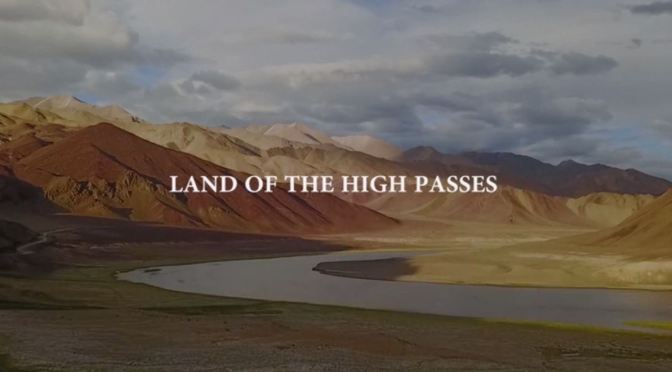
Ladakh – The ‘Land of the High Passes’ – is among the most stunning parts of the Indian Himalayas. Widely known as the cold desert, it holds within itself beauty that is pristine and glorious. Stretching from peak to peak, it is an exquisite canvas of surreal art done with celestial strokes of red, ochre and purple rocks, made over thousands of years into shapes so unexpected and so phenomenal, the eye can hardly believe.
An icon of heavenly beauty, the scenery makes people either speechless or wholly expressive. Everyone gets stunned and nobody can remain indifferent.
Ladakh induces in all, a permanent high. A rush so unhinged, you struggle to find the adjectives to talk of the imprint it leaves on you.
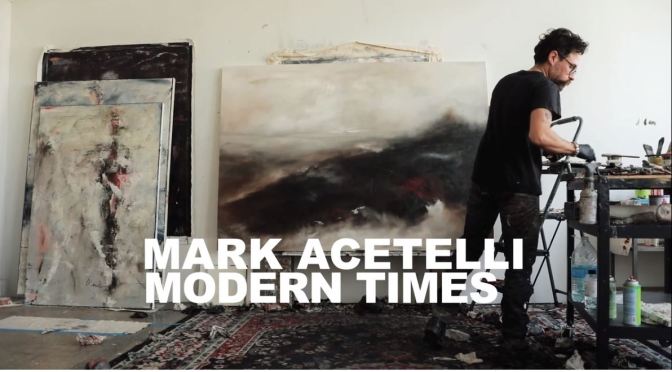
My paintings are inspired by an intensely personal introspective journey of life, from the ever-changing complexities of love, loss, birth, and death. The context of my work is what I call, “Absence and Presence” pertaining to how someone or something can be physically gone, but the essence still remains. Capturing the physical mixed with spirituality on canvas. My application of paint is an extension of that thought process. Continuously building up and tearing down, layer upon layer, adding and subtracting. A visceral dance between the conscious and the unconscious until the emotion is expressed. Painting the essence of something rather than a depiction. My message is about the human condition, that joy is sweetened by the memory of the pain endured to reach it.
Written by JOHANNES OLSZEWSKI & CODY CHRISTENSEN
Produced by MIRKO PROHASKA & JOHANNES OLSZEWSKI
Director of Photography FELIX REICHERT
B Camera Operator & Animation VALENTIN RAPP
Production Designer BARBARA PEISL
CAST
Pilot of German ballon TIM TAYLOR
Pilot of American Ballon ZACHARY BRAMBLE
Hitchhiker Girl BARBARA PEISL
Hitchhiker Boy LEVI ALLEN
CREW
Production Supervisor LISA GHIO
Production Assistant ALEXANDER SCHULZ
Property Master RONNY BIARD
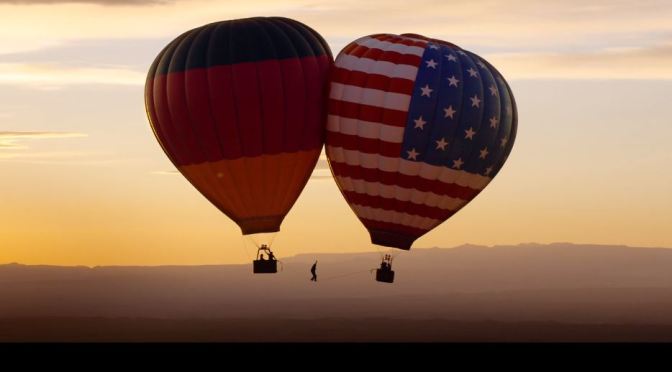
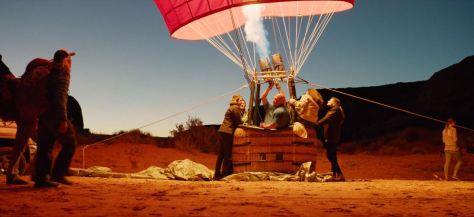
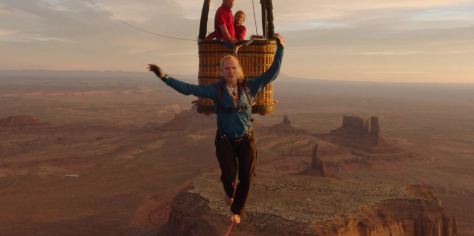
High above the sacred Navajo land of Monument Valley, two hot air balloons float, circling each other as if in a dance. One carries the German flag, the other that of the United States. A closer look reveals that the balloons are not only tethered together, but that a person is walking on this thin, connecting line.
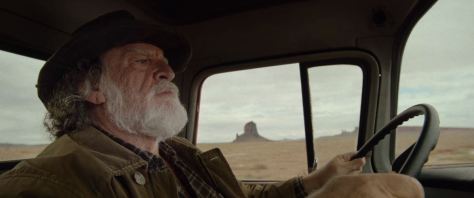
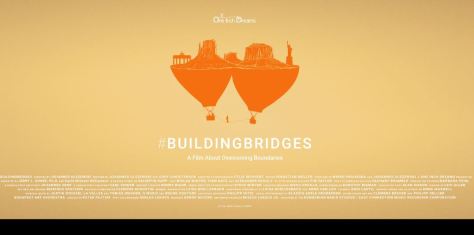
This is the sight that the protagonist of the short film #buildingbridges beholds, as he steps out of his humble Utah home and looks up at the sky. An old and lonely man, he finds his own courage through the actions of these strangers.
This balancing act in movie form by the young creative agency One Inch Dreams (oneinchdreams.com) was commissioned by the German Embassy as a tribute to German-American friendship.
In this episode of “The Way I See It,” Janna Levin brings her celestial expertise to Vincent van Gogh’s star-filled vision, in conversation with senior curator of Drawing and Prints Jodi Hauptman. Levin helps us see how certain features of the night sky, including “turbulent air,” the light from a star, and the planet Venus, are rendered visible by Van Gogh’s brush. She also points out that her approach is not so different from Van Gogh’s: “People who observe the world, whether they are artists or scientists, are always on the cusp of what they see and then what is internal.”
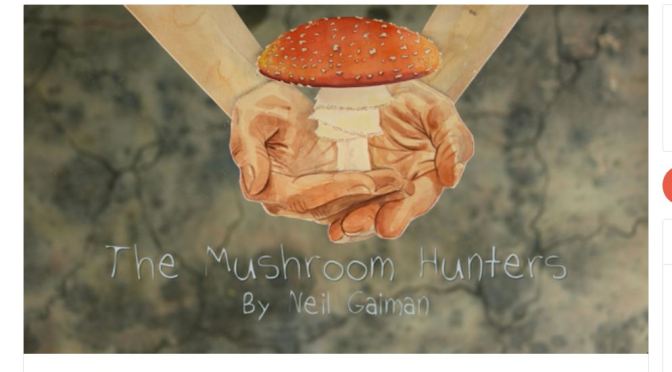
“The Mushroom Hunters” is a Cinematic Poem Short Film With Original Poem Written By Neil Gaiman, Directed By Caroline Rudge.
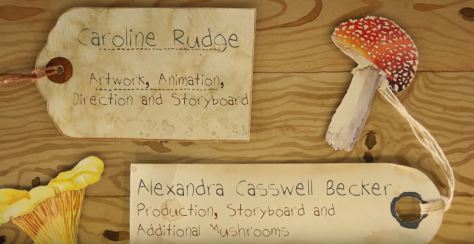
Artwork, Animation, Direction and Storyboard by: Caroline Rudge
Production, Storyboard and Additional Mushrooms: Alexandra Casswell Becker
Editing and Special Effects: Dann Casswell
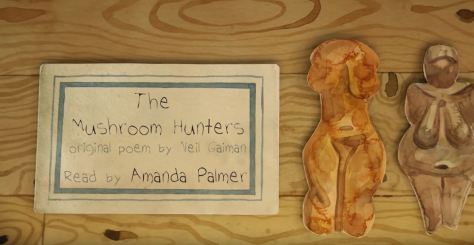
The Mushroom Hunters Original Poem by: Neil Gaiman
Read by: Amanda Palmer
Bass, Percussion, Vibraphone, Piano and Original Score by: Jherek Bischoff
Cello: Aniela Marie Perry
Violin: Paris Hurley
Viola: Marta Sofia Honer
Recorded, Mixed and Mastered by Jherek Bischoff at Sweethaven
THE MUSHROOM HUNTERS by Neil Gaiman
Science, as you know, my little one, is the study of the nature and behaviour of the universe. It’s based on observation, on experiment, and measurement, and the formulation of laws to describe the facts revealed.
In the old times, they say, the men came already fitted with brains designed to follow flesh-beasts at a run, to hurdle blindly into the unknown, and then to find their way back home when lost with a slain antelope to carry between them. Or, on bad hunting days, nothing.
The women, who did not need to run down prey, had brains that spotted landmarks and made paths between them left at the thorn bush and across the scree and look down in the bole of the half-fallen tree, because sometimes there are mushrooms.
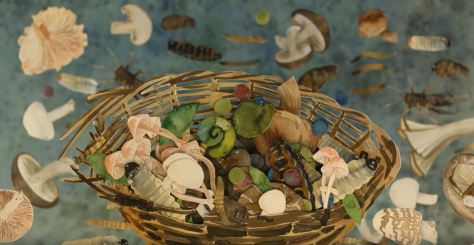
Before the flint club, or flint butcher’s tools, The first tool of all was a sling for the baby to keep our hands free and something to put the berries and the mushrooms in, the roots and the good leaves, the seeds and the crawlers. Then a flint pestle to smash, to crush, to grind or break.
And sometimes men chased the beasts into the deep woods, and never came back.
Some mushrooms will kill you, while some will show you gods and some will feed the hunger in our bellies. Identify. Others will kill us if we eat them raw, and kill us again if we cook them once, but if we boil them up in spring water, and pour the water away, and then boil them once more, and pour the water away, only then can we eat them safely. Observe.
Observe childbirth, measure the swell of bellies and the shape of breasts, and through experience discover how to bring babies safely into the world.
Observe everything.
And the mushroom hunters walk the ways they walk and watch the world, and see what they observe. And some of them would thrive and lick their lips, While others clutched their stomachs and expired. So laws are made and handed down on what is safe. Formulate.
The tools we make to build our lives: our clothes, our food, our path home… all these things we base on observation, on experiment, on measurement, on truth.
And science, you remember, is the study of the nature and behaviour of the universe, based on observation, experiment, and measurement, and the formulation of laws to describe these facts.
The race continues. An early scientist drew beasts upon the walls of caves to show her children, now all fat on mushrooms and on berries, what would be safe to hunt.
The men go running on after beasts.
The scientists walk more slowly, over to the brow of the hill and down to the water’s edge and past the place where the red clay runs. They are carrying their babies in the slings they made, freeing their hands to pick the mushrooms.
This poem was written by Neil Gaiman and read by Amanda Palmer for Maria Popova’s “The Universe In Verse” event in 2017 (you can read about that here: https://www.brainpickings.org/2017/04…).
The brilliant team at creative connection in the UK hand-drew this animated video to accompany the poem, and the music was composed and recorded by jherek bischoff. read about the making of this whole film on patreon: https://www.patreon.com/posts/31517040
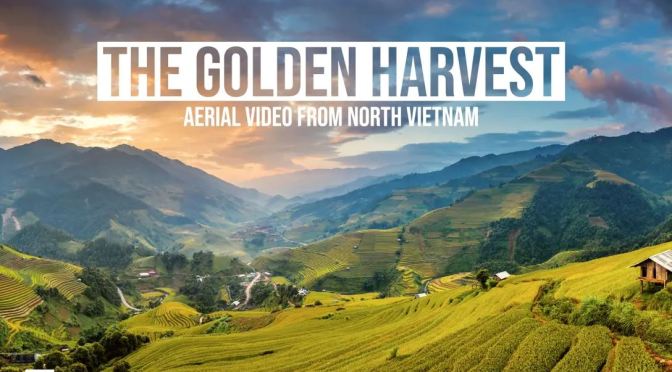
Beautiful golden rice terraces and green tea hills – welcome to North Vietnam. After a 10 hours car ride from Hanoi through the Vietnamese mountains I finally arrived at the beautiful rice terraces of Mu Cang Chai. The long journey was worth it – I’ve never seen something like this before. The rice has already colored from green to yellow and is ready for the harvest – glad that I made it to this place while the „golden season“.


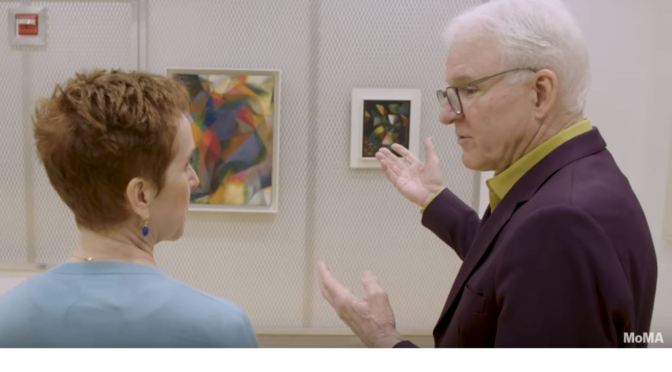
 In this episode of “The Way I See It,” actor and comedian Steve Martin looks at paintings by two early pioneers of American abstraction and takes us on a journey of seeing—shape and color transform into mountains, sky, and water. Find “The Way I See It” on BBC Sounds or wherever you get your podcasts.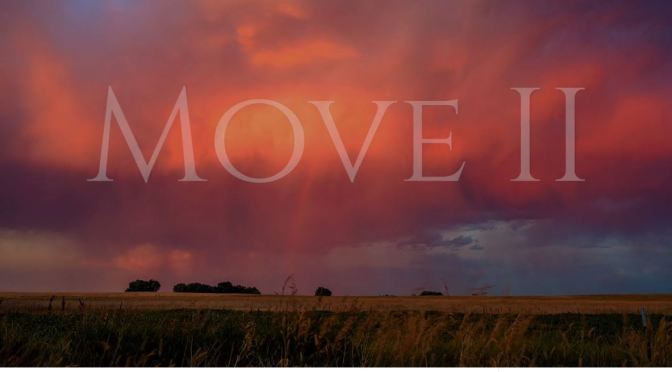


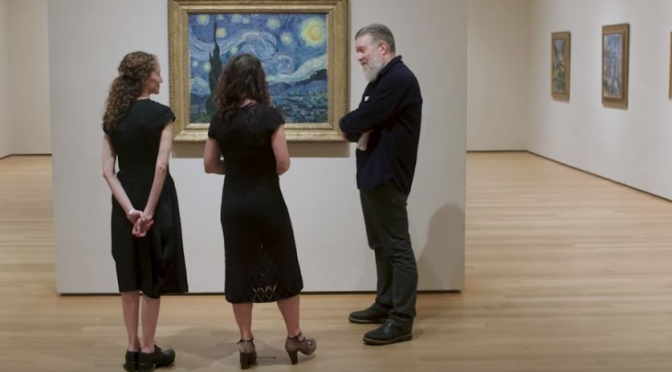
 In this episode of “The Way I See It,” Janna Levin brings her celestial expertise to Vincent van Gogh’s star-filled vision, in conversation with senior curator of Drawing and Prints Jodi Hauptman. Levin helps us see how certain
  features of the night sky, including “turbulent air,” the light from a star, and the planet Venus, are rendered visible by Van Gogh’s brush. She also points out that her approach is not so different from Van Gogh’s: “People who observe the world, whether they are artists or scientists, are always on the cusp of what they see and then what is internal.”

 Boomers Daily