
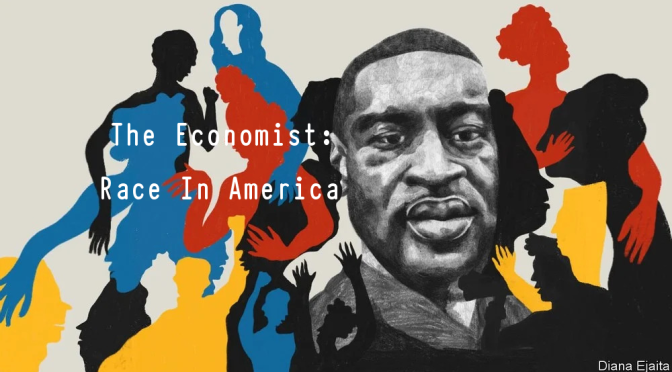
A selection of three essential articles read aloud from the latest issue of The Economist. This week: race in America, the green investment boom (10:00), and why NATO increasingly sees its soldiers’ phones as a liability (21:50).
Category Archives: Reviews

Vaccine Passports: Legal & Medical Issues Are Raised
The CDC says fully vaccinated Americans can resume many normal activities but should people have to prove they have gotten those shots? Brook Silva-Braga reports on the pros and cons of so-called “vaccine passports” and the medical and legal issues raised.

Shakespeare: ‘Hamnet’ Author Maggie O’Farrell
Maggie O’Farrell’s “Hamnet,” one of last year’s most widely acclaimed novels, imagines the life of William Shakespeare, his wife, Anne (or Agnes) Hathaway, and the couple’s son Hamnet, who died at 11 years old in 1596.
On this week’s podcast, O’Farrell says she always planned for the novel to have the ensemble cast it does, but that her deepest inspiration was to capture a sense of the young boy at its center.
“The engine behind the book for me was always the fact that I think Hamnet has been overlooked and underwritten by history,” she says. “I think he’s been consigned to a literary footnote. And I believe, quite strongly, that without him — without his tragically short life — we wouldn’t have the play ‘Hamlet.’ We probably wouldn’t have ‘Twelfth Night.’ As an audience, we are enormously in debt to him.”

Political Analysis: The U.S.-China Tussle Over Taiwan
Taiwan has long been a U.S.-China flashpoint, but its tech and military capabilities have come into sharper focus under the Biden administration. WSJ travels to three places on the island to explain how both superpowers could determine Taiwan’s future. Photo: Wally Santana/AP
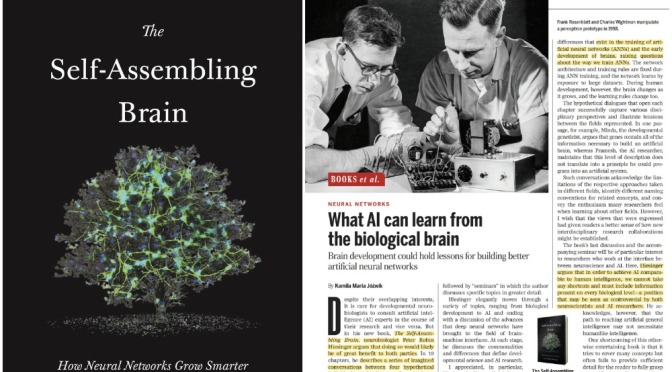
Book Reviews: ‘The Self-Assembling Brain’ – The Future Benefits For AI


As Peter Robin Hiesinger argues, “the information problem” underlies both fields, motivating the questions driving forward the frontiers of research. How does genetic information unfold during the years-long process of human brain development―and is there a quicker path to creating human-level artificial intelligence? Is the biological brain just messy hardware, which scientists can improve upon by running learning algorithms on computers? Can AI bypass the evolutionary programming of “grown” networks? Through a series of fictional discussions between researchers across disciplines, complemented by in-depth seminars, Hiesinger explores these tightly linked questions, highlighting the challenges facing scientists, their different disciplinary perspectives and approaches, as well as the common ground shared by those interested in the development of biological brains and AI systems. In the end, Hiesinger contends that the information content of biological and artificial neural networks must unfold in an algorithmic process requiring time and energy. There is no genome and no blueprint that depicts the final product. The self-assembling brain knows no shortcuts.
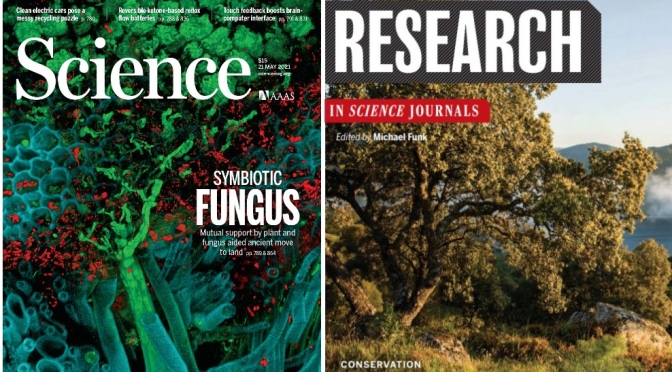
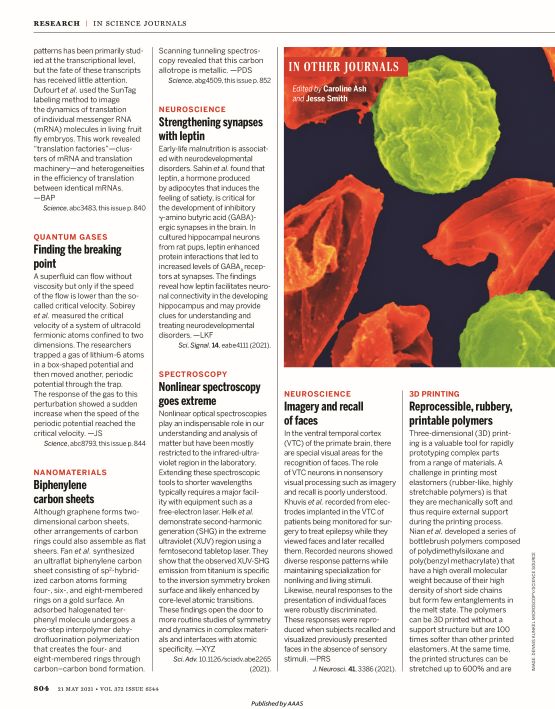
TOP JOURNALS: RESEARCH HIGHLIGHTS FROM SCIENCE MAGAZINE (MAY 21, 2021)
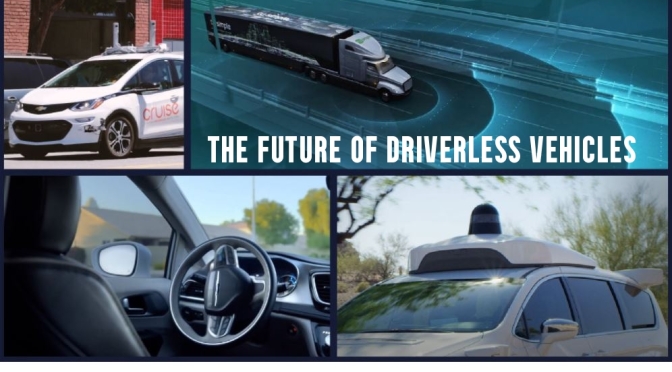
Analysis: The Future Of Driverless Vehicles (WSJ)
While Tesla and others already offer assisted-driving features, startups Waymo, Cruise, TuSimple and Aurora are betting their autonomous vehicles will make driving a thing of the past. WSJ asked them about safety and other challenges they face. Photo composite: George Downs
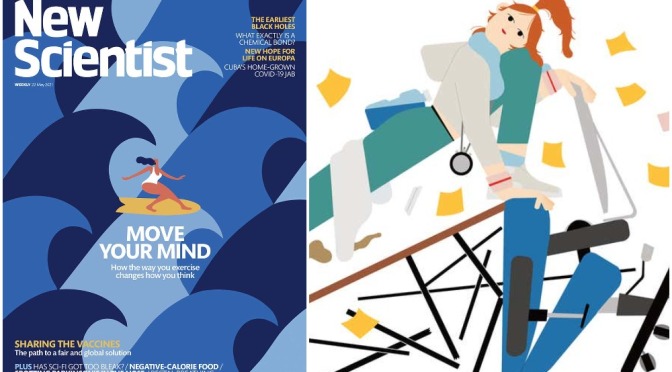
Research: Importance Of Exercise & Movement For Brain Function & Health
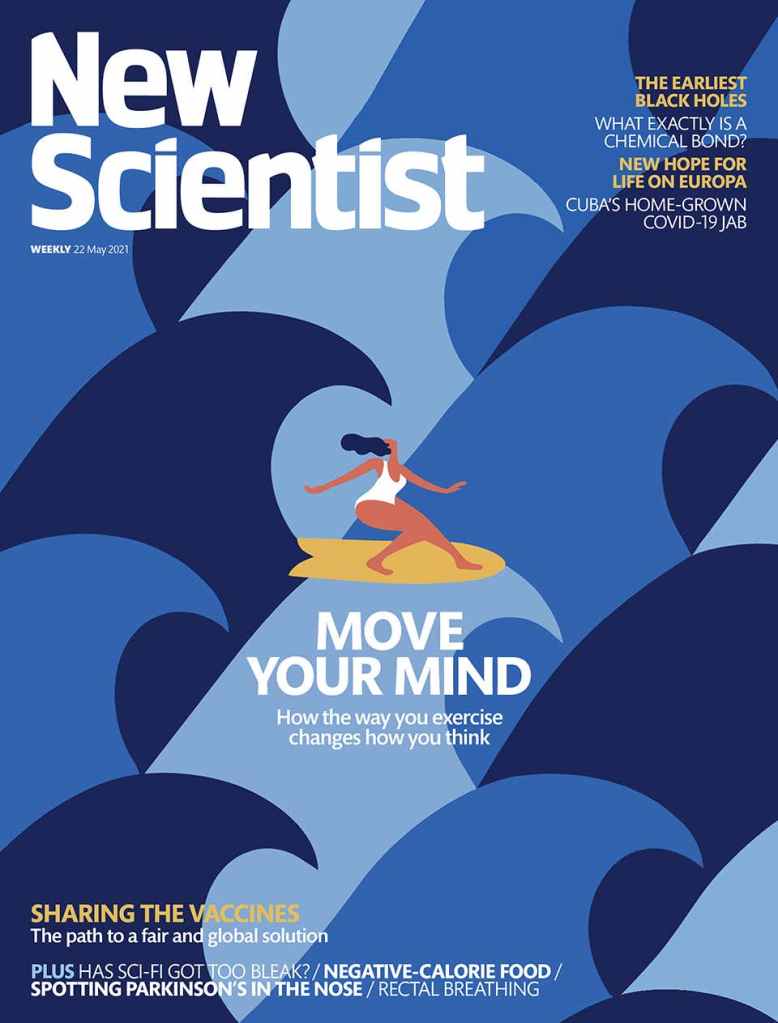
But the connection between movement and the brain goes deeper than you might think. A revolutionary new understanding of the mind-body connection is revealing how our thoughts and emotions don’t just happen inside our heads, and that the way we move has a profound influence on how our minds operate. This opens up the possibility of using our bodies as tools to change the way we think and feel.
Evidence is starting to stack up that this is indeed the case, and it isn’t all about doing more exercise. In my new book, Move! The new science of body over mind, I explore emerging research in evolutionary biology, physiology, neuroscience and cell biology to find out which body movements affect the mind and why.
Whatever it is that you want from your mind – more creativity, improved resilience or higher self-esteem – the evidence shows that there is a way of moving the body that can help. Here is my pick of the best ways to use your body to achieve a healthier, better-functioning mind.
Science Podcast: Snow-Covered ‘Zombie Fires’, Flashy Plant Research
Smouldering fires lay dormant before bursting back into flame in spring.
In this episode:
00:56 The mysterious overwintering forest fires
Researchers have shown that fires can smoulder under snow in frozen northern forests before flaring up the following spring. Understanding how these so-called ‘zombie’ fires start and spread is vital in the fight against climate change.
Research Article: Scholten et al.
07:39 Research Highlights
Aesthetic bias means pretty plants receive the most research attention, and ancient tooth gunk reveals the evolution of the mouth microbiome.
Research Highlight: Flashy plants draw outsize share of scientists’ attention
Research Highlight: Microbes in Neanderthals’ mouths reveal their carb-laden diet
10:04 Briefing Chat
We discuss some highlights from the Nature Briefing. This time, Voyager 1 detects a faint interstellar ‘hum’, and a trove of Neanderthal bones found in an Italian cave.
Reuters: Faraway NASA probe detects the eerie hum of interstellar space
The Guardian: Remains of nine Neanderthals found in cave south of Rome
Video: Hawaii’s surprise volcanic eruption: Lessons from Kilauea 2018
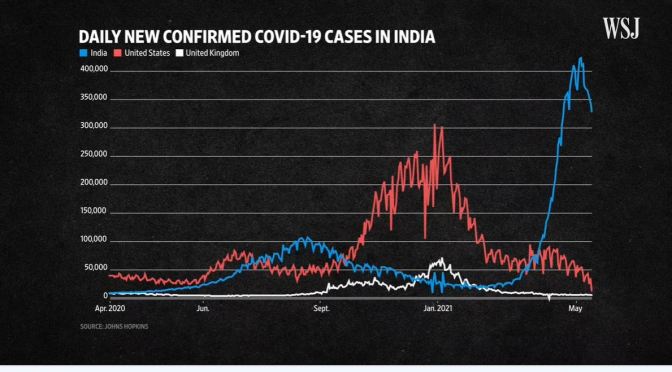
Analysis: How India’s Covid Crisis Got Out Of Control
India’s Covid-19 crisis has resulted in record numbers of cases and deaths. WSJ breaks down the chain of events that led to the fastest-growing wave of infection since the pandemic started, and what it means for the world. Photo: Samuel Rajkumar/Reuters
 Boomers Daily