

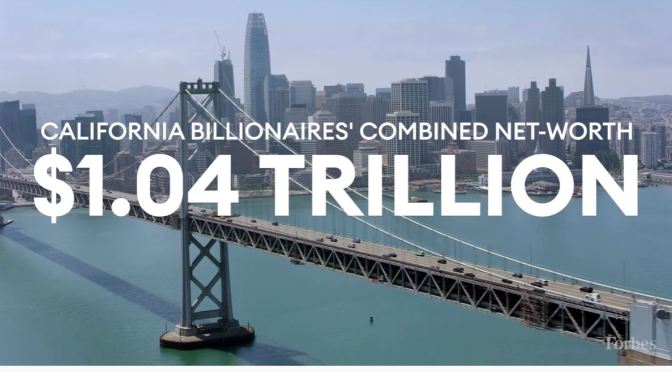
News about billionaires like Elon Musk and Larry Ellison moving out of California might lead you to believe that tycoons have abandoned the state. Tesla’s “Technoking” Musk confirmed in December that he had moved to Austin, Texas. And that same month Ellison told employees at software firm Oracle that he was moving to the Hawaiian island of Lanai, which he owns. But it turns out that the Golden State has yet to lose its appeal for the ultra-wealthy. Forbes just released the 2021 list of the World’s Billionaires, and California is once again home to more billionaires than any other state, with 189 billionaire residents out of the 2,755 billionaires Forbes tracked globally. That’s 24 more than a year ago, due mostly to a surge in the number of new billionaires. New York comes in second with 126 billionaires, up from 118 last year. Altogether, 732 members of the 2021 list live in the U.S., including non-U.S. citizens, like Ireland’s John and Patrick Collison, the brothers who founded San Francisco-based payments firm Stripe. (There are 724 U.S. citizens on the list.) Large states dominate the top 10 states for these tycoons: seven out of the ten most populous U.S. states are also home to the most billionaires. One of the outliers, Massachusetts, a tech hub, has 7 more billionaires than a year ago; the fastest vaccine development in history—spurred by the Covid-19 pandemic—minted several new biotech billionaires who live in the state. Seven states don’t have any billionaire residents that Forbes could find: Alabama, Alaska, Delaware, New Hampshire, North Dakota, Vermont and West Virginia. (Jim Justice, the governor of West Virginia, used to be a billionaire but was recently revealed to have borrowed $850 million from Greensill Capital, a U.K. based lender that has filed for insolvency.) Read the full profile on Forbes: https://www.forbes.com/sites/krisztia…
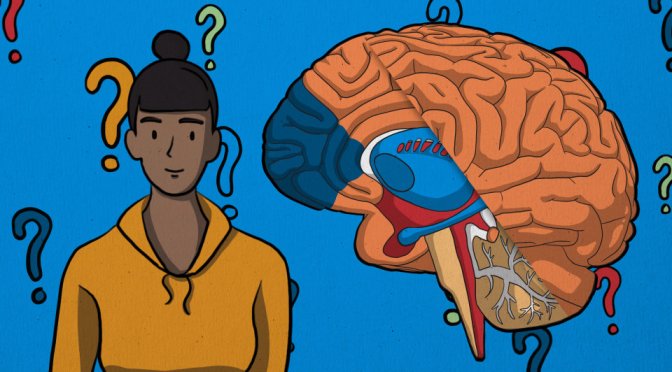
Indoor dining, workout classes, concerts. These once commonplace events are coming back into daily life. But because of Covid-19, everyone now has a different level of comfort. What happens in the brain as we decide what’s risky or not? Photo illustration: Laura Kammermann
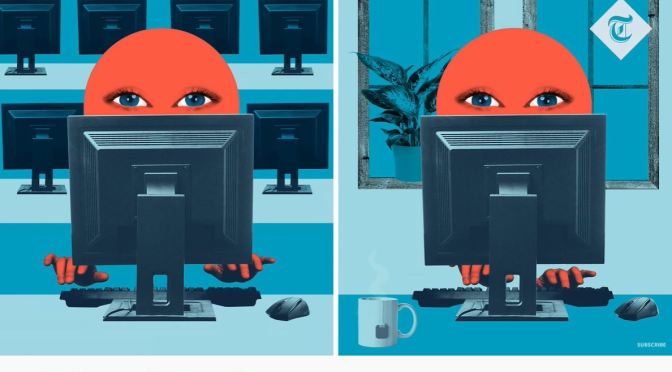
From commuting to office time, automation to virtual reality – here’s how we’ll be working in 2030
Moving towards the future – by taking from the past? This is the story of how one restauranteur is drawing upon nostalgia in order to break into a new era of innovation in the food industry.
Originally, the machines in U.S. automats took only nickels. In the original format, a cashier sat in a change booth[citation needed] in the center of the restaurant, behind a wide marble counter with five to eight rounded depressions. The diner would insert the required number of coins in a machine and then lift a window, hinged at the top, and remove the meal, usually wrapped in waxed paper. The machines were replenished from the kitchen behind. All or most New York automats had a cafeteria-style steam table where patrons could slide a tray along rails and choose foods, which were ladled from tureens.
The first automat in the U.S. was opened June 12, 1902, at 818 Chestnut St. in Philadelphia by Horn & Hardart; Horn & Hardart became the most prominent American automat chain. Inspired by Max Sielaff’s AUTOMAT Restaurants in Berlin, they became among the first 47 restaurants, and the first non-Europeans, to receive patented vending machines from Sielaff’s Berlin factory. The automat was brought to New York City in 1912 and gradually became part of popular culture in northern industrial cities.
The automats were popular with a wide variety of patrons, including Walter Winchell, Irving Berlin and other celebrities of the era. The New York automats were popular with unemployed songwriters and actors. Playwright Neil Simon called automats “the Maxim’s of the disenfranchised” in a 1987 article.
With Covid encouraging city-dwellers to emigrate to the suburbs and families looking for home offices and bigger yards, prices for the American dream home have skyrocketed. Home prices surged in March 2021 up 13% from the year prior, according to the S&P Case-Shiller index. With homeowners unwilling to sell, a record-low supply of homes for sale has forced buyers into intense bidding wars. At the end of April 2021 there were only 1.16 million houses for sale in the U.S. down more than 20.5% from the year prior. Higher costs for land, labor and building materials including lumber have also impacted homebuilders. With the 30-year fixed mortgage rate hovering near a 50-year low and strong demand pushing prices to all-time highs, why is the housing supply so meager? Watch the video to find out if the U.S. is running out of houses.
Protests have followed police killings in America with saddening regularity, but the scope of demonstrations following George Floyd’s murder may mark a turning point in how policing is monitored and regulated.
We speak to Lee Merritt, an attorney for Mr Floyd’s family, and to our United States editor—asking how likely cultural and structural changes are to take hold.
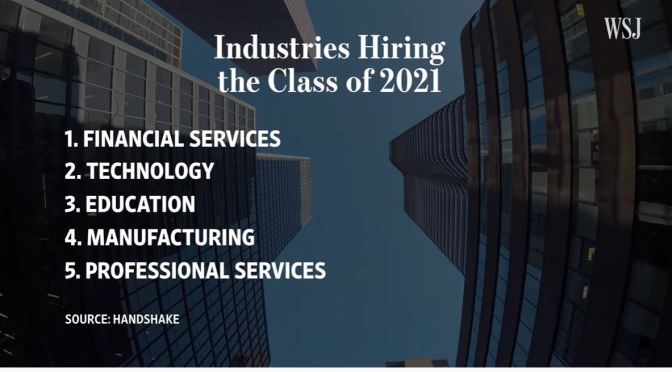
The labor market is red-hot again after more than a year on ice. The class of 2021 college graduates are looking at a new jobs landscape, but the competition is fierce. What should new grads expect from the job market and the job hunting process? Photo: Hoang ‘Leon’ Nguyen/The Republican via AP
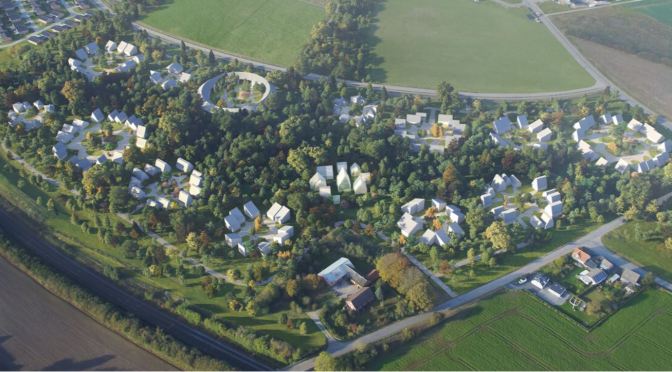
Copenhagen-based studio EFFEKT has presented plans for a residential development that forms part of its contribution to the upcoming venice architecture biennale. titled ‘naturbyen’, a name that translates as ‘nature village’, the project will see a field in denmark transformed into a completely new forest-neighborhood district comprising more than 200 homes. the development seeks to demonstrate how sustainable housing development can be combined with ambitious afforestation, increased biodiversity, and circular resource thinking. ‘as humanity is facing its greatest challenge ever with the imminent threat of climate change, habitat loss and depletion of natural resources — not to mention the ongoing pandemic — we need to rethink the way we live together on this planet. not only as humans, but across all species and ecosystems,’ EFFEKT tells designboom, discussing how the project responds to the biennale’s theme — ‘how will we live together?’. Responding to denmark’s goal of covering 20% of its landmass with forest by 2100, EFFEKT developed the project in collaboration with the town of middelfart. the site, currently an agricultural field, will be densely planted with a mix of native tree seedlings — an approach based on interviews and insight from industry experts, anders busse nielsen and björn wiström. ‘with a project like ‘naturbyen’ we try to address the growing need for more housing while also restoring natural habitats in close proximity to our cities, increasing biodiversity and through afforestation sequester carbon over time,’ EFFEKT explains.
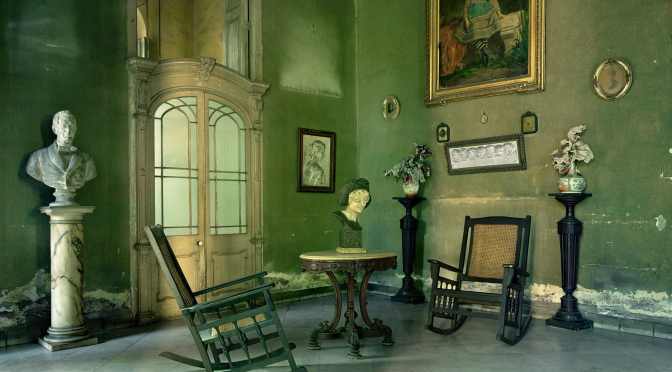
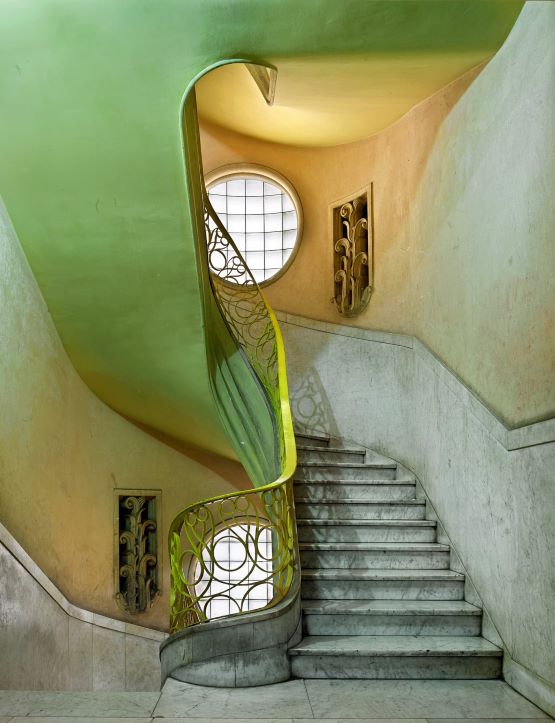
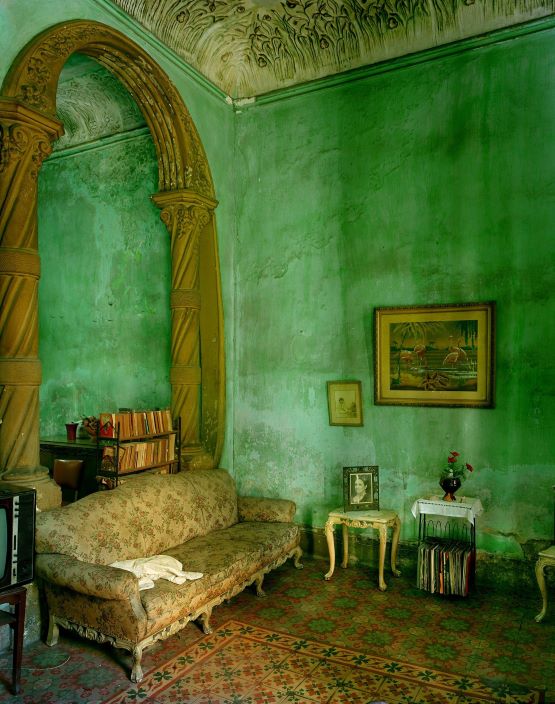
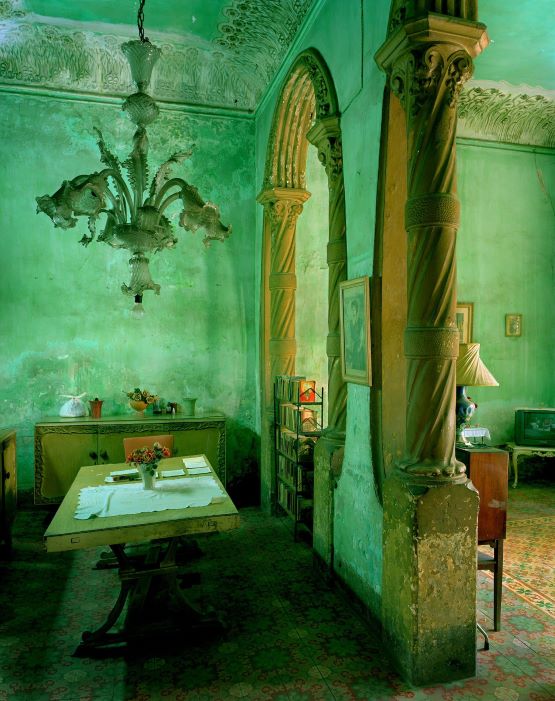
Cuba, a place known for it’s unique mix of cultural and artistic influences along with it’s diverse architecture, repeatedly drew Eastman to work there throughout the years. Eastman’s lavish monumental photographs of the opulent colonial and Art Deco architecture of Havana impart on the viewer magnificently decorated rooms bathed in romantic Baroque light.

Seemingly caught in the rift of time and bearing the resulting mark making, these decadent and warm inviting spaces seemingly take on the role of storyteller, serving witness to a time now passed.
For five decades, Michael Eastman has explored the interiors and facades in diverse geographical locations producing photographs unified by their visual precision, monumentality, and painterly use of color. Eastman’s affection for the vernacular is reflected in the resultant photographs, rich in narrative and embodied with an intrinsic sense of place and time.
Born in 1947 in St. Louis, Missouri, Eastman studied at the University of Wisconsin. He is the recipient of the National Endowment for the Arts Grant, National Addy Award, and a Paris Photo BMW Finalist Prize. His images have appeared in Time, Life, Art in America, New York Times, and American Photographer. Eastman’s work is in numerous private and public collections, including The Metropolitan Museum of Art, NY; San Francisco Museum of Modern Art, CA; Art Institute of Chicago, IL; Los Angeles County Museum of Art, CA; High Museum of Art, Atlanta, GA; Saint Louis Art Museum, MO; and the International Center of Photography, NY. His publications include Havana (Prestel, 2011), Vanishing America (Rizzoli, 2008), and Horses (Knopf, 2003).



 Boomers Daily