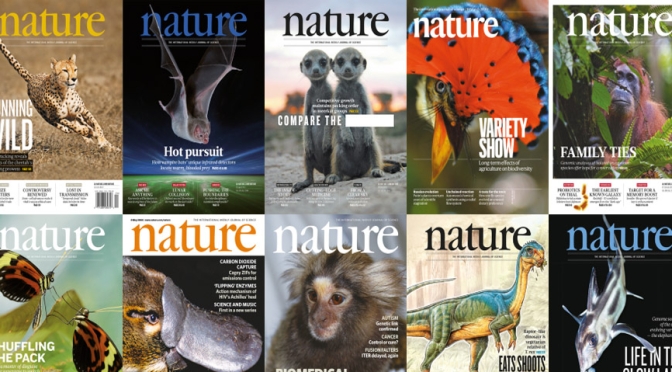
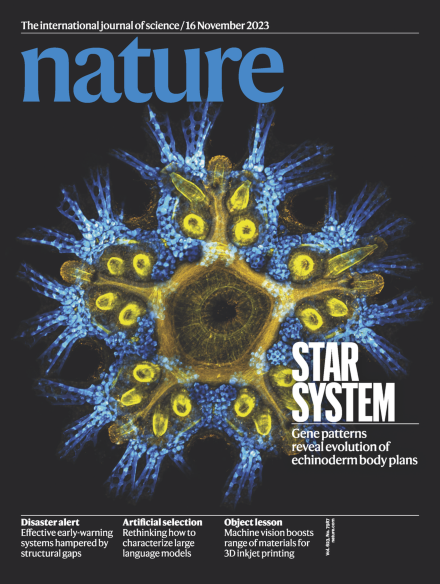
Nature Magazine – November 16, 2023: The latest issue cover features how echinoderms such as starfish and sea urchins have evolved five-fold symmetry, with five limbs radiating from a central mouth.
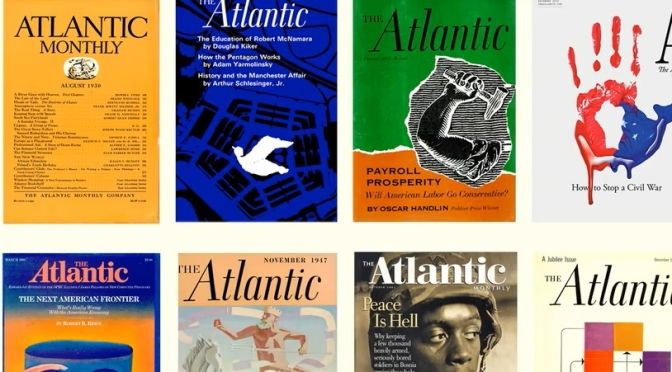
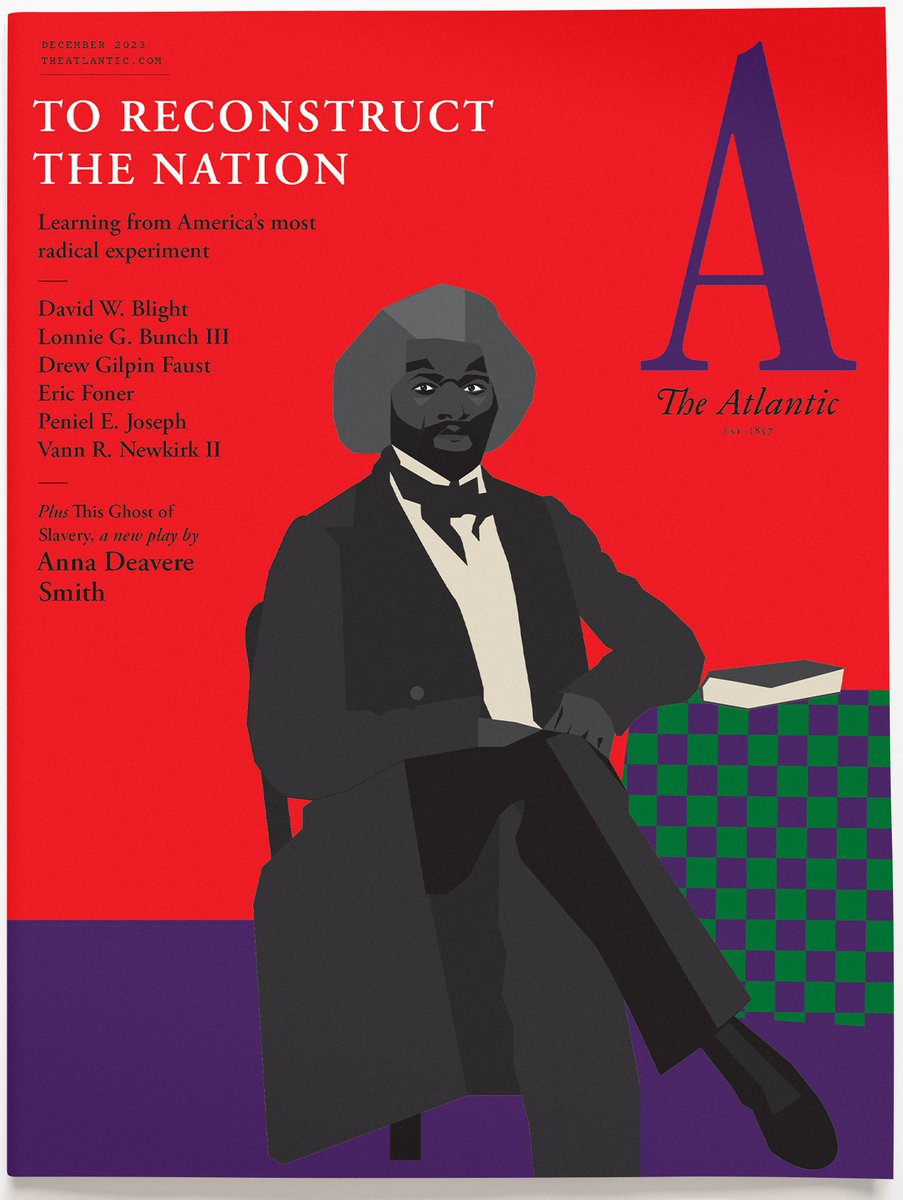
The Atlantic Magazine – December 2023 issue: For the first time since the publication of our first series of stories on Reconstruction, in 1901, The Atlantic is examining “the enduring consequences of Reconstruction’s tragic fall at a moment—yet another moment—when the cause of racial progress faces sustained pressure”…
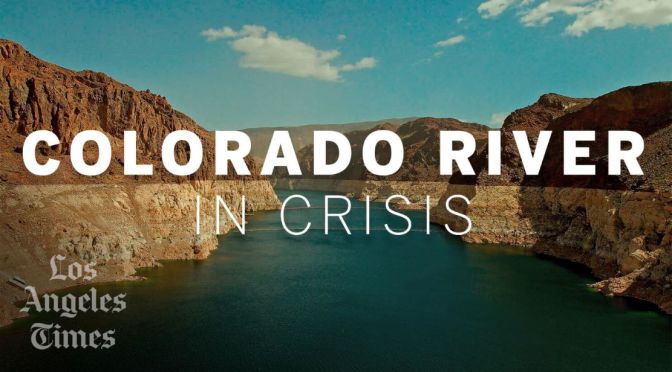
Los Angeles Times (November 15, 2023) –A team of Los Angeles Times journalists travels along the Colorado River to examine how the Southwest is grappling with the water crisis. The Colorado River can no longer withstand the thirst of the arid West.
Water drawn from the river flows to millions of people in cities from Denver to Los Angeles and irrigates vast farmlands. For decades, sections of the river have been entirely used up, leaving dusty expanses of desert where water once flowed to the sea in Mexico. Now, chronic overuse and the effects of climate change are pushing the river system toward potential collapse, with depleted reservoirs near the lowest levels since they were filled.
A water reckoning is about to transform the landscape of the Southwest. Colorado River in Crisis follows Los Angeles Times journalists traveling throughout the river’s watershed, from the headwaters in the Rocky Mountains to the river’s dry delta. These stories reveal the stark toll of the river’s decline, responses that have yet to match the scale of the crisis, and voices that are urging a fundamental rethinking of how water is managed and used to adapt to the reality of an overtapped and dwindling river.
This documentary was filmed and produced by Albert Brave Tiger Lee, with reporting by Ian James and other L.A. Times journalists. Consulting producers included Maggie Beidelman, Robert Meeks and Erik Himmelsbach-Weinstein. (46 minutes)
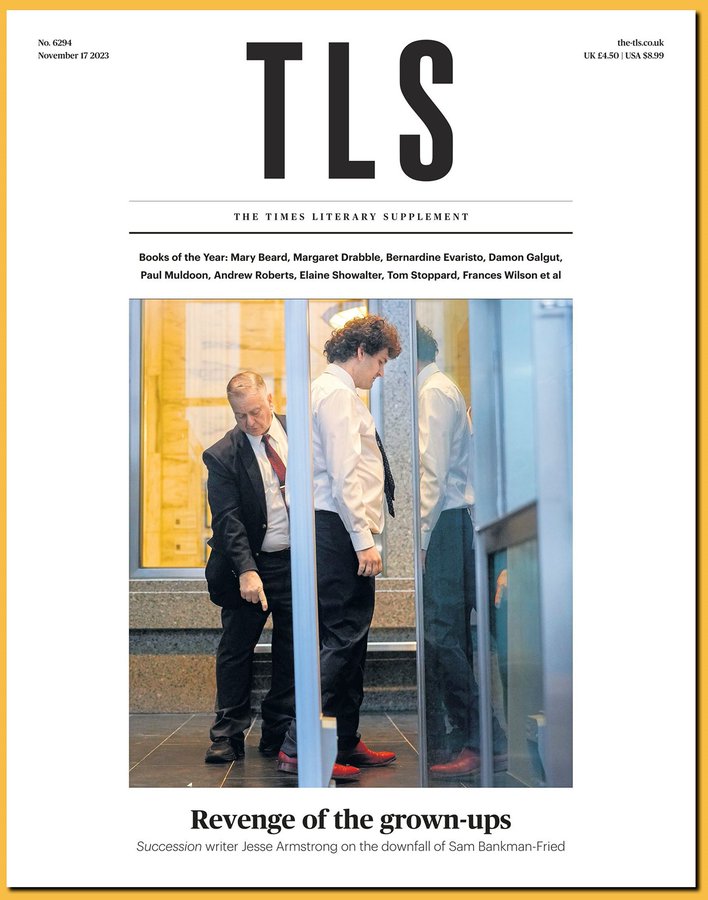
Times Literary Supplement (November 17, 2023): The new issue #TheTLS features Revenge of the grown-ups – The downfall of Sam Bankman-Fried; 2023 Books of the Year; the elusive Shakespeare; Simone Weil; Philosophers and public affairs – and more…
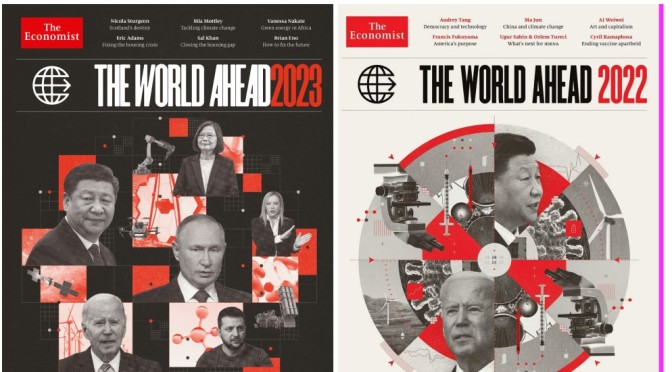
The Economist The World Ahead 2024 (November 14, 2023) – Future-gazing analysis, predictions and speculation including Ten trends to watch in 2024; 2024 will be stressful for those who care about liberal democracy; America will need a new vocabulary to discuss its presidential election; Europe needs to step up support for Ukraine; Don’t give up on peace in the Middle East, and more…
Life comes at you fast. Whether it’s the upsurge in armed conflict, the redrawing of the global energy-resources map or rapid progress in artificial intelligence (ai), the world is changing at mind-boggling speed. From the situation in the Middle East to the adoption of electric vehicles to the treatment of obesity, things look very different from the way they did just a year or two ago. Our aim is to help you keep your worldview up to date—and tell you what might be coming next. To kick things off, here are ten themes to watch in the coming year.
In theory it should be a triumphant year for democracy. In practice it will be the opposite
By Zanny Minton Beddoes
More than half the people on the planet live in countries that will hold nationwide elections in 2024, the first time this milestone has been reached. Based on recent patterns of voter turnout, close to 2bn people in more than 70 countries will head to the polls. Ballots will be cast from Britain to Bangladesh, from India to Indonesia. Yet what sounds like it should be a triumphant year for democracy will be the opposite.
The fragility of the Western coalition is a crucial weakness
By Patrick Foulis
As 2023 drew to a close, wars were raging in Africa, Israel and Gaza, and Ukraine. These crises are explosive in their own right. Combine them with a presidential race in America and 2024 promises to be a make-or-break year for the post-1945 world order.
The 2020s were destined to be dangerous. The West’s share of world gdp has fallen towards 50% for the first time since the 19th century. Countries such as India and Turkey believe the global institutions created after 1945 do not reflect their concerns. China and Russia want to go further and subvert this system.
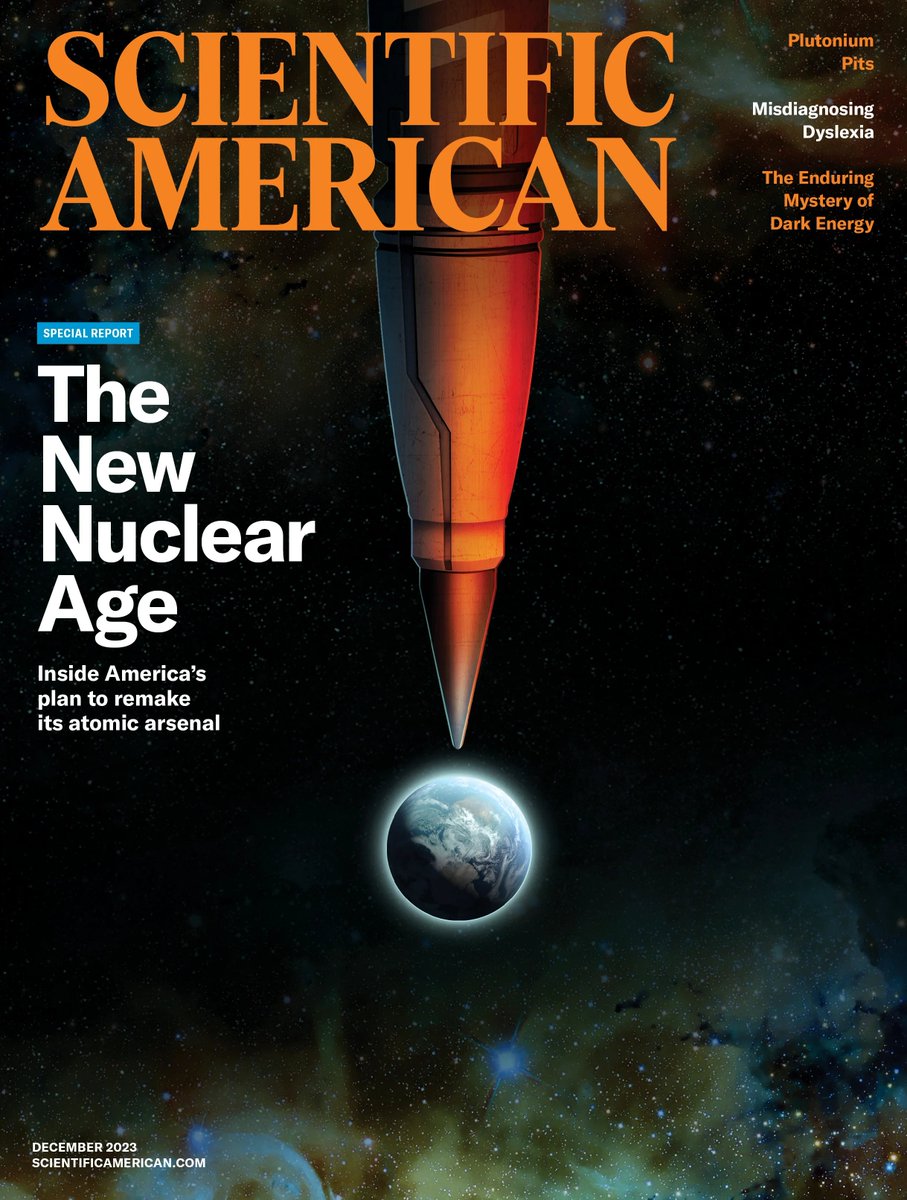
Scientific American – November 2023: The issue features The New Nuclear Age – Inside America’s plan to remake its atomic arsenal; The Most Shocking Discovery in Astrophysics Is 25 Years Old – Scientists are still trying to figure out dark energy; Behind the Scenes at a U.S. Factory Building New Nuclear Bombs – The U.S. is ramping up construction of new “plutonium pits” for nuclear weapons….
One afternoon in early 1994 a couple of astronomers sitting in an air-conditioned computer room at an observatory headquarters in the coastal town of La Serena, Chile, got to talking. Nicholas Suntzeff, an associate astronomer at the Cerro Tololo Inter-American Observatory, and Brian Schmidt, who had recently completed his doctoral thesis at the Center for Astrophysics | Harvard & Smithsonian, were specialists in supernovae—exploding stars. Suntzeff and Schmidt decided that the time had finally come to use their expertise to tackle one of the fundamental questions in cosmology: What is the fate of the universe?
The point of the thing was to forever change our concept of power. When the U.S. military assembled a team of scientists, led by physicist J. Robert Oppenheimer, to build a nuclear bomb during World War II with the hope of beating the Nazis to such a terrible creation, many of those involved saw their efforts as a strange kind of civic destiny. The Manhattan Project, wrote Richard Rhodes, Pulitzer-winning author of The Making of the Atomic Bomb, was “compelled from the beginning not by malice or hatred but by hope for a better world.” Oppenheimer himself once said, “The atomic bomb was the turn of the screw. It made the prospect of future war unendurable. It has led us up those last few steps to the mountain pass; and beyond there is a different country.”
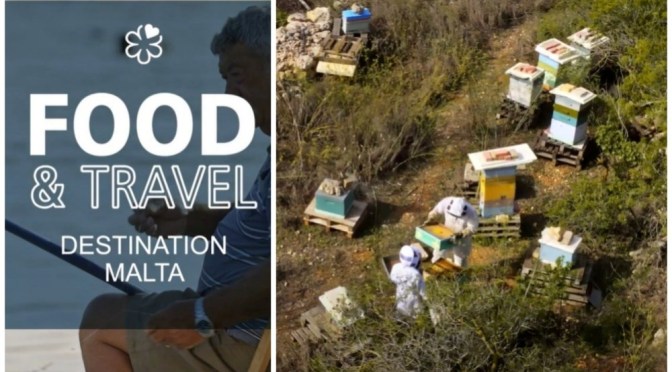
MICHELIN Guide (November 14, 2023) – A local product par excellence, Maltese honey represents the country’s history and culinary riches – and no mention can be made of Maltese cuisine without it being referenced.
In this video, beekeepers Ray Sciberras and Jorge Spiteri take us back to the time of the Romans and tell us all about the Apis Mellifera Ruttneri – the Maltese honeybee. We also see how the honey they produce plays a key role at the Camilleri & Sons Bakery, where among the many delicacies, you’ll find delicate Zeppoli Ta’ San Guzepp pastries drizzled with honey.
But it doesn’t stop at pastry, as chef Robert Cassar of the MICHELIN-recommended restaurant Root 81 makes clear. “Honey, in my eyes, is like butter – you can use it with everything,” he says.
Country Life Magazine – November 15, 2023:The latest issue features the annual Georgian Group Architecture Awards; Horns of plenty – The Bull, monarch of the meadow has been a key mythological figure since ancient times; the sensitive restoration of Somerton Castle in Lincolnshire, a once-neglected medieval stronghold; the great thatching renaissance, and more…
Here’s to the Georgians
Imaginative restoration, from Stowe House to Stroud canal, is lauded in the annual Georgian Group Architectural Awards
No, you’re not going batty
Jane Wheatley investigates the development pitfalls of finding a pipistrelle on your property
Back to the strawing board
The art of thatching is enjoying a renaissance as architects are drawn to its eco credentials, as Sarah Langford discovers
Horns of plenty
The monarch of the meadow has been a key mythological figure since ancient times. Ian Morton takes the bull by the horns
The toast of the town
Jonathan Self finds comfort in every crunchy, buttery mouthful and asks: how do you like yours?
Buried treasures
Christopher Stocks goes under-ground to examine the centuries-long allure of glittering grottos
The great country-house revival
Director-general Ben Cowell celebrates Historic Houses and half a century of achievement
Sir David Hempleman-Adams’s favourite painting
The explorer chooses a work that demonstrates the beauty and colour of the natural world
Hebridean overtures
Jamie Blackett runs the gauntlet of the ‘Grand National’ in pursuit of ever-elusive South Uist snipe
From ruin to rebirth
Nicholas Cooper marvels at the sensitive restoration of Somerton Castle in Lincolnshire, a once-neglected medieval stronghold
Native breeds
Kate Green meets the docile and floppy-eared British Lop
The good stuff
Need a sparkling conversation starter? Hetty Lintell picks out a fistful of fabulous cocktail rings
Dressed to impress
The sartorial centre of Savile Row provided the perfect setting for our Gentleman’s Life party
Interiors
Painting a floor is a fun way to add colour and pattern to a room, finds Amelia Thorpe
A touch of glass
Victorian glasshouses are feats of engineering that deserve a new lease of life, says Lucy Denton
Big apple
Charles Quest-Ritson is wowed by the display of trained apples in the 18th-century walled garden at The Newt in Somerset
Kitchen garden cook
Melanie Johnson savours the sweet earthiness of a chestnut
Shakespeare, but not as we know it
Sir Kenneth Branagh’s Lear may be off beam, but Michael Billington is buoyed by a stirring portrayal of the Bard’s wife
WIRED (November 13, 2023) – Dr. Jeffrey Laitman joins WIRED to break down how our organs and body parts age from head to toe. From hearing and hair loss to sagging skin and deteriorating joints, Dr. Laitman highlights the impact of aging on the human body—and what we can do about it.
Director: Lisandro Perez-Rey; Director of Photography: Francis Bernal
In the mad, masochistic world of ultra-marathons, one bizarre event stands above all others. The Barkley Marathons in Frozen Head State Park, Tennessee, was established in 1986 but to date only 17 people have successfully finished the 100-mile course. Peculiarities include the fact that, rather than using a starting pistol, the race begins when its director lights a cigarette. Participants must collect a page from a book at each checkpoint, and the application process includes writing an essay about why they should be allowed to take part. Panhuysen, who has competed several times (always unsuccessfully) gives an entertaining portrait of a cult competition.
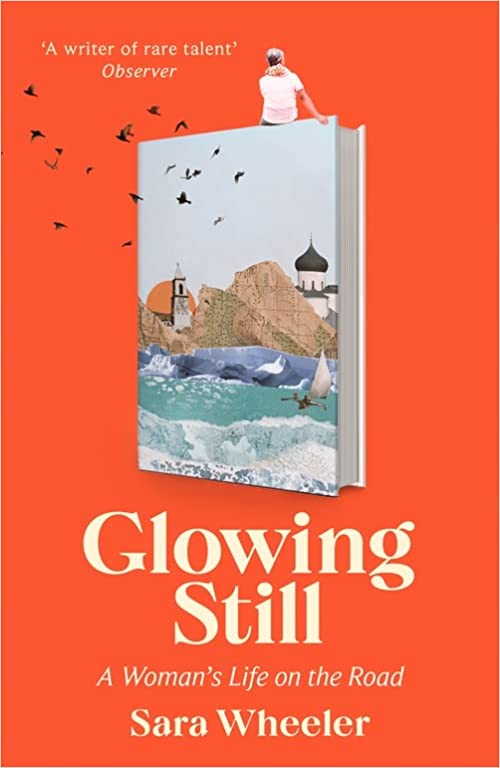
This entertaining memoir recounts Wheeler’s career as a travel writer, swimming against the tide of her largely upper-class male contemporaries. Despite the dangers and misogyny endured on journeys from Antarctica to Zanzibar, she admits her main fear is the mundane: “The John Lewis curtain department terrifies me most.”
A Brief Atlas of the Lighthouses at the End of the World
by González Macías (Picador)
For Spanish writer, graphic designer and committed landlubber Macías, remote lighthouses seem to have the appeal of endangered animals. “There is something beautiful and wild in these impossible architectures,” he writes. “Perhaps because we sense these creatures are dying. Their lights are going out, their bodies crumbling . . . ships no longer need to be under their romantic guardianship.” His fascination propels this survey of 34 lighthouses from Cornwall to China, an exploration of the buildings’ histories and particularities and a study of human solitude and survival in the loneliest surroundings.
Black Ghosts: A Journey into the lives of Africans in China
by Noo Saro-Wiwa (Canongate)
For a follow-up to the award-winning Looking for Transwonderland, the Anglo-Nigerian journalist travels to China and sets out to explore through the eyes of immigrant Africans who can travel and trade easily in the country, unlike in many European and western countries. It’s an impressionistic but revealing account of a journey through “a separate and nebulous universe”.
The Granite Kingdom: A Cornish Journey
by Tim Hannigan (Head of Zeus/Apollo)
Cornwall is among England’s most popular tourist destinations and yet remains mysterious, mythologised and misunderstood. It is, according to historian Bernard Deacon, “a kind of halfway house between English county and Celtic nation”. Hannigan attempts to untangle the region’s history, identity and culture — from King Arthur to Poldark — as he hikes from the River Tamar in the east to his family home near Land’s End.
News, Views and Reviews For The Intellectually Curious



 Los Angeles Times





 MICHELIN Guide





 WIRED
WIRED

 Financial Times (November 12, 2023) – The
 Boomers Daily