
February 12, 2023: Emma Nelson, Lynne O’Donnell and Dipo Faloyin on the weekend’s biggest talking points. We also get the latest from our editorial director, Tyler Brûlé, in Bangkok and speak to Guy De Launey, Monocle’s man in the Balkans.


February 12, 2023: Emma Nelson, Lynne O’Donnell and Dipo Faloyin on the weekend’s biggest talking points. We also get the latest from our editorial director, Tyler Brûlé, in Bangkok and speak to Guy De Launey, Monocle’s man in the Balkans.
Georgina Godwin and guests set the tone for the weekend. Simon Brooke reviews the day’s newspapers and Andrew Mueller recaps what we learned this week.


The New York Times Magazine – February 12, 2023:
The U.S. prosecuted Brian Lemley for threats, not violence. Is that what it takes to fight extremism?
“There are people who don’t know how to spell, they don’t know how to think,” says the bestselling novelist.
A poem that shakes us awake, enacting and preserving the fugitive possibilities of “healing from the law.”
February 10, 2023: After the quakes: what is the role of mayors in times of disaster? Plus: a look ahead to the forthcoming Nigerian election, the latest fashion news and Andrew’s Mueller’s What We Learned.
Ukraine and the UK: a new special relationship? Plus: what to expect from Cyril Ramaphosa’s State of the Nation address, Switzerland’s school for coronavirus sceptics and the latest aviation news.
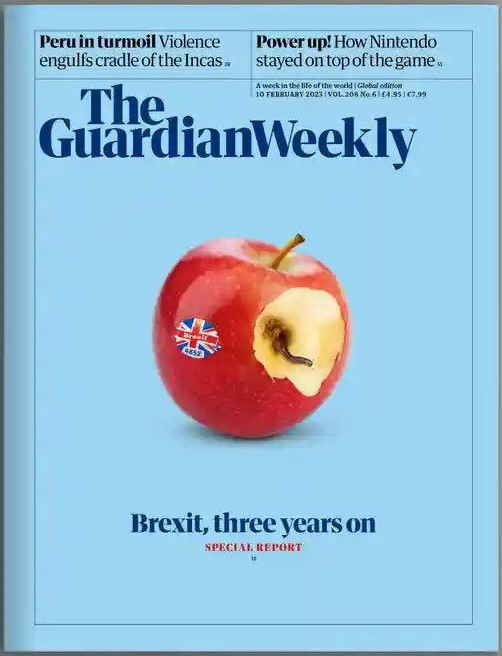

The Guardian Weekly (February 10, 2023) – Three years have passed since Britain officially left the European Union, but the country feels a long way from the “sunlit uplands” once memorably envisioned by Boris Johnson. Indeed, according to several polls released last week, more of the British population than ever are unhappy with the outcomes of Brexit – including, crucially, those who voted for it in the first place.
The Observer’s Michael Savage and Toby Helm consider what’s behind the upsurge in “Bregret” and ask what realistic hopes exist of Britain ever returning to the bloc. Then, opinion writer Nesrine Malik warns that, while many on the left may see validation in the current trends, it’s important to understand many of the UK’s structural problems stem from before the time of the Brexit referendum in 2016.
February 8, 2023 – Jenny Mathers on the directions in which Ukraine and Russia are moving as Moscow prepares its spring assault. Plus: The latest on relief efforts in Turkey from the epicentres of the earthquakes, the day’s papers and the welcome return of the beaver.

February 7, 2023 – Hong Kong’s biggest national-security trial yet begins. Plus: a trade dispute between the EU and Washington, the latest TV news and how the war is changing Ukraine’s historically patriarchal society.
A selection of three essential articles read aloud from the latest issue of The Economist. This week, President Joe Biden’s plan to remake America’s economy, Ukraine’s troops in the east are quietly confident (11:20) and the race of the AI labs heats up (18:10).
But America’s plan to spend $2trn could help save the planet



Now ninety, Lady Glenconner—a trusted friend of Queen Elizabeth and Princess Margaret—has become a cheeky chronicler of the British élite.
Everyone seems to feel like they’re faking it. But, as the concept has spread, so has the criticism.

After a near-fatal stabbing—and decades of threats—the novelist speaks about writing as a death-defying act.




 Boomers Daily