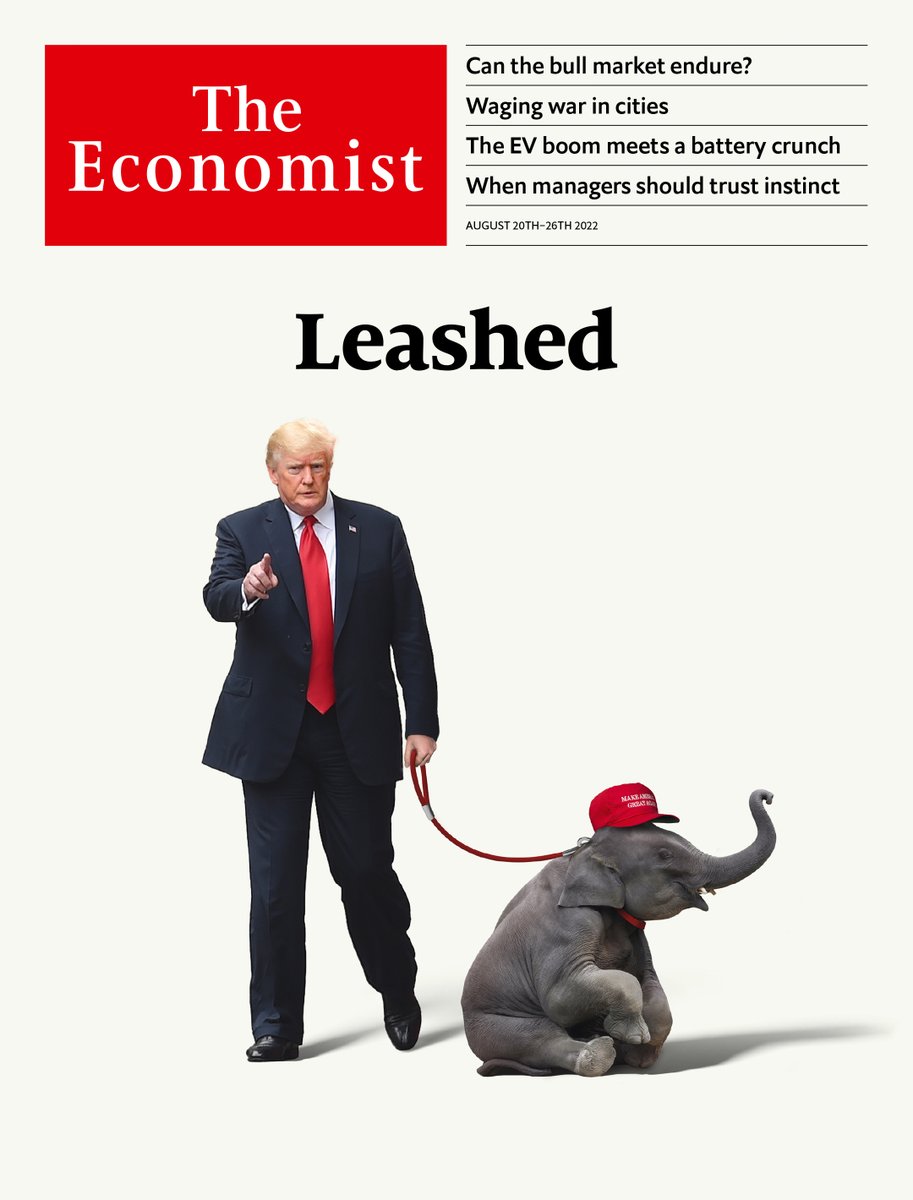
A selection of three essential articles read aloud from the latest issue of The Economist. This week, the forces that stand to transform India’s economy over the next decade (11:06), how surveilling workers could enhance productivity (21:07), and full-genome screening for newborn babies is now on the cards.
Category Archives: Opinion
Opinions: Saving The U.S. Supreme Court, Health Care Tech, Remote Work
A selection of three essential articles read aloud from the latest issue of The Economist. This week, how to save the supreme court from itself, how wearable technology promises to revolutionise health care (10:29) and our Bartleby columnist on why working from anywhere isn’t realistic (18:29).
Political Views: China Gets It Wrong, Ukraine Stakes, Crypto Utopias
A selection of three essential articles read aloud from the latest issue of The Economist. This week, what is China getting wrong? Also, why the world should stand up to Putin (10:43). And, crypto and web3: libertarian dream, or socialist Utopia? (18:27).
Political Views: Emmanuel Macron’s Future, Russian War Crimes, Headset Wars
A selection of three essential articles read aloud from the latest issue of The Economist. This week, why Emmanuel Macron’s fate matters beyond France, war crimes in Ukraine (11:05) and we explore the new headset wars between tech firms (16:05).
Analysis: Ukraine Victory Importance, Anti-Media In China, Social Influencers
A selection of three essential articles read aloud from the latest issue of The Economist. This week, why a Ukrainian victory would transform the security of Europe, a terrible plane crash prompts a revealing anti-media backlash in China (11:20) and the serious business of social influencers (18:30).
Preview: New York Times Magazine – April 3, 2022
Cover Previews: Harper’s Magazine – January 2022
Climate Change: “Don’t Choose Extinction” (U.N.)
A visitor to the United Nations General Assembly has a message about climate change, telling us government-supported fossil fuel subsidies will prove disastrous to our species. The computer-animated Frankie the Dinosaur (voiced by actor Jack Black) stars in this message produced by the U.N. Development Program as part of its “Don’t Choose Extinction” campaign, timed to the COP-26 climate conference in Glasgow.
Covid-19: Patients Dying In Name Of Vaccine Freedom
In the video above, Alexander Stockton, a producer on the Opinion Video team, explores two of the main reasons the number of Covid cases is soaring once again in the United States: vaccine hesitancy and refusal. “It’s hard to watch the pandemic drag on as Americans refuse the vaccine in the name of freedom,” he says. Seeking understanding, Mr. Stockton travels to Mountain Home, Ark., in the Ozarks, a region with galloping contagion and — not unrelated — abysmal vaccination rates. He finds that a range of feelings and beliefs underpins the low rates — including fear, skepticism and a libertarian strain of defiance. This doubt even extends to the staff at a regional hospital, where about half of the medical personnel are not vaccinated — even while the intensive care unit is crowded with unvaccinated Covid patients fighting for their lives. Mountain Home — like the United States as a whole — is caught in a tug of war between private liberty and public health. But Mr. Stockton suggests that unless government upholds its duty to protect Americans, keeping the common good in mind, this may be a battle with no end.
Personal Health: “Singing The Praises Of Prevention” (The Scientist Magazine)
From Bob Grant, The Scientist Magazine (April 1, 2020):
Prevention has been playing a growing role in other diseases, infectious and
otherwise, long before this latest global pandemic. Cancer, the focus of this issue, is ubiquitous, and one would be hard pressed to find a person anywhere on Earth whose life wasn’t in some way touched by the complex and vexing malady.
This cancer-focused issue features a cover story in which we explore one facet of cancer prevention: exercise. In this feature story, Danish researcher Bente Klarlund Pedersen explains that studies have shown frequent exercise to be useful in avoiding cancer as well as in helping cancer patients lessen the side effects of their cancers and treatments. Her research and that of others is seeking to enumerate the molecular and cellular mechanisms that underlie the benefits exercise seems to offer cancer patients.
But when one considers the practical ripples that biology sends through societies—issues of public health and the shared goal of minimizing the impact of diseases on a global scale—human behavior and prevention become vitally important.