From a New York Times online article (Feb 17, 2020):
Charles Portis, Elusive Author of ‘True Grit,’ Dies at 86 The publicity-shy Mr. Portis earned a modest but devoted readership and accolades as America’s “least-known great writer.”Charles Portis, the publicity-shy author of “True Grit” and a short list of other novels that drew a cult following and accolades as the work of possibly the nation’s best unknown writer, died on Monday at a hospice in Little Rock, Ark.
He was 86.His death was confirmed by his brother Jonathan, who said Mr. Portis had been in hospice care for two years and in an Alzheimer’s care facility for six years prior.Mr. Portis was in his early 30s and well established as a reporter at The New York Herald Tribune in 1964, when he decided to turn to fiction full time. The decision astonished his friends and colleagues at the paper, among them Jimmy Breslin, Tom Wolfe and Nora Ephron.He had covered the civil rights movement in the South: riots in Birmingham, Ala.; the jailing of the Rev. Dr. Martin Luther King Jr. in Albany, Ga.; Gov. George C. Wallace’s attempt to stop the desegregation of the University of Alabama.
NPR’s Tamara Keith and Amy Walter of the Cook Political Report join Judy Woodruff to discuss the latest political news, including the stakes for 2020 Democrats in the upcoming Nevada caucuses, technical concerns for tabulating caucus results after Iowa’s confusion and whether Mike Bloomberg’s advertising blitz is delivering him voter support.
From a New York Times article by Jane E. Brody (Feb 17, 2020):
“It takes 10 to 12 hours to use up the calories in the liver before a metabolic shift occurs to using stored fat,” Dr. Mattson told me. After meals, glucose is used for energy and fat is stored in fat tissue, but during fasts, once glucose is depleted, fat is broken down and used for energy.
I was skeptical, but it turns out there is something to be said for practicing a rather prolonged diurnal fast, preferably one lasting at least 16 hours. Mark P. Mattson, neuroscientist at the National Institute on Aging and Johns Hopkins University School of Medicine, explained that the liver stores glucose, which the body uses preferentially for energy before it turns to burning body fat.
For example, human studies of intermittent fasting found that it improved such disease indicators as insulin resistance, blood fat abnormalities, high blood pressure and inflammation, even independently of weight loss. In patients with multiple sclerosis, intermittent fasting reduced symptoms in just two months, a research team in Baltimore reported in 2018.
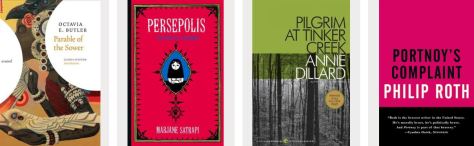
The New York Public Library is marking its 125th birthday this year—in part with this list of their favorite books written for adults from the past 125 years, which they hope will “inspire a lifelong love of reading.”
Bloomberg Opinion columnist Barry Ritholtz interviews economist, bestselling author and New York Times columnist Paul Krugman, whose most recent book is “Arguing With Zombies: Economics, Politics, and the Fight for a Better Future.”
Paul Robin Krugman (born February 28, 1953) is an American economist who is the Distinguished Professor of Economics at the Graduate Center of the City University of New York, and a columnist for The New York Times. In 2008, Krugman was awarded the Nobel Memorial Prize in Economic Sciences for his contributions to New Trade Theory and New Economic Geography. The Prize Committee cited Krugman’s work explaining the patterns of international trade and the geographic distribution of economic activity, by examining the effects of economies of scale and of consumer preferences for diverse goods and services.
Krugman was previously a professor of economics at MIT, and later at Princeton University. He retired from Princeton in June 2015, and holds the title of professor emeritus there. He also holds the title of Centenary Professor at the London School of Economics. Krugman was President of the Eastern Economic Association in 2010, and is among the most influential economists in the world. He is known in academia for his work on international economics (including trade theory and international finance),economic geography, liquidity traps, and currency crises.
Krugman is the author or editor of 27 books, including scholarly works, textbooks, and books for a more general audience, and has published over 200 scholarly articles in professional journals and edited volumes. He has also written several hundred columns on economic and political issues for The New York Times, Fortune and Slate. A 2011 survey of economics professors named him their favorite living economist under the age of 60.[13] As a commentator, Krugman has written on a wide range of economic issues including income distribution, taxation, macroeconomics, and international economics. Krugman considers himself a modern liberal, referring to his books, his blog on The New York Times, and his 2007 book The Conscience of a Liberal. His popular commentary has attracted widespread attention and comments, both positive and negative. According to the Open Syllabus Project, Krugman is the second most frequently cited author on college syllabi for economics courses.
The emergent corona virus (SARS-CoV-2) outbreak in China is fast changing, just this week reported cases of the disease covid-19 jumped as new data became available. In this video Wendy Burns, and Peter Openshaw from Imperial College London explain what we know about the basic structure of the virus, it’s mode of transmission, the symptoms and pathogenesis of the diease, what we currently know about treatment, and how the virus may adapt in the future.
Syndicated columnist Mark Shields and Washington Post columnist Michael Gerson join Judy Woodruff to discuss the week in politics, including Sen. Bernie Sanders’ victory in the New Hampshire primary and how it shapes the race for the 2020 Democratic presidential nomination, President Trump’s strategy for reelection and the political conflict surrounding the Justice Department.
From a Wall Street Journal online article (Feb 13, 2020):
Beaming Solar Power – Wall Street Journal
To meet the surge in demand projected by 2050, innovative engineers, utility operators and grid architects are planning for a future that blurs the distinctions between energy consumers and producers. Homeowners, businesses and other traditional utility customers are beginning to take on a new role as energy producers, through small-scale solar arrays, wind turbines and other new affordable technologies.
To coordinate so many different power sources and demands, the future power grid will depend on artificial intelligence, automated two-way communications and computer control systems to continuously collect and synthesize data from millions of smart sensors.
Beaming Solar Power – Scientists and engineers are working on spacecraft to capture sunlight and transform it into electricity that is wirelessly beamed to Earth. A prototype from the California Institute of Technology transmits power in a steerable beam. Japan’s space agency JAXA demonstrated a unit that converted 1.8 kilowatts of electricity into microwaves and then beamed it about 100 yards. China is planning an orbital solar power station.
Living Solar Cells – Researchers are exploring how to exploit the ability of many microorganisms to generate electric current through photosynthesis. Solar cells using microbes would be cleaner and cheaper than those based on conventional semiconductors. So far, the current is only about enough to drive a small fan. By using two kinds of microbes instead of one, scientists in China recently found a way to boost the electrical energy.
The Power of Brine – Scientists in Norway, the Netherlands, Japan and the U.S. are generating electricity by harnessing the difference in salt concentration between seawater and freshwater. In one experiment, a semipermeable membrane allows seawater ions to pass into the fresh water. The movement of the ions generates an electric current.
HCCI Releases 2018 Health Care Cost and Utilization Report
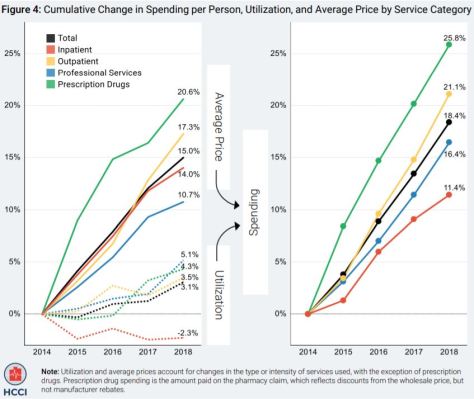
Per-Person Health Care Spending Grew 18% from 2014 to 2018, Driven Mostly by Prices
The report examines four groups of health care services and dozens of sub-categories. Of the four major categories, outpatient visits and procedures saw the highest 2018 spending increase (5.5%). Other notable trends include:
Inpatient services.
Per-person spending on inpatient admissions rose 11.4% between 2014 and 2018
Within each sub-category of inpatient admissions, average prices grew steadily between 2014 and 2018 while utilization trends varied. However, the 2.0% price increase in 2018 was lower than the near 4% annual increases from 2014 to 2017.
Outpatient services.
Increases in prices and use led to a 16% increase in spending from 2014 to 2018.
ver that period, ER visit spending increased 32% and spending on observation stays went up 29%.
Professional services.
Spending increased 16% and growth accelerated over the 5-year period, driven by office visits and administered drugs.
Psychiatry also saw strikingly high spending growth of 43% from 2014 to 2018, which was driven mostly by increased use.
Prescription Drugs.
Generic drugs accounted for 88% of all prescriptions. .
Out-of-pocket payments for prescriptions for generic drugs was less than one-fifth of out-of-pocket payments on brand drugs.

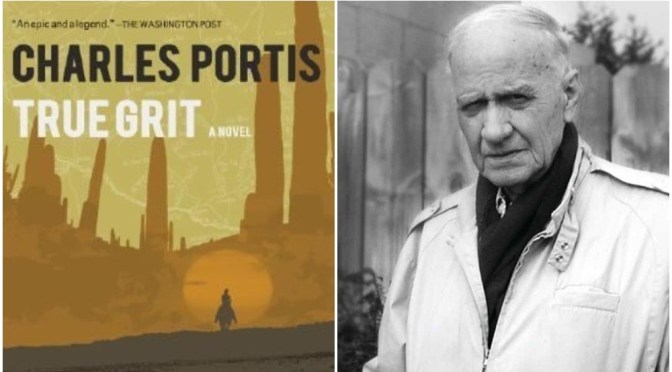
 Charles Portis, Elusive Author of ‘True Grit,’ Dies at 86 The publicity-shy Mr. Portis earned a modest but devoted readership and accolades as America’s “least-known great writer.”Charles Portis, the publicity-shy author of “True Grit” and a short list of other novels that drew a cult following and accolades as the work of possibly the nation’s best unknown writer, died on Monday at a hospice in Little Rock, Ark.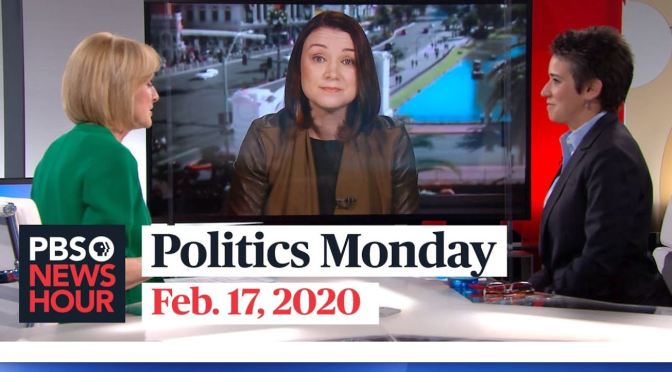
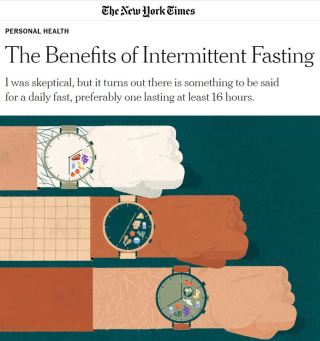 I was skeptical, but it turns out there is something to be said for practicing a rather prolonged diurnal fast, preferably one lasting at least 16 hours. Mark P. Mattson, neuroscientist at the National Institute on Aging and Johns Hopkins University School of Medicine, explained that the liver stores glucose, which the body uses preferentially for energy before it turns to burning body fat.
 The New York Public Library is marking its 125th birthday this year—in part with this list of their favorite books written for adults from the past 125 years, which they hope will “inspire a lifelong love of reading.”
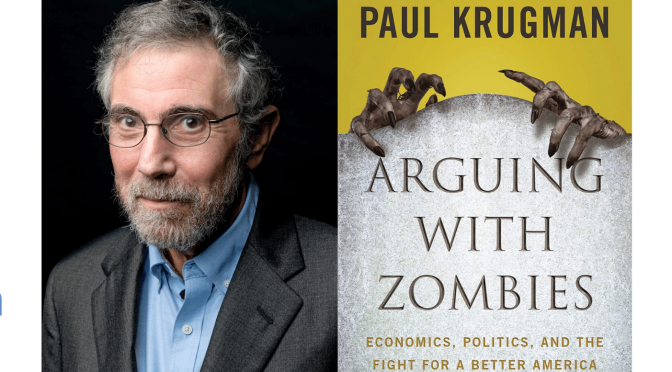
 Bloomberg Opinion columnist Barry Ritholtz interviews economist, bestselling author and New York Times columnist Paul Krugman, whose most recent book is “Arguing With Zombies: Economics, Politics, and the Fight for a Better Future.”
 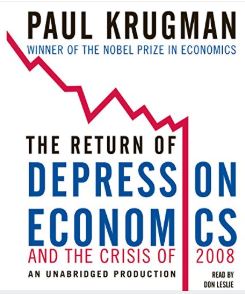 Paul Robin Krugman (born February 28, 1953) is an American economist who is the Distinguished Professor of Economics at the Graduate Center of the City University of New York, and a columnist for The New York Times. In 2008, Krugman was awarded the Nobel Memorial Prize in Economic Sciences for his contributions to New Trade Theory and New Economic Geography. The Prize Committee cited Krugman’s work explaining the patterns of international trade and the geographic distribution of economic activity, by examining the effects of economies of scale and of consumer preferences for diverse goods and services.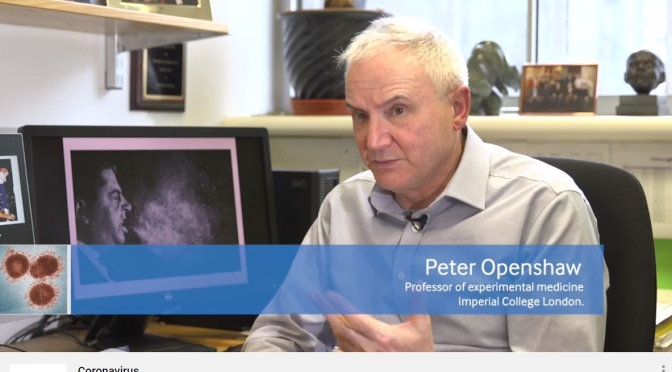





 Boomers Daily