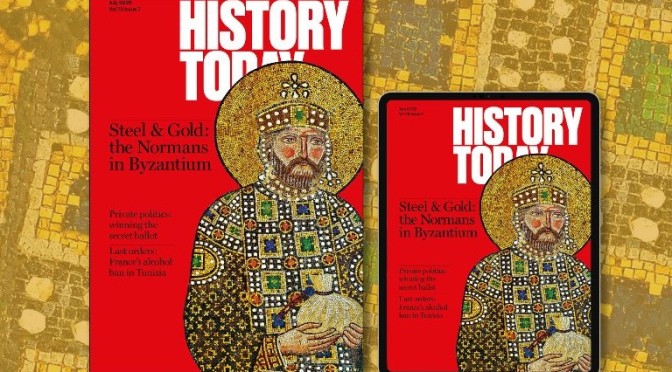
HISTORY TODAY MAGAZINE: The latest issue features ‘The Declaration of Independence’, Black Loyalists, how England learned Old English, sacrifice and early Christianity, and the Hans Crescent strike.
That the United States declared its independence in July 1776 is well known; that the British state commissioned, but never published, a counter-declaration is not.
Hoping to weaken the rebels’ cause, Britain offered freedom to enslaved people who joined the British army. At the end of the American Revolutionary War that promised freedom had to be honoured – but how and where?
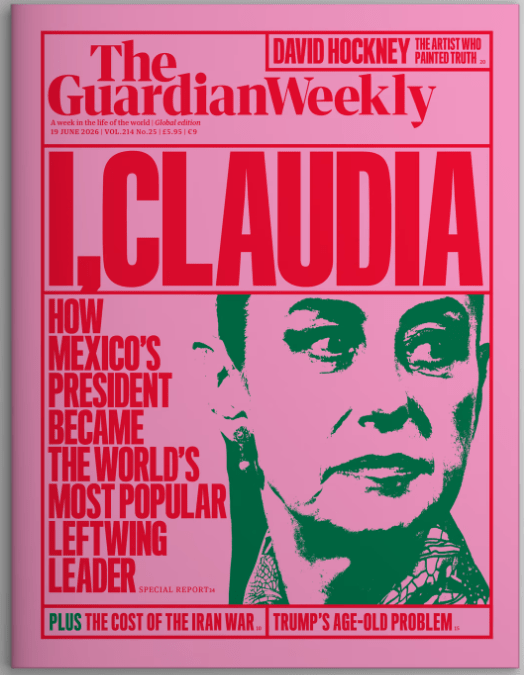
Claudia Sheinbaum must be doing something right. With a consistent approval rating of around 70% since becoming Mexico’s president in 2024, the former climate scientist – and protege of her predecessor, Andrés Manuel López Obrador – is the world’s most popular leftwing leader. She is also the first female leader of one of Latin America’s most macho countries.
Yet despite her soaring popularity, driven in part by major universal healthcare reforms, there is a curious tension between Sheinbaum’s disciplined, scientific approach to governing and the messy, often violent politics of modern Mexico. Her handling of the country’s ongoing crisis of disappearances, the continuing influence of organised crime and the rising presence of the army in national life are all issues she has faced criticism over.
The big story | Counting the cost of the war on Iran With a peace deal expected to be signed later this week, Oliver Holmes examines the human, economic and environmental toll of a conflict that appears to have achieved nothing
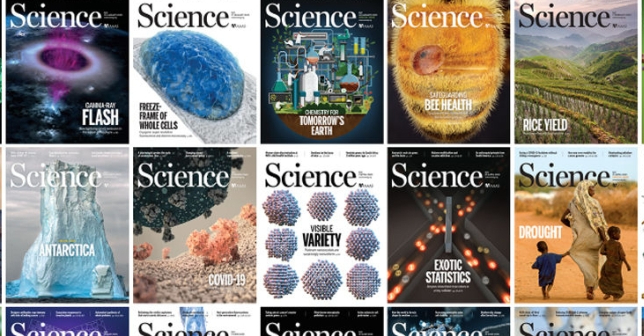
Science | How the loss of wild bees impacts human health Crops and flowers rely on them for survival, but wild bees are declining – and crucial nutrients will go missing from our diets as a result. Gloria Dickie reports
Feature | How personal taste fell out of fashion Our favourite music, clothes and books used to be markers of individuality – but algorithms have made us all sheep. Rachel Aroestimeets the style rebels fighting back
Opinion | If Kyiv has really got Putin on the run, he won’t accept peace meekly Don’t expect the Russian president to pursue peace, says Simon Tisdall – instead, he could continue to expand the war beyond Ukraine’s borders, with dire risks for us all
Culture | The revolutionary art of David Hockney Guardian critic Jonathan Jones pays tribute to the artist whose work was a feast of visual pleasures
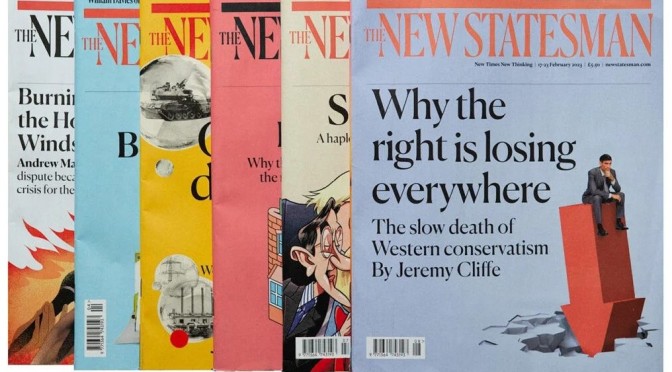
“I love inflation,” said Donald Trump earlier this month, when asked about the latest increase in the Consumer Prices Index to an annualized 4.2 percent. But the power of the President’s positive thinking cannot overwhelm the enormous threat that rising prices pose to his legacy. The new figure is more than an inconvenience or a technicality. It could bring about a sharp change in the political order. Rising costs will likely prove to be Trump’s undoing and present the Democrats with a free hit for November’s midterms and beyond. There was one reason above all others why Trump returned to the White House in 2024: high inflation during the Biden years. His 2016 slogan, “Make America Great Again,” morphed into “Make America Affordable Again.
“I don’t think there’s anything that’s going to get me into heaven,” Donald Trump told a group of journalists aboard Air Force One in October. “I think I’m not, maybe, heaven-bound.” “My phone started blowing up,” says Paula White-Cain, Trump’s senior advisor to the White House Faith…
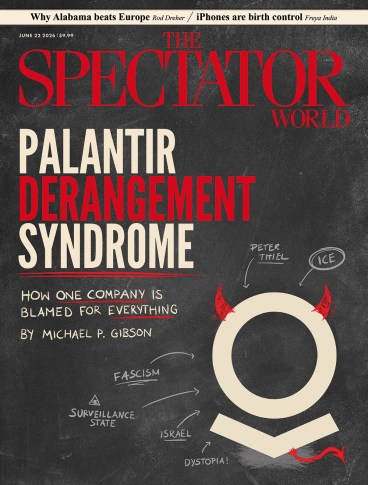
A late spring outbreak of righteous indignation is affecting the United Kingdom. It’s yet another variant of Palantir Derangement Syndrome. Virologists tracked this smug neurosis as it jumped across the Atlantic from the American left to British Labour. Symptoms include selective blindness, performative anguish, a hilarious inability to grasp the facts and Tourette’s-level
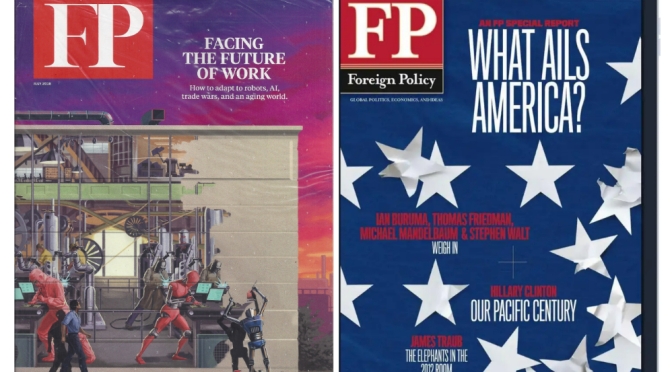
FOREIGN POLICY MAGAZINE: The latest issue features ‘the End of…The U.S.-Israel alliance…Neo liberalism…Trans-Atlanticism…Climate Politics…The United Nations…Asylum…Political parties…Chinese growth…Morality…The future….












 Boomers Daily