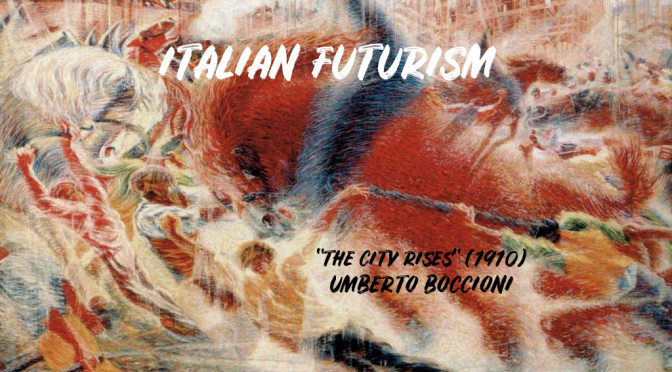
An introduction to Futurism, the dynamic movement that revolutionised Italian art at the beginning of the twentieth century. Obsessed with speed, the Futurists created art that captured the dawning of a new age. Also included is a closer look at Umberto Boccioni a founding member of the group, who died tragically young during the First World War. An extract from the Christie’s Education online course, Modern Art.
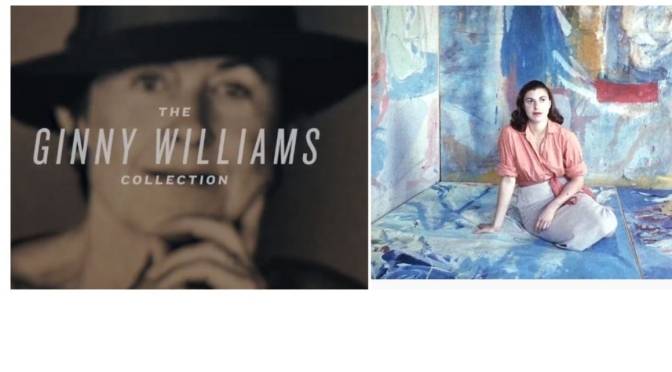
As an early patron and friend of artists including Louise Bourgoeis, Ann Hamilton and Lee Krasner, Ginny Williams was revered for her pioneering support. “Ginny saw the Art World as this wonderful and diverse ecosystem, and she loved all parts of it” Sotheby’s Chariman Amy Cappallazzo fondly recalls, “she had a tremendously rich relationship with so many artists”.
In the 1960s, while America was being wowed by Pop art, Europe had its own answer to bringing life and art closer together. In this episode of Expert Voices, learn about Nouveau Réalism – a groundbreaking movement in which artists created radical and rebellious sculptures and paintings in protest against the rise of consumerism.
Our upcoming Art Contemporain Day Sale (24 June | Paris) features an exceptional private European collection of historical New Realist art, including works by Niki de Saint Phalle, Arman, Daniel Spoerri, Mimmo Rotella and Christo and Jean-Claude.
An extract from the Christie’s Education online course, The Great Masters of European Art 1350–1850. Florence in the 1400s, a city of wealthy guilds and merchants, in particular the Medici family, who commissioned astonishing works of art to show off their success and cultivation.
Here we are introduced to one of the great artists the Medicis favoured: Sandro Botticelli, and his most famous works: ‘Primavera’ and ‘The Birth of Venus’.
Alessandro di Mariano di Vanni Filipepi (c. 1445 – May 17, 1510), known as Sandro Botticelli, was an Italian painter of the Early Renaissance. He belonged to the Florentine School under the patronage of Lorenzo de’ Medici, a movement that Giorgio Vasari would characterize less than a hundred years later in his Vita of Botticelli as a “golden age”. Botticelli’s posthumous reputation suffered until the late 19th century; since then, his work has been seen to represent the linear grace of Early Renaissance painting.
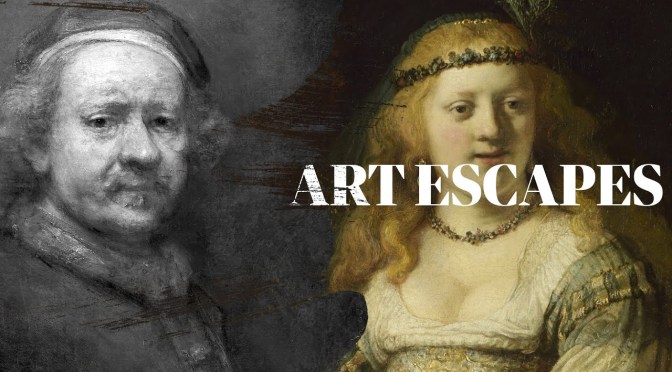
A revealing look at Rembrandt’s most intimate portraits, on display in the locked-down National Gallery in London. The Guardian’s art critic Jonathan Jones reveals his favourite portraits, of vulnerable and unpretentious people the artist had known and loved. Jones asks what we can learn from these great masterpieces, especially during lockdown.
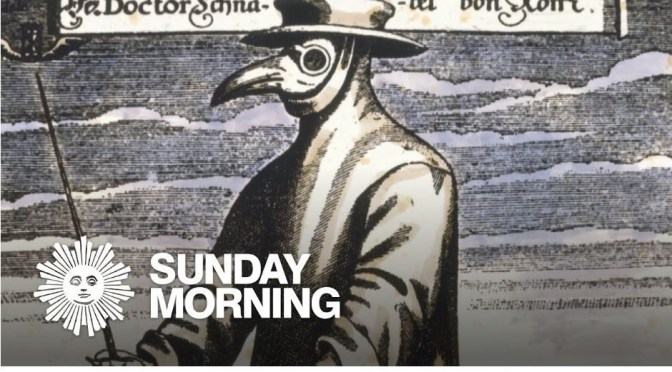
Originating during the Black Death of the Middle Ages, face coverings to protect against the transmission of disease are not just medical requirements; they’re now a fashion statement. Mark Phillips talks with medical historian Mark Honigsbaum (“The Pandemic Century”) about the purpose and style of facemasks.
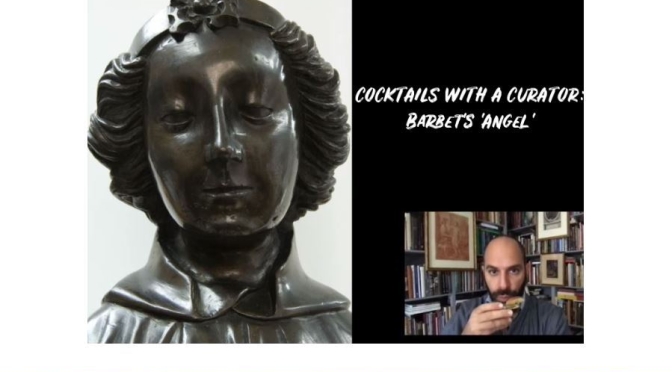
In this week’s episode of “Cocktails with a Curator,” discover the fascinating history of Jean Barbet’s Angel, an incredibly rare bronze from fifteenth-century France whose origins are shrouded in mystery. Xavier F. Salomon, Peter Jay Sharp Chief Curator, discusses the royal cannon-maker who cast the sculpture and the possibility that it once resided in Paris’s Sainte-Chapelle. This week’s complementary cocktail is the Angel Face, customarily garnished with an apple slice.
Painted in 1996, David Hockney’s “30 Sunflowers” is a bold and luscious still life of contemporary times. In this episode of Expert Voices, discover how Hockney was inspired to paint “30 Sunflowers” after a decade hiatus, and hear Hockney himself explain the influence of the Old Masters in this vivid work.
‘Project ZP’ proved the Jaguar E-type was as fast as it looked.
Although the response to the E-type was frenzied, Jaguar knew that more than a pretty face was required to secure the model’s future. Under the veil of ‘Project ZP’, seven of the earliest E-types were transformed into racers. And this particular car stands today as the best of the bunch…
What do these writers have in common? They were all members of the Shakespeare and Company lending library.
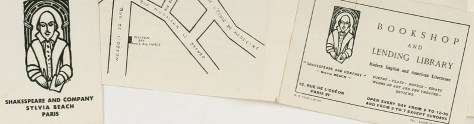
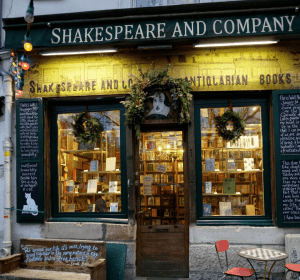
In 1919, an American woman named Sylvia Beach opened Shakespeare and Company, an English-language bookshop and lending library in Paris. Almost immediately, it became the home away from home for a community of expatriate writers and artists now known as the Lost Generation. In 1922, she published James Joyce’s Ulysses under the Shakespeare and Company imprint, a feat that made her—and her bookshop and lending library—famous around the world. In the 1930s, she increasingly catered to French intellectuals, supplying English-language publications from the recently rediscovered Moby Dick to the latest issues of The New Yorker. In 1941, she preemptively closed Shakespeare and Company after refusing to sell her last copy of Joyce’s Finnegans Wake to a Nazi officer.
The Shakespeare and Company Project uses sources from the Beach Papers at Princeton University to reveal what the lending library members read and where they lived. The Project is a work-in-progress, but you can begin to explore now. Search and browse the lending library members and books. Read about joining the lending library. Download a preliminary export of Project data. In the coming months, check back for new features and essays.

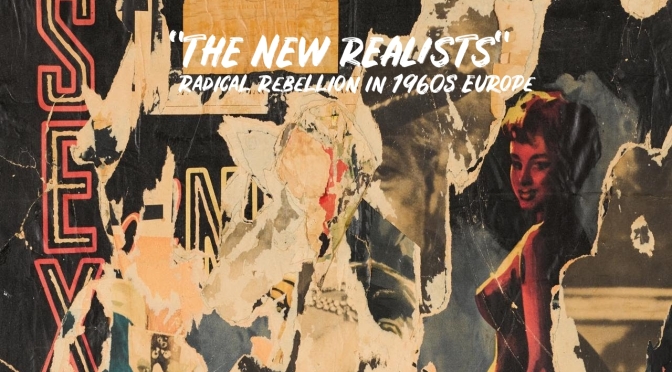
 In the 1960s, while America was being wowed by Pop art, Europe had its own answer to bringing life and art closer together. In this episode of Expert Voices, learn about Nouveau Réalism – a groundbreaking movement in which artists created radical and rebellious sculptures and paintings in protest against the rise of consumerism.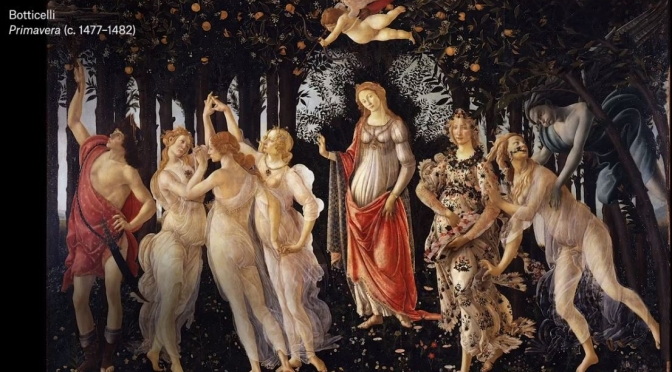
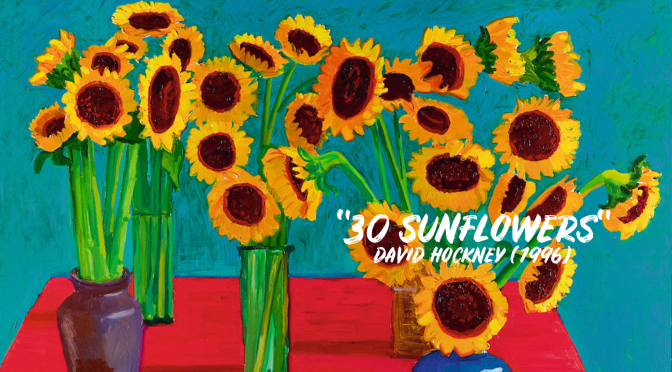
 Painted in 1996, David Hockney’s “30 Sunflowers” is a bold and luscious still life of contemporary times. In this episode of Expert Voices, discover how Hockney was inspired to paint “30 Sunflowers” after a decade hiatus, and hear Hockney himself explain the influence of the Old Masters in this vivid work.

 Gertrude Stein
 Boomers Daily