Henry Moore achieved international fame as a sculptor, despite once being denounced for promoting ‘the cult of ugliness’. And he also remained a most unassuming man, finds Laura Gascoigne, as two new exhibitions of his work prepare to welcome visitors.
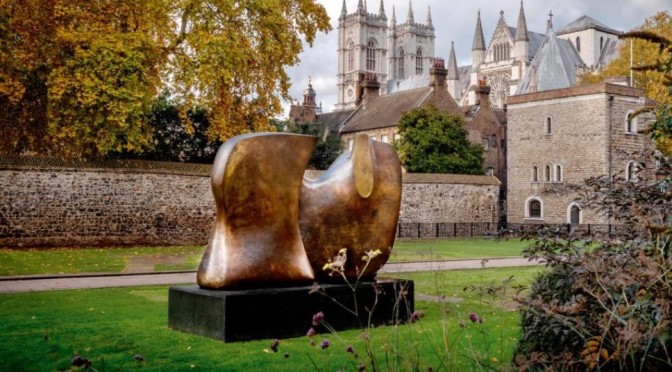
Sculptors are very rarely household names, but no one who lived through the 1960s could be unfamiliar with the name of Henry Moore. At the height of his international success, Moore’s monumental public sculptures in prominent locations — from the 12ft-high Knife Edge Two Piece (1962–65) outside London’s Houses of Parliament to the 26ft-long Reclining Figure (1963–64) outside the Lincoln Centre in New York, US — became such a feature of the urban landscape that they appeared in cartoons in the popular press. For a Modernist abstract sculptor, that was fame.
In the 1950s, Moore added a new subject to his signature themes of the mother and child and the reclining figure. As a young man, his first sight of Stonehenge by moonlight, in 1921, had left an indelible impression; 30 years later, he began a series of large bronze totemic forms recalling prehistoric monoliths.
Henry Moore with three of his Upright Motives c.1955.Photo: Barry Warner
@Eva zu Beck takes you on a journey to Cholula and Puebla, two cities in central Mexico designated as Pueblos Mágicos, or Magical Towns. These are places that offer visitors a very special experience, owing to their typical historic character and in some cases, colonial-era architecture. As well as a spectacular pyramid and a miniature volcano, the towns are a great place to experience the Danza de los Voladores, or Dance of the Flyers.
More than 20 years ago, a community of men and women in the French region of Burgundy set themselves a massive challenge: to build a castle using the techniques of the Middle Ages. The site in the town of Guédelon is open to visitors, offering them an immersion into the 13th century. Today, nearly 40 people work every day on this medieval construction site. Stone quarrying is the first step in building a castle. And to transport the stones to the site, modern machines are banned: everything is done like in the 13th century, with horsepower.
In this five-minute animated video, journey back to the 6th-century BCE workshop of the Athenian master Andokides and witness an ancient artist’s moment of creative ingenuity. For generations Athenian vase painters had employed black-figure technique, in which the figure is painted in a mixture of clay and water called slip and details are incised with a sharp tool.
At some point—we don’t know precisely when or why—a vase painter had the idea to reverse the scheme, leaving the figures the color of the clay and painting details with a brush. We now call this red-figure technique. Learn how ancient vase painters created vases in both styles and marvel at the technical virtuosity of the multi-step firing process that contributed to their distinctive, high-contrast look.
The Japanese painter Kawanabe Kyōsai (1831–1889) was one of the most innovative artists of his day. He lived during a turbulent time, experiencing the downfall of the Tokugawa shogunate (the hereditary military government) and the new imperial regime’s reforms to modernise and Westernise the country. Kyōsai’s drive to capture the world with his brush earned him the nickname ‘demon of painting’ – which he lived by.
Kyōsai, as a highly trained painter, was proficient in traditional methods and subjects. He broke with convention by blurring the established boundary between ‘serious’ and comic pictures. Traditionally, complex painting techniques were reserved for literary classics, historical and legendary figures, auspicious themes and religious images. Comic pictures were typically produced in a lighter, more fluid style.
Kyōsai often saw humour in ‘serious’ subjects and introduced comic and everyday content in highly finished, detailed paintings. The selection in this room demonstrates Kyōsai’s range and skill across diverse genres. Subjects include animals, monsters, ghosts, protective deities and Buddhist icons. Some paintings display powerful Kano-style ink techniques, others depict humorous creatures – recalling works by his first teacher, Utagawa Kuniyoshi, and referencing medieval picture scrolls. He can be seen exploring Western techniques such as perspective, shading and the study of anatomy, which attests to his insatiable curiosity and desire to push beyond tradition.
Kyōsai had a keen interest in society, and captured contemporary events in his pictures with humour and piquancy. His satirical prints from the 1860s, the period leading up to the collapse of the shogunate regime, reflect widespread anxiety about the political turmoil, economic instability and foreign presence. He channelled the febrile atmosphere into dynamic images of frog battles, monster parties and wildly dancing tengu (mischievous, semi-human creatures). Under the new Meiji government, the sudden influx of Western-style culture greatly shocked many Japanese, after over 260 years of relative isolation.
Kyōsai’s comic pictures express both the excitement of the new era, with modern technologies such as the telegraph and trains, and a certain scepticism towards those who blindly followed the new trends. The government’s policy of hiring European and American specialists to teach at new institutions in Japan brought the painter a personal benefit. The British architect Josiah Conder (1852–1920) became his pupil around 1881, and remained a student, patron and friend until Kyōsai’s death in 1889.
In nineteenth-century Japan, artists often produced works impromptu in front of an audience. The creative process was appreciated as a performance. At commercially organised calligraphy and painting parties called shogakai, attendees would pay for admission, and once inside, could ask the artists to create works for them at no extra charge. These gatherings were frequently a platform for collaboration. Multiple painters would complete a picture together or a calligrapher would inscribe a poem by the painter’s work. Kyōsai often depicted a scene of art viewing, and the artworks within the image would be painted by other artists.
Collaboration has always been an important part of the creative process in Japan, among artist friends or between teacher and pupils, sharing and marking the occasion. Event flyers, newspaper articles and anecdotes attest that Kyōsai was famous for his speedy, skilful and witty performances. The parties involved copious alcohol. Kyōsai loved saké and his brush became even more playful and expressive when intoxicated. Josiah Conder wrote in his master’s obituary: ‘under the influence of BACCHUS some of his strangest fancies, freshest conceptions and boldest touches were inspired.’
Bill Whitaker saddles up for one of the last enduring symbols of the Old West, a Wyoming cattle drive that travels the same route pioneered 125 years ago.
Upper Green River Valley, Wyoming
Predating most federal land management agencies, the Green River Drift cattle trail has been continuously used since the 1890s by the Upper Green River Cattle Association ranchers to get cattle from spring pasture on the desert to summer pasture in the forest. Chilly fall weather causes the cattle to “drift” back out of the forest to return to their home ranches. The trail, 58 miles long with 41 miles of spurs, crosses BLM, State of Wyoming, National Forest, and private properties. It has played a pivotal role in the development of ranching in the area as well as in the development of relationships between Federal agencies that manage grazing allotments and private property owners. The Drift was listed on the National Register in November, 2013. Because it is still being used much as it has for more than 100 years, the Drift was listed as a Traditional Cultural Property (TCP), the first ranching related TCP in the nation.
This remarkable painting by Michel Corneille the Elder has been hidden away from view for at least the past 110 years and is a truly exceptional rediscovery for French painting of the 17th century. After a recent restoration, the artist’s signature has been re-exposed so that now this impressive work can be confidently attributed to the early French Classicist.
This episode of Anatomy of a work of art, discover The Death of Virginia, taken from Roman historian Livy and recounts the death of Virginia, daughter of a centurion in the Roman army. This rediscovery will be one of the highlights of our sale Tableaux Dessins Sculptures 1300-1900, Session I, Including Treasures from the Antony Embden Collection.
Blenheim Palace, Oxfordshire — the seat of the Duke of Marlborough — is one of the outstanding palaces of Baroque Europe, and was planned as both a residence and national monument.
Towards the end of the day on August 13, 1704, John Churchill, Duke of Marlborough, exhausted by an intense day of fighting near Blindheim, a village on the Danube, famously scrawled a note to his wife on the back of a tavern bill: ‘I have not time to say more but to beg you will give my duty to the Queen and let her know her army has had a glorious victory.’ The battle of Blenheim — as the name has been anglicised — was, in fact, a confrontation between a Franco-Bavarian army and the forces of a grand alliance of European powers, including the Dutch republic, Austria and Britain, over control of Spain and its empire. It was the first major defeat inflicted on a French army in the field for 50 years and was crowned by the capture of Louis XIV’s commander-in-chief, Marshal Talleyrand, who waited in the Duke’s coach as he scribbled his hasty message.
Although the plans of the building changed considerably over time, something close to the final design was published in the first part of Colen Campbell’s Vitruvius Britannicus (1715). As described by Campbell, ‘the manner is grand, the parts noble, and the air majestick of this palace, adapted to the martial genius of the patron…’ This latter quality was celebrated both in the ornament of the building with military trophies and its original title, ‘Blenheim Castle’.
Both Vanbrugh and Hawksmoor were well versed in medieval castle architecture and their knowledge of it shines through the spectacular outline of this building, its great angle towers and the rugged articulation of the masonry. Yet this is really a Classical castle suitable for a general of Britain in its newly assumed character as an Imperial power and second Rome. Borrowing Hawksmoor’s description of Castle Howard, as ‘the seat of one of the chief nobles of Britain, it is both a castle and palace conjoined’.
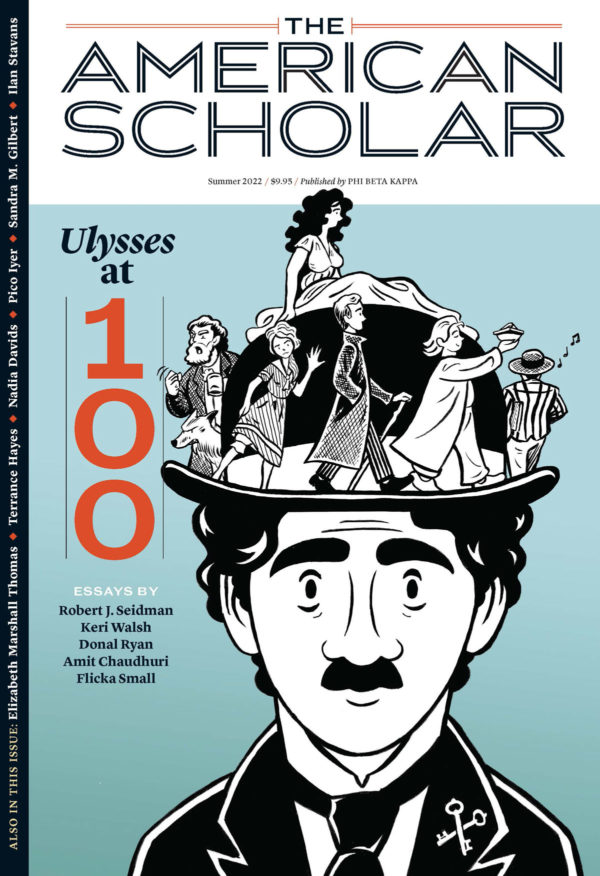
Forget what you know from the cartoon. The 19th-century story, now in a new translation, was a rallying cry for universal education and Italian nationhood
Built in the 1930s, high above the Santa Barbara coast, the mansion known as Bellosguardo was the summer home of reclusive heiress Huguette Clark, who instructed her staff to never change a thing – and they didn’t. Jane Pauley pays a visit to a fabled home constructed from a Gilded Age fortune (made famous from the bestseller “Empty Mansions”), which will open its doors to public tours for the first time later this year.
News, Views and Reviews For The Intellectually Curious