Category Archives: Food

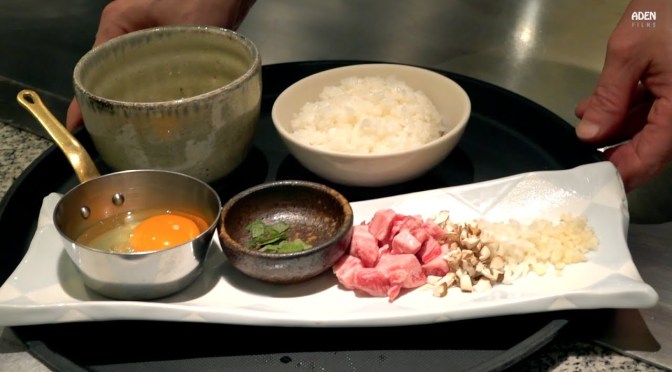
Top Culinary Arts Videos: “Japanese Fried Rice” From Teppanyaki Hoen In Kyoto

Fried rice in Kyoto as part of a lunch menu, including Wagyu beef, vegetables, herbs and an egg.

Teppanyaki Hoen(鉄板焼 豊園) is a restaurant located on the 2nd floor of the Hotel Nikko Princess Kyoto.

This Teppanyaki restaurant commits on using the best ingredients when cooking your meal. High-quality Japanese Wagyu and seafood, fresh vegetables from the Kyoto area, and salt from France. Their theme is to provide the best fusion of Eastern and Western cuisine. There is also a sommelier present at the restaurant who can recommend you the best wine for your preference.

The restaurant is spacious and even has a private room, so you can come with children without any problems.

Top New Culinary Books: “Sushi Shokunin” – Andrea Fazzari -“Stunning Images”

In this stunning monograph, James Beard Award-winning photographer and author Andrea Fazzari profiles twenty of the most celebrated sushi masters on the Japanese food scene. Through a combination of striking photography and intimate essays, each chapter introduces readers to a new master and restaurant, capturing the aesthetics, philosophy, and level of dedication that illustrates their status as the world’s finest culinary shokunin.

In Japan, cooking often bears aesthetic value, and the making of sushi is exalted as one of the finest culinary crafts. In line with this ideal of food as art, the Japanese often employ the word shokunin, loosely defined as “artisan”, to refer to highly skilled sushi masters. Connoting excellence and devotion to one’s craft, this title is reserved for those who approach their work with an artistic eye and seemingly spiritual sense of purpose, or ikigai.

A must-have for sushi enthusiasts—and for anyone interested in fine food culture—Sushi Shokunin is the first book of its kind to the most revered sushi masters and restaurants. Fazzari invites readers to explore the rarefied world of top shokunin who view sushi making not only as a career, but also as a way of life.

Andrea Fazzari is a Tokyo-based James Beard Award-winning photographer and author specializing in travel and the culinary world. Her previous book was Tokyo New WaveShe was chosen as one of “30 Photographers to Watch” by Photo District News in 2004. Her editorial and advertising clients include Travel + LeisureDeparturesSaveurCathay Pacific Airlines, and Four Seasons Hotels

Read more or purchase

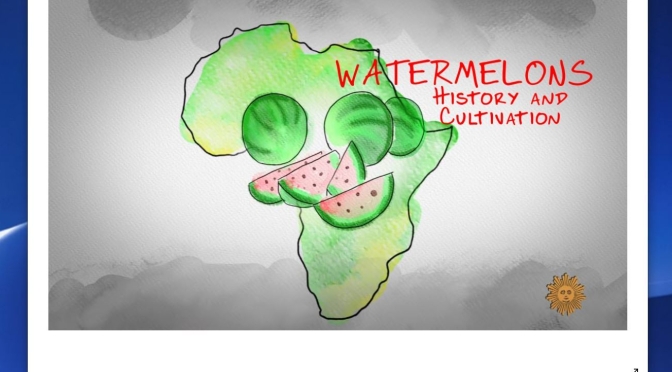
Videos: “Watermelons – History & Cultivation” Of Summer’s Favorite Fruit

There’s nothing that counteracts the heat of summer quite like a big, sweet, juicy slice of watermelon. Luke Burbank offers up the history and lore behind that thirst-quenching favorite.

Watermelon is a plant species in the family Cucurbitaceae, a vine-like flowering plant originally domesticated in West Africa. It is a highly cultivated fruit worldwide, having more than 1000 varieties. Watermelon is a scrambling and trailing vine in the flowering plant family Cucurbitaceae.

Infographics: The Major Challenges Restaurants Face Post Covid-19 (2020)

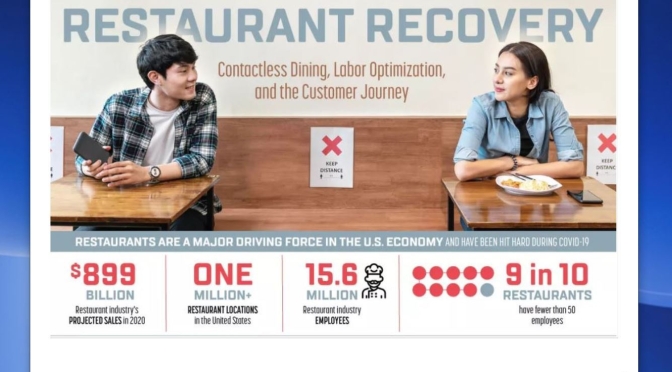
Restaurants must function at 75% capacity in order to achieve profitability. With many restaurants operating at 50% capacity or less, how do they make up the remaining 25%? The three main contributing factors are contactless dining, labor optimization and changing the customer journey. Learn more about how restaurants are recovering during the COVID-19 pandemic in this infographic by OneDine.

FOOD & AGRICULTURE: “The Robot Producing Crops Of The Future” (WSJ Video)

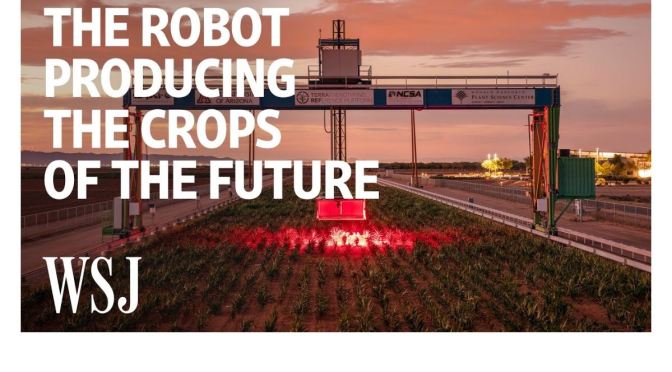
Arizona has what researchers call “the climate of tomorrow, today.” Scientists are using a 30-ton robotic field scanner in the state to study plant genetics and hopefully develop stress-resilient crops.

Photo: Jesse Rieser for The Wall Street Journal

More from the Wall Street Journal: Visit WSJ.com: http://www.wsj.com

Infographics: “Reducing Salt In Diet & Foods To Improve Blood Pressure”

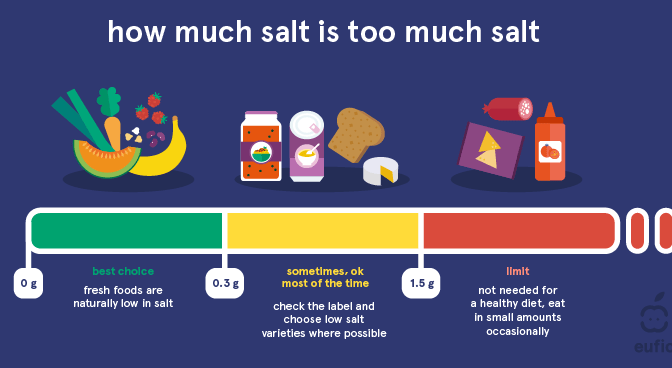
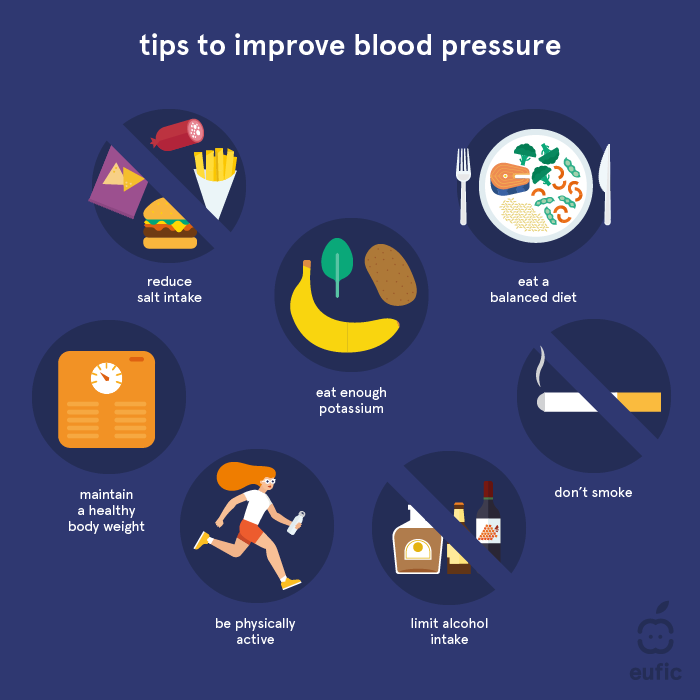
Tip To Improve Blood Pressure - Infographic - Eufic

Does reducing salt improve our blood pressure?

There is consistent evidence that moderate reductions (i.e. a decrease of 3 to 5 g or ½ to 1 teaspoon a day) in salt intake can lead to a reduction in blood pressure.5,6 However, these effects may not be the same for everyone and will depend on an individual’s starting blood pressure (greater benefits are seen in those with higher blood pressure), their current level of salt intake, genetics, disease status and medication use.

It is important to note that salt is not the only lifestyle factor that can influence our blood pressure. Other factors such as eating enough potassium, maintaining a healthy body weight, not smoking, and being physically active are also important when it comes to reducing blood pressure. You can find 7 lifestyle tips to help reduce blood pressure here.

High salt foods:

  • Processed meats such as bacon, salami, sausages and ham
  • Cheeses
  • Gravy granules, stock cubes, yeast extracts
  • Olives, pickles and other pickled foods
  • Salted and dry-roasted nuts and crisps
  • Salted and smoked meat and fish
  • Sauces: soy sauce, ketchup, mayonnaise, BBQ sauce
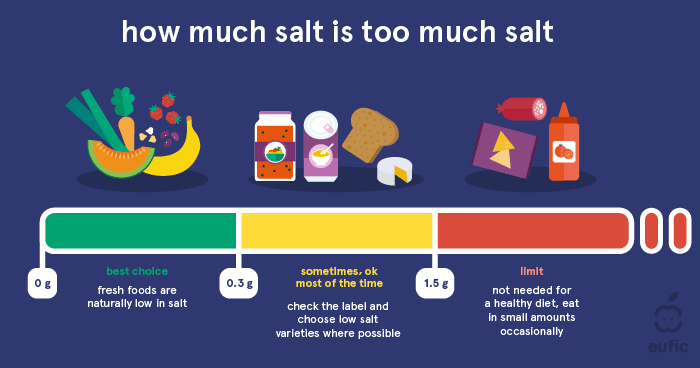
How Much Salt Is Too Much Salt - Infographic Eufic

What is salt?

Salt is the common name for sodium chloride (or NaCl). It consists of 40% sodium and 60% chloride. In other words, 2.5 g of salt contains 1 g of sodium and 1.5 g of chloride.

Why do we need salt?

Both sodium and chloride are essential for many body functions. They help regulate blood pressure, control fluid balance, maintain the right conditions for muscle and nerve function and allow for the absorption and transport of nutrients across cell membranes. Chloride is also used to produce stomach acid (hydrochloric acid, HCl) which helps us digest foods.

How much salt do we need per day?

The exact minimum daily requirement for salt is unknown, but it is thought to be around 1.25 g – 2.5 g (0.5 – 1 g sodium) per day.1 As salt is found in a large variety of foods the risk of deficiency is low.1,2 The European Food Safety Authority (EFSA) has stated that a salt intake of 5 g per day (equivalent to 2 g of sodium) is sufficient to meet both our sodium and chloride requirements as well as reduce our risk of high blood pressure and heart disease.1,2 This is equivalent to around 1 teaspoon of salt per day from all sources.

Both sodium and chloride are released from our body through our urine and when we sweat. This means bouts of heavy sweating such as during exercise can increase our salt requirements slightly. However, as most people consume well above required levels it is usually not necessary to increase salt intake during these conditions.1

Website

Food & Nature: “The Wild Harvest – Mid Summer” With Chef Alan Bergo


Filmed and Directed by: Jesse Roesler

Produced by: Credo Nonfiction
Featuring: Alan Bergo, Forager Chef

Edited by: Sam Kaiser

From James Beard Award-winning filmmaker Jesse Roesler and renowned Forager Chef Alan Bergo, The Wild Harvest is a new foraging & cooking series that celebrates the beauty and bounty of nature and explores what’s culinarily possible with easily foraged wild foods. This series is being created safely during quarantine using social distancing measures.

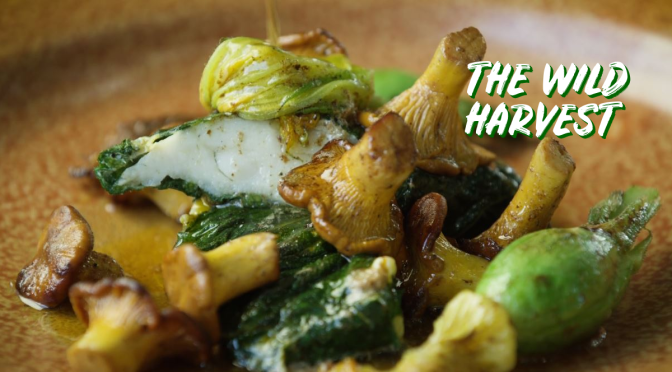
Episode 3 features the bounty of mid summer in the northern hemisphere including a wild greens salad, walleye wrapped in squash leaves with chanterelles and a blueberry desert that captures the spirit of the pine barrens. Featured foraged ingredients include Lamb’s Quarters, Chickweed, Purslane, Bee Balm, Chanterelles, Wild Blueberries, Sweet Fern, Hazelnuts.

We hope to release a new episode every 3-4 weeks for free, but are currently seeking sponsors.

Website

Foods & Flavors: “The Story Of Vanilla” (CBS)

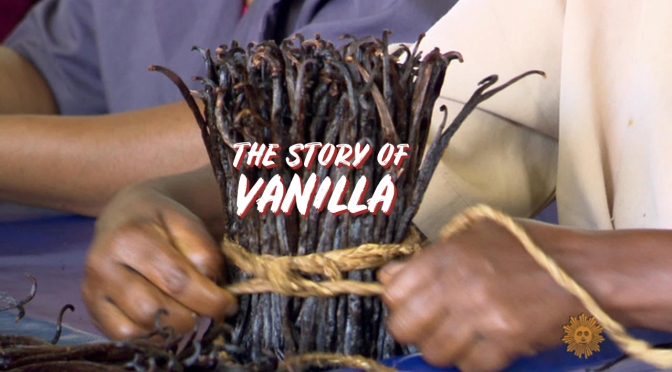
With so many of us staying at home these days and spending more time in the kitchen, vanilla sales, of all things, are booming. Correspondent Seth Doane travels to the island of Madagascar – which supplies 80% of the world’s vanilla – to learn more about the extraordinarily colorful (and sometimes unsavory) story of a familiar spice, and why this valuable cash crop can be worth more by weight than silver.