
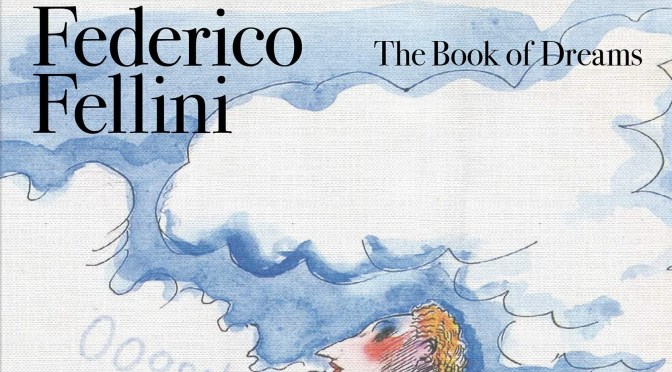
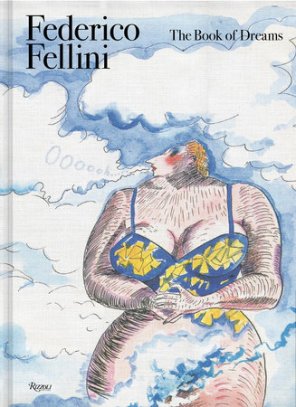
 The volume will be released to coincide with the centenary of Federico Fellini’s birth (January 2020), which will be celebrated in Italy with a traveling exhibition on the director that will start its journey from Milan in December 2019.
Category Archives: Culture

Video Interview: 89-Year Old Psycholinguist Jean Berko Gleason Discusses Culture & Language (PBS)
 Psycholinguist Jean Berko Gleason is a professor emerita at Boston University and a pioneer in the field of children’s language. Even as a child, Berko Gleason loved and connected with language. It also made a big impression on her how much her older brother, who suffered from cerebral palsy, struggled to be understood. Berko Gleason shares her Brief But Spectacular take on language.
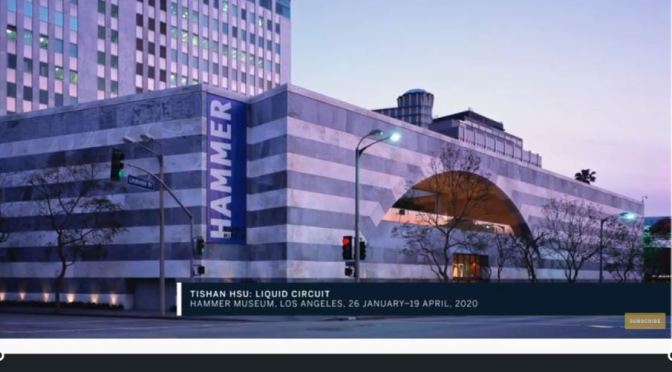
Arts & Culture: “Must-See Museum Exhibitions In January 2020” (Sotheby’s)
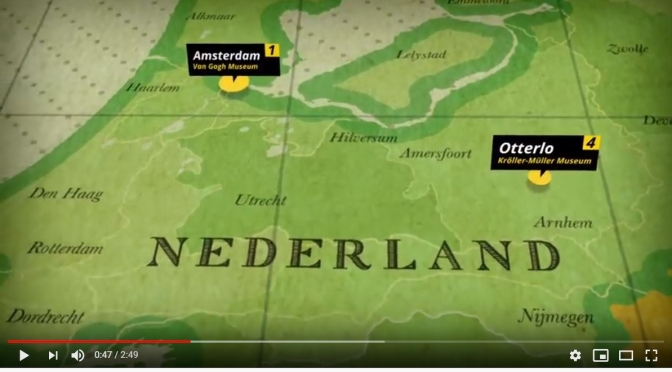
Art Videos: Vincent Van Gogh’s Route Crossing Europe (1853-1890)
 Vincent van Gogh (1853-1890) is one of the world’s most loved artists. His paintings, drawings and letters inspire people of all ages. His work can be admired in numerous museums around the world. Many places where the artist lived and worked can be visited, from the Netherlands to the South of France. About 25 organisations and museums in the Netherlands, Belgium and France have joined forces under the name Van Gogh Europe. Together they are actively engaged in maintaining and promoting Van Gogh’s heritage.

Urban Trends: “Avant2Go” Electric Car Sharing In Slovenia (Podcast)
From the Avant2Go.com website:
 Avant2Go car sharing is an effective way to cut and manage your mobility expenses. Find an available car and reserve it using the Avant2Go mobile app. The first reservation (15 min) is free. Use the app to end your rental and settle the final cost. The rental price includes car registration, insurance, fuel*, running costs, vignette, loss of value, free parking at Avant2Go spots and more.
- Pay only for when you actually use the vehicle.

- Electricity and insurance are already included.
- In your neighbourhood and city, driving to the airport …
- State-of-the-art electric vehicles for any rental period.
- No vehicle ownership or running costs.
- A mobile app for using the service.

History & Culture: Heard Museum Of American Indian Art In Phoenix Celebrates 90 Years
90 years ago today, Maie Bartlett Heard, curator Allie Walling BraMé along with a small group of friends and volunteers spent Christmas Day making final preparations for the opening of the Heard Museum. The next day, December 26, 1929, the Heard Museum began our now nine decade long and ongoing legacy of advancing American Indian Art.
This short video poem written, recorded and edited by longtime artist and friend of the Heard Museum, Steven J. Yazzie (Diné) is our very sincere thank you to you.
Heard Museum 90th Celebration Poem, December 2019

“Home” By Steven J. Yazzie (Diné)
Voiced by: Jenn Henry
Music: Better Now, Phillip Daniel Zach
Why do we come here to these walls painted shades of off white
In search of beauty
or memory
or place
Where the sounds of children can be heard echoing in these vast
and intimate spaces
And where everyone has just arrived here from a journey
What brings us to the feet of stone
or textile
or dried paint
In the galleries of our hearts and truths
Our histories are revealed
and our humanity ensured
This place of my youth and older age
This place of beauty
stewardship
and celebration
Is home
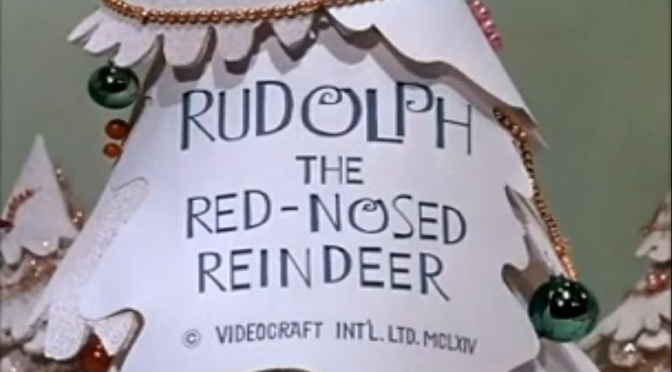
1960’s Television: “Rudolph The Red-Nosed Reindeer” (1964) Celebrates 55 Years
From a Smithsonian Magazine online article:
When the special finally aired in 1964, it became such a hit that it has been rebroadcast every year since, making it the longest-running Christmas special in history. Even today, the special still punches above its weight; when Rudolph the Red-Nosed Reindeer aired on CBS in 2016, it beat every show except This Is Us. In 2017, more viewers tuned in to watch Rudolph than A Charlie Brown Christmas, which ran on ABC in the same time slot.
https://www.dailymotion.com/video/x19l9n1
Reindeer and dentists, puppets and LED light bulbs, Gene Autry and General Electric—these odd pairings might not seem to have much in common. But each played an important role in the making of Rudolph the Red-Nosed Reindeer, a classic Christmas special currently celebrating its 55th straight year of annual reruns. Before Rudolph lit up the small screen, a series of tragedies, twists of fortune and lucky coincidences allowed his tale to endure through decades—eventually ensuring a place in holiday tradition.

Culture & Politics: “2019 – A Year In Review” (Time)
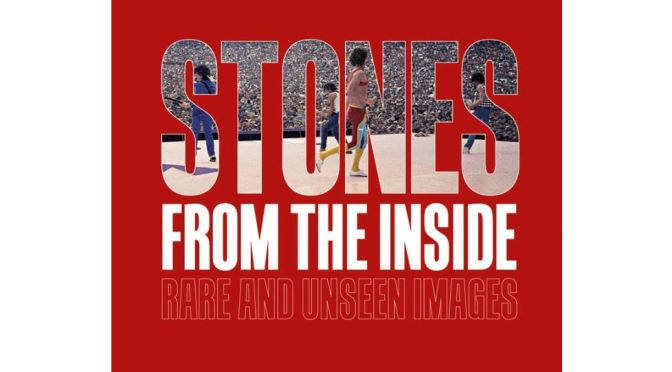
New Photography Books: “Stones From The Inside – Rare And Unseen Images”
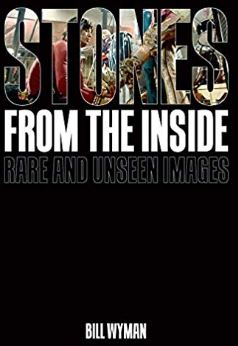 Along with the images of the band at work and play, Wyman includes remarkable images of those along for the ride, from John Lennon, Eric Clapton, David Bowie and Iggy Pop to John Belushi and Dan Aykroyd. To accompany his photographs, Wyman offers up wonderful insights, anecdotes and behind-the-photo stories, giving all us a front-row seat and backstage pass to what it was like to be there, as music history was made as a member of The Rolling Stones.
Known, unknown, rare and unseen images from former Rolling Stones bassist Bill Wyman, capturing life on-stage, backstage and on the road
In addition to this trade edition, there will also be a limited edition of 300 copies, which comes in a slipcase, with an open-edition A4 print

As soon as Bill Wyman was given a camera as a young boy, he quickly developed a passion for photography. After joining what would become the world’s greatest rock ‘n’ roll band, Wyman continued his hobby. When he didn’t have his bass, he had his camera. The result is an arresting, insightful and often poignant collection of photographs, showing his exclusive inside view of the band. From travelling to relaxing, backstage and on, Stones From the Inside is a unique view captured by a man who was there, every step of the way.
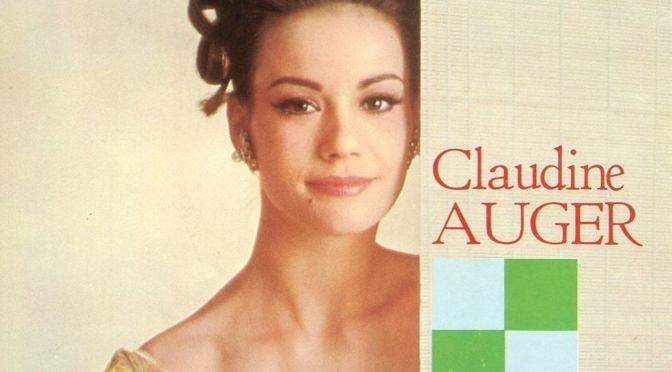
1960’s Cinema Icons: Remembering French “Bond Girl” Claudine Auger (1941 -2019)
From a France24.com online release:
 The film’s trailer introduced Auger as: “Young. Beautiful. Trapped. Could be dangerous”.
French actress Claudine Auger, best known to international audiences playing alongside Sean Connery in the 1965 James Bond film “Thunderball”, has died aged 78, her agent said Thursday.
She played the character “Domino” in the film, the fourth in the Bond franchise, which was set in the Bahamas providing ample opportunity for swimsuit action scenes.
To read more: https://www.france24.com/en/20191219-auger-thunderball-bond-girl-dies-aged-78
 Boomers Daily