
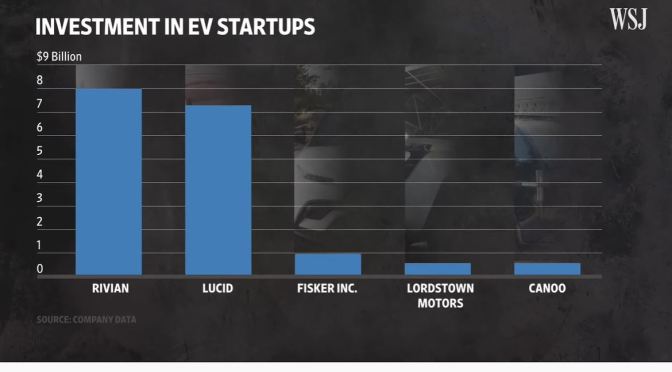
Lucid, Fisker, Rivian and Canoo are among the well-funded startups racing to release new electric vehicles. WSJ asked CEOs and industry insiders how new auto companies plan to challenge Tesla’s market dominance and take on legacy car makers. Photo composite: George Downs
Category Archives: Business
Analysis: The Electric Vehicle Battery Shortage
U.S. automakers are finally making bold commitments to electrify their fleets, but in the short-term, there may not be enough lithium-ion batteries to go around. While China dominates the battery manufacturing supply chain, and Europe is working to catch up, the U.S. still lags far behind.
As batteries become a matter of energy independence and national security, here’s what the U.S. can do to catch up. As automakers continue to grapple with a semiconductor shortage, some experts say the next supply chain crisis for the U.S. could involve lithium-ion batteries. As companies like GM, Ford and a slew of start-ups are ramping up their electric vehicle ambitions, current battery production in the U.S. will not be able to keep up with demand.
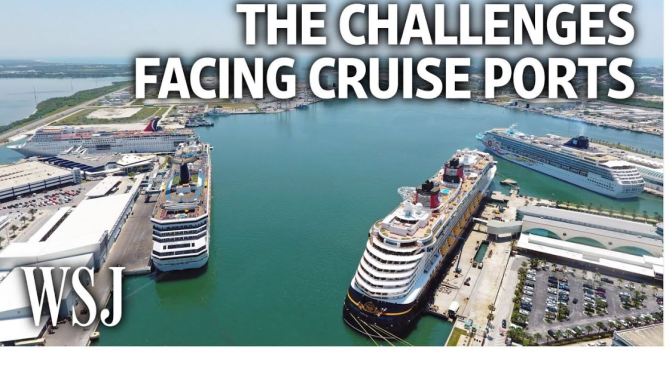
Cruise Industry: How U.S. Ports Are Staying Afloat
The shutdown of cruise lines during the pandemic has had far-reaching economic consequences for America’s ports. In this video, WSJ reporter Julie Bykowicz visits Port Canaveral’s once-bustling cruise terminal to learn about what’s next for the industry.

Technology: How ‘AI’ Is Improving Creativity
Artificial intelligence is helping humans make new kinds of art. It is more likely to emerge as a collaborator than a competitor for those working in creative industries.
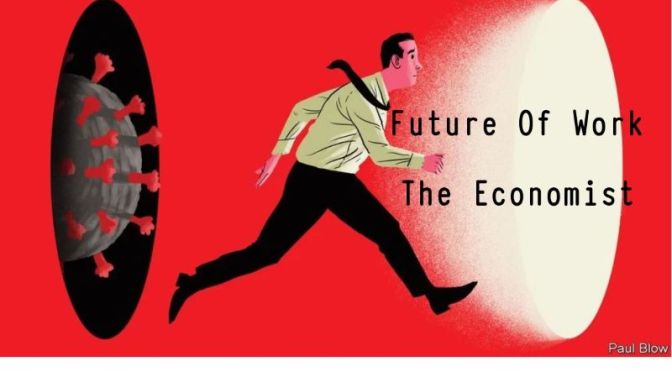
Podcast: The ‘Future Of Work’ (The Economist)
The pandemic has fuelled an explosion of unemployment and a transformation in how many people work, especially in richer countries. Many of these changes are promising and there are many reasons for optimism about the labour market.
Also, the prospects for working from home and MIT labour economist David Autor on the effect of covid-19 on automation. Simon Long hosts

Analysis: Why Mercedes-Benz Is No Longer An ‘Aspirational Brand’
Mercedes-Benz is perhaps the biggest name in luxury cars globally, and for countless buyers around the world, it is a car brand to aspire to own. The German automaker has a reputation for superb build quality, excellent engineering, and the bragging rights that its founder Carl Benz invented the first production automobile.
Today, Mercedes-Benz faces a new class of challenges as Tesla has become the aspirational brand for younger consumers. There is a slew of other EV hopefuls vying for the next generation’s aspirational vehicle’s mantle. Automakers have had to sink billions into new technologies and contend with a new crop of competitors in the critical Chinese market and around the world.

Online Business: How ‘Chewy’ Harnessed The Pandemic Pet Boom
Online pet retailer Chewy has seen a surge of growth over the past year as millions adopted new pets. WSJ spoke with Chewy’s CEO to learn how the company handled the pandemic pet boom. Illustration: Jacob Reynolds/WSJ

Views: Greece & Portugal Reopen For Business
Greece and Portugal are beginning to reopen parts of their countries and economies, even while other European countries enforce stricter lockdowns. Small retailers in most of #Greece reopened on Monday, with a limit of 20 people indoors at a time. Critics say it is a paradox to reopen shops while Covid-19 cases continue to rise and hospitals remain under pressure. Meanwhile in #Portugal, café terraces, gyms and secondary schools are opening.
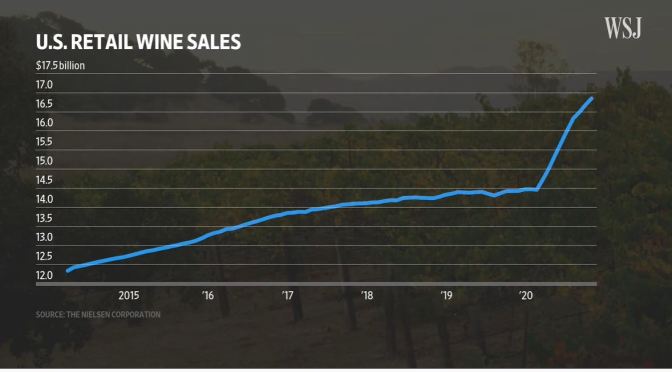
Analysis: Why California Winemakers Go Public
Two California wine companies are going public this spring, the first major wineries to do so since the late 1990s. Winemakers explain the lessons of past stock offerings from wineries like Mondavi and Ravenswood and why they think the time is now right to join the IPO fray. Photo: Jake Nicol/WSJ
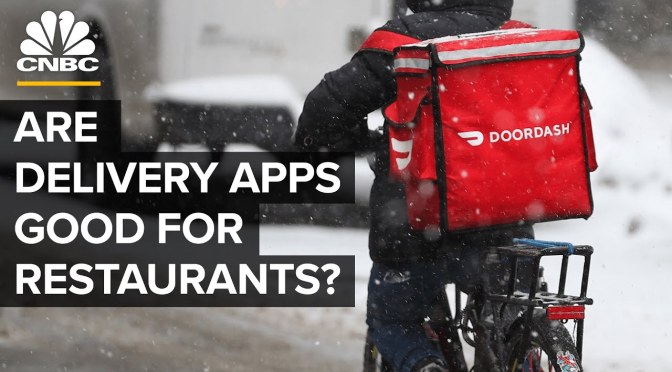
Analysis: Are Delivery Apps Good For Restaurants?
While indoor dining has dropped way down during the pandemic, food delivery has grown considerably. DoorDash and Uber Eats, the two largest delivery apps by market share both saw their sales double from the end of 2019 to the end of 2020.
But while it might be an easy decision for customers to use these third-party delivery apps, the decision for restaurants is not so easy. There is a lot to consider, and it’s not a one-size-fits-all solution.
 Boomers Daily