
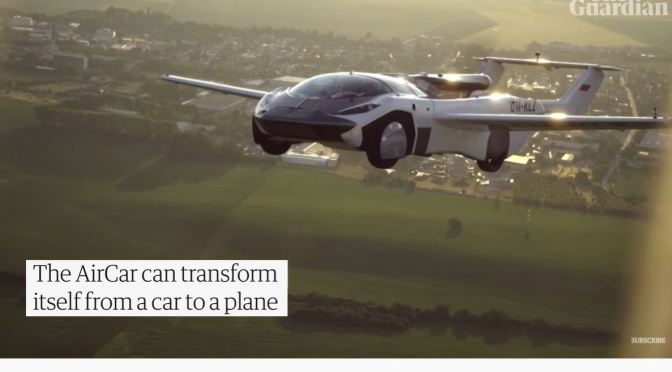
A flying car has successfully completed its first intercity flight between two airports in Slovakia. The prototype, called AirCar, took off from Nitra and landed in Bratislava 35 minutes later. Using wings that fold away in less than three minutes and a propeller at its rear, the dual-transportation vehicle has now completed more than 40 hours of test flight.
Category Archives: Automobiles
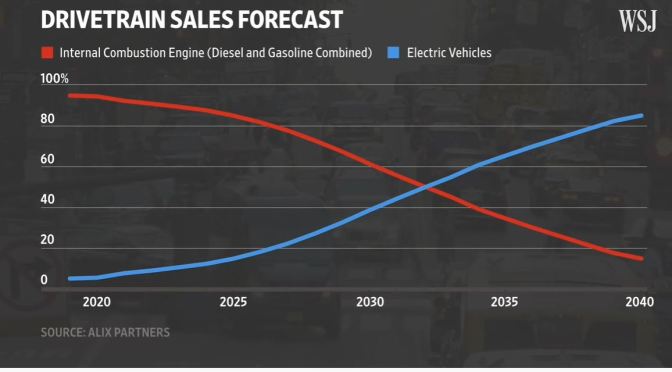
VW: Engine Factories Turn Into EV Battery Plants
Volkswagen is investing in electric vehicles more than other legacy car makers in the U.S. WSJ goes inside an engine factory that is being transformed into a battery plant as the German giant looks to change its image and become a rival to Tesla. Photo illustration: George Downs
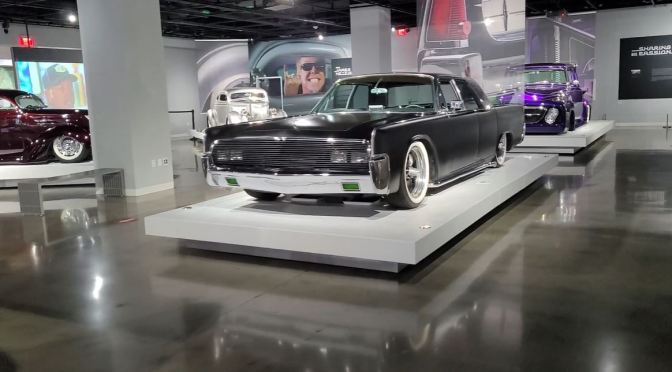
Los Angeles: Petersen Automotive Museum (4K)
The Petersen Automotive Museum is located on Wilshire Boulevard along Museum Row in the Miracle Mile neighborhood of Los Angeles. One of the world’s largest automotive museums, the Petersen Automotive Museum is a nonprofit organization specializing in automobile history and related educational programs.
Founded on June 11, 1994, by magazine publisher Robert E. Petersen and his wife Margie, the $40-million Petersen Automotive Museum is owned and operated by the Petersen Automotive Museum Foundation. The museum was originally located within the Natural History Museum of Los Angeles County, and later moved to a historic department store designed by Welton Becket.
Opened in 1962, the building first served as a short-lived U.S. branch of Seibu Department Stores, before operating as an Ohrbach’s department store from 1965 to 1986. Six years after Ohrbach’s closed, Robert Petersen selected the largely windowless site as an ideal space for a museum—allowing artifacts to be displayed without harmful exposure to direct sunlight. In 2015, the museum underwent an extensive $125 million renovation.The building’s façade was redesigned by the architectural firm Kohn Pedersen Fox, and features a stainless-steel ribbon assembly made of 100 tons of 14-gauge type 304 steel in 308 sections, 25 supports and 140,000 custom stainless-steel screws.Designers at The Scenic Route configured interior spaces to accommodate changing exhibits.[4] The remodeled museum opened to the public on December 7, 2015.

Analysis: China’s XPeng Vs Tesla In EV Tech Race (WSJ)
Chinese automaker XPeng is betting that driving assistance features and other tech will be the key to winning new customers. WSJ travels to its research and development lab to see how its rivalry with Tesla could reshape how we drive. Photo: XPeng
Italian Design: 90 Years Of ‘Pininfarina’ Celebrated
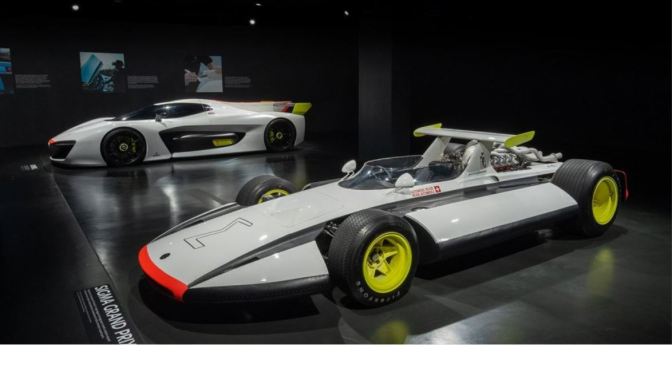
The world’s most famous automotive design house, Pininfarina celebrates 90 years of style and innovation with a new exhibition at the MAUTO in Turin, open from May to September.
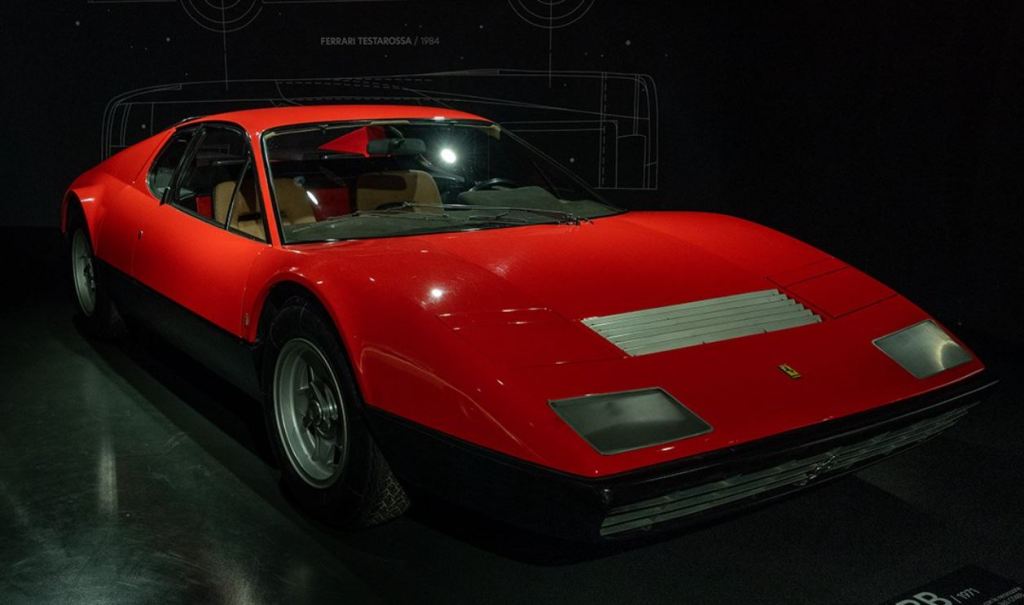
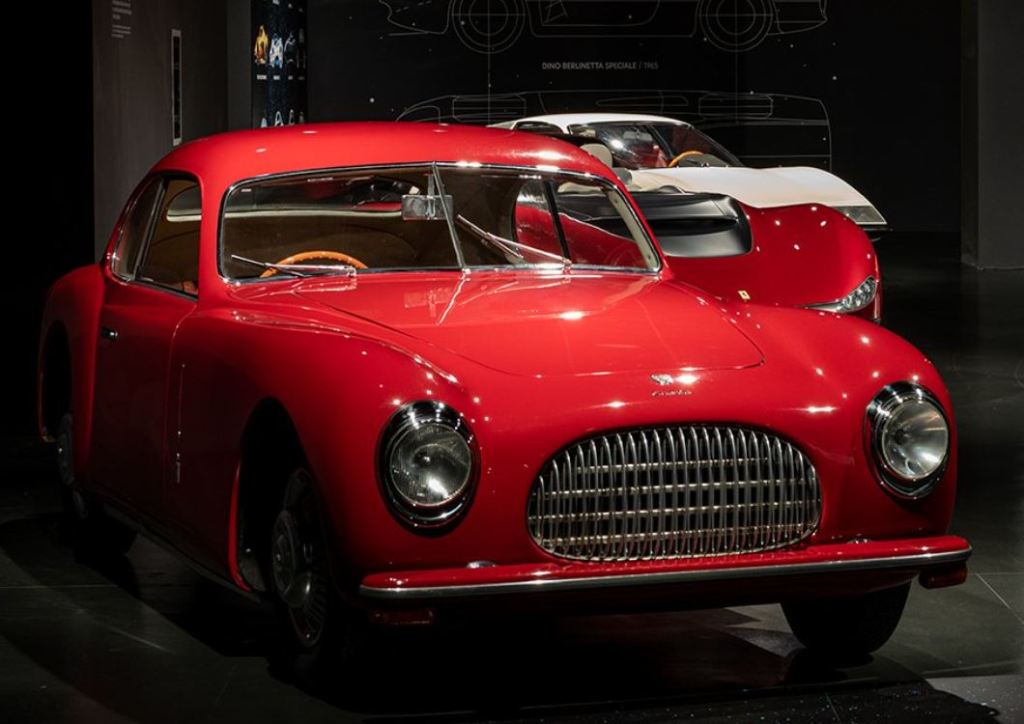
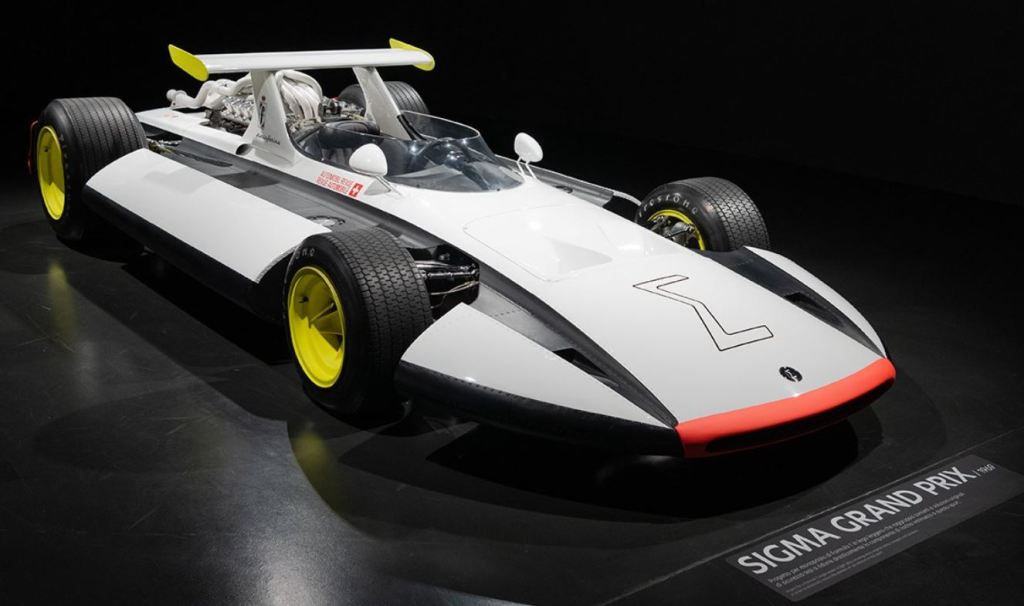
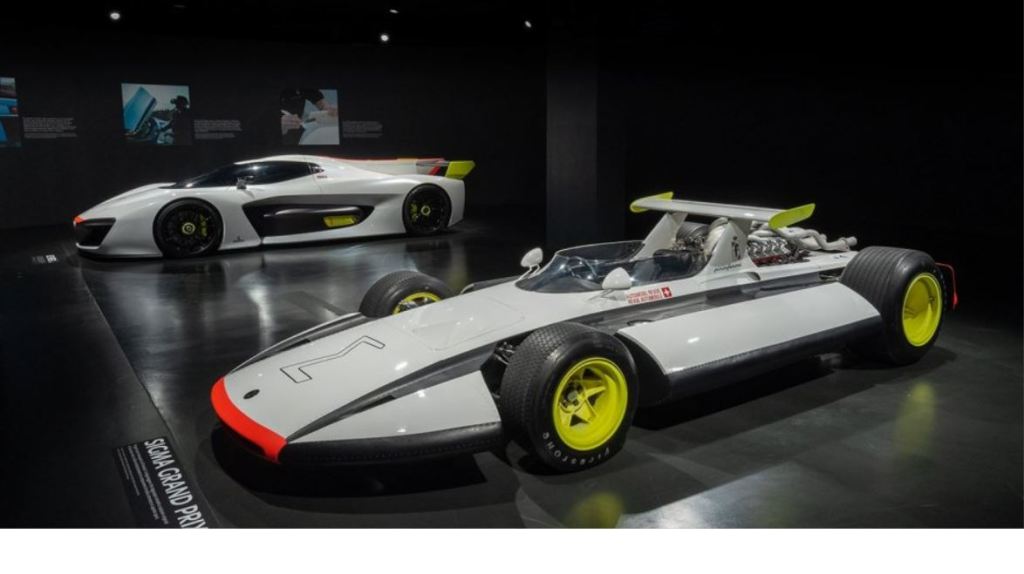
Founded in 1930, Pininfarina has evolved from an artisan concern to a global brand employing over 600 people. In those 90 years Pininfarina has given us some of the world’s most beautiful automobiles, but also demonstrated exciting innovation. Divided up in to six areas the exhibition will showcase the unique breadth of the brand from the gorgeous Cisitalia 2020, to the 1969 Sigma Grand Prix and off into the future with the exciting new Battista, electric hypercar concept.
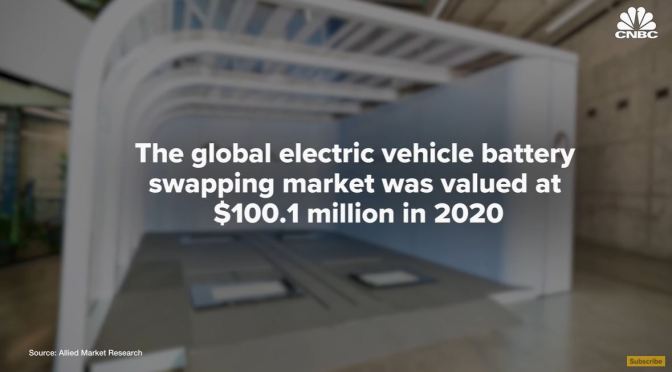
Analysis: Can EV Battery Swapping Gain In The U.S.?
San Francisco-based Ample has brought electric vehicle battery swapping to the U.S. The company was in stealth mode for seven years before launching recently with five swapping stations in the Bay Area. Uber drivers in the area are Ample’s first customers.
The concept isn’t new. A start-up called Better Place launched an EV and battery swapping company after it raised $850 million in venture funding, but it ultimately went bankrupt in 2013. Tesla also demoed battery swapping in 2013 but only opened one station for about a year. Elon Musk said Tesla owners were not interested in it.
Battery swapping is already common in China. Electric vehicle maker Nio, for example, plans to double its network of swapping stations to 500 this year and plans to open stations in Norway as part of its expansion into Europe. Ample has a different approach, with modular batteries and a focus on fleets. CNBC got an inside look at its headquarters and battery factory in San Francisco to learn how the company plans to bring battery swapping into the mainstream.
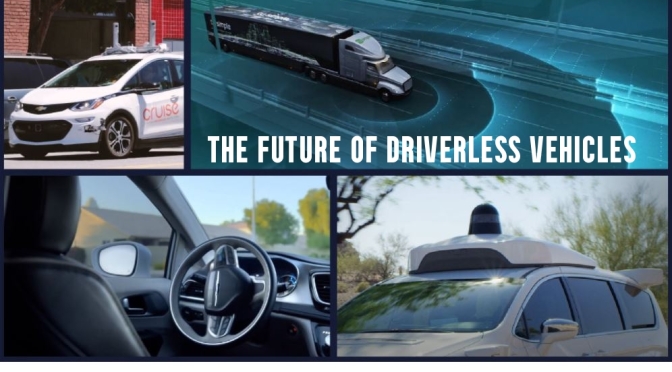
Analysis: The Future Of Driverless Vehicles (WSJ)
While Tesla and others already offer assisted-driving features, startups Waymo, Cruise, TuSimple and Aurora are betting their autonomous vehicles will make driving a thing of the past. WSJ asked them about safety and other challenges they face. Photo composite: George Downs
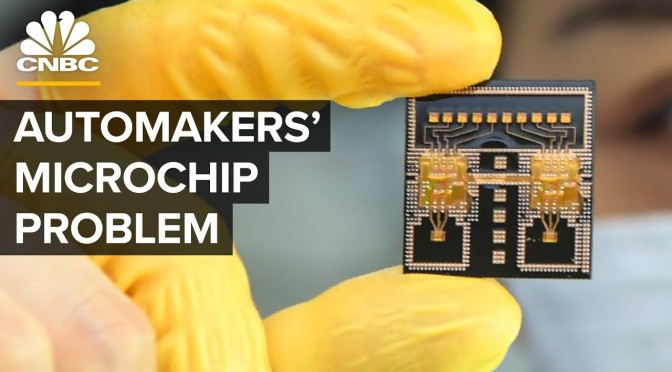
Analysis: The Microchip Shortage Limiting Autos
While the automotive industry was ravaged early on in the pandemic thanks to lockdown measures and a dramatic decrease in travel, it more recently has begun facing a new problem: a shortage of microchips.
Microchips are vital to much of a vehicle’s key functions, such as engine control, transmission, infotainment systems, and more. In the last half of 2020 and now in 2021, vehicle sales recovered fairly quickly, faster than automakers anticipated.
Suddenly, they were struggling to meet demand. At the same time, chipmakers were experiencing supply shortages and increased demand from other sectors, such as personal electronics. With the resulting lack of microchip supply, automakers have been forced to slow production, even on their most popular models. For several automakers, the shortage is expected to cost them $1 billion or more — and even still, the alternatives are worryingly few.
Analysis: The Politics Of Germany’s Auto Industry
The German automotive industry has long played a key role in the country’s prosperity. It employs hundreds of thousands and enjoys cozy relationships with politicians.
But the COVID-19 crisis threw a wrench in the works. What’s next? The prosperous German auto industry has long been lagging when it comes to innovating new automotive technologies. Then came the COVID-19 pandemic. Now, the industry is turning to decision-makers for help. But just how far will policymakers go to help the car companies?
Arguing that the COVID-19 pandemic has hit them hard, the auto industry is demanding the postponement of stricter CO2 limits and a purchase premium for new vehicles. They maintain that nothing less than the prosperity of the whole country is at stake. But is Germany’s success really dependent on the auto industry? And how much blame does industrial policy bear for the failures of the automotive companies?
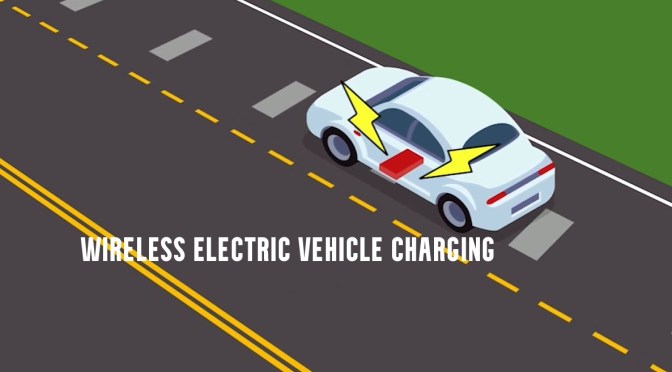
Future Driving: Wireless Electric Vehicle Charging
Cornell is pioneering an innovative approach for the wireless charging of electric vehicles, forklifts and other mobile machines, while they remain in motion.
 Boomers Daily