

Hyundai says it will introduce an electric vehicle-only platform early next year that will use its own battery technology to cut production time and costs.
Category Archives: Automobiles
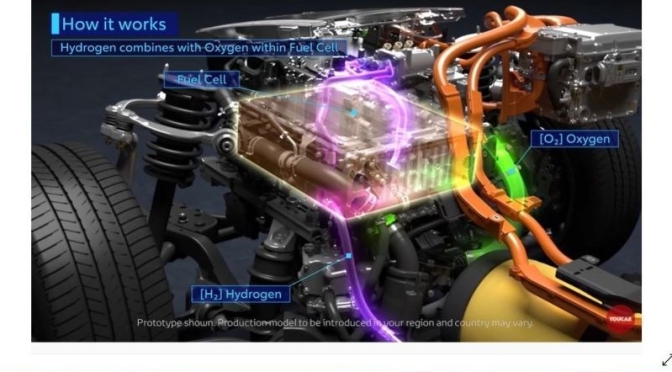
Tech: ‘2021 Toyota Mirai’ – Enhanced Hydrogen Fuel Cell Electric Car (Video)
The 2021 Toyota Mirai is the second generation of zero emission hydrogen fuel cell electric sedan.
One of the principal aims for the new 2021 Mirai has been to give the car a stronger emotional appeal, making it a car that people will be attracted to by its looks and the way it drives, as well its eco-performance. The new GA-L platform and Toyota’s advances in FCEV technologies have made this possible. Toyota’s new fuel cell stack and fuel cell power converter (FCPC) have been developed specifically for use with the GA-L platform.
The designers have been able to bring all the elements together in the stack frame (including the water pumps, intercooler, air conditioning and air compressors and the hydrogen recirculation pump) with each part made smaller and lighter, while at the same time improving performance. The stack case itself has been made smaller by using Friction Stir Welding, reducing the gap between the fuel cell and casing.
The new Mirai is equipped with lithium-ion high-voltage battery in place of the current model’s nickel-metal hydride unit. Although smaller in size, it is more energy-dense, giving higher output and superior environmental performance. Containing 84 cells, it has a 310.8 rated voltage compared to 244.8, and a 4.0 Ah capacity, versus 6.5 Ah. Overall weight has been reduced from 46.9 to 44.6 kg. The output has improved from 25.5 kW x 10 seconds to 31.5 kW x 10 seconds.
The battery’s smaller dimensions have allowed it to be positioned behind the rear seats, avoiding intrusion in the load compartment. An optimised air-cooling path has been designed, with discreet inlets either side of the rear seats. The environmental benefit of driving the Toyota Mirai go beyond zero emissions to “negative emissions” – the car effectively cleans the air as it moves. A Toyota innovation, a catalyst-type filter is incorporated in the air intake.
As air is drawn into the vehicle to supply the fuel cell, an electric charge on the non-woven fabric filter element captures microscopic particles of pollutants, including sulphur dioxide (SO2), nitrous oxides (NOx) and PM 2.5 particulates. The system is effective in removing 90 to 100% of particles between 0 and 2.5 microns in diameter from the air as it passes into the fuel cell system.

Tech: ‘Why Electric Cars Took So Long To Develop’
Electric cars have been around since the mid 19th century… So why didn’t they catch on sooner? Telegraph motoring journalist Paul Hudson explains the long journey EVs have gone through, from almost extinction in postwar Britain, up to present day and their pivotal role in the future of driving. https://www.telegraph.co.uk/cars/advi..
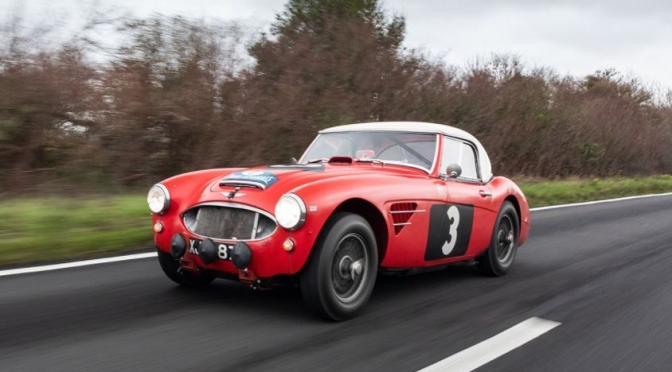
British Cars: ‘1959 Austin Healey 3000’ (Video)
Perfectly patinated, period competition success, a legendary rally-driver owner and a super fan who kept the car for 51 years. This is probably the best-preserved example of a ‘works’ Big Healey.
The original 100 was named as a nod to its top speed, while the 3000 – released in 1959 – was named for its larger engine capacity. Straight away, the more powerful car was successful, with Pat Moss (Stirling’s sister) winning the challenging Liege-Rome-Liege rally in 1960.
This ‘Works’ Big Healey, now available with Henderson Fellowes, was prepared by the BMC Competition Department for the 1961 season and made its debut on the legendary and gruelling Acropolis Rally in Greece, where Peter Riley and Tony Ambrose steered the car to first in class and third overall.

The Future Of Driving: Designing ‘The Apple Car’
Every time Californian tech giant Apple puts out a new product, it makes headlines around the world. That was true of its early home computers – the first to use a recognizably modern user interface – and it was even more true of the iPod, which singlehandedly revolutionized the music industry. Not to mention the very smartphone you’re probably watching this video on.
But the world’s biggest and best-loved technology company isn’t done yet. For several years, now Apple engineers have secretly been eyeing up transportation as the next industry ripe for their unique brand of scorched-earth disruption. So today we’re asking the question – when will we see the Apple Car?

Investigations: ‘Why Premium Gas Is A Waste Of Money’ (CNBC Video)
Gas prices have been relatively low compared with the airy peaks they had seen roughly a decade ago; Americans are paying more for premium gasoline than standard gasoline than they have in the past. According to AAA, Americans collectively waste $2 billion a year buying premium gasoline. The critical difference between premium gas from regular is its octane rating—understanding that octane rating and what cars need what gasoline is key to knowing whether it is worth paying for premium.

Classic Car Restoration: ‘Eagle – Masters Of The Jaguar E-Type’ (Video)
Since its founding in 1984, the team behind Eagle has steadily worked their dedication into an obsession, with the outcome being the last word in the world of the Jaguar E-Type. Unlike many restoration specialists, Eagle keeps all the work in-house, and none of it is rushed.
Indeed Eagle CEO Henry Pearman says it takes the team nearly 4,000 hours to complete one of the company’s ground-up, full-on Eagle E-Types, and while they aren’t for those on a tight budget, there is clear evidence of the claim that the business is foremost driven by passion, not profits. A purely commercial endeavor would find ways to cut costs and hurry the process, but the completed cars—whether they be restorations or bespoke commissions—that leave Eagle’s countryside compound in Sussex are not just faultless E-Type specimens, they are examples of what can be achieved after decades of refinement and accumulated knowledge. Nobody knows these cars better, and in that same vein, nobody is building them better.
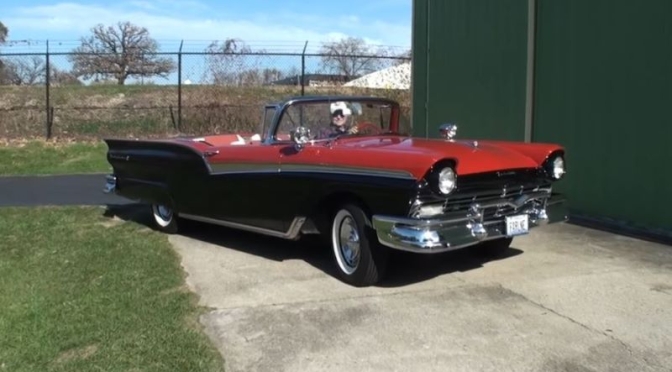
Classic Cars: 1957 Ford Fairlane 500 Skyliner Convertible (Video)
On “My Car Story” we’re in the West Suburbs of Chicago IL on 11-5-20. We’re looking at a 1957 Ford Fairlane 500 Skyliner Convertible in Flame Red & Raven Black Paint. The car comes with the factory 292 CI V8 “Y Block” engine. The car’s Owner is Don Walters. Don’s had this car since 2000. He shares he had one like this when he met his wife. The car features the “Retractable Top” and Don shares back in the 1950’s known as the “Hideaway Hard Top”. He found this one in a junk yard and did all the restoration work himself in four years. Don uses this car as his daily driver.
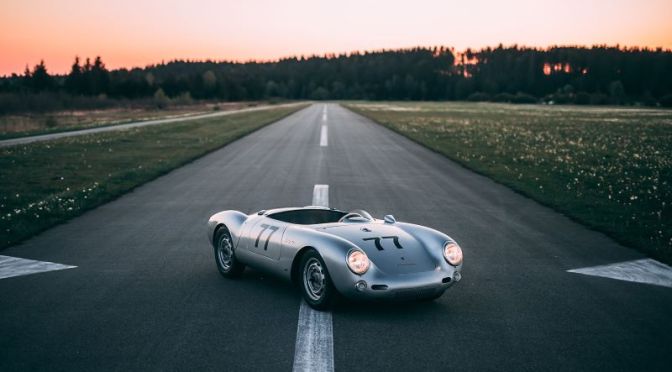
Classic Racing Cars: 1955 Porsche 550 Spyder (Video)
Christophe Schmidt, co-founder of A & S, and Anders Warming, Automotive designer, discuss the 1955 Porsche 550 Spyder, chassis 550-0050.
The 550 Spyder put Porsche firmly on the map as a serious competitor on the world’s racing tracks; indeed, the diminutive mid-engined roadster generated the nickname ‘Giant Killer’ for its ability to defeat much more powerful rivals. Introduced at the 1953 Paris Auto Show, the 550 and its second iteration, the 550A, remained in production through February of 1959, and a total of 130 chassis were constructed before the 718 RSK Spyders appeared. A large proportion of 550 production was destined for the United States.
Built on a frame of seamless mild steel tubing, the 550 utilised a front suspension of double trailing arms and transverse-leaf torsion bars. After the first few examples, the rear suspension was redesigned from leading control arms to trailing arms with swing axles and tubular transverse torsion bars. Porsche’s engineers had planned an all-new engine to power the Spyder at the gruelling Carrera Panamericana, but early testing determined that Dr Ernst Fuhrmann’s Type 547 advanced 1.5-litre air-cooled four- cylinder Boxer engine was not quite ready. Thus, the first few chassis were fitted with conventional pushrod Porsche engines. Soon, however, reliability was ensured and the new ‘Four-Cam’ would be installed in all the 550s, 550As, RSKs, 356 Carreras, and 904s that were to follow.
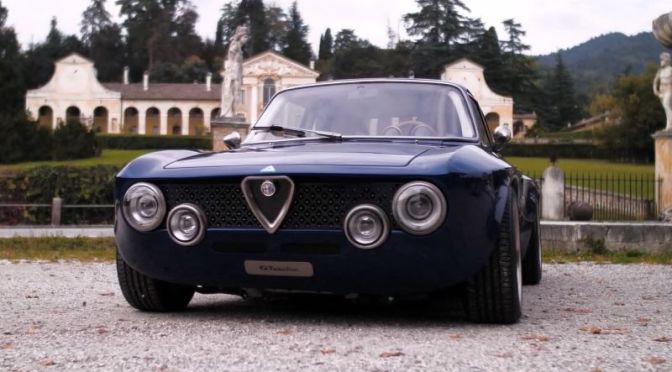
Classic Car Restorations: ‘2021 Alpha Romeo Giulia GT Electric’ By Totem Automobili, Italy (Video)
With the idea of revamping the car we elegantly redesigned the original lines giving the car a stunning shape whilst maintaining the authentic signature of the Giulia GTA.
Starting from one of the best iconic Italian cars of the 60’s & 70’s, the Alfa Romeo Giulia GTA, we have created one of the most advanced restomod in the business, producing the ever fastest and most fascinating Giulia GTA. The Giulia GTA was presented in 1965 and in the following seven years obtained a series of successes and prizes which led this car to be considered as a legend. Our goal was to rebuild a car which remembers in spirit and shape the victorious Alfa of the 60ies, emerging as a reference for sportsmanship and craftsmanship.
 Boomers Daily