Category Archives: Arts & Literature

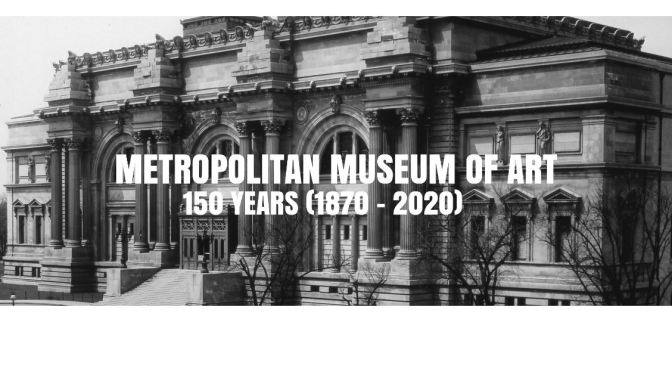
Fine Arts: “Metropolitan Museum Of Art” 150th Anniversary (1870 – 2020)

The MET 150Watch Episode 1, “Looking back to look forward,” in which Met image archivist Stephanie Post, educator and former-Project Runway host Tim Gunn, and New York City Ballet dancer Silas Farley share how their encounters with history and the Museum inform their sense of self and their creative practices.

As part of The Met’s 150th anniversary, Met Stories is a new video series and year-long social media initiative that shares unexpected and compelling stories gathered from the many people who visit The Met, whether artists, teachers, curators, actors, museum staff, designers, thought-leaders, or public figures.

Website

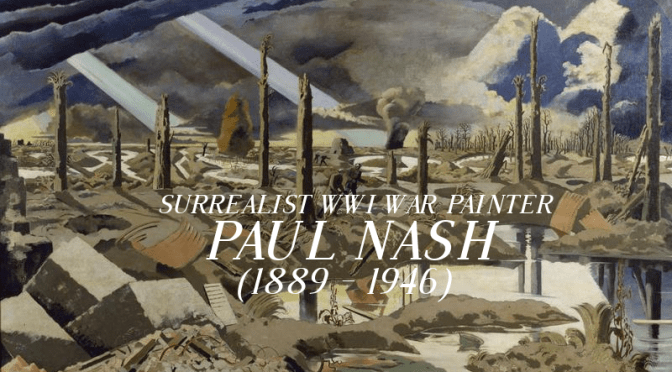
Art History: World War I Surrealist War Artist Paul Nash (1889 – 1946)

Paul Nash (11 May 1889 – 11 July 1946) was a British Surrealist painter and war artist, as well as a photographer, writer and designer of applied art. Nash was among the most important landscape artists of the first half of the twentieth century. He played a key role in the development of Modernism in English art.

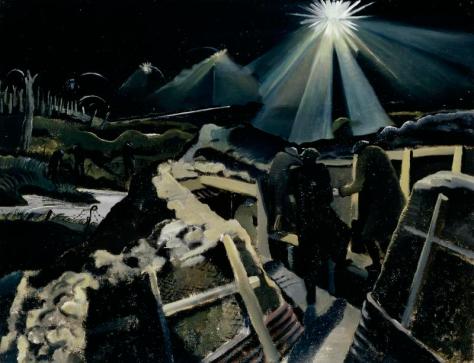
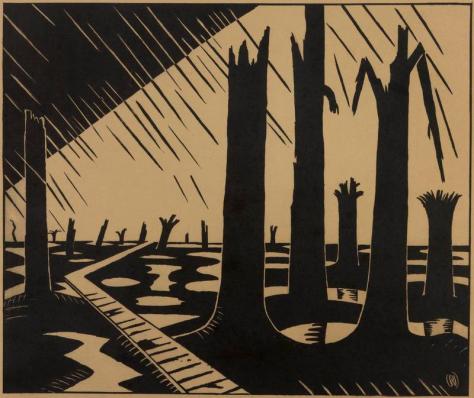
Paul Nash The Ypres Salient at Night, 1918.
Paul Nash: The Ypres Salient at Night, 1918.
Paul_Nash_woodcut_CONTEMPORARY_BRITISH_ARTISTS_1923 Wikipedia
PAUL NASH in a woodcut self-portrait (1923)

Born in London, Nash grew up in Buckinghamshire where he developed a love of the landscape. He entered the Slade School of Art but was poor at figure drawing and concentrated on landscape painting. Nash found much inspiration in landscapes with elements of ancient history, such as burial mounds, Iron Age hill forts such as Wittenham Clumps and the standing stones at Avebury in Wiltshire. The artworks he produced during World War I are among the most iconic images of the conflict. After the war Nash continued to focus on landscape painting, originally in a formalized, decorative style but, throughout the 1930s, in an increasingly abstract and surreal manner. In his paintings he often placed everyday objects into a landscape to give them a new identity and symbolism.

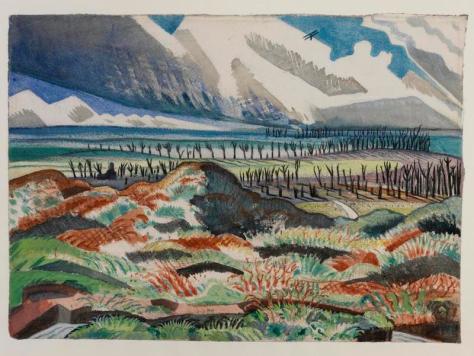
Paul Nash:  Ruined Country - Old Battlefield, Vimy, near La Folie Wood, 1918.
Paul Nash: Ruined Country – Old Battlefield, Vimy, near La Folie Wood, 1918.

Official World War I Artist – In November 1917 Nash returned to the Ypres Salient as a uniformed observer with a batman and chauffeur. At this point the Third Battle of Ypres was three months old and Nash himself frequently came under shellfire after arriving in Flanders. The winter landscape he found was very different from the one he had last seen in spring. The system of ditches, small canals and dykes which usually drained the Ypres landscape had been all but destroyed by the constant shellfire. Months of incessant rain had led to widespread flooding and mile upon mile of deep mud. Nash was outraged at this desecration of nature. He believed the landscape was no longer capable of supporting life nor could it recover when spring came. Nash quickly grew angry and disillusioned with the war and made this clear in letters written to his wife. One such written, after a pointless meeting at Brigade HQ, on 16 November 1917 stands out,

I have just returned, last night from a visit to Brigade Headquarters up the line and I shall not forget it as long as I live. I have seen the most frightful nightmere of a country more conceived by Dante or Poe than by nature, unspeakable, utterly indescribable. In the fifteen drawings I have made I may give you some idea of its horror, but only being in it and of it can ever make you sensible of its dreadful nature and of what our men in France have to face. We all have a vague notion of the terrors of a battle, and can conjure up with the aid of some of the more inspired war correspondents and the pictures in the Daily Mirror some vision of battlefield; but no pen or drawing can convey this country—the normal setting of the battles taking place day and night, month after month. Evil and the incarnate fiend alone can be master of this war, and no glimmer of God’s hand is seen anywhere. Sunset and sunrise are blasphemous, they are mockeries to man, only the black rain out of the bruised and swollen clouds all though the bitter black night is fit atmosphere in such a land. The rain drives on, the stinking mud becomes more evilly yellow, the shell holes fill up with green-white water, the roads and tracks are covered in inches of slime, the black dying trees ooze and sweat and the shells never cease. They alone plunge overhead, tearing away the rotting tree stumps, breaking the plank roads, striking down horses and mules, annihilating, maiming, maddening, they plunge into the grave, and cast up on it the poor dead. It is unspeakable, godless, hopeless. I am no longer an artist interested and curious, I am a messenger who will bring back word from the men who are fighting to those who want the war to go on for ever. Feeble, inarticulate, will be my message, but it will have a bitter truth, and may it burn their lousy souls.”

Paul Nash  Void of War, 1918.
Paul Nash: Void of War, 1918.

Nash’s anger was a great creative stimulus which led him to produce up to a dozen drawings a day. He worked in a frenzy of activity and took great risks to get as close as possible to the frontline trenches. Despite the dangers and hardship, when the opportunity came to extend his visit by a week and work for the Canadians in the Vimy sector, Nash jumped at the chance. He eventually returned to England on 7 December 1917.

From Wikipedia

Interviews: 59-Year Old Artist & Writer Jessica Helfand (CalTech)

From a CalTech Matters online article:

Jessica Helfand Caltech Matters Credit - Maggie Peters
Jessica Helfand – Photo by Maggie Peters in Caltech Matters

“Observation is observation. Looking, listening, thinking, conjecturing … all original ideas begin with a kind of scrutiny that is at once framed by discipline and open to discovery. Because I have always taught students in a university, not in an art school, I think I have a baseline understanding of what it means to approach the visual world from a different place. Teaching non-artists is always a little bit like being a foreign exchange student. Therein lies the challenge—and, I suspect, the fun.”

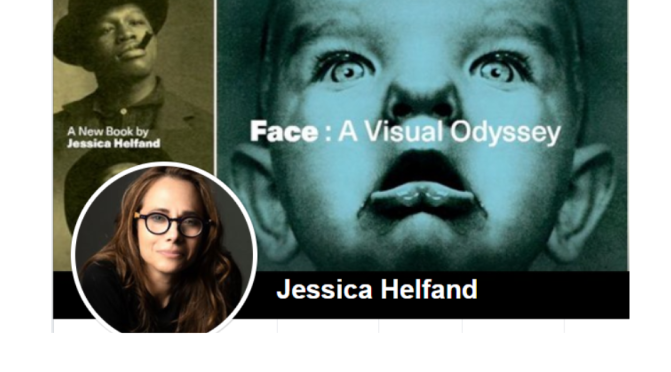
January 7, 2020 – This month, artist, designer, and writer Jessica Helfand joins Caltech as the Winter 2020 artist-in-residence in the Division of the Humanities and Social Sciences’ Caltech-Huntington Program in Visual Culture, which is administered jointly by the division and The Huntington Library, Art Museum, and Botanical Gardens. Helfand is a former contributing editor and columnist for PrintEye and Communications Arts magazines, and founding editor of the website Design Observer. She taught at Yale for two decades and has held artist residencies at the American Academy in Rome and the Bogliasco Foundation, among others. Her most recent book, Face: A Visual Odyssey, was published by MIT Press last fall. On January 16, Helfand will take part in a noontime talk with Bren Professor of Psychology, Neuroscience, and Biology Ralph Adolphs on the theme of the “face.”

CalTech Matters Logo

Read full article

The 1980’s: Science Center Construction Boomed – New Age “Museums”

From a CityLab.com online article:

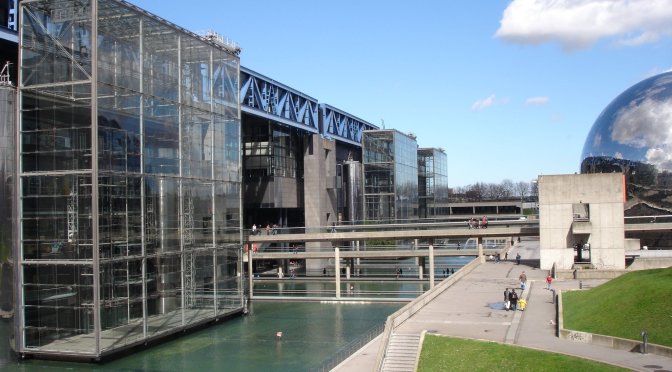
The first of these urban amenities arose in the 1960s, but it was in the 1980s and ‘90s that the construction of science centers truly boomed. Inspired by historic World’s Fair exhibitions, industrial and natural history museums, and the sci-fi dreams of their early founders, science centers had a hands-on mission distinct from that of most museums—to engage rather than display. They offered levers you could pull, gyroscopes you could spin, lab experiments you could conduct. 

Citilab logoThe science center is an adolescent among museum types, one whose main growth spurt was in recent memory. Over the past 40 years, they went from a sparse to a ubiquitous presence, now found in almost every major city. Their emergence stretched the ontological essence of the museum: They present not objects, but concepts. Many science centers define themselves explicitly this way and possess slim to no permanent collections.

Read full article

Tributes: 89-Year Old Actor & Screenwriter Buck Henry Has Died

From a Hollywood Reporter online release:

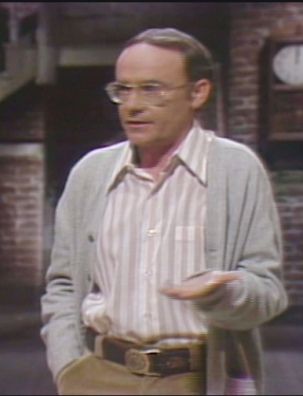
Buck Henry Saturday Night Live 1970s“Turman, Nichols and I related to The Graduate in exactly the same way,” Henry told Vanity Fair. “We all thought we were [the book’s protagonist] Benjamin Braddock. Plus, it’s an absolutely first-class novel, with great characters, great dialogue, a terrific theme. Who could resist it? I read it and I said, ‘Yes, let’s go.'”

Henry landed his first Oscar nom for the screenplay (he came up with the word “plastics” and had a small role in the film) and received a second nom for co-directing (with Warren Beatty) the reincarnation comedy Heaven Can Wait, a remake of the 1941 film Here Comes Mr. Jordan.

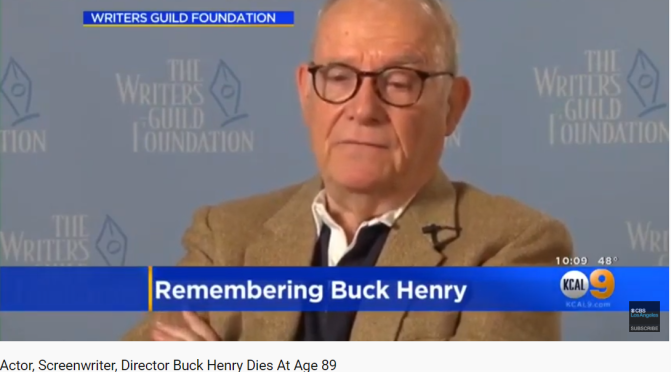
Buck Henry, the impish screenwriter whose wry, satirical sensibility brought comic electricity to The GraduateWhat’s Up, Doc?To Die For and TV’s Get Smart, has died. He was 89.

Henry, a two-time Oscar nominee who often appeared onscreen — perhaps most memorably as a 10-time host (all in the show’s first four years) on Saturday Night Live — died of a heart attack Wednesday at a Los Angeles hospital, his wife, Irene, told The Washington Post. He had suffered a stroke in November 2014.

Read full article

Video Interviews: 69-Year Old Photographer Steve McCurry (Bloomberg)

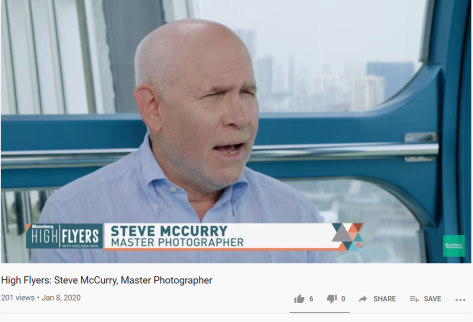
Jan.08 — Bloomberg’s Haslinda Amin kicks off Season 8 on board the Singapore Flyer with the man who shot the “Afghan Girl”. Steve McCurry has spent a lifetime focusing on conflict and culture creating some of the world’s most iconic photos.

Steve McCurry Master Photographer Bloomberg High Flyers Video Interview January 8 2020

Website


Exhibitions: 74-Year Old Artist John Alexander – “Landscape And Memory” (Berggruen Gallery)

JANUARY 9 – FEBRUARY 15, 2020
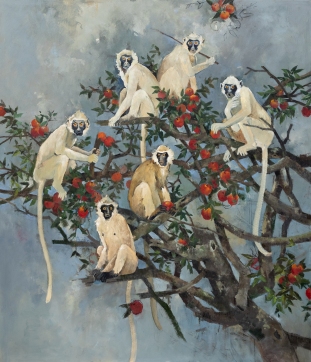
 

John Alexander The Temptation 2019 Landscape and Memory Berggruen Gallery January 2020Berggruen Gallery is proud to present John Alexander: Landscape and Memory, an exhibition of recent paintings and drawings by Texas-born, New York-based artist John Alexander. This show marks Alexander’s second solo exhibition with the gallery and will be on view January 9 through February 15, 2020. The gallery will host an opening reception for the artist on Thursday, January 16 from 5:00 to 7:00pm.

John Alexander’s most recent body of work presents a detailed collection of landscapes, botanicals, sea life, and animals – each subject an emblem of the artist’s own mind and memory. Alexander grew up between the bayous and the wooded wilderness of East Texas, enjoying camping and fishing trips within the lush, diverse landscape that would ultimately become so influential to him. Moreover, Alexander’s understanding and appreciation for the natural world was fortified by his father’s environmentalism. For Alexander, developing an environmental acuity, especially for his native Texas, was familial. Today, the artist creates work in reference to the nature-based consciousness he developed in his youth.
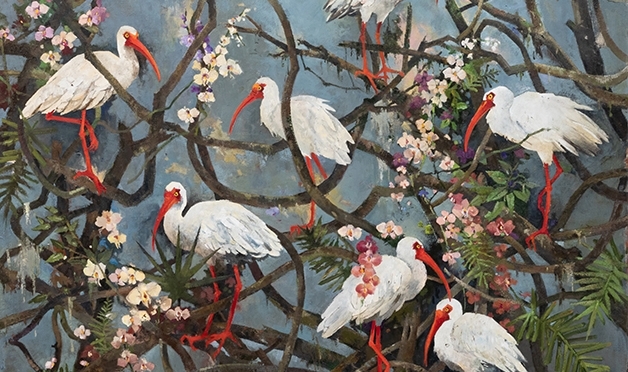
Berggruen Gallery San FranciscoThe introspective nature of Alexander’s work is revealed through the artist’s keen observations of his surrounding environment and the vivid way in which he paints it. Employing bold, painterly strokes, Alexander maintains an acute sensibility of his subject matter – whether it be the detailed rendering of the spiny lobster, an expressive portrayal of grackles and ibises perched in branches, or more expansive, floating florals. The artist also injects elements of whimsy; the playful monkeys he paints peer out of their canvases to almost directly engage the viewer. And thus each work is imbued with an authentic, raggedly pristine, emotional sense of the earth we all inhabit. In this way, Alexander creates scenes that are deeply personal, yet also shared…nostalgic yet ongoing…exotic yet familiar…of the world yet otherworldly. Saturating his landscapes with humor, sentimentality, and veneration, Alexander reveals as much about himself as he does about nature.

John Alexander: Landscape and Memory is comprised of nine paintings and four drawings, work that comes together in reverence for the formal tradition of landscape painting. Paying homage to an Impressionist Master, Claude Monet, Alexander paints dreamy hollyhocks. Invoking the more recent Hudson River School, Alexander carefully creates bucolic scenes of both reality and idealization. Perhaps most unexpectedly, Alexander also nods to the Abstract Expressionists, applying thick strokes of paint in a gestural, emotional meditation. In turn, Alexander’s work pays tribute to the long and varied legacy of landscape painting before him while simultaneously remaining true to his own, very personal, connection to nature. Through the amalgamation of art historical context, environmental conservation, and the integration of a more intimate narrative, Alexander produces a body of work that is raw, compelling, and perhaps above all else, natural.

John Alexander was born in Beaumont, Texas, in 1945. He received his B.F.A. from Lamar University in Beaumont in 1968 and his M.F.A. from the Southern Methodist University in Dallas in 1970. Following graduate school, Alexander taught at the University of Houston. Though the artist’s Texas roots influence much of his work, to solely categorize Alexander as a “Texas” artist would be inaccurate. In 1979, having established himself in Houston as a prominent local artist, Alexander moved to New York City. Today the artist divides his time between his SoHo studio loft and home in Amagansett, East Hampton. Alexander’s work has been widely exhibited at such prestigious institutions as the Corcoran Gallery of Art and the Smithsonian American Art Museum, both in Washington, D.C., and the Museum of Fine Arts, Houston. His work is featured in the permanent collections of several leading institutions, including The Metropolitan Museum of Art, New York; the Dallas Museum of Art; and the Museum of Contemporary Art, Los Angeles; as well as many other public and private collections worldwide.

Website

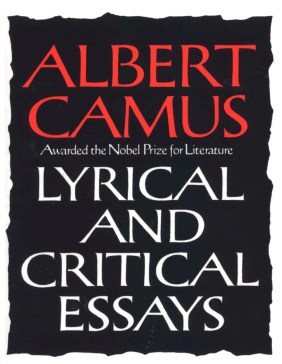
Lyrical Essays: “Return To Tipasa” By Albert Camus (Poetry Channel Podcast)

Albert Camus’ lyrical essay… where he found In the midst of winter, there was, within himself, an invincible summer.

Excerpt from “Return To Tipasa” by Alber Camus

Albert Camus Lyrical and Critical Essays Return To Tipasa bookYou have navigated with raging soul far from the paternal home, passing beyond the sea’s double rocks, and you now inhabit a foreign land.
–Medea

For five days rain had been falling ceaselessly on Algiers and had finally wet the sea itself. From an apparently inexhaustible sky, constant downpours, viscous in their density, streamed down upon the gulf. Gray and soft as a huge sponge, the sea rose slowly in the ill-defined bay. But the surface of the water seemed almost motionless under the steady rain. Only now and then a barely perceptible swelling motion would raise above the sea’s surface a vague puff of smoke that would come to dock in the harbor, under an arc of wet boulevards. The city itself, all its white walls dripping, gave off a different steam that went out to meet the first steam. Whichever way you turned, you seemed to be breathing water, to be drinking the air.

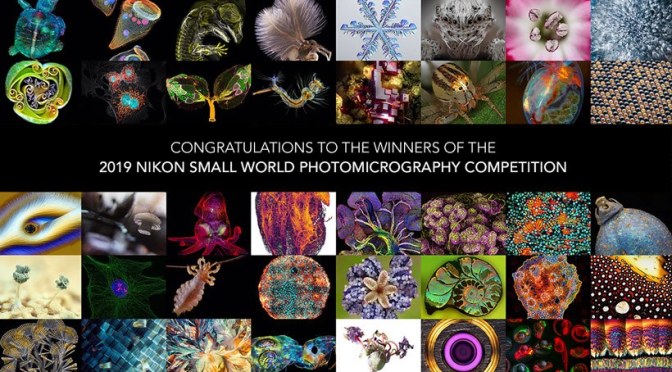
Photography: “2019 Nikon Small World Competition – Photomicrography”

Nikon Small World Competition 2019 Page 0

Nikon Small World Competition 2019 page-8

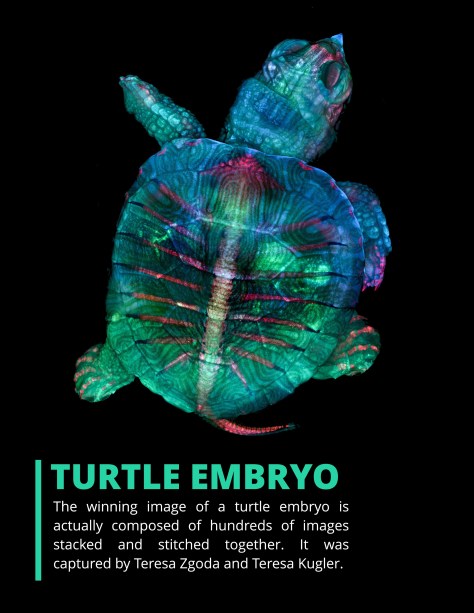
1st Place Fluorescent turtle embryo 

Teresa Zgoda & Teresa Kugler

Location: Campbell Hall, New York, USA; Technique: StereomicroscopyFluorescence; Magnification: 5x (Objective Lens Magnification)

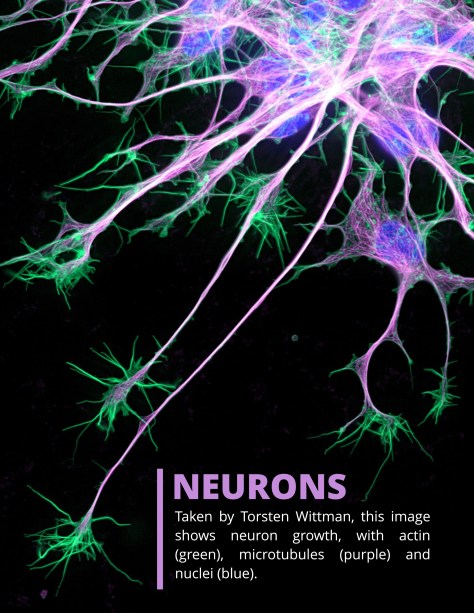
For microscopy technician Teresa Zgoda and recent university graduate Teresa Kugler, microscopy is a discipline that allows them to blend their dual passions of art and science. The 2019 winning image is a spectacular example of that, featuring a colorful turtle embryo captured using a combination of fluorescence and stereomicroscopy.

The pair captured this image while assisting in the Marine Biological Laboratory’s embryology course. It was here they learned the precise technique required to properly prepare various types of embryos to be observed and photographed. Creating this image was a unique challenge, largely due to the size of the sample. Over an inch long, and thick, it took time and precision to ensure the entire subject was photographed completely. What’s more, the magnification used meant only a small part of the turtle could be imaged on the focal plane. The final image is a compilation of hundreds of images that had to be stacked and stitched together.

When they are not taking photos through the microscope, both women enjoy being creative (for Kugler, that means cosplay, and for Zgoda it means photographing the landscapes, plants, and animals she sees on her hikes). Zgoda has recently started a job in a Boston hospital in a lab focused on neurology, while Kugler is excited to see what the world of science has in store for new Rochester Institute of Technology graduate.

“Microscopy lets us get a better look at the small things in life,” said Kugler, “It allows me to do science with a purpose.”

“We are inspired by the beautiful images we see through the microscope,” added Zgoda, “It’s amazing to be able to share that science with other people.”

Nikon Small World Competition 2019 page-1


Nikon Small World Competition 2019 page-2

Nikon Small World Competition 2019 page-3

Nikon Small World Competition 2019 page-4

Top New Exhibitions: “Charles Arnoldi | Four Decades” (Fisher Museum)


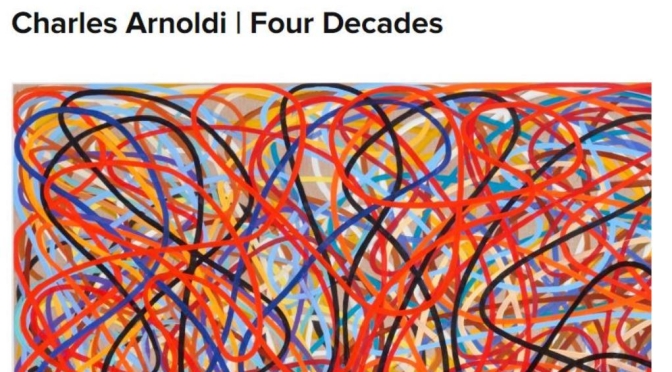
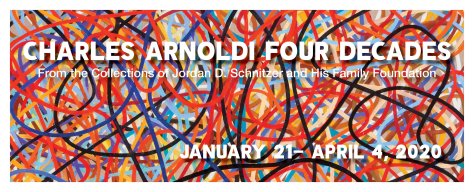
USC Fisher Museum Of Art Charles Arnoldi Four Decades Exhibit January 21 - April 4 2020

USC Fisher Museum of Art proudly presents Charles Arnoldi | Four Decades, a survey of the versatile and prolific Venice Beach artist, which traces the evolution Charles Arnoldi Artof the artist’s expansive and materials-focused practice from the 1970s to the present.

USC Fisher Museum of Art proudly announces Charles Arnoldi | Four Decades from the Collection of Jordan D. Schnitzer and His Family Foundation, a survey of Venice Beach artist Charles (Chuck) Arnoldi. The exhibition, organized by the USC Fisher Museum of Art with the generous support of the Jordan Schnitzer Family Foundation and curated by Bruce Guenther, author of Charles Arnoldi: Paper (2017), opens January 21, 2020 and runs through April 4, 2020.

USC Fisher Museum of Art logoCharles Arnoldi was a young man from Dayton, Ohio who had seen little of the world when he arrived in Southern California in the mid 1960s. Following stints at a local community college and Chouinard Art Institute, Arnoldi won LACMA’s New or Young Talent Award in 1969 and thus began his ever-evolving career which continues to this day in his sprawling Venice studio.

For close to 50 years, Arnoldi’s work has reflected a passion for the material world, a commitment to experimentation, and a tireless focus on studio production. Charles Arnoldi | Four Decades is drawn from the holdings of the collector Jordan D. Schnitzer and His Family Foundation.

Website