Category Archives: Arts & Literature

Tours: Rodin Sculptures, Cantor Museum, Stanford

At the time of his death, Auguste Rodin (France, 1840-1917) was counted among the most renowned artists in the world. A century later, after numerous reassessments by generations of art historians, Rodin continues to be recognized for making figurative sculpture modern by redefining the expressive capacity of the human form. This installation spans three galleries and features nearly 100 Rodin sculptures essential to telling his story and representing his groundbreaking engagement with the body. Drawn from the extensive holdings of the Cantor Arts Center, the largest collection of sculptures by Rodin in an American museum, it also presents comparative works by his rivals, mentors, admirers, and imitators.

Check out the Cantor for publications about August Rodin and his works, available for purchase in the Cantor’s Atrium.

Poetry Readings: “I Am!” – By John Clare (1793 – 1864)

Read by John Davies

John Clare was an English poet who lived most of his life in abject poverty. His life was marred by bouts of mania and depression, and for the final 23 years of his life, Clare was locked in an insane asylum. It was here he began to write poetry; ‘I Am’ was Clare’s final elegy before his passing.

I Am!

BY JOHN CLARE

I am—yet what I am none cares or knows;
My friends forsake me like a memory lost:
I am the self-consumer of my woes—
They rise and vanish in oblivious host,
Like shadows in love’s frenzied stifled throes
And yet I am, and live—like vapours tossed

Into the nothingness of scorn and noise,
Into the living sea of waking dreams,
Where there is neither sense of life or joys,
But the vast shipwreck of my life’s esteems;
Even the dearest that I loved the best
Are strange—nay, rather, stranger than the rest.

I long for scenes where man hath never trod
A place where woman never smiled or wept
There to abide with my Creator, God,
And sleep as I in childhood sweetly slept,
Untroubling and untroubled where I lie
The grass below—above the vaulted sky.

Profiles: British Painter William Lee-Hankey – ’19th Century Rural France’

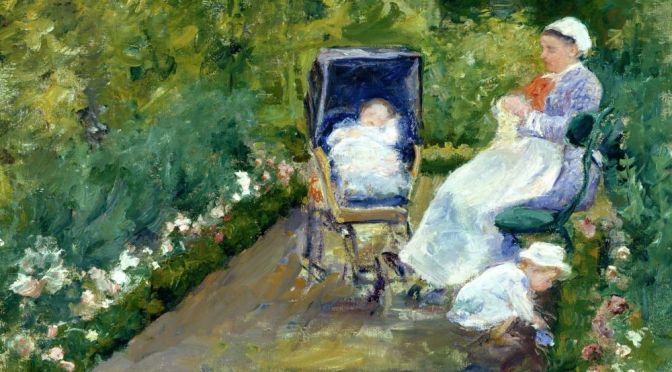
William Lee Hankey RWS, RI, ROI, RE, NS was a British painter and book illustrator. He specialised in landscapes, character studies and portraits of pastoral life, particularly in studies of mothers with young children such as “We’ve Been in the Meadows All Day”. 

Tours: The Musée d’Orsay In Paris, France (4K Video)

The Musée d’Orsay is a museum in Paris, France, on the Left Bank of the Seine. It is housed in the former Gare d’Orsay, a Beaux-Arts railway station built between 1898 and 1900. The museum holds mainly French art dating from 1848 to 1914, including paintings, sculptures, furniture, and photography. 

Previews: Times Literary Supplement (TLS) – Sep 3

Literary Preview: London Review Of Books – Sep 9

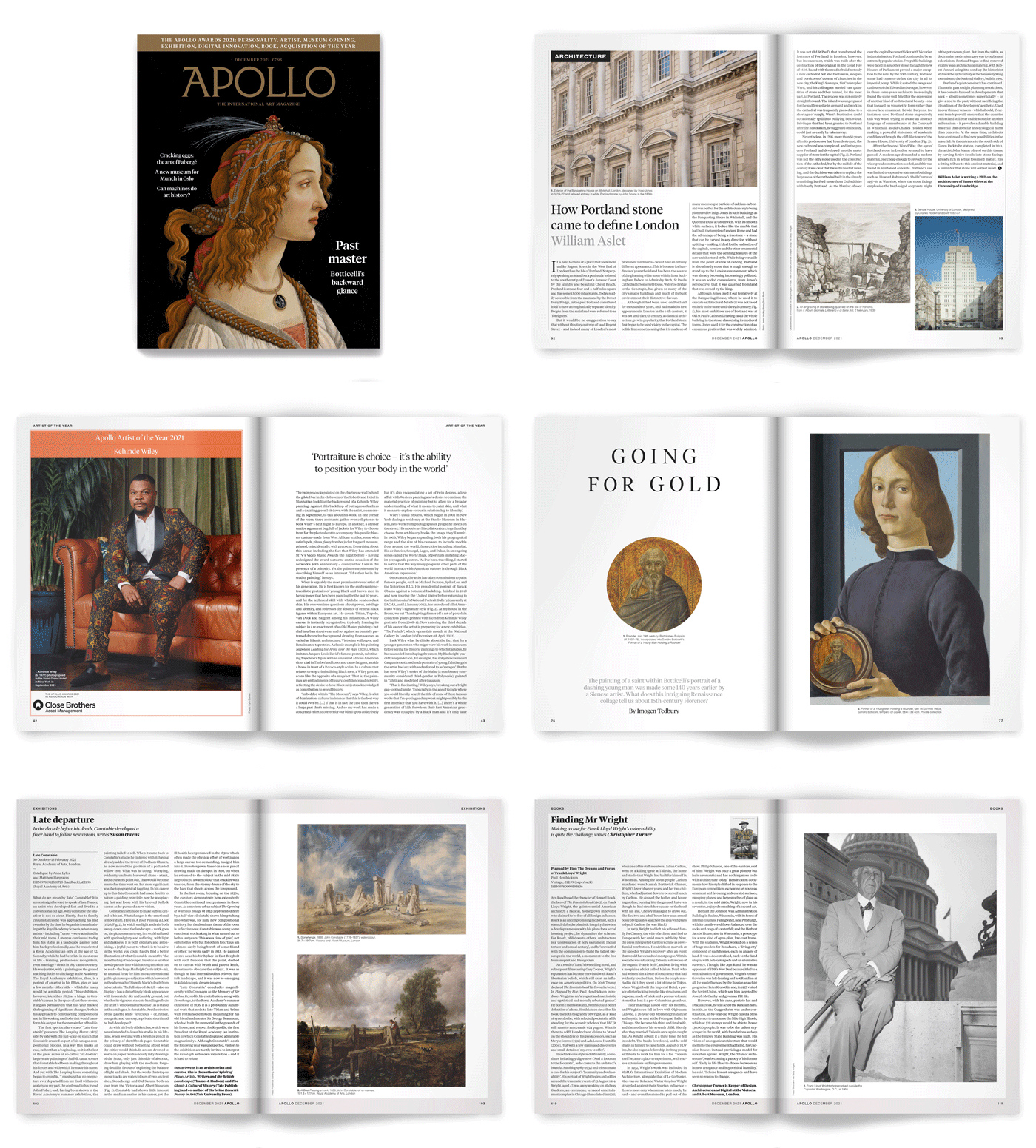
Cover Previews: Apollo Magazine – September 2021

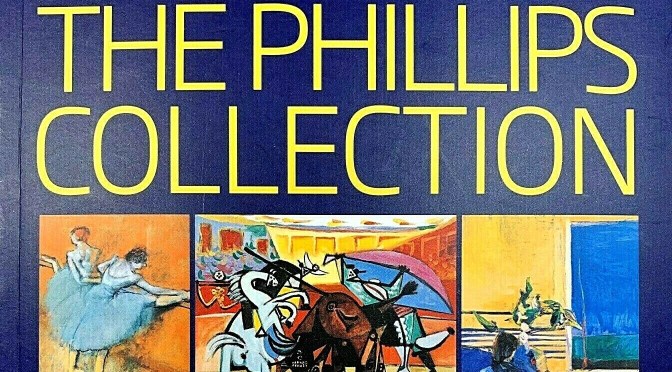
FEATURES | Jonathan Griffin on mysticism and modern art; Yasmine Seale watches Sheila Hicks at work; Andrew Lloyd Webber gives Sophie Barling a tour of Drury Lane; Eve M. Kahn at the Phillips Collection in Washington, D.C.; Valeria Costa-Kostritsky on the Museum of Homelessness

REVIEWS | Susan Owens on Gustave Moreau’s fables at Waddesdon; Aimee Ng on the Medici at the Met; Emilie Bickerton on Georges Méliès at the Cinémathèque Française; Peter Parker on Richard Chopping in SalisburyTom Stammers on history in the age of Romanticism; Kitty Hauser on the life of Francis Bacon; David Ekserdjian on Italian paintings at the Norton Simon; Sameer Rahim on the Umayyad Mosque in Damascus; Rebecca Ann Hughes on the tricks of the white-truffle trade
 
MARKET | Jo Lawson-Tancred selects her highlights of TEFAF Online; and the latest art market columns from Susan MooreEmma Crichton-Miller and Samuel Reilly
 
PLUS | Susan Moore and Niru Ratnam ask if the art world has a sense of humourDiane Smyth on the rise of falling in photography; Martin Herbert at the restored Neue Nationalgalerie in BerlinWilliam Dunbar on a cave monastery in Georgia; Gillian Darley on the visions of Joseph Gandy; Robert O’Byrne on the forgotten art of Ignazio Hugford

Views: ‘Richard Chopping: The Original Bond Artist’

In April 1956, at the suggestion of his friend Francis Bacon, Richard Chopping took the society hostess Ann Fleming to see some of his trompe l’oeil paintings, which were then on show at the Arthur Jeffress Gallery in Mayfair. Impressed by these pictures, Fleming invited the artist to meet her husband, Ian, who was looking for someone to provide dust-jacket illustrations for his James Bond novels.

Peter Parker
 31 AUGUST 2021

Chopping was immediately offered the job, and his striking designs remain the work for which he is best known and are, for many collectors, the reason the novels are particularly prized.

As this small but imaginatively curated exhibition demonstrates, there was a great deal more to Chopping than James Bond. Nevertheless, the highly detailed, finely executed and often macabre paintings he produced for Fleming are characteristic of his work as a whole. Born in Essex in 1917, Chopping moved to London at the age of 18 with little idea of what he wanted to do, but soon got a job on the magazine Decorations of the Modern Home.

Read more

Museum Tour: The Musée Marmottan Monet, Paris

Musée Marmottan Monet features over three hundred Impressionist and Post-Impressionist paintings by Claude Monet, including his 1872 Impression, Sunrise. Marmottan Museum’s fame is the result of a donation in 1966 by Michel Monet, Claude’s second son and only heir.