“I try to paint the paintings like the window into life, you can step into the painting and enjoy your own walk through the streets or take a seat and enjoy a meal…”


“I try to paint the paintings like the window into life, you can step into the painting and enjoy your own walk through the streets or take a seat and enjoy a meal…”


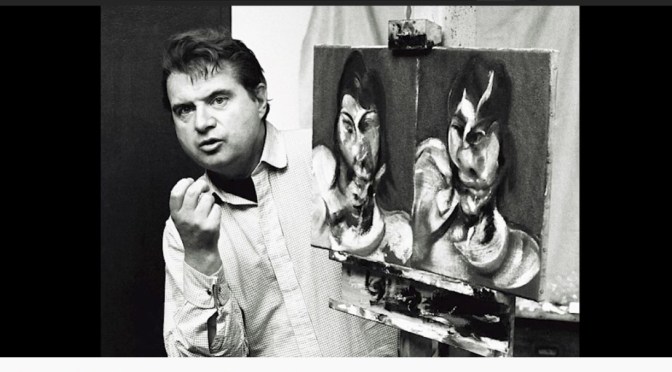
This extraordinary Francis Bacon triptych from the William S. Paley Collection is one of the true masterpieces of his career and marks the first inception of his painting of Henrietta Moraes, who became one of his most famous and preferred sitters.
Held in stewardship by the Museum of Modern Art in New York for the last 30 years, it is coming to market for the first time since William S. Paley acquired it from the Marlborough Gallery.
Francis Bacon was an Irish-born British figurative painter known for his raw, unsettling imagery. Focusing on the human form, his subjects included crucifixions, portraits of popes, self-portraits, and portraits of close friends, with abstracted figures sometimes isolated in geometrical structures.
To learn more about one of the great bohemian muses of the 1950’s and 1960’s, Henrietta Moraes, please click here: https://www.sothebys.com/en/articles/…
Set right on the spectacular coast of Cannes, France, La Palme d’Or rests inside the Grand Hyatt Cannes Hotel Martinez. This restaurant has won two Michelin stars, and is most known for its Mediterranean-style dishes. However, the most notable thing about this restaurant is the head chef, who creates bespoke ceramic dishware to for the restaurant to best compliment his unique recipes.

Some places you fall in love with at first sight and La Palme d’Or is one of them. In the fabulous Art Deco setting of the Hotel Martinez, diners look down on the famous promenade of La Croisette and the Bay of Cannes, while savouring the luxury and refinement so beautifully brought together here. Of course, all this would be worth nothing without high-calibre cuisine. No worries on that score: chef Christian Sinicropi, a local man, has matters entirely in hand. At each stage of the “Mouvements” set menu, he homes in on one ingredient, supporting it with elements from its own ecosystem. The result is coherent and sophisticated, right down to the remarkably precise desserts by Julien Ochando. Definitely worthy of a Golden Palm award.
This week: Georgina Adam joins Ben Luke to discuss the intriguing story of the bankrupt entrepreneur and art collector, the museum scholar and a host of Old Master paintings given new attributions.
We talk to Suzanne Pagé, the curator of Monet-Mitchell, an exhibition bringing together the Impressionist Claude Monet and the post-war American abstract painter Joan Mitchell, at the Fondation Louis Vuitton in Paris.
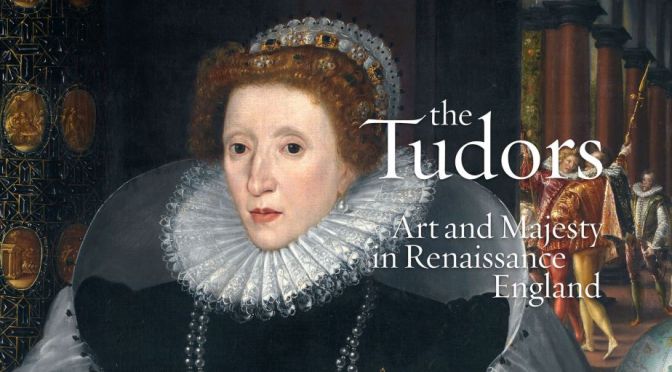
And this episode’s Work of the Week is a 1583 painting of Elizabeth I of England, known as the Sieve Portrait, which is one of the highlights of the Metropolitan Museum of Art in New York’s exhibition The Tudors: Art and Majesty in Renaissance England. The show’s curators, Elizabeth Cleland and Adam Eaker, tell us about this richly layered picture.
Monet-Mitchell, Joan Mitchell retrospective, Fondation Louis Vuitton, Paris, until 27 February 2023. Joan Mitchell: Paintings, 1979-85, David Zwirner, New York, 3 November-17 December.The Tudors: Art and Majesty in Renaissance England, Metropolitan Museum of Art, New York, 10 October-8 January 2023 Hosted on Acast. See acast.com/privacy for more information.
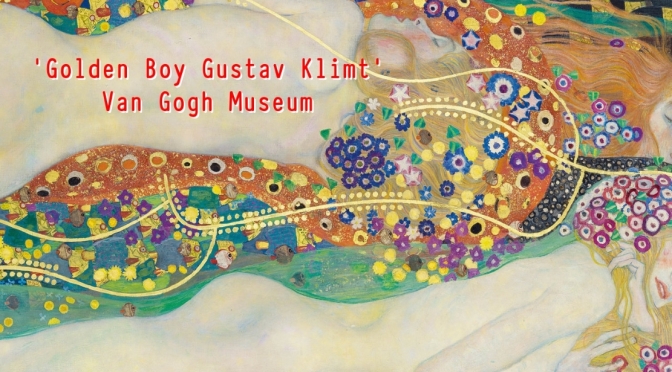
Walk through our exhibition ‘Golden Boy Gustav Klimt. Inspired by Van Gogh, Rodin, Matisse. Explore how Klimt developed his unique style and how the Austrian artist was inspired by the work of Van Gogh, Toorop, Rodin, Whistler, Toulouse-Lautrec, Monet, Matisse and many other artists. Gustav Klimt (1862-1918) is one of the most fascinating artists of western art history. He is world-famous for his golden and decorative paintings and his portraits of strong women. But who was this ‘golden boy’, and what is the story behind his talent?
From 7 October 2022 – l8 January 2023

In ArtReview’s October issue – out now – Chris Fite-Wassilak profiles Jeffrey Gibson, the artist whose works unpick and repattern mythologies around the depiction of native cultures: ‘Dolled up in intricate beadwork and bright kitsch plumes, Gibson’s flamboyant artefacts mock the anthropological impulse, while buzzingly suggesting new rituals’.
Renewal can be a fraught process, as ruangrupa found at this year’s documenta fifteen. ArtReview’s Mark Rappolt and J.J. Charlesworth spoke to the collective’s farid rakun and Ade Darmawan about their hopes for and the results of ruangrupa’s artistic direction of documenta fifteen – and what happens next. Their work confounded many assumptions about how this major survey exhibition should be organised – and who and what it should be for. One thing was certain: they “had to fight for every inch”.
It’s a story that has dominated recent cultural discourse – and is touched on by Naom Chomsky, interviewed by Nika Dubrovsky for ArtReview October. Chomsky, a keen admirer of David Graeber’s work, discusses with Dubrovsky the late anthropologist’s last project, neoliberalism and democracy, Western empiricism and imperialism, free speech, Roe v. Wade, and the war in Ukraine.
The exhibitions “Monet – Mitchell” create an unprecendented “dialogue” between the works of two exceptional artists, Claude Monet (1840-1926) and Joan Mitchell (1925-1992).
“The dialogue Claude Monet – Joan Mitchell” will be introduce by the “Joan Mitchell Retrospective”, enabling the public in France and Europe to discover her work.
The “Monet – Mitchell” exhibitions present each artist’s unique response to a shared landscape, which they illustrate in a particularly immersive and sensual manner. In his last paintings, the Water Lilies, Monet aimed to recreate in his studio the motifs he observed at length on the surface of his water lily pond in Giverny. Joan Mitchell, on the other hand, would explore a memory or a sense of the emotions she felt while in a particular place that was dear to her, perceptions that remained vivid beyond space and time. She would create these abstract compositions at La Tour, her studio in Vétheuil, a small French village.
Exhibition – 05.10.2022 to 27.02.2023


A 40-year timeline of disability art and moments that make up a movement.
THE EXCHANGE: SCIENCE FICTIONS
by American Artist with Lou Cornum
An artist and a sci-fi scholar share their esteem for novelist Octavia Butler, who extrapolated future worlds from troubled times.
HARD TRUTHS: MIC DROP
by Chen & Lampert
Artist-curators Howie Chen and Andrew Lampert offer advice on karaoke and other forms of art world hobnobbing.
There have been very few issues of art magazines devoted to disability. There ought to be more. As Art in America associate editor Emily Watlington, who took the lead on this issue, writes in her essay “Our Work Is Working,” disabled artists have been crucial to progress in disability justice and the art world in general, whether through storytelling, empathy-building, or outright activism. These artists place disability where it belongs: at the heart of creativity itself.
In collaboration with the Munch Museum in Oslo, the Musée d’Orsay is devoting an exhibition to the famous Norwegian painter Edvard Munch (1863-1944), whose work, in all its breadth – sixty years of creation – and complexity, remains partly unknown.
Munch’s work occupies a pivotal place in artistic modernity. It has its roots in the 19th century and would find its place firmly in the next one. Moreover, his entire work is permeated by a singular vision of the world, giving it a powerful symbolist dimension that is not limited to the few masterpieces he created in the 1890s. Moving beyond fin-de-siècle symbolism, Munch transcended this movement beyond its peak to make it the backbone of his work, giving it its great coherence.
Filmed on October 2, 2022.

Alex Kitnick on the art of Wolfgang Tillmans
Natalia Brizuela and Julia Bryan-Wilson on the art of Jumana Manna
Alexandro Segade on the Ororocene