Step into innovative little gardens of Eden created on small terraces and city rooftops, as well as out in the suburbs and countryside.
As our lifestyles become more sustainable, so does the way we interact with the outdoors. Today’s gardeners aim not only to create decorative outside spaces but also to give something back. No matter what size your patch is, it’s easy to create diverse and rich environments for plants and insects, or grow your own vegetables or fruits. This book presents spaces that are more imaginative, diverse, and sustainable. Learn how to grow food in the city, get creative with native plants, and design greener corners within urban areas. The Gardens of Eden looks at fascinating examples around the world, teaching what you can do for nature while revealing what a garden can do for you.
Abbye Churchill was the editorial director of Wilder Quarterly, and her first book, A Wilder Life, was featured in The New York Times Book Review. Her writing has also appeared in The New York Times, Vogue, Food & Wine, and W. She lives in Brooklyn, New York City.
“After 96 years on this earth, Yona has moved up to build a Spatial City and install some Space Chains in the sky. The Fonds de Dotation Denise and Yona Friedman, which he founded last year, will continue his work.”
From an Instagram post (02/21/20)
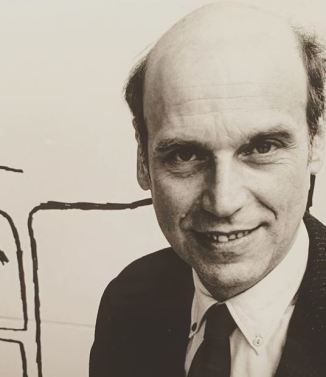
Yona Friedman (5 June 1923 – 21 February 2020) was a Hungarian-born French architect, urban planner and designer. He was influential in the late 1950s and early 1960s, best known for his theory of mobile architecture.
In 1958, Yona Friedman published his first manifesto : “Mobile architecture”. It described a new kind of mobility not of the buildings, but for the inhabitants, who are given a new freedom.
Mobile architecture is the “dwelling decided on by the occupant” by way of “infrastructures that are neither determined nor determining”. Mobile architecture embodies an architecture available for a “mobile society”. To deal with it, the classical architect invented “the Average Man”. The projects of architects in the 1950s were undertaken, according to Friedman, to meet the needs of this make-believe entity, and not as an attempt to meet the needs of the actual members of this mobile society.
The teaching of architecture was largely responsible for the “classical” architect’s under-estimation of the role of the user. Furthermore, this teaching did not embrace any real theory of architecture. Friedman proposed then teaching manuals for the fundamentals of architecture for the general public.
The spatial city, which is a materialization of this theory, makes it possible for everyone to develop his or her own hypothesis. This is why, in the mobile city, buildings should :
touch the ground over a minimum area
be capable of being dismantled and moved
and be alterable as required by the individual occupant.
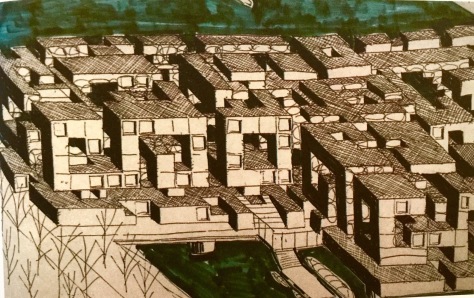
The Spatial City is the most significant application of “mobile architecture”. It is raised up on piles which contains inhabited volumes, fitted inside some of the “voids”, alternating with other unused volumes, making it look aesthetically pleasant. The basis of its design is that of trihedral elements which operate as “neighbourhoods” where dwellings are distributed without a price.
This structure introduces a kind of merger between countryside and city (compare to Paolo Soleri’s Arcology concept) and may span:
certain unavailable sites,
areas where building is not possible or permitted (expanses of water, marshland),
areas that have already been built upon (an existing city),
above farmland.
This spanning technique which includes container structures ushers in a new development in town-planning. Raised plans increase the original area of the city becoming three-dimensional. The tiering of the spatial city on several independent levels, one on top of the other, determines “spatial town-planning” both from the functional and from the aesthetic viewpoint. The lower level may be earmarked for public life and for premises designed for community services as well as pedestrian areas. The piles contain the vertical means of transport (lifts, staircases). The superposition of levels should make it possible to build a whole industrial city, or a residential or commercial city, on the same site. In this way, the Spatial City forms what Yona Friedman would call an “artificial topography”. This grid suspended in space outlines a new cartography of the terrain with the help of a continuous and indeterminate homogeneous network with a major positive outcome: this modular grid would authorize the limitless growth of the city.
The spaces in this grid are rectangular and habitable modular “voids”, with an average area of 25–35 square meters. Conversely, the form of the volumes included within the grid depends solely on the occupant, and their configuration set with a “Flatwriter” in the grid is completely free. Only one half of the spatial city would be occupied. The “fillings” which correspond to the dwellings only actually take up 50% of the three-dimensional lattice, permitting the light to spread freely in the spatial city. This introduction of elements on a three-dimensional grid with several levels on piles permits a changeable occupancy of the space by means of the convertibility of the forms and their adaptation to multiple uses.
In Yona Friedman’s own words “The city, as a mechanism, is thus nothing other than a labyrinth : a configuration of points of departure, and terminal points, separated by obstacles”.
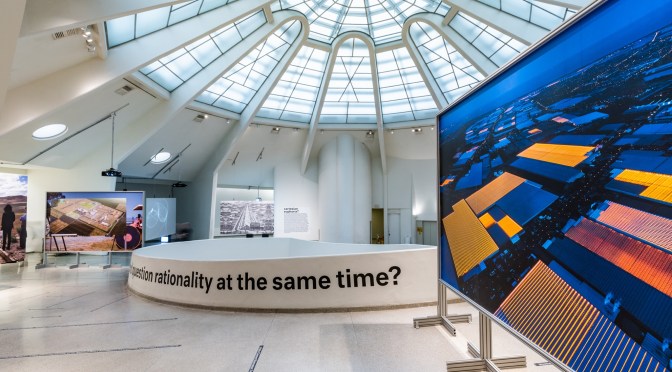
Countryside, The Future is an exhibition addressing urgent environmental, political, and socioeconomic issues through the lens of architect and urbanist Rem Koolhaas and Samir Bantal, Director of AMO, the think tank of the Office for Metropolitan Architecture (OMA).
A unique exhibition for the Guggenheim Museum, Countryside, The Future will explore radical changes in the rural, remote, and wild territories collectively identified here as “countryside,” or the 98% of the Earth’s surface not occupied by cities, with a full rotunda installation premised on original research. The project presents investigations by AMO, Koolhaas, with students at the Harvard Graduate School of Design; the Central Academy of Fine Arts, Beijing; Wageningen University, Netherlands; and the University of Nairobi. The exhibition will examine the modern conception of leisure, large-scale planning by political forces, climate change, migration, human and nonhuman ecosystems, market-driven preservation, artificial and organic coexistence, and other forms of radical experimentation that are altering landscapes across the world.
Rem Koolhaas (Rotterdam, 1944) founded OMA in 1975 together with Elia and Zoe Zenghelis and Madelon Vriesendorp. He graduated from the Architectural Association in London and in 1978 published Delirious New York: A Retroactive Manifesto for Manhattan. In 1995, his book S,M,L,XL summarized the work of OMA in “a novel about architecture”. He co-heads the work of both OMA and AMO, the research branch of OMA, operating in areas beyond the realm of architecture. His built work includes the Qatar National Library and the Qatar Foundation Headquarters (2018), Fondation Galeries Lafayette in Paris (2018), Fondazione Prada in Milan (2015/2018), Garage Museum of Contemporary Art in Moscow (2015), the headquarters for China Central Television (CCTV) in Beijing (2012), Casa da Musica in Porto (2005), Seattle Central Library (2004), and the Netherlands Embassy in Berlin (2003). Current projects include the Taipei Performing Arts Centre, a new building for Axel Springer in Berlin, and the Factory in Manchester. Koolhaas directed the 2014 Venice Architecture Biennale, is a professor at Harvard University, and is preparing a major exhibition for the Guggenheim museum to open in 2019 entitled Countryside: Future of the World.
Though Gandhi’s projects are dramatically different in form, such consideration of their remote, subarctic backdrop connects them to one another — they “look like they could only be in Nova Scotia,” he says.
EVERY FEW DAYS, the Canadian architect Omar Gandhi migrates between Toronto, his hometown, and Halifax, the capital of Nova Scotia, where he opened his eponymous firm in 2010. A year and a half ago, Gandhi added New Haven to his weekly peregrinations — he was teaching a seminar at the Yale School of Architecture called Where the Wild Things Are, after Maurice Sendak’s 1963 children’s book.
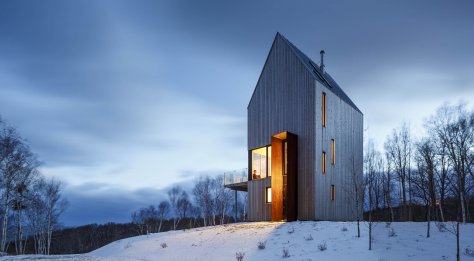
For the final project of the semester, the professor took his class to the wind-swept island of Cape Breton (a glove-shaped appendage separated from Nova Scotia’s main peninsula by the narrow Strait of Canso) to visit Rabbit Snare Gorge — his 2013 project with the New York-based architecture firm Design Base 8 — a slender cabin that stretches 43 feet tall, like a 16th-century Mannerist portrait. Touring the surrounding plot, a 47-acre wooded slope bisected by the creek that gives the house its name, Gandhi, 40, asked his students to conceive a “campus of creatures” — a set of structures that, as he described it when we met at his Halifax studio last summer, “have an attitude and respond and look like they move.”
The Tall Timber Building residence has become a landmark and, during construction, became Sweden’s tallest solid wooden building in the new district of Kajstaden at Lake Mälaren in Västerås. All parts of the building consist of cross-laminated wood, which includes the walls, joists and balconies as well as the lift and stairwell shafts.
Kajstaden – Tall Timber Building is an important landmark for sustainable construction and a reference project that shows that conversion to climate conscious architecture is possible. Through research projects and several active wood projects, C.F. Møller Architects has focused on innovation as well as developing and implementing multi-storey buildings with solid wood frames. In Kajstaden, an active decision was made to prioritise industrial timber techniques for the building material to influence and take responsibility for the impact of the construction industry on the environment and climate change. A crucial advantage of wood, unlike other building materials, is that the production chain for the material produces a limited amount of carbon dioxide emissions. Instead, it is part of a closed cycle, where carbon is retained in the frame of the building.
Research also shows that buildings with a wooden frame make a positive contribution to human health and well-being- thanks to better air quality and acoustic qualities.
While We All Know That You Shouldn’t Judge a Book by Its Cover, This is One Case in Which Evaluating Something on Its Appearance is Not Only Accepted, but Encouraged, These Libraries Are Known for Noteworthy Exteriors—think Soaring Architecture With Inspiring Interiors, and That’s Nothing Compared to the Millions of Books Housed Within Their Walls. So Whether You’re a Bookworm or an Architecture Lover, Start Adding These Beautiful Libraries to Your Must-visit List.
The Library of El Escorial, San Lorenzo De El Escorial, Spain Not Only is This Spanish Library a Work of Art, It’s Also Part of a Unesco World Heritage Site. Originally Commissioned by King Philip II, the Library’s Most Dazzling Feature is a Series of Seven Frescoes That Depict the Liberal Arts (Music, Rhetoric, Astronomy, and So on). The Town of San Lorenzo De El Escorial, Which is About 45 Minutes Outside of Madrid, Has Long Been a Favorite of Spanish Royals, and There’s Plenty More to See Here Beyond the Library, Including a Monastery, Gardens, and the Pantheons of Former Princes and Kings.
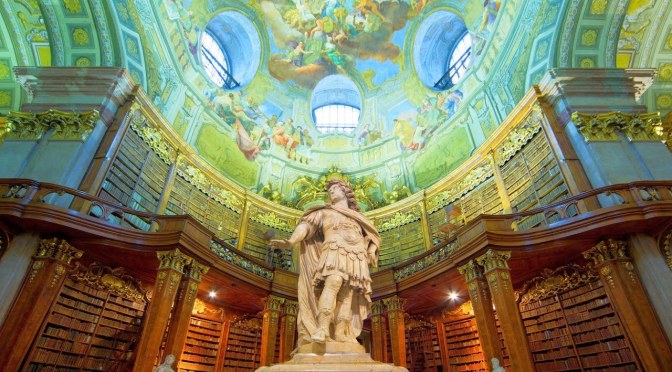
Austrian National Library, Vienna, Austria The Austrian National Library is the Largest Library in Austria, With More Than 12 Million Items in Its Various Collections. The Library is Located in the Neue Burg Wing of the Hofburg in Center of Vienna, One of the Austrian National Library’s Most Jaw-dropping Features is the Huge Fresco on the Ceiling, Which Was Created by Painter Daniel Gran. The Dome is Also Decorated With Statues by Sculptor Paul Strudel That Pay Tribute to the Habsburg Rulers, Among the Exhibits Are Two Exquisite Venetian Baroque Globes: One for the Earth and One for the Sky, Each With a Diameter of More Than One Meter.
George Peabody Library, Baltimore, Maryland The George Peabody Library (Part of Johns Hopkins University) Contains Over 300,000 Volumes Stacked in Five Decorative Tiers. The Books Are Impressive, Sure, but the Cathedral Like-atrium, Marble Floors, and Wrought-iron Details Are the Main Draw Here. Is It Any Wonder the Library Has Become One of the Most Popular Wedding Venues in Baltimore?
Strahov Monastery Library, Prague, Czech Republic The Strahov Monastery in Prague Was Originally Founded in 1143. Despite Wars, Fires, and Other Disasters, the Order Endured and Built Its Library in 1679. The Library’s Best-known Features Are Its Remarkable Ceiling, Which is Covered in Biblical Frescoes, and the “Compilation Wheel” That Can Turn and Rotate Shelves in Order to Make Books Easier to Find Without Knocking Any of Them Over.
Library of Alexandria (Bibliotheca Alexandrina), Egypt Alexandria Was Once Home to the Most Famous Library in the World. Now, Egypt Pays Homage to Its Biblio-heritage With This Sleek Granite Building. The Circular Structure, Designed by Norwegian Firm Snøhetta, is Covered in Carvings Done by Local Artists and Sits Next to a Large Reflecting Pool. Although There Are Plenty of Books in Three Languages (Arabic, French, and English), There Are Also Museums, a Planetarium, and a Lab Dedicated to Restoring and Preserving Ancient Manuscripts.
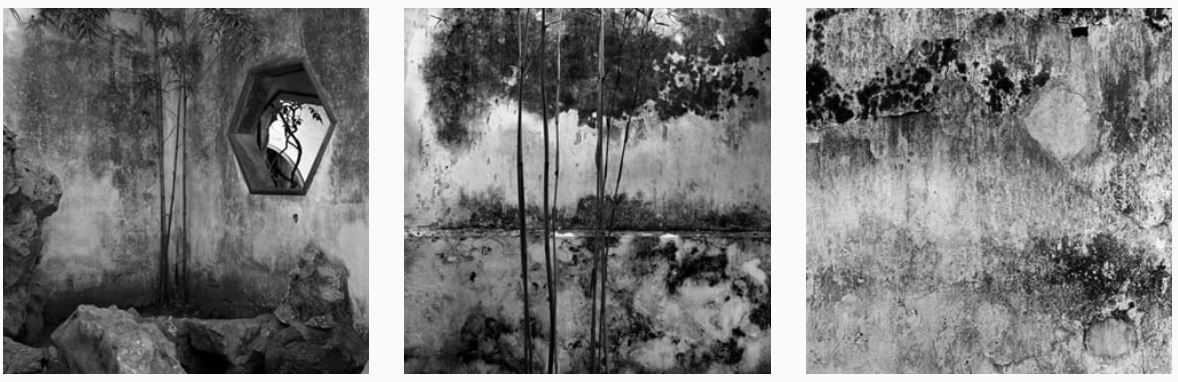
“Hélène Binet has emerged as one of the leading architectural photographers in the world. Every time Hélène Binet takes a photograph, she exposes architecture’s achievements, strength, pathos and fragility.”
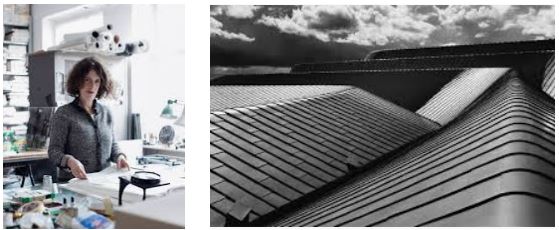
Hélène Binet was born in 1959 in Sorengo and is of both Swiss and French background. She currently lives in London with her husband Raoul Bunschoten and their two children, Izaak and Saskia. She studied photography at the Instituto Europeo di Design in Rome, where she grew up, and soon developed an interest in architetural photography.
Hélène Binet
Over a period of twenty-five years Hélène Binet has photographed both contemporary and historical architecture. Her list of clients include architects Raoul Bunschoten, Caruso St John, Zaha Hadid, Daniel Libeskind, Studio Mumbai, Peter Zumthor and many others. While following the work of contemporary architects – often from construction through completion – Hélène Binet has also photographed the works of past architects as Alvar Aalto, Geoffrey Bawa, Le Corbusier, Sverre Fehn, John Hejduk, Sigurd Lewerentz, Andrea Palladio and Dimitris Pikionis. More recently, Hélène Binet has started to direct her attention to landscape photography, wherein she transposes key concerns of her architectural photography. Hélène Binet’s work has been published in a wide range of books, and is shown in both national and international exhibitions.
Hélène Binet is an advocate of analogue photography and therefore she exclusively works with film.
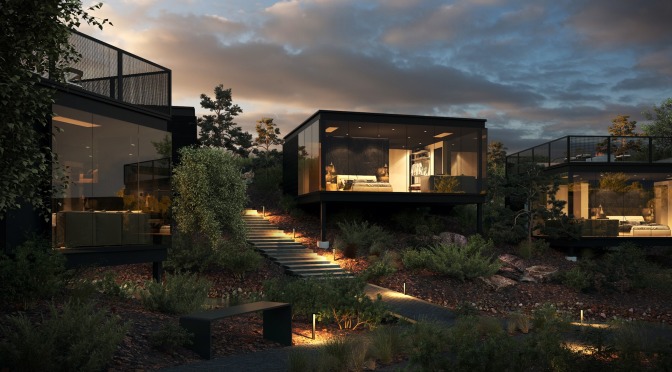
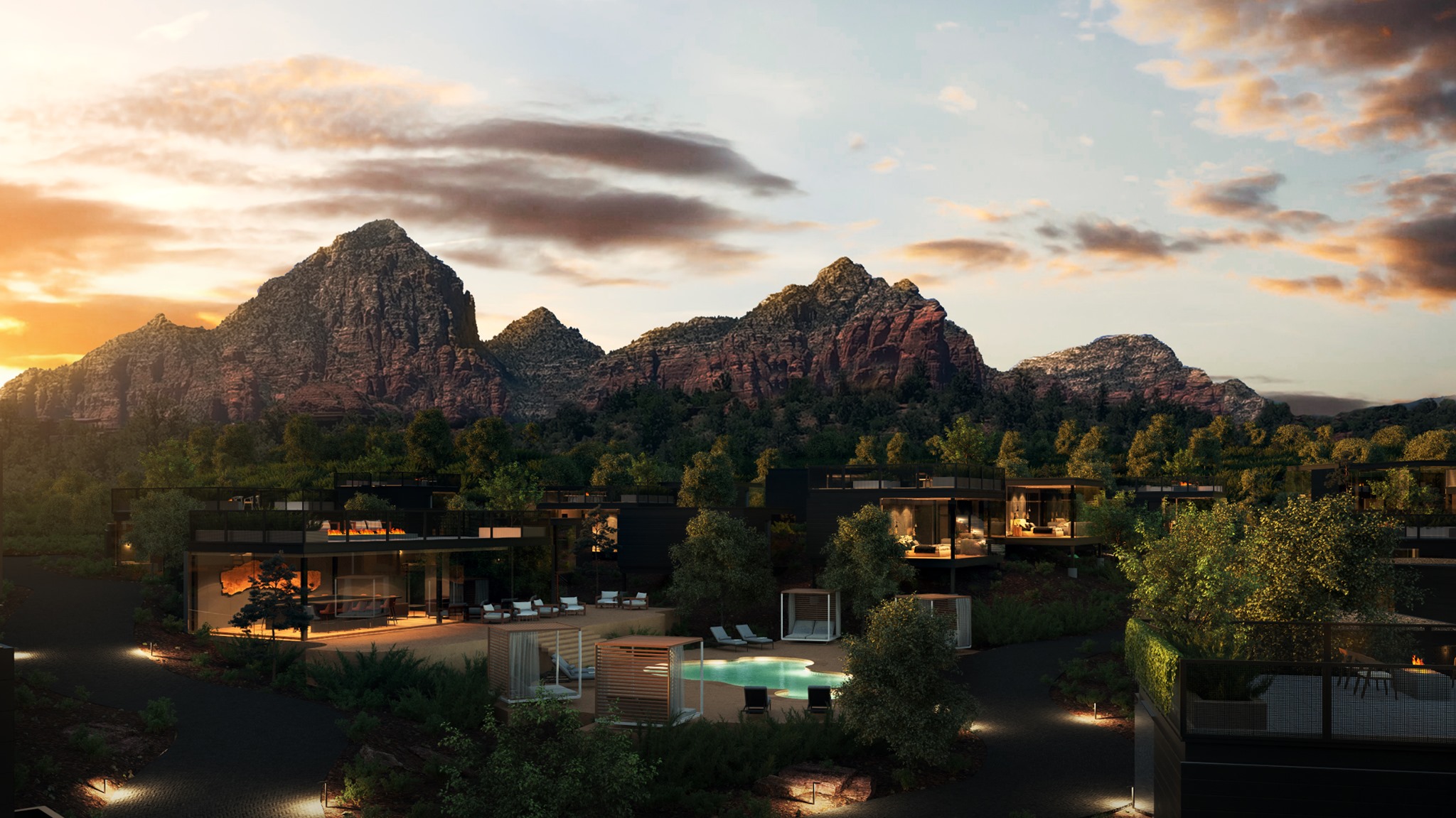
Ambiente is comprised of 40 cubed-shaped guest Atriums that are elevated above the ground by steel piers and constructed using floor-to-ceiling, bronze-tinted glass and matte-charcoal and rusted metal.
At dusk, the tinted glass reflects the nature around it creating stunning, mirrored silhouettes. The Atriums’ sleek and contemporary design embodies elegant minimalism and the utmost in luxurious accommodations.
Designed by award-winning, Scottsdale-based ASUL Architects, Ambiente will be constructed around the natural vegetation and topography, requiring less cut and fill, which better meets today’s expectations of being responsible land stewards. The pier-method to building Ambiente’s Atriums basically eliminates the need to grade the land. During construction, this pier technique allows each Atrium to be rotated and individually hand-placed at very specific angles to fit, as best as possible, within the existing trees and flora, thereby maximizing the views.
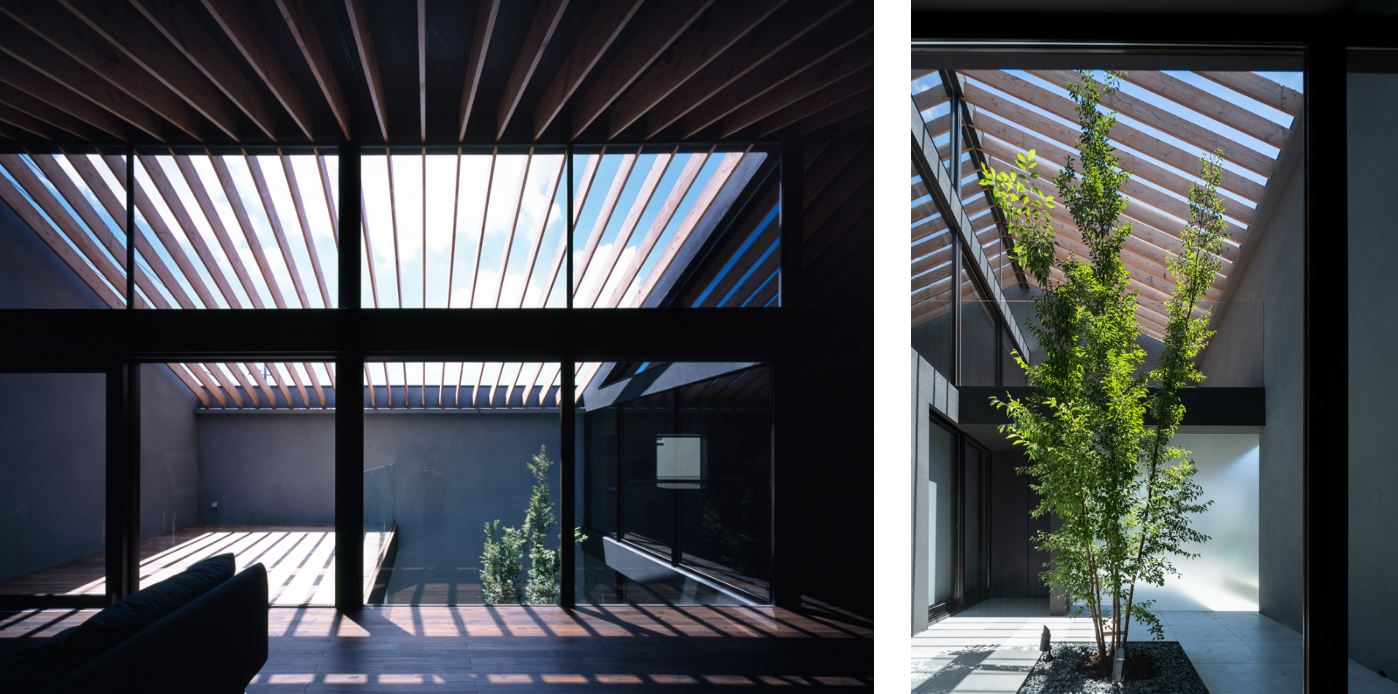
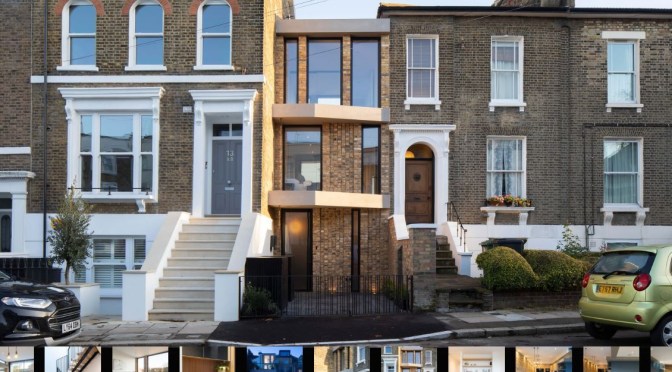
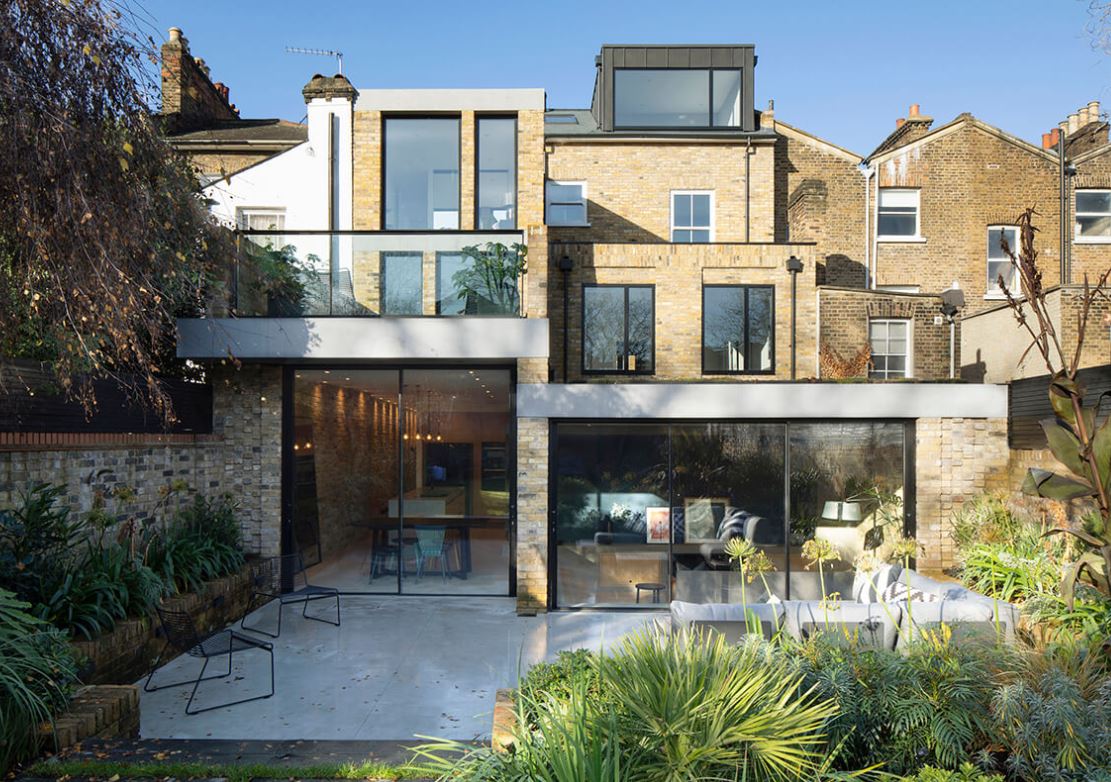
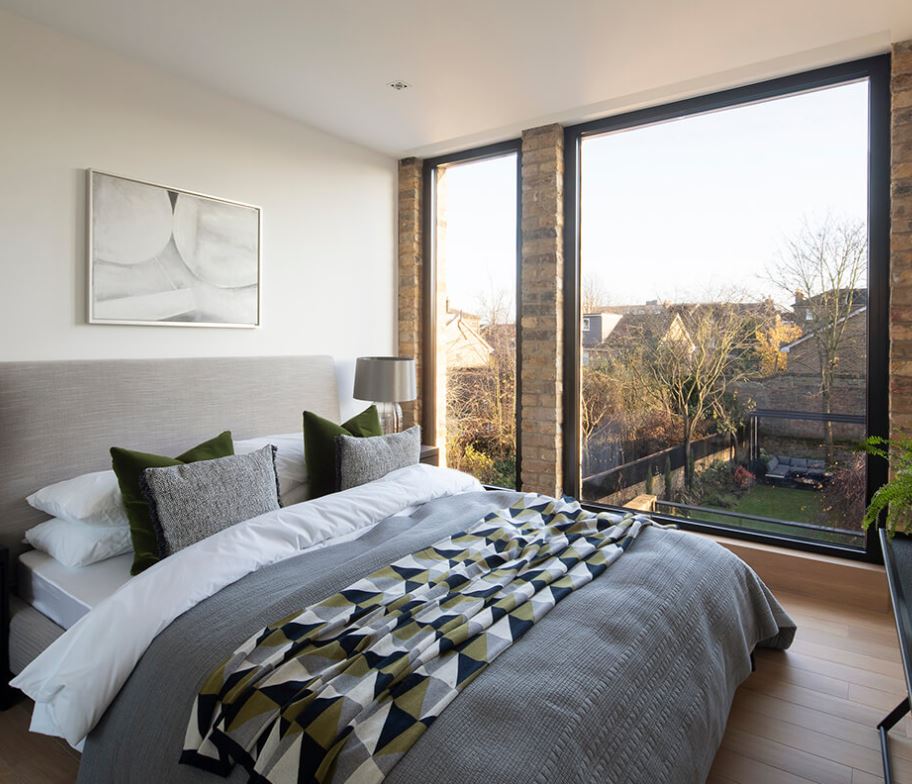
The Coach House, is a four bedroom new build infill house.
A triple height light well brings light deep into the heart of the narrow plot which unexpectedly opens out to create a spacious open plan living space which engages with the large rear garden.

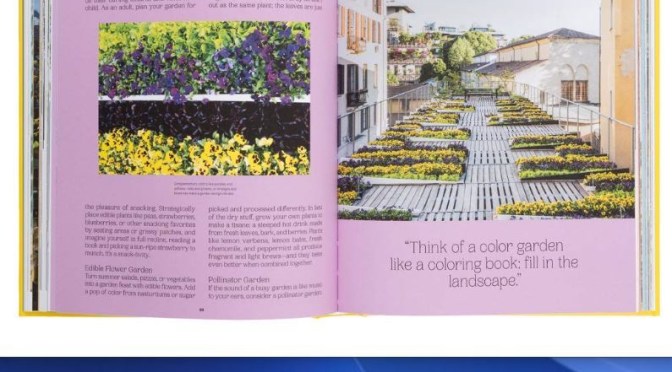
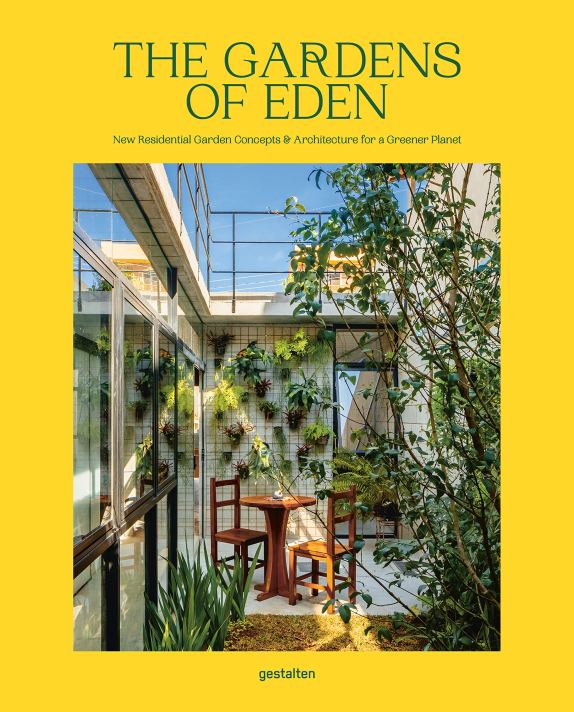 Step into innovative little gardens of Eden created on small terraces and city rooftops, as well as out in the suburbs and countryside.
 greener corners within urban areas. The Gardens of Eden looks at fascinating examples around the world, teaching what you can do for nature while revealing what a garden can do for you.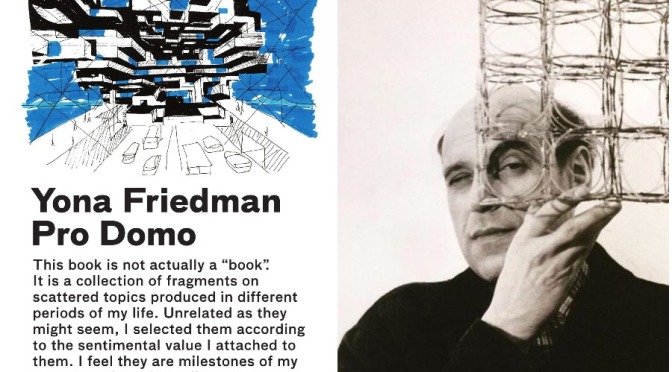
 by AMO, Koolhaas, with students at the Harvard Graduate School of Design; the Central Academy of Fine Arts, Beijing; Wageningen University, Netherlands; and the University of Nairobi. The exhibition will examine the modern conception of leisure, large-scale planning by political forces, climate change, migration, human and nonhuman ecosystems, market-driven preservation, artificial and organic coexistence, and other forms of radical experimentation that are altering landscapes across the world.

 For the final project of the semester, the professor took his class to the wind-swept island of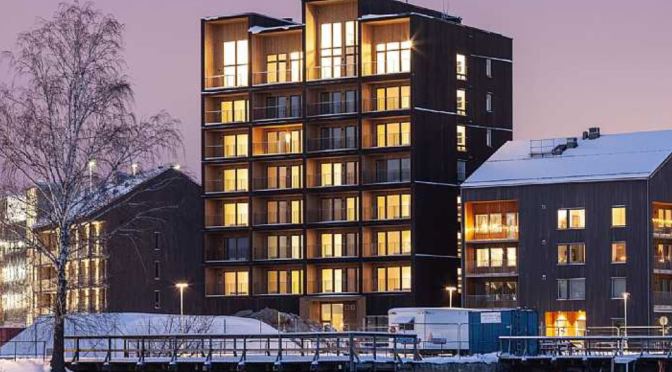
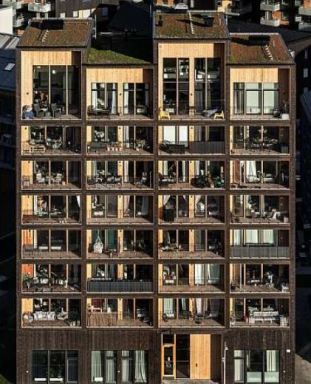 The Tall Timber Building residence has become a landmark and, during construction, became Sweden’s tallest solid wooden building in the new district of Kajstaden at Lake Mälaren in Västerås. All parts of the building consist of cross-laminated wood, which includes the walls, joists and balconies as well as the lift and stairwell shafts.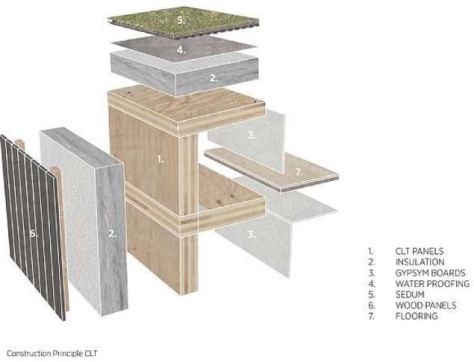





 Boomers Daily