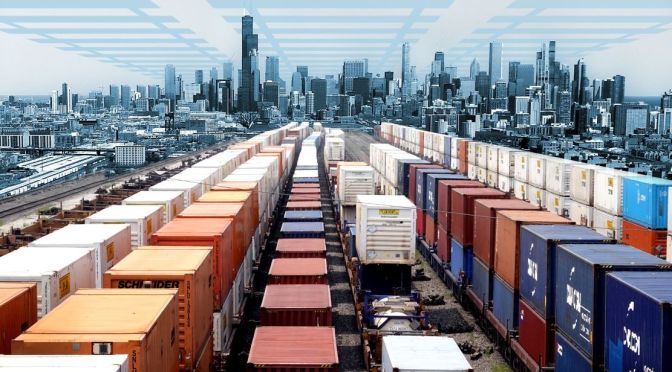
Wall Street Journal (December 19, 2022) – In recent years, the city’s railyards have seen severe bottlenecks as the supply chain choked up nationally. With $3 trillion in goods traveling through Chicago every year, the city is the busiest rail hub in the U.S. WSJ breaks down how important rail is to the region, and how vulnerable the system is to a work stoppage like a strike.
A selection of three essential articles read aloud from the latest issue of The Economist. This week, a looming Russian offensive, why the rich world’s politicians are giving up on growth (10:00) and can the French nuclear industry avoid meltdown? (16:25),
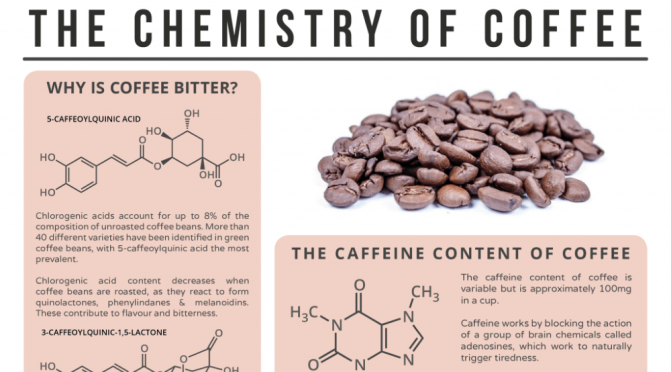
National Science Foundation – The chemistry of the universe is, in a way, in your morning cup of coffee. Coffee contains a tremendous number of chemicals, with over 1000 aroma compounds. If you are looking for antioxidants, the most abundant phenolic compounds in coffee are chlorogenic acids (CGAs), which account for up to 12 per cent of the dry weight of green unroasted coffee beans. Much of coffee’s bitter taste comes from CGAs, which also cause the acid reflux that is sometimes experienced by coffee drinkers.
Produced by the PBS Digital Studio / American Chemical Society
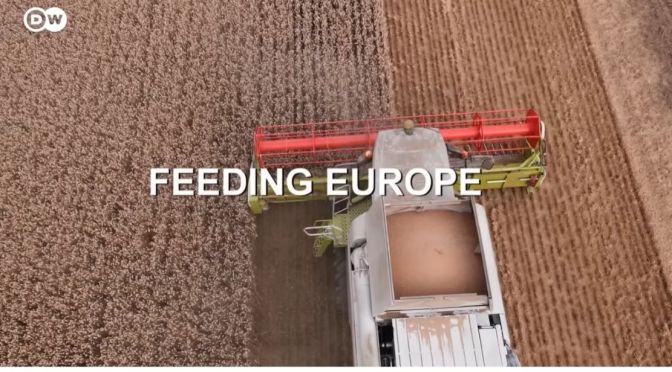
DW Documentary (December 10, 2022) – Is sustainable agriculture possible in Europe? From Spain’s “plastic sea” of greenhouses, to farmer suicides in France, the organics boom and high-tech production, it’s clear that Europe’s agricultural sector is in a period of extreme flux. And it needs to change: Agricultural landscapes are shaped by the history of our continent and inextricably bound up with its identity.
But farmers are struggling. They’re under constant pressure to produce more, at lower prices and can no longer hold out against the stiff competition. Most European farms are still family-run businesses, but it’s the large-scale enterprises that benefit from EU subsidies. These companies practice intensive farming, which we now know has a detrimental effect on biodiversity and human health.
This kind of agricultural system is also very bad for soil quality and is now seen as obsolete. With every crisis that occurs, its shortcomings become more evident. The pace of climate change now requires rapid responses to crucial questions: How to sustainably feed more than 500 million Europeans? What steps can be taken to stem the catastrophe resulting from the dramatic rise in meat consumption (up 60 per cent in 60 years) and its associated intensive production of cereal crops?
Solutions are presenting themselves, and many farmers have already seized the initiative. Throughout the European continent, they are the main drivers of a vital 21st century agricultural revolution: a return to traditional farming methods, intelligent or urban agriculture, fewer mass imports, research into in-vitro meat and meat substitutes. These are just some of the approaches being explored by European farmers in a bid to protect biodiversity, the landscape and the health of human beings.
A selection of three essential articles read aloud from the latest issue of The Economist. This week, Xi Jinping’s zero-covid policy, why trustbusters should let Microsoft buy Activision Blizzard (11:44) and why emigration is in the air for Britons (16:38).
PBS NewsHour (December 2, 2022) – New York Times columnist David Brooks and Washington Post associate editor Jonathan Capehart join Judy Woodruff to discuss the week in politics, including the Democrats’ plan to shakeup the road to the White House, President Biden and Congress halt a potential railroad strike and lawmakers shield gay marriage.
The cost of health care is unaffordable for many in the developing world. But while universal health care may sound like an impossible dream, it’s more achievable than you might think.
Video timeline: 00:00 – The argument for universal health coverage is clear 00:57 – Thailand’s path to universal health coverage 03:31 – Universal health care around the world 04:48 – How to finance universal health coverage? 05:30 – Rwanda: from genocide to public health exemplar 07:19 – What is a pooling finance system? 08:01 – Which services make the cut? 11:17 – The economic benefits of UHC 12:23 – Could covid-19 be a catalyst for reform?
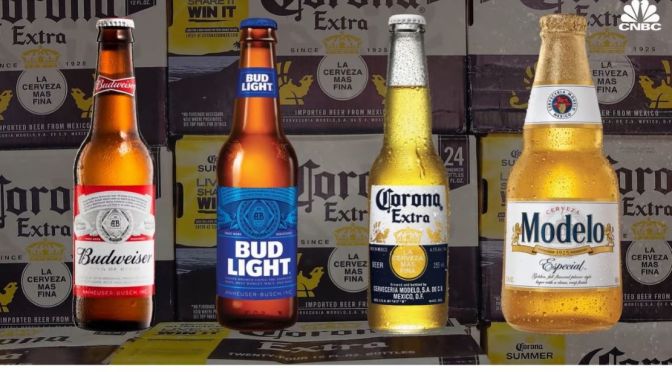
CNBC – Anheuser-Busch InBev is the world’s largest brewer with 500 brands in more than 100 countries. In 2016, Flemish Interbrew and Brazilian Ambev, together known as InBev, merged with the American legacy company Anheuser-Busch, which ultimately brought AB under the leadership of 3G Capital.
3G Capital is a Brazilian-American global investment firm whose tactics include an aggressive, and at times controversial, cost-cutting strategy. AB InBev’s longtime priority of aggressive acquisitions has been coupled with a focus on profit and price per barrel rather than volume share. Premiumization and expanding beyond beer continue to be winning strategies. In 2021, the company amassed $54.3 billion in revenue with 169,000 employees worldwide. As overall beer consumption has declined, AB InBev has transformed from merely a beer company to the largest beverage company in the world.
News, Views and Reviews For The Intellectually Curious












 Boomers Daily