Wall Street Journal (June 10, 2023) – Noise canceling is a hallmark feature of top headphones across brands, from Apple and Beats to Sony and Bose. Behind the simplicity of the technology from a user perspective, though, is cutting-edge hardware running sophisticated algorithms.
Video timeline: 0:00 A sound wave and its inverse 0:32 Destructive interference 1:30 Noise-canceling headphones’ origins 3:17 What background noise to remove 4:46 Transparency modes or aware modes
What kind of audio processing is necessary to eliminate background noise when listening to music or watching a movie? WSJ dives into how noise canceling works, how the technology has changed and where things are headed.
CNBC (June 10, 2023) – Interest in electric vehicles is at an all time high, with sales of new EVs up 55 percent in 2022 compared to the year prior. But there are still a lot of gas cars on the road today and there will be for a long time. EV conversions are becoming a bigger trend that could help.
Chapters: 00:00 — Introduction 02:40 — EV conversions 04:12 — Conversion shops 06:45 — DIY community 11:16 — Challenges
Both the shops and aftermarket community are growing substantially to meet the new demand. CNBC explores what it takes to convert a gas-powered car to an electric vehicle and whether it could go mainstream.
CNBC (June 8, 2023) – Samsung may be known for android phones, TVs and appliances, but it’s also been the undisputed leader in memory for more than three decades. Now, as memory prices continue to fall, it’s doubling down on manufacturing chips for outside customers, with a $17 billion new chip fab in Texas and new $228 billion cluster in South Korea.
Chapters: 00:00 – Introduction 02:31 — From fish to microchips 06:10 — Making more chips in the U.S. 11:17 — Concerns and controversy 14:40 — Ambitious road map ahead
CNBC got a rare look inside Samsung’s chip business to bring you the untold story of how it became the world’s second biggest advanced chipmaker, just as it makes plans to catch the industry leader TSMC.
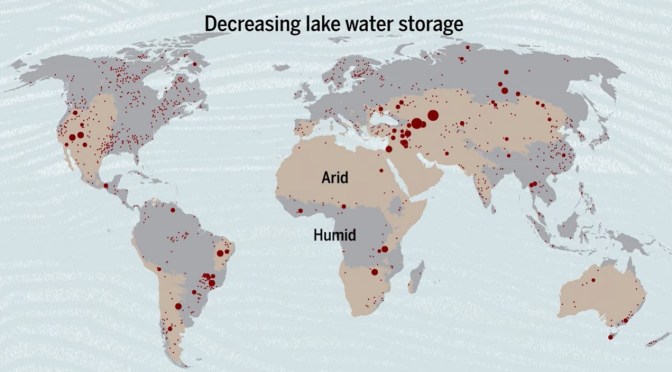
SCIENCE MAGAZINE VIDEOS – JUNE 6, 2023: Some of the most notable lakes in the world, from the Great Salt Lake to Poyang Lake, have shrunk dramatically in recent decades. But because most lakes lack long-term, on-the-ground measurements, it was hard to say whether this was a widespread phenomenon.
Now, researchers have published a first-of-its-kind data set to look at how lake water storage has changed in nearly 2000 of the world’s largest lakes. They find significant global losses and tease out what might be driving these decreases.
‘Editor’s Picks’ Podcast (June 5, 2023) – A selection of three essential articles read aloud from the latest issue of The Economist. This week, the economic consequences of the global collapse in fertility, Scotland’s holiday from reality (10:10) and the business of the rapper, Bad Bunny (18:10).
Populism can unravel quickly. But its effects are long-lasting
Scotland was the first part of Britain to get high on populist referendums. In 2014, two years before the Brexit vote, the Scottish independence campaign exhorted people to ignore the experts and revel in a glorious national renewal.
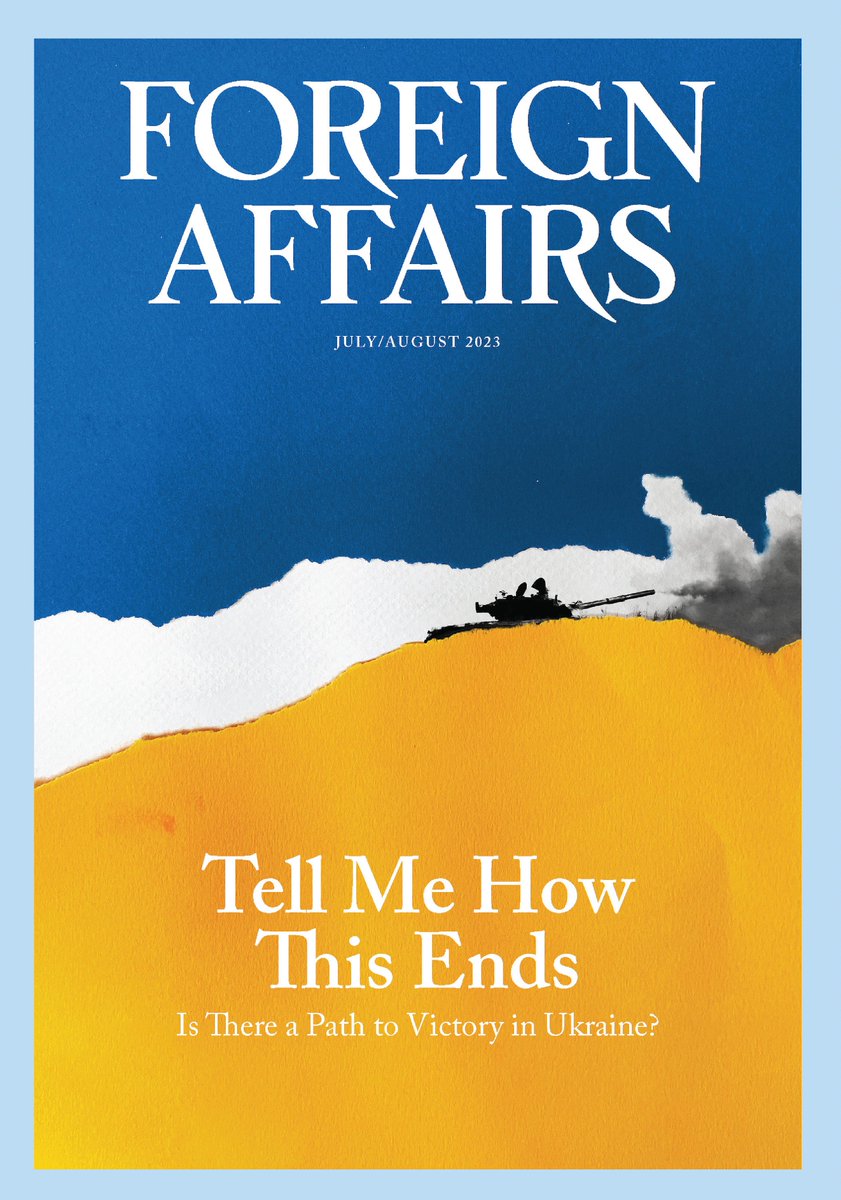
Wall Street Journal (June 3, 2023) – Ukrainian President Volodymyr Zelensky spoke with Wall Street Journal editor in chief Emma Tucker in Odesa ahead of his meeting with European leaders to press for membership in NATO and as the world waits for Ukraine’s counteroffensive against Russia.
Video timeline:0:00 Ukraine’s counteroffensive 0:50 Ukraine’s long-term security and Western allies 2:23 U.S. election’s effect on Ukraine 4:03 Ukrainian weapons 5:44 NATO and Ukraine 7:05 Zelensky’s thoughts on China 7:38 How Zelensky is personally dealing with the war
CNBC (May 30, 2023) – From floods to droughts, CNBC Marathon explores the water crisis in the U.S. Today, one out of three people don’t have access to safe drinking water. And that’s the result of many things, but one of them is that 96.5% of that water is found in our oceans. It’s saturated with salt, and undrinkable.
Chapters:00:00 — Introduction 00:30 — Can Sea Water Desalination Save The World? (Published October 2019) 14:00 — U.S. Farms Waste A Lot Of Water — But This Tech Could Help (Published September 2022) 29:56 — How The West Coast Drought Could Cause More ‘Water Wars’ (Published July 2021) 40:07 — Why Flood Insurance Is Failing The U.S. (Published November 2020)
Most of the freshwater is locked away in glaciers or deep underground. Less than one percent of it is available to us. So why can’t we just take all that seawater, filter out the salt, and have a nearly unlimited supply of clean, drinkable water? The western U.S. is experience a megadrought so severe, it is the driest two decades in at least 1,200 years. And no sector has felt the impact more than agriculture, which takes up about 70% of the world’s freshwater.
With water resources becoming more scarce, several companies are working to improve irrigation efficiency and help sustain food production in a future where extreme climate may be more common. Water is a cornerstone of economic activity, and when it runs low, communities face tough choices. The extreme drought conditions in the U.S. West are straining water resources and providing a fertile ground for wildfires. How will the West Coast face this climate challenge? And 2020 was the busiest hurricane season on record. Flooding is one of a storm’s most devastating consequences.
FEMA estimates one inch of flood water can cause up to $25,000 in damage. The U.S. began offering national flood insurance in 1968 but the program, called the NFIP, is now over $20 billion in debt. Private companies are starting to offer flood insurance as well. However, flood insurance is more complicated than it may appear. Watch the video to better understand how flood insurance works, and doesn’t work, in the U.S.
‘Editor’s Picks’ Podcast (May 29, 2023) – Three essential articles read aloud from the latest issue of The Economist. This week, why Donald Trump is very likely to be the Republican nominee for president, how to fix Britain’s National Health Service (09:55) and companies’ “away days” are getting unnecessarily creative (17:15).
The Economist (May 18, 2023) – Generative AI is the technology behind the wave of new online tools used by millions around the world. As the technology is ever more widely deployed, what are its current strengths and its weaknesses?
Video timeline:00:00 – What is generative AI? 00:46 – Breakthroughs and take-up of the technology 02:03 – Strengths 03:32 – Weaknesses
DW Documentary (May 28, 2023) – NATO members are viewing Russia’s war of aggression against Ukraine with grave concern, especially those on the alliance’s eastern flank. They’re joining forces with German troops right on the Russian border.
Germany is the leading or “framework nation” in what is called the NATO Battle Group Lithuania. With its alliance partners, German forces are serving “on the front line” – right on the Russian border. They’re guarding NATO’s northeast flank against any possible incursion and ensuring the Baltic states are supported during times of crisis and, if necessary, conflict.
In the spring of 2023, Germany’s military is in Rukla and Pabrade, among other places, for maneuvers. There it is practicing with NATO partners from Croatia, the Czechia and the Netherlands to handle a Russian attack on the Baltic states. In full agreement with the NATO motto “train as you fight,” practice and training are closely-oriented to a genuine threat.
The leader of the German contingent, Colonel Wolfgang Schmidt, points out the special historic significance and perceived peril in the Baltic. He says, “From historical experience, of course the perception of possible aggression – be it Russian or Belarusian – is far more intense here than in the Federal Republic of Germany.” He adds that not everyone has grasped the defense of “all that we stand for – modernity, freedom of opinion and speech and everything we describe as Western values begins here.” For a year, Schmidt says, the Ukraine has been fighting far more than their Russian attackers – they’re defending “our freedom,” too. This report follows a major exercise called “Griffin Lightning.” A platoon commander with the Dutch Armed Forces emphasizes the importance of maneuvers and cooperation among the multinational forces.
First Lieutenant Bent S. says, “We’re taking part in different exercises. Last week we were with the Norwegians. In a few weeks, the whole Battle Group will come together and we’ll train again with the Norwegians, Germans, Czechs and Croats. Nobody wants war, but if it really comes to it, we’ll be ready.” This documentary provides an exclusive look at NATO maneuvers in Lithuania, which are unfolding closer than ever before to a genuine military threat.