

| This month, read about: |
| Spring Greens!NEWSBITES: Vitamin B12 and depression; vegetables for bone healthChrononutritionYour Amazing Digestive SystemDiet and Your ThyroidAsk Tufts Experts: Nutrition Label Nutrients … Diet and Diverticulitis |

| This month, read about: |
| Spring Greens!NEWSBITES: Vitamin B12 and depression; vegetables for bone healthChrononutritionYour Amazing Digestive SystemDiet and Your ThyroidAsk Tufts Experts: Nutrition Label Nutrients … Diet and Diverticulitis |
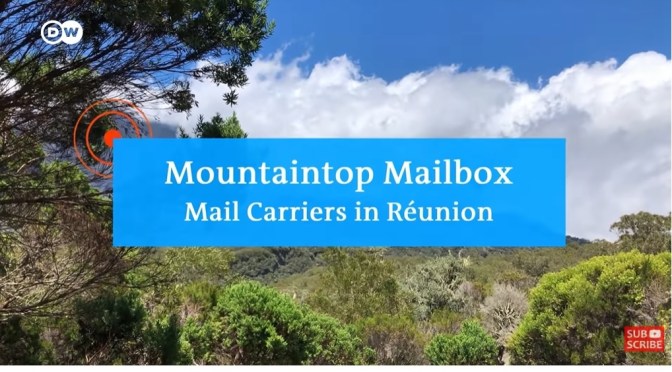
Cyril Maillot is a mail carrier in Réunion – in the most literal sense. On the tropical island in the Indian Ocean, some villages can’t be reached by road. So Maillot hikes to remote areas with a backpack full of mail. He travels by foot to places not accessible by car, deep into the mountainous region of Mafate.
A hike of several days over narrow paths and steep ascents – and in all kinds of weather. When it rains, the streams sometimes swell into a raging river. But Cyril Maillot loves his job. It’s his personal yoga: “You switch off completely and leave city life behind.” And for many of the local people in the mountains, the weekly visit by Cyril the mail carrier is their only regular contact with the outside world. A report by Lisa Louis.
Réunion Island, a French department in the Indian Ocean, is known for its volcanic, rainforested interior, coral reefs and beaches. Its most iconic landmark is Piton de la Fournaise, a climbable active volcano standing 2,632m (8,635 ft.). Piton des Neiges, a massive extinct volcano, and Réunion’s 3 calderas (natural amphitheaters formed by collapsed volcanoes), are also climbing destinations.
Health-care spending is consistently rising around the world, but the United States is the worst performer when it comes to controlling costs. A lack of universal coverage in the U.S. and a fragmented and heavily commercialized system leads to rising costs and excessive spending. Watch the video to learn more about why health-care costs are rising in the U.S. more than anywhere else and how that can be stopped.

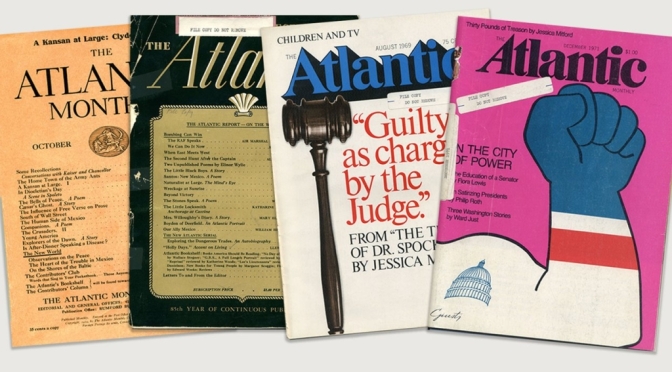
How to find happiness: the satisfaction trap, friendship, and changing your personality. Plus the betrayal of Afghan allies, the myth of ‘the Latino vote,’ bald eagles, Sheila Heti, Method acting, lateness, and more.
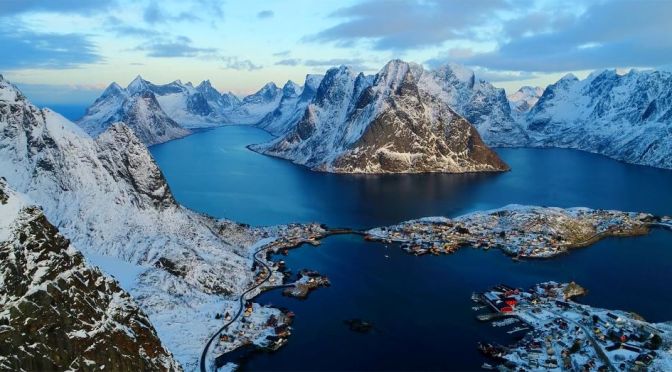
Norway is a Scandinavian country encompassing mountains, glaciers and deep coastal fjords. Oslo, the capital, is a city of green spaces and museums. Preserved 9th-century Viking ships are displayed at Oslo’s Viking Ship Museum. Bergen, with colorful wooden houses, is the starting point for cruises to the dramatic Sognefjord. Norway is also known for fishing, hiking and skiing, notably at Lillehammer’s Olympic resort.

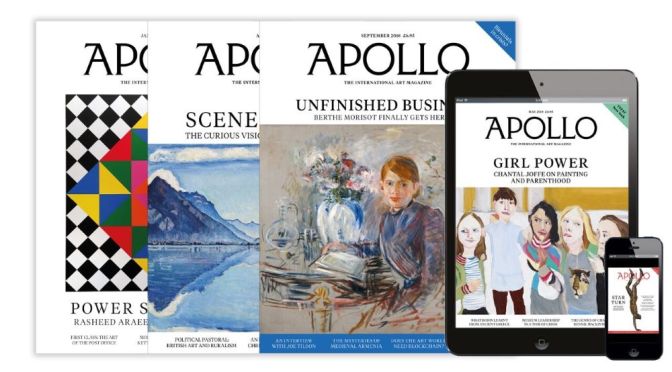
• An interview with Charles Ray
• The style wars of Ricardo Bofill
• Gamers and galleries don’t quite come to blows
• What has changed at the Burrell?
Plus: the lost palaces of London, Yves Saint Laurent takes over Paris, and how do you commemorate Covid?
‘Suddenly I will see something that seizes me – a shape, a combination of shapes, a play of light or shadows, and I send up a prayer because I know I have seen a picture.’
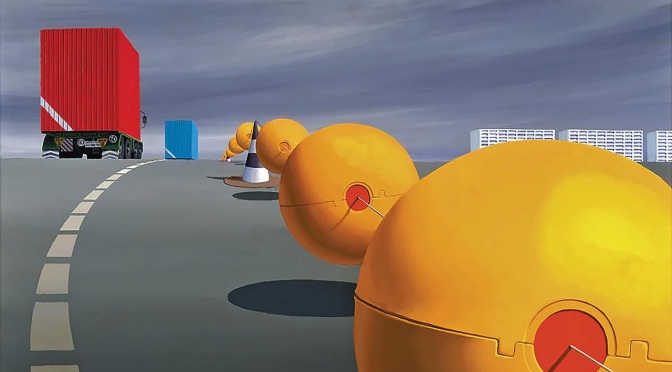
JEFFREY SMART The year 2021 marks one hundred years since the birth of acclaimed Australian artist Jeffrey Smart. This major exhibition celebrates and commemorates this significant centenary. One of Australia’s most celebrated artists, Smart sought inspiration from the world around him – looking to the environment of urban and industrial modernity – which he transformed through his imaginative sense of theatre and intimate understanding of geometry and composition.
These potent and intriguing images have become emblematic of 20th and 21st century urban experience. Building on the foundational work already undertaken on Smart, this exhibition will bring fresh perspectives to his artistic contribution so that his remarkable legacy will be kept alive in the present. Curators: Dr Deborah Hart, Henry Dalrymple Head of Australian Art and Dr Rebecca Edwards, Sid & Fiona Myer Curator of Ceramics and Design
We hear an update from Ukraine, including the latest on the invasion and the view from Poland. Plus: the military capabilities of both sides, an update on sanctions and the role of technology in the conflict.




 Boomers Daily