
From a LitHub.com online article:
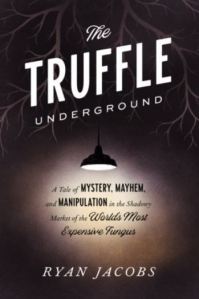 “Asking even seasoned chefs and truffle-industry insiders to describe what the fungus tastes or smells like,” Jacobs writes, “is a bit like asking a priest why he believes in God.” Readers not familiar with the pungent, one-of-a-kind flavor will come away even more intrigued. Those of us whose most frequent encounter with the fabled fungus is through truffle oil will also be disappointed. As Jacobs discovers, nearly all truffle butter and truffle oil sold in America is manufactured using chemicals rather than the real thing.
Part culinary exploration, part history, and part true crime, reporter Ryan Jacobs takes readers to France, Italy, and the Pacific Northwest in The Truffle Underground. “Even without criminal interference, the truffle’s journey from spore to plate is so fraught with biological uncertainty, economic competition, and logistical headaches that a single shaving could be understood as a testament to the wonder of human civilization.” Truffles are often referred to as diamonds, and the violent crime Jacobs’s chronicles reinforces that comparison.
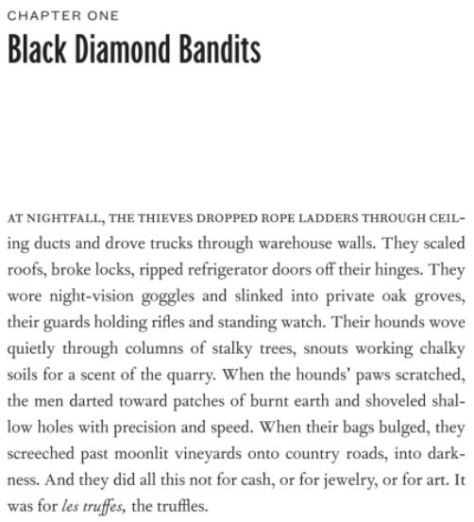
To read more click on the following link: https://lithub.com/5-audiobooks-to-help-with-those-end-of-summer-blues/

 “Under,” which opened in March, is

 Now, researchers have developed a fast-acting skin patch that efficiently delivers medication to attack melanoma cells. The device, tested in mice and human skin samples, is an advance toward developing a vaccine to treat melanoma and has widespread applications for other vaccines.
 A sleek, converted camper van in Brooklyn rents for


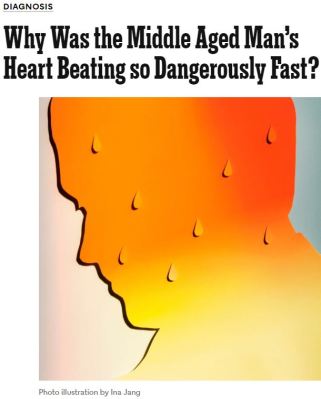 In sarcoidosis, abnormal collections of cells called granulomas invade the organ, interfering with its normal activity and often destroying the surrounding tissue. What is left is a scar, known as fibrosis, dotted with these abnormal granulomas.
 Real estate startup ZeroDown, which launched earlier this year, boasts a unique business model. Aiming to help more people become homeowners in the pricey San Francisco Bay Area, the company removes several of the largest hurdles from the homebuying process, namely the down payment and mortgage, and buys homes for its customers outright.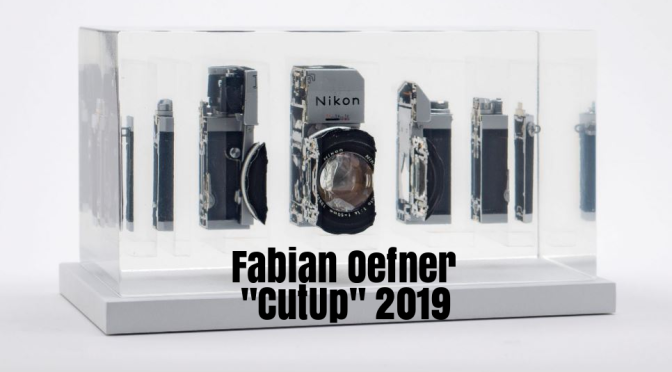
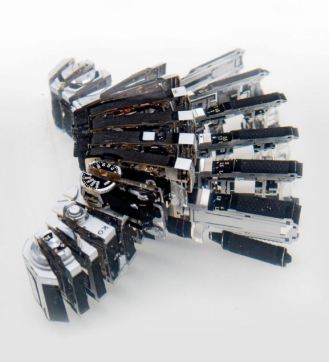 CutUp is closely linked to Oefner`s
 The SC-1 is designed to transform what was a mere means of mobility into an all-new opportunity for entertainment. Sony and Yamaha Motor will deploy it to provide fun new diversions at venues such as golf courses, amusement parks, and commercial facilities.
 A single KFC franchise — the one near the SunTrust Park baseball stadium in Atlanta — will, starting Tuesday, offer meatless chicken from the plant-based food company Beyond Meat. The deal makes KFC the first fast-food restaurant to serve plant-based chicken.
 Boomers Daily