Retirements must evolve because everything won’t work out as planned, says Carolyn Taylor, president of Weatherly Asset Management, an investment-management firm in Del Mar, Calif. One of her clients, who worked in the biotech industry and had a very busy family life, trained before retirement to become a master gardener. As she trained, she found that she enjoyed teaching others and finally became a teacher of gardening, Taylor says.
Retirees who feel they have no purpose are more likely to find themselves at a loss or feeling depressed, says Black. Taking on part-time work, going back to school, volunteering, or participating in philanthropic endeavors can make retirees feel that they’re still making an important contribution.
Bringing the enjoyable aspects of your work into your retirement life can be helpful, says Black. “Maybe you enjoy mentoring young people; perhaps you can find a way to continue doing that into retirement,” she says.
His work was displayed in many exhibitions in the UK and twenty four of his paintings were exhibited in New York in 1960. the exhibition was entitled ‘British Motoring Achievements’ and was a collection of paintings depicting outstanding performances of British cars during the previous ten years. These included the Vanwall and Cooper in Grand Prix, Monte Carlo and Alpine Rallies, speed records by MG and Austin, and Le Mans wins by Jaguar and Aston Martin.
Roy Anthony Nockolds was born in Croydon in south London, England on the 24th January 1911. He was the last of seven children; one of his brothers Harold F. L. Nockolds would later become a motoring journalist and author of the classic Rolls-Royce history, “Magic of a Name”. His mother Flora Mary van der Heyden was the great grand daughter of Dutch Baroque-era painter and inventor, Jan van der Heyden. His farther Walter Herbert Nockolds was a descendent of farmers who had originally come to Britain from the Frisian Islands.
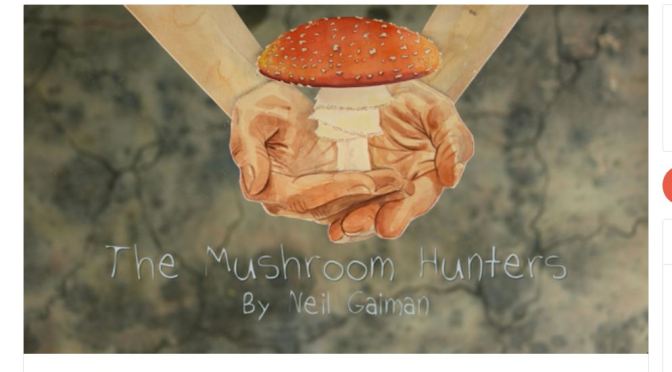
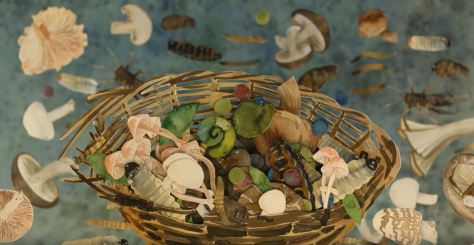
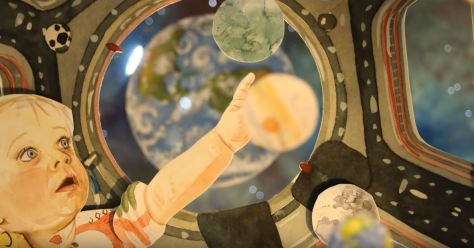
“The Mushroom Hunters” is a Cinematic Poem Short Film With Original Poem Written By Neil Gaiman, Directed By Caroline Rudge.
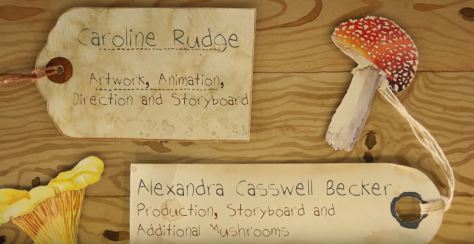
Artwork, Animation, Direction and Storyboard by: Caroline Rudge
Production, Storyboard and Additional Mushrooms: Alexandra Casswell Becker
Editing and Special Effects: Dann Casswell
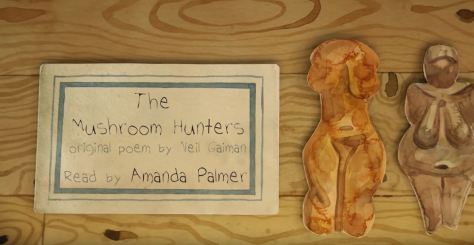
The Mushroom Hunters Original Poem by: Neil Gaiman
Read by: Amanda Palmer
Bass, Percussion, Vibraphone, Piano and Original Score by: Jherek Bischoff
Cello: Aniela Marie Perry
Violin: Paris Hurley
Viola: Marta Sofia Honer
Recorded, Mixed and Mastered by Jherek Bischoff at Sweethaven
THE MUSHROOM HUNTERS by Neil Gaiman
Science, as you know, my little one, is the study of the nature and behaviour of the universe. It’s based on observation, on experiment, and measurement, and the formulation of laws to describe the facts revealed.
In the old times, they say, the men came already fitted with brains designed to follow flesh-beasts at a run, to hurdle blindly into the unknown, and then to find their way back home when lost with a slain antelope to carry between them. Or, on bad hunting days, nothing.
The women, who did not need to run down prey, had brains that spotted landmarks and made paths between them left at the thorn bush and across the scree and look down in the bole of the half-fallen tree, because sometimes there are mushrooms.
Before the flint club, or flint butcher’s tools, The first tool of all was a sling for the baby to keep our hands free and something to put the berries and the mushrooms in, the roots and the good leaves, the seeds and the crawlers. Then a flint pestle to smash, to crush, to grind or break.
And sometimes men chased the beasts into the deep woods, and never came back.
Some mushrooms will kill you, while some will show you gods and some will feed the hunger in our bellies. Identify. Others will kill us if we eat them raw, and kill us again if we cook them once, but if we boil them up in spring water, and pour the water away, and then boil them once more, and pour the water away, only then can we eat them safely. Observe.
Observe childbirth, measure the swell of bellies and the shape of breasts, and through experience discover how to bring babies safely into the world.
Observe everything.
And the mushroom hunters walk the ways they walk and watch the world, and see what they observe. And some of them would thrive and lick their lips, While others clutched their stomachs and expired. So laws are made and handed down on what is safe. Formulate.
The tools we make to build our lives: our clothes, our food, our path home… all these things we base on observation, on experiment, on measurement, on truth.
And science, you remember, is the study of the nature and behaviour of the universe, based on observation, experiment, and measurement, and the formulation of laws to describe these facts.
The race continues. An early scientist drew beasts upon the walls of caves to show her children, now all fat on mushrooms and on berries, what would be safe to hunt.
The men go running on after beasts.
The scientists walk more slowly, over to the brow of the hill and down to the water’s edge and past the place where the red clay runs. They are carrying their babies in the slings they made, freeing their hands to pick the mushrooms.
This poem was written by Neil Gaiman and read by Amanda Palmer for Maria Popova’s “The Universe In Verse” event in 2017 (you can read about that here: https://www.brainpickings.org/2017/04…).
The brilliant team at creative connection in the UK hand-drew this animated video to accompany the poem, and the music was composed and recorded by jherek bischoff. read about the making of this whole film on patreon: https://www.patreon.com/posts/31517040
Shoppers have to use a debit card at the door to gain entry to the store. Then they can shop for products and just walk out. Upon exit, customers can verify their purchases against the receipt. No cash is accepted.
“This speaks to the original design thinking behind NanoStore: to make a plug-and-play modular store so it can be easily placed and moved where people need it the most,”
Albert Heijn first unveiled the fully digital store under its AH To Go name in September at its headquarters in Zaandam in the Netherlands, where it was open only to employees. The move to Schiphol Airport gives the company an opportunity to pilot the technology with consumers in a highly trafficked area.
They found that these physically active mice had fewer inflammatory cells (leukocytes) than sedentary mice, an effect they traced to diminished activity of hematopoietic stem and progenitor cells (HSPCs). The lower activity of HSPCs was due at least in part to exercise-induced reduction in the levels of leptin, a hormone produced by fat tissue that regulates cells within the hematopoietic bone marrow niche.
Regular physical activity is associated with a lower rate of death from heart disease, but the underlying mechanisms are not fully understood. Frodermann et al. examined the effect of exercise on cardiovascular inflammation, a known risk factor for atherosclerosis, by studying mice that voluntarily ran for long distances on exercise wheels.
Syndicated columnist Mark Shields and New York Times columnist David Brooks join Judy Woodruff to discuss the week in politics, including public opinion and legal debate in the impeachment inquiry into President Trump, the shifting race among 2020 Democrats and what we’re thankful for during this holiday week.
50 years ago, people used film cameras just as we use smartphones in the age of Instagram. They photographed their meals, holidays, loved ones, celebrations, and family reunions. Imagining the past lives of these strangers is the beauty and mystery of The Anonymous Project, which curates just under 300 images from this vast collection of 700,000+ Kodachrome slides. The places, dates, and people may be unknown, but the stories in these snapshots are universally familiar.
Shortly after George Orwell’s death in 1950, his widow Sonia was visited in London by two representatives of the American film producer, Louis de Rochemont. They sought the rights to Orwell’s novel from five years earlier, Animal Farm. It’s said Sonia took some convincing but eventually agreed, on the promise that de Rochemont would introduce her to her hero, Clark Gable.
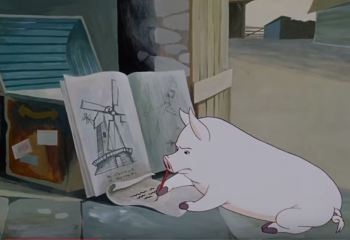
A conventional, live-action adaptation was out of the question given that the book’s main characters were farmyard animals, so an animated movie was decided upon instead. De Rochemont chose to have it made in the UK rather than the US — partly because of lower production costs, partly because he admired the work of British husband-and-wife duo John Halas and Joy Batchelor, a couple who ran their own animation studio and had produced several propaganda films for the British government during the Second World War.
Their adaptation of Animal Farm was released in 1954, to popular and critical acclaim — the first feature-length animation movie ever made in the UK.
AHEAD OF the 2020 American presidential election, John Prideaux, The Economist‘s US editor, talks to Bill Weld, a former governor of Massachusetts, Joe Walsh, a talk radio host and former Illinois congressman, and Mark Sanford, a former governor of South Carolina. While Donald Trump enjoys near 90% approval ratings among his party, can anyone challenge him for the Republican presidential nomination? And how has he changed what it means to be a Republican?
The war spectacle “1917,” directed by Sam Mendes (“American Beauty”), was unveiled in preview screenings on both coasts this past weekend and immediately announced itself as a significant Oscar player. The movie follows two British soldiers during World War I (George MacKay and Dean-Charles Chapman) as they’re given a seemingly impossible mission: Rush through dangerous territory to deliver a message that could save another battalion on the verge of annihilation.
Though “1917” recalls other Oscar-winning war movies like “Saving Private Ryan” and “Dunkirk,” Mendes distinguishes his effort by presenting the story as though “1917” were filmed all in one single take. It isn’t — Mendes and the cinematographer Roger Deakins employ all manner of clever methods to stitch together a great many different shots — but the average moviegoer won’t be able to spot the tells, and the you-are-there verisimilitude is potent.

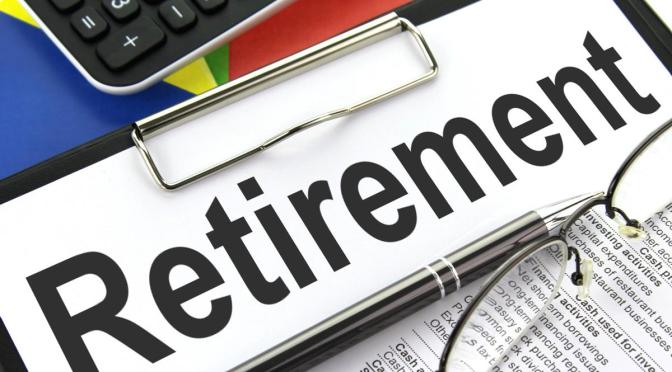
 Retirements must evolve because everything won’t work out as planned, says Carolyn Taylor, president of Weatherly Asset Management, an investment-management firm in Del Mar, Calif. One of her clients, who worked in the biotech industry and had a very busy family life, trained before retirement to become a master gardener. As she trained, she found that she enjoyed teaching others and finally became a teacher of gardening, Taylor says.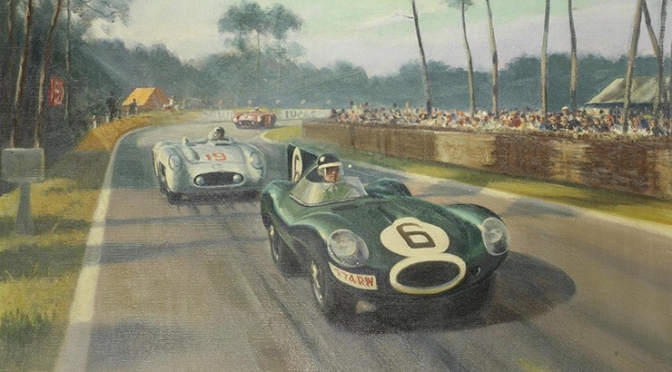
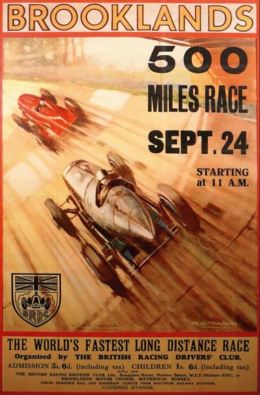 His work was displayed in many exhibitions in the UK and twenty four of his paintings were exhibited in New York in 1960. the exhibition was entitled ‘British Motoring Achievements’ and was a collection of paintings depicting outstanding performances of British cars during the previous ten years. These included the Vanwall and Cooper in Grand Prix, Monte Carlo and Alpine Rallies, speed records by MG and Austin, and Le Mans wins by Jaguar and Aston Martin.

 Shoppers have to use a debit card at the door to gain entry to the store. Then they can shop for products and just walk out. Upon exit, customers can verify their purchases against the receipt. No cash is accepted.
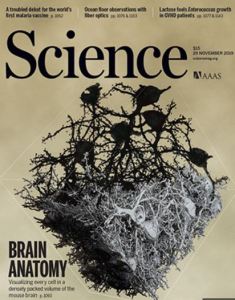 They found that these physically active mice had fewer inflammatory cells (leukocytes) than sedentary mice, an effect they traced to diminished activity of hematopoietic stem and progenitor cells (HSPCs). The lower activity of HSPCs was due at least in part to exercise-induced reduction in the levels of leptin, a hormone produced by fat tissue that regulates cells within the hematopoietic bone marrow niche.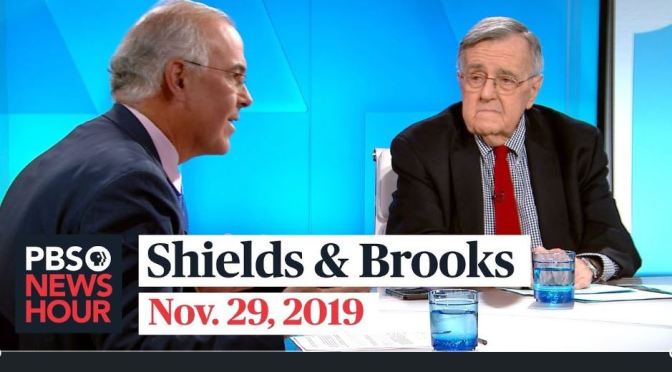
 Syndicated columnist Mark Shields and New York Times columnist David Brooks join Judy Woodruff to discuss the week in politics, including public opinion and legal debate in the impeachment inquiry into President Trump, the shifting race among 2020 Democrats and what we’re thankful for during this holiday week.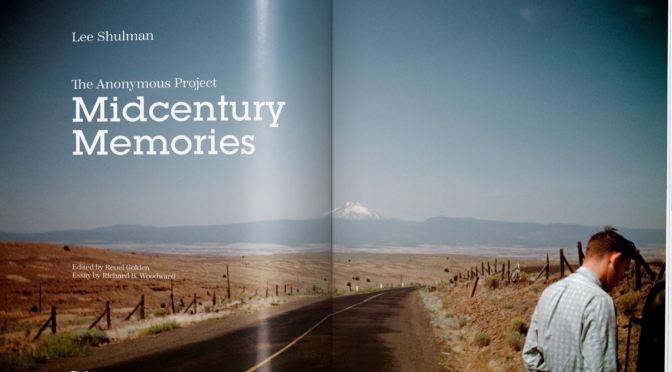
 50 years ago, people used film cameras just as we use smartphones in the age of Instagram. They photographed their meals, holidays, loved ones, celebrations, and family reunions. Imagining the past lives of these strangers is the beauty and mystery of The Anonymous Project, which curates just under 300 images from this vast collection of 700,000+ Kodachrome slides. The places, dates, and people may be unknown, but the stories in these snapshots are universally familiar.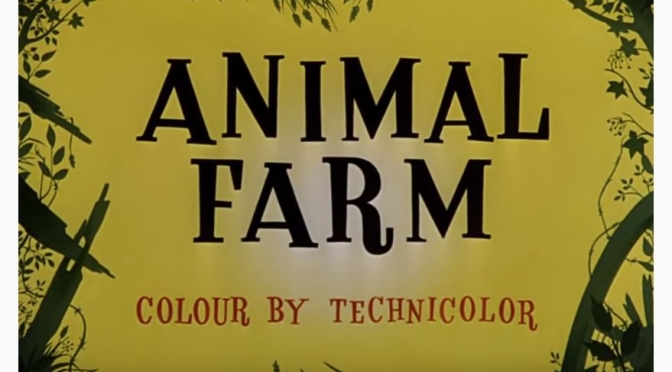
 Shortly after George Orwell’s death in 1950, his widow Sonia was visited in London by two representatives of the American film producer, Louis de Rochemont. They sought the rights to Orwell’s novel from five years earlier, Animal Farm. It’s said Sonia took some convincing but eventually agreed, on the promise that de Rochemont would introduce her to her hero, Clark Gable.
 A conventional, live-action adaptation was out of the question given that the book’s main characters were farmyard animals, so an animated movie was decided upon instead. De Rochemont chose to have it made in the UK rather than the US — partly because of lower production costs, partly because he admired the work of British husband-and-wife duo
 AHEAD OF the 2020 American presidential election, John Prideaux, The Economist‘s US editor, talks to Bill Weld, a former governor of Massachusetts,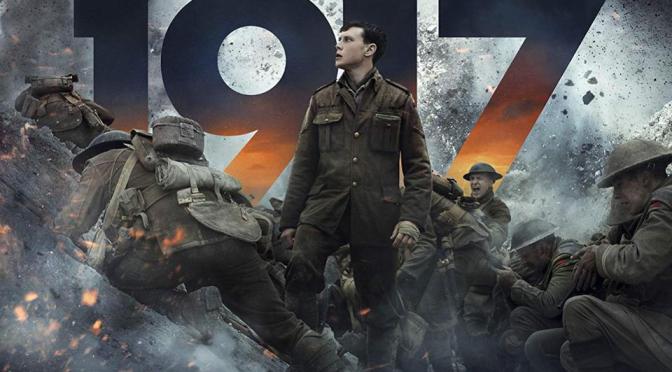
 Boomers Daily