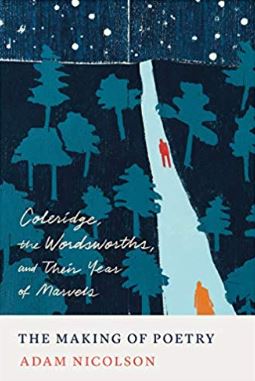
 In The Making of Poetry, Adam Nicolson embeds himself in the reality of this unique moment, exploring the idea that these poems came from this particular place and time, and that only by experiencing the physical circumstances of the year, in all weathers and all seasons, at night and at dawn, in sunlit reverie and moonlit walks, can the genesis of the poetry start to be understood.
June 1797 to September 1798 is the most famous year in English poetry. Out of it came Samuel Taylor Coleridge’s The Rime of the Ancient Mariner and “Kubla Khan,” as well as his unmatched hymns to friendship and fatherhood, and William Wordsworth’s revolutionary songs in Lyrical Ballads along with “Tintern Abbey,” Wordsworth’s paean to the unity of soul and cosmos, love and understanding.
The poetry Wordsworth and Coleridge made was not from settled conclusions but from the adventure on which they embarked, thinking of poetry as a challenge to all received ideas, stripping away the dead matter, looking to shed consciousness and so change the world. What emerges is a portrait of these great figures seen not as literary monuments but as young men, troubled, ambitious, dreaming of a vision of wholeness, knowing they had greatness in them but still in urgent search of the paths toward it.
The artist Tom Hammick accompanied Nicolson for much of the year, making woodcuts from the fallen timber in the park at Alfoxden where the Wordsworths lived. Interspersed throughout the book, his images bridge the centuries, depicting lives at the source of our modern sensibility: a psychic landscape of doubt and possibility, full of beauty and thick with desire for a kind of connectedness that seems permanently at hand and yet always out of reach.
Purchase Book



 Hooker’s novel MASH: A Novel About Three Army Doctors. The picture is the only theatrically released feature film in the M*A*S*H franchise, and it became one of the biggest films of the early 1970s for 20th Century Fox.




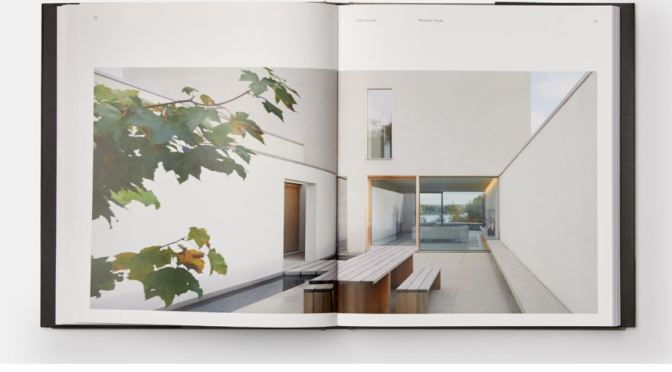
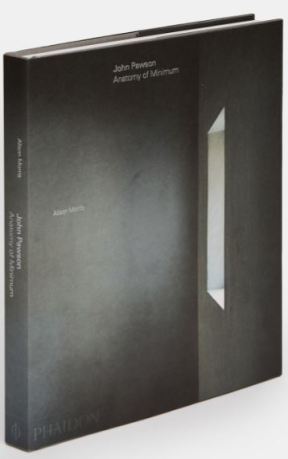 British architectural designer John Pawson has, in a career spanning over three decades, created an inimitable body of work characterized by its distillment of the fundamental ingredients of architecture into their most elemental, elegant expressions.
 approach, Pawson is sensitive to the intimate rituals of daily life and his buildings are far from austere: instead, they elegantly make the case for the clarity and freedom to be found in the act of reduction.


 replicating a


 Boomers Daily