
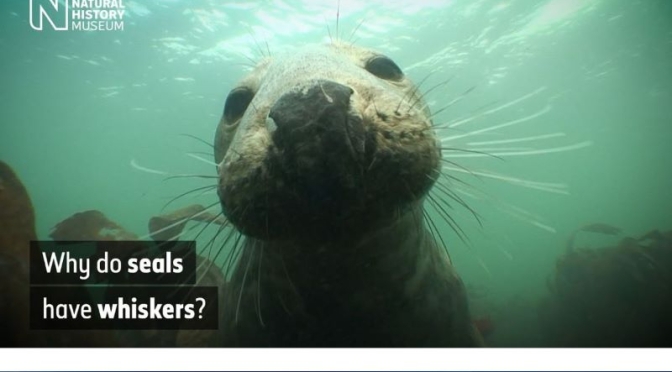
Underwater cameraman and seal researcher Dr Ben Burville, explains how seals’ whiskers help them hunt underwater even in poor visual conditions.
All posts by She Seeks Serene
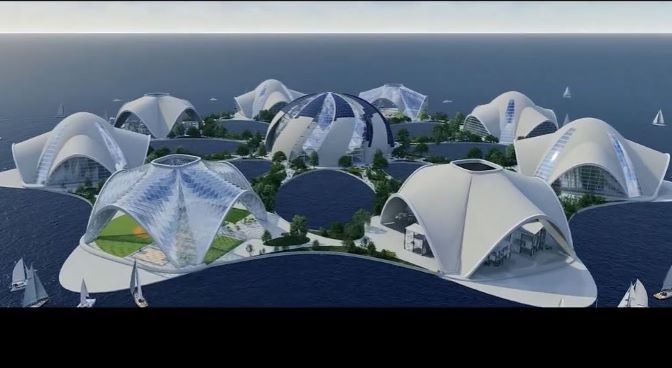
Future Of Ocean Living: ‘Lillyana’ – A Hydrophytic Model For Urban Design
LILLYANA : Architecture & Innovation for the Sea
Author : Arthur Seibert and Clemens Lindner
Nationality : German
Year : 2019
Location : Shanghaï, China
In the context of a rapidly increasing global population growth and the associated shortage of living space, alternative urban concepts in a marine environment are gaining importance under ecological and sustainable aspects. The concept- guideline “renaturation instead of soil sealing” is an effort to react on the challenges of current megatrends in the context of the sea. The underwater city structure is designed for up to 15,000 inhabitants in the vicinity of a large coastal city. “Lillyana” represents an ideal system that can be applied to various geographical and climatic conditions and their specific demands. The form is inspired by hydrophytes – plants that grow above and below the water and benefit from their environment. Through their biometric and biological mechanisms, the shape has been improved for energy efficiency, buoyancy and stability. Thus, the wind-, water- and solar energy production is directly embedded in the design language. The main challenge of this project was to develop a self-sufficient system that could also allow different forms of social life at the same time. To achieve this, we have tried to understand the factors that make an attractive city: “Living”, “working”, “mobility”, “supply” and “recreation” These fields of action provide the framework for our design: Therefore, a superior supply organ will be placed in the centre, from which radially arranged bridge systems will form connections to floating platforms. These are anchored beneath the seabed and represent the quarter centres. From the platforms, supply pipelines, on which various spheres are suspended, lead into the depths. They shift private, professional and social life below the water surface. High attractiveness, beneath as well as above the sea level, is achieved by providing well-located and spatially qualitative living and working areas with a recreation and leisure area, as well as an intelligent infrastructure via a pipeline network.
Descriptive of Author : Splendour of life beneath the surface: “Lillyana” – A hydrophytic model for urban design
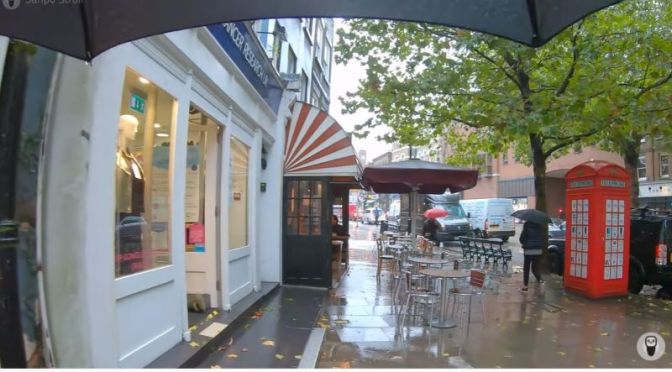
New Walking Tour Video: ‘London’s Hamstead Village’ Streets In The Rain
Today we will walk in London Hampstead, one of London’s most beautiful area, in the rain. This time, in addition to the previous walking route, we will also take a walk along small side streets and alleyways. Enjoy the view and sound of the rainy city.
Date of video: Friday October 2, 2020

Morning News Podcast: Trump Covid-19 Update, Supreme Court Politics

NPR News Now: Trump Covid-19 condition, Supreme Court convenes, Senate Judiciary Committee, and other top news.
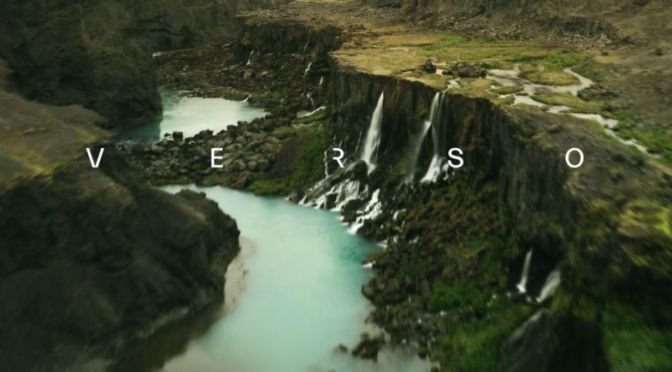
New Aerial Travel Videos: ‘Verso’ – Europe By Drone
Filmed and Edited by: Vadim Sherbakov
Verso is a short drone film inspired by the recent feature film “Tenet” by Christopher Nolan.
Verso features two protagonists – nature and city. Verso shots are reversed in time to mimic an inversion effect.
Iceland, UAE, Norway, Russia, Spain, and Italy shots are included in this short 2 minutes drone film.
Moscow, Dubai, St Peterburg, Sevilla, Nerja, Granada, Rome, Manarola, Civita di Bagnoregio are cities that are featured in Verso.

Global News Podcast: ‘Bidenomics, Erasing Chinese Villages, Ethnic Minorities In Britain’

A selection of three essential articles read aloud from the latest issue of The Economist. This week: Bidenomics, Chinese officials want to erase many villages (12:00) and ethnic minorities in Britain (19:10).

Sunday Morning Podcast: News From Athens, Zurich, London, Tokyo (Monocle)

Monocle’s Emma Nelson speaks to Vincent McAviney and Rob Cox, plus we hear from The Saturday Paper’s Karen Middleton, and check in with Tokyo and Ljubljana.

Poetry: ‘Sonnet 44’ By William Shakespeare
Read by: A Poetry Channel
Sonnet 44 is one of 154 sonnets written by the English playwright and poet William Shakespeare. It is a member of the Fair Youth sequence, in which the poet expresses his love towards a young man. Sonnet 44 is continued in Sonnet 45.
Sonnet XLIV
If the dull substance of my flesh were thought,
Injurious distance should not stop my way;
For then despite of space I would be brought,
From limits far remote, where thou dost stay.
No matter then although my foot did stand
Upon the farthest earth removed from thee;
For nimble thought can jump both sea and land
As soon as think the place where he would be.
But ah! thought kills me that I am not thought,
To leap large lengths of miles when thou art gone,
But that, so much of earth and water wrought,
I must attend time’s leisure with my moan,
Receiving nought by elements so slow
But heavy tears, badges of either’s woe.
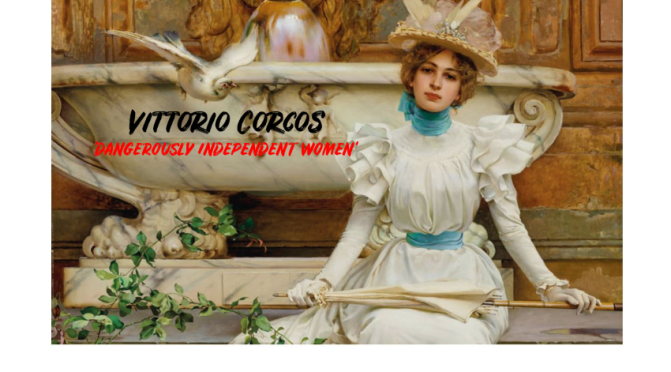
Art: The ‘Dangerously Independent Women’ Of Italian Painter Vittorio Corcos (1859-1933)

He went on to become a highly respected portraitist, counting Kaiser Wilhelm II of Germany, Benito Mussolini and opera star Lina Cavalieri among his subjects. In Coy’s view, however, his portraits were relatively conventional offerings — and Corcos’s ‘best work’ was his turn-of-the-century imagery of ‘dangerously independent women’.



Compare the biographies of Vittorio Corcos (1859-1933) and Amedeo Modigliani (1884-1920), and a remarkable number of similarities become apparent. Both were born into Jewish families in the Italian port city of Livorno in the second half of the 19th century; both would settle — and artistically come of age — in Paris. Both would even excel at the same type of paintings: their provocative depictions of women.
Their reputations, however, have suffered widely different fates. Modigliani, who struggled to sell much work before his death at the age of 35, is today regarded as a master of Modernism. Corcos, by contrast, who enjoyed a long and prosperous international career, posthumously became a rather forgotten figure.
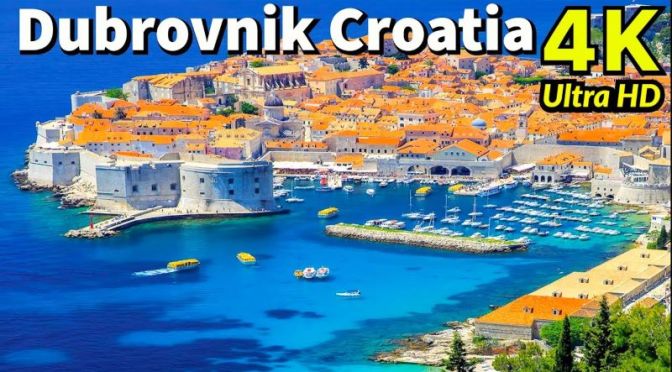
Top New Travel Videos: ‘Dubrovnik, Croatia’ (4K)
Dubrovnik is a city in southern Croatia fronting the Adriatic Sea. It’s known for its distinctive Old Town, encircled with massive stone walls completed in the 16th century. Its well-preserved buildings range from baroque St. Blaise Church to Renaissance Sponza Palace and Gothic Rector’s Palace, now a history museum. Paved with limestone, the pedestrianized Stradun (or Placa) is lined with shops and restaurants.
Croatia, officially the Republic of Croatia, is a country at the crossroads of Central and Southeast Europe, on the Adriatic Sea. It borders Slovenia to the northwest, Hungary to the northeast, Serbia to the east, Bosnia and Herzegovina, and Montenegro to the southeast, sharing a maritime border with Italy.
 Boomers Daily