

Excerpts from a NextAvenue.org online article interview:

“I don’t like the word ‘evolve,’” he says. “Art means the same thing today as it always has. Styles change, but art doesn’t.”
Hesitant to put too defining a label on his work, Wrayge claims his paintings have “a landscape feel.” He doesn’t consider them to be abstract. “That’s a word invented by the press, not by painters,” he says. “What I prefer to say [about my paintings] is that they are a visual manifestation of my values.”
 In James Wrayge’s quiet studio on an early winter afternoon, there is a tangible sense of purpose. Wrayge’s paintings line the walls along the portion of the space he shares with another artist at the Northrup King Building in Minneapolis. There are also some paintings on the floor propped up against the same walls. And there is one — in progress — set on an easel in the corner.

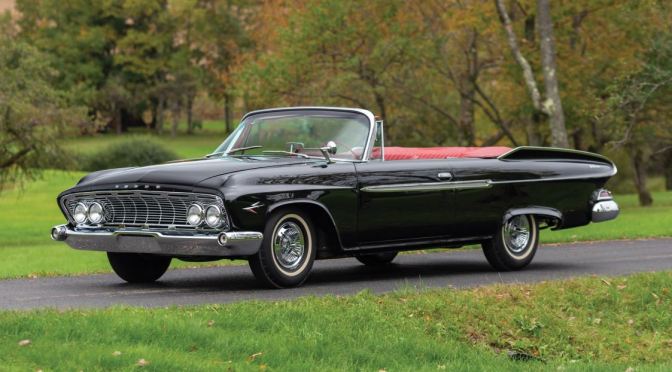
 For the 1961 model year, the Dart continued as the smallest full-size Dodge. It retained the 118 in (2,997 mm) wheelbase, and was restyled to emulate the larger Polara. The same three trim levels were available: the premium Phoenix, mid-range Pioneer, and base Seneca. Once again, wagons shared the Polara’s 122 in/310 cm wheelbase; they also shared the Polara’s unique side-mounted taillights.
 The Dart name originally appeared on a 1956 Chrysler show car featuring a streamlined body designed by the Italian coachbuilder Carrozzeria Ghia that was later modified and renamed the Dart Diablo. The production Dart was introduced as a lower-priced, full-size Dodge in 1960 and 1961, became a mid-size car for 1962, and then was a compact from 1963 to 1976.
 Boomers Daily