
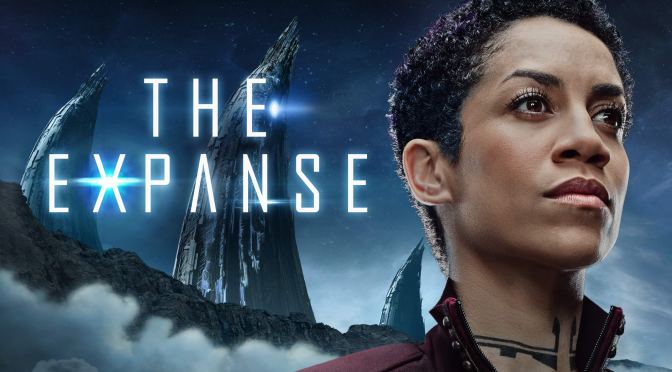
From a Science Magazine online article:
 On 13 December, Amazon Prime will air the fourth season of The Expanse, a hardboiled space drama renowned for its working-class characters and real-world space physics. Showrunner Naren Shankar is part of the reason the science checks out. The veteran writer and producer for programs such as Star Trek: The Next Generation, Farscape, and the police procedural CSI: Crime Scene Investigation, has a doctorate in applied physics and electrical engineering.
When I got the script for the The Expanse, the pilot, I was, like, “Wow, this is a very different kind of a show.” Because they embraced all of the things that most science fiction shows run away from: the fact that you don’t have weight unless your ship is accelerating, the fact that communication in space is not instantaneous.
Shankar chatted with Science about why he feels it’s important to have a realistic sci-fi show, and how television work is like the scientific peer-review process.
To read full interview: https://www.sciencemag.org/news/2019/12/how-real-world-science-sets-expanse-apart-other-sci-fi-shows?utm_campaign=news_weekly_2019-12-06&et_rid=600792821&et_cid=3113276

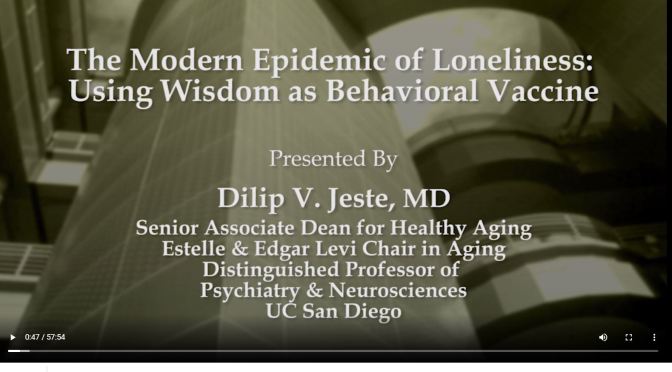
 As societal stresses have increased, loneliness and social isolation have become silent killers. Dilip Jeste, MD, a geriatric neuropsychiatrist who specializes in successful aging, explains how loneliness has become an epidemic, the risk factors, helpful interventions, and how we can harness wisdom for compassion, self regulation, and more.

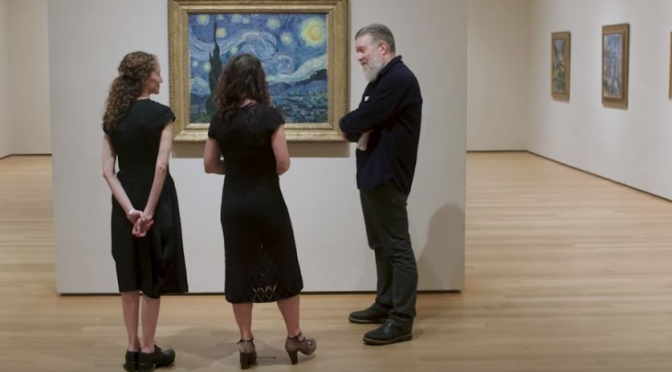
 In this episode of “The Way I See It,” Janna Levin brings her celestial expertise to Vincent van Gogh’s star-filled vision, in conversation with senior curator of Drawing and Prints Jodi Hauptman. Levin helps us see how certain
  features of the night sky, including “turbulent air,” the light from a star, and the planet Venus, are rendered visible by Van Gogh’s brush. She also points out that her approach is not so different from Van Gogh’s: “People who observe the world, whether they are artists or scientists, are always on the cusp of what they see and then what is internal.”

 Boomers Daily