Videos

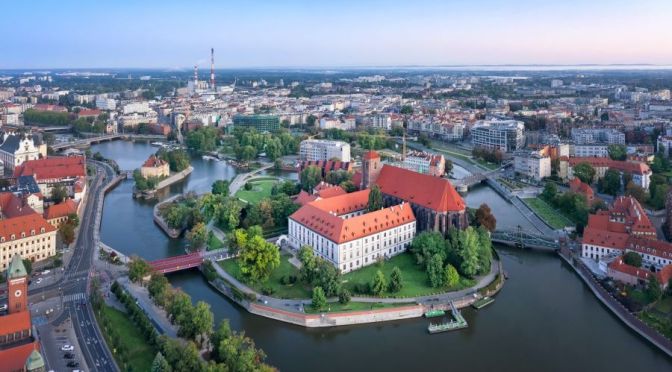
8K Views: The Landmarks & Landscapes Of Poland

Polandcountry of central Europe. Poland is located at a geographic  crossroads that links the forested lands of northwestern Europe to the sea lanes of the Atlantic Ocean and the fertile plains of the Eurasian frontier.

Video timeline: 0:00 intro 0:15 Green field in Sułoszowa 0:23 Wooden house cover by the ice 0:34 Tatra mountains 0:40 Odra river 0:45 Krakow Traffic 0:50 Warsaw at night 1:29 Castle ruins 1:33 Rocky mountain 1:43 Field in Sułoszowa 1:51 Stare miasto 2:02 Castle ruins 2:13 Krzyżtopór Castle 2:23 Turbines 2:30 Warsaw at night 2:44 Castle ruins 2:58 Pieskowa skala 3:06 Wawel castle 2:14 Green mountain 3:18 Old castle 3:28 warsaw time-lapse 3:33 Culture and Science 3:44 Nowy castle 3:53 Krakow 4:08 Poland warsaw 4:34 Odra river 4:51 Night warsaw 4:55 Tatra mountain 5:04 Zakopane 5:15 Turbine 5:26 Kazimierz Dolny 5:36 Old castle 5:46 Clock Tower 5:56 Wawel royal castle 6:06 Renaissance castle 6:17 Stare miasto 6:27 Stare miasto 6:43 Capital of poland 6:55 Modern downtown 7:05 Clock Tower 7:17 Krakow 7:27 Krakow 7:37 Aerial View 7:47 Skyscrapers 7:58 Clock Tower 8:07 Turbine 8:19 Nowy wisnicz 8:29 Castle 8:40 Wroclaw 8:52 Poland at night 9:13 Royal castle 9:32 Clock Tower 9:52 Skyscraper 10:04 Clock Tower

Now bounded by seven nations, Poland has waxed and waned over the centuries, buffeted by the forces of regional history. In the early Middle Ages, Poland’s small principalities and townships were subjugated by successive waves of invaders, from Germans and Balts to Mongols.

In the mid-1500s, united Poland was the largest state in Europe and perhaps the continent’s most powerful nation. Yet two and a half centuries later, during the Partitions of Poland (1772–1918), it disappeared, parceled out among the contending empires of RussiaPrussia, and Austria.

Views: A Walking Tour Of Monaco (Summer 2022)

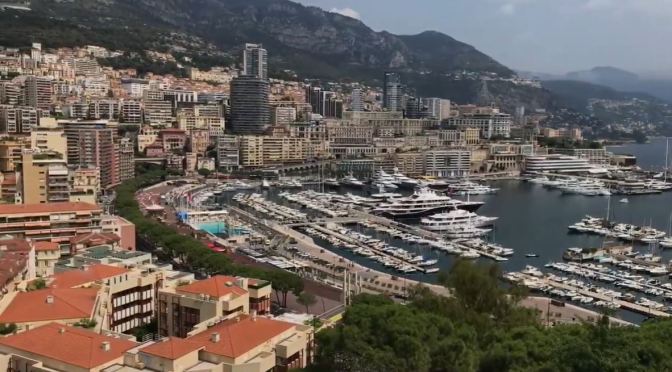
Monaco, French Principauté de Monacosovereign principality located along the Mediterranean Sea in the midst of the resort area of the Côte d’Azur (French Riviera). The city of Nice, France, lies 9 miles (15 km) to the west, the Italian border 5 miles (8 km) to the east. Monaco’s tiny territory occupies a set of densely clustered hills and a headland that looks southward over the Mediterranean. Many unusual features, however, have made Monaco among the most luxurious tourist resorts in the world and have given it a fame far exceeding its size.

Island Views: A Van Tour Around Corsica, France

Corsica, a mountainous Mediterranean island, presents a mix of stylish coastal towns, dense forest and craggy peaks (Monte Cinto is the highest). Nearly half the island falls within a park whose hiking trails include the challenging GR 20. Its beaches range from busy Pietracorbara to remote Saleccia and Rondinara. It’s been part of France since 1768, but retains a distinct Italian culture. 

Views: Freerunner Jason Paul Races Across Mumbai

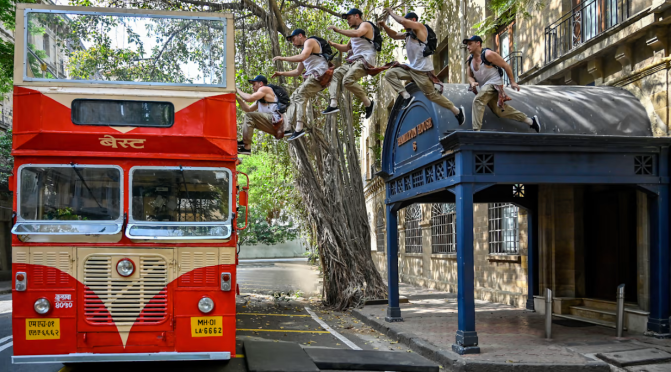
Parkour athlete Jason Paul uses all of his freerunning skills and speed to chase across the busy streets of Mumbai to return a Bollywood actors lunchbox… 🇮🇳

See more incredible freerunning from Jason Paul here: https://www.redbull.com/int-en/shows/…

Public Transport: Inside Tokyo’s Electric ‘Red Bus’

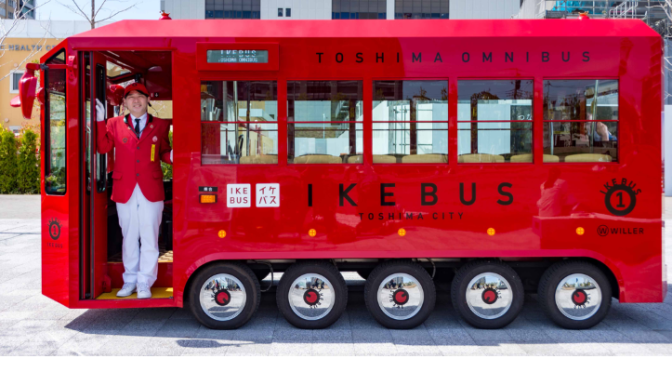
An electric bus service has injected a new playfulness into a borough of Tokyo in need of a revamp. We hop aboard and meet Eiji Mitooka, its creator and Japan’s foremost train designer, who explains why he puts fun at the top of his list when designing public transport. All aboard!

Read more in the June issue of the magazine: [https://monocle.com/shop/product/2155…

Droughts: Competing With Nature For Water

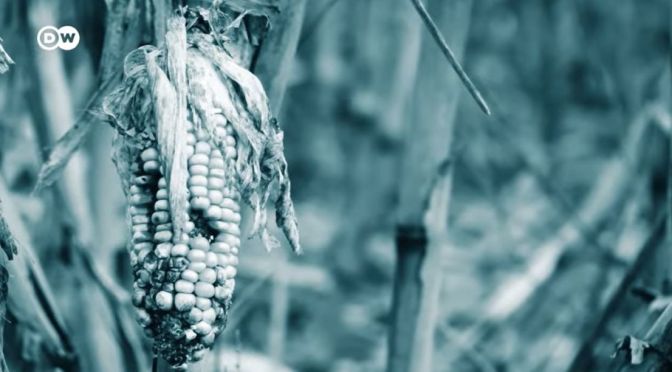
Climate change is causing rising temperatures, extreme weather events and more and more drought. And, in this changing reality, everyone needs more water. Humans are competing with the natural world for water. What does this mean for biodiversity? Fewer and fewer countries still have an abundance of water. The climate crisis, overpopulation and overexploitation are the root of this global problem. And, in a warming world, everyone is using more water: people, agriculture and industry. In Germany, streams and ponds are disappearing, forests and soils are drying out. What does this mean for biodiversity? And how do people cope with drought in countries that have even less water — for example, in the USA or Mexico? What happens when our water dries up?

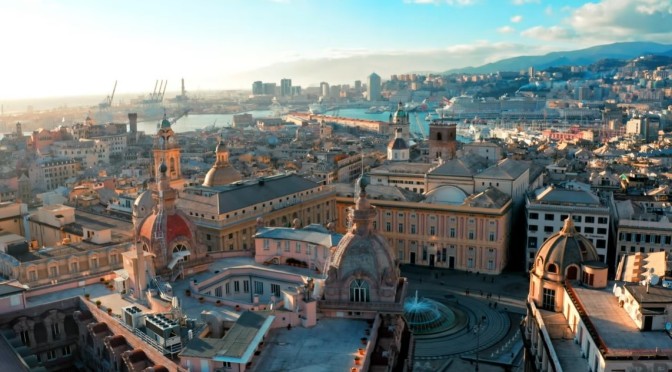
Aerial Views: Genoa In Northwestern Italy (4K)

Genoa (Genova) is a port city and the capital of northwest Italy’s Liguria region. It’s known for its central role in maritime trade over many centuries. In the old town stands the Romanesque Cathedral of San Lorenzo, with its black-and-white-striped facade and frescoed interior. Narrow lanes open onto monumental squares like Piazza de Ferrari, site of an iconic bronze fountain and Teatro Carlo Felice opera house. 

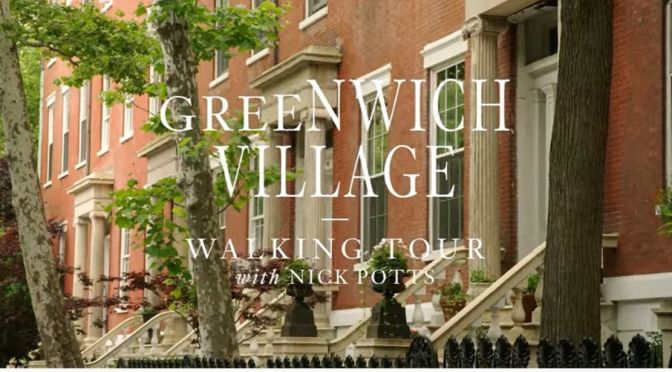
Architectural Tours: New York’s Greenwich Village

Architectural Digest takes you to New York City for an insightful walking tour of Greenwich Village with architect Nicholas Potts. From jazz clubs and coffee shops to the dramatic arch at Washington Square Park and the landmark buildings on Waverly Place, “The Village” continues to exist at the nexus of New York’s past, present, and future.

Come along with Nick as he explores the architectural details hidden in plain sight. Check out Nicholas Potts here:

Website: https://nicholasgpotts.com/ Instagram: https://www.instagram.com/nicholasgpo…

Walking Tour: Merseburg In Northeastern Germany

Merseburg, city, Saxony-Anhalt Land (state), eastern Germany. It lies on the left bank of the Saale River, just south of Halle. Founded about 800 as a frontier fortress against the Slavs, it was a favourite residence of the German kings Henry I the Fowler (d. 936), Otto I, and Henry II.

It was the seat of a bishop from 968 until the Reformation (1561) and was chartered in 1188. It passed to Saxony in 1561 and was captured (1631) by the Swedes in the Thirty Years’ War. The residence of the dukes of Saxe-Merseburg from 1656 to 1738, it passed to Prussia in 1815. It was heavily bombed in World War II.

Merseburg’s most notable buildings are the imposing castle (1480–89) and the cathedral, begun in 1015 and dating mainly from the 13th and 16th centuries. Today there is a technical university (now part of Martin Luther University of Halle-Wittenberg) in Merseburg. The city’s industries include aluminum foil production. 

Architect’s Tour: Casa Mia In City Beach, Australia

Offering a playful rendition of the familiar sustainable narrative, Casa Mia enables residents to experience life inside a dream house. Crafted by Iredale Pedersen Hook Architects in collaboration with Caroline Di Costa Architect, the residence uses brickwork to convey a liberating message.

Video timeline: 00:00 – Introduction to Casa Mia 00:28 – High-Density Living 01:11 – A Playful Space 01:53 – Providing a Presence and Privacy 02:13 – Sustainable Brickwork 03:08 – Love and Appreciation for Brickworks 03:39 – Historic and Ancient Japanese Architecture 04:25 – Utilising Unfinished Materials 05:00 – Sustainable Design 05:47 – The Architect’s Favourite Aspects of the House

Located on the Ocean Mia Estate in City Beach, Casa Mia is an architect’s own home, sitting in contrast to the built context. Constructed from carefully positioned brickwork with spaces between bricks at its edge, the dream house juxtaposes the rectilinear forms of the surrounding buildings, presenting a dynamic profile of surprising lightness.

Liaising with Brickworks, Iredale Pedersen Hook Architects both inheres the project with a sense of sustainability and makes the concept legible as a prominent feature of the architect’s own home. Brickworks enables its products to be applied to the dream house in their uncut state – an atypical usage – in order to minimise waste. Every brick of the dream house is locally sourced and exhibits colours reminiscent of the earthy natural landscape. Inspired by Japanese architecture, Iredale Pedersen Hook Architects employs fully-glazed bricks around particular openings.

The bricks bounce sunlight into the depths of the home, allowing the residents to save energy where possible. Although Casa Mia represents the weight of responsibility architects have towards the environment, it also presents this responsibility as beneficial. Iredale Pederson Hook Architects and Caroline Di Costa Architect craft a dream house that rejoices in its sustainability, utilising the colour and texture of brick to suggest a playful variation of an architect’s own home.