On this week’s show, Contributing Correspondent Kai Kupferschmidt talks with host Sarah Crespi about modeling coronavirus spread and the role of forecasts in national lockdowns and other pandemic policies. They also talk about the launch of a global trial of promising treatments.
Also this week, Nadine Gogolla, research group leader at the Max Planck Institute of Neurobiology, talks with Sarah about linking the facial expressions of mice to their emotional states using machine learning.
Scientists around the world are racing to develop a vaccine for COVID-19. But experts have said it could take a year to 18 months for one to hit the market. The process for testing and approving a vaccine is long and complicated.
That can be frustrating when the coronavirus is taking more and more lives every day. But cutting corners to push a vaccine through faster can lead to devastating consequences. We know that, because it’s happened before.
This week, reassessing the age of the ‘Broken Hill skull’, and unearthing evidence of an ancient forest near the South Pole.
In this episode:
01:25 A skull’s place in history
After nearly a century scientists believe they’ve finally pinned down an age for the ‘Broken Hill skull’ hominid specimen. Research Article: Grun et al.
Digging deep below the sea-floor, researchers have uncovered evidence of a verdant forest that existed on Antarctica around 90 million years ago. Research Article: Klages et al.
Letters of John Keats to His Family and Friends by John KEATS (1795 – 1821) and Sidney COLVIN (1845 – 1927)
Read by: Nemo and Eva Davis
Chapters: 00:00:00 – 00 – Preface 00:21:11 – 01 – Letter 1 – to Charles Cowden Clarke 00:22:21 – 02 – Letter 2 – to Benjamin Robert Haydon 00:24:06 – 03 – Letter 3 – to Benjamin Robert Haydon 00:25:00 – 04 – Letter 4 – to Charles Cowden Clarke 00:26:57 – 05 – Letter 5 – to John Hamilton Reynolds 00:28:25 – 06 – Letter 6 – to John Hamilton Reynolds 00:29:52 – 07 – Letter 7 – to George and Thomas Keats 00:34:17 – 08 – Letter 8 – to John Hamilton Reynolds 00:42:14 – 09 – Letter 9 – to Leigh Hunt 00:50:13 – 10 – Letter 10 – to Benjamin Robert Haydon 01:00:31 – 11 – Letter 11 – to Messrs. Taylor and Hessey 01:03:50 – 12 – Letter 12 – to Messrs. Taylor and Hessey 01:06:07 – 13 – Letter 13 – to Mariane and Jane Reynolds 01:10:34 – 14 – Letter 14 – to Fanny Keats 01:18:27 – 15 – Letter 15 – to Jane Reynolds 01:26:44 – 16 – Letter 16 – to John Hamilton Reynolds 01:34:49 – 17 – Letter 17 – to Benjamin Robert Haydon 01:37:39 – 18 – Letter 18 – to Benjamin Bailey 01:43:58 – 19 – Letter 19 – to Benjamin Bailey 01:51:33 – 20 – Letter 20 – to Benjamin Bailey 01:54:19 – 21 – Letter 21 – to Charles Wentworth Dilke 01:55:20 – 22 – Letter 22 – to Benjamin Bailey 02:05:23 – 23 – Letter 23 – to John Hamilton Reynolds 02:11:23 – 24 – Letter 24 – to George and Thomas Keats 02:16:25 – 25 – Letter 25 – to George and Thomas Keats 02:26:06 – 26 – Letter 26 – to Benjamin Robert Haydon 02:28:19 – 27 – Letter 27 – to John Taylor 02:29:30 – 28 – Letter 28 – to George and Thomas Keats 02:35:45 – 29 – Letter 29 – to John Taylor 02:37:09 – 30 – Letter 30 – to George and Thomas Keats 02:45:42 – 31 – Letter 31 – to Benjamin Bailey 02:53:40 – 32 – Letter 32 – to John Taylor 02:55:38 – 33 – Letter 33 – to John Hamilton Reynolds 03:00:19 – 34 – Letter 34 – to John Hamilton Reynolds 03:09:32 – 35 – Letter 35 – to John Taylor 03:10:23 – 36 – Letter 36 – to George and Thomas Keats 03:14:06 – 37 – Letter 37 – to John Hamilton Reynolds 03:20:52 – 38 – Letter 38 – to George and Thomas Keats 03:25:16 – 39 – Letter 39 – to John Taylor 03:28:39 – 40 – Letter 40 – to Messrs. Taylor and Hessey 03:29:39 – 41 – Letter 41 – to Benjamin Bailey 03:39:27 – 42 – Letter 42 – to John Hamilton Reynolds 03:46:04 – 43 – Letter 43 – to Benjamin Robert Haydon 03:51:10 – 44 – Letter 44 – to Messrs. Taylor and Hessey 03:52:54 – 45 – Letter 45 – to James Rice 03:58:59 – 46 – Letter 46 – to John Hamilton Reynolds 04:06:50 – 47 – Letter 47 – to Benjamin Robert Haydon 04:12:07 – 48 – Letter 48 – to John Hamilton Reynolds 04:17:53 – 49 – Letter 49 – to John Hamilton Reynolds 04:20:39 – 50 – Letter 50 – to John Taylor 04:24:29 – 51 – Letter 51 – to John Hamilton Reynolds 04:29:41 – 52 – Letter 52 – to John Hamilton Reynolds 04:46:49 – 53 – Letter 53 – to Benjamin Bailey 04:52:06 – 54 – Letter 54 – to Benjamin Bailey 04:57:26 – 55 – Letter 55 – to John Taylor 04:59:14 – 56 – Letter 56 – to Thomas Keats 05:08:57 – 57 – Letter 57 – to Fanny Keats 05:18:23 – 58 – Letter 58 – to Thomas Keats 05:28:49 – 59 – Letter 59 – to Thomas Keats 05:39:49 – 60 – Letter 60 – to John Hamilton Reynolds 05:48:19 – 61 – Letter 61 – to Thomas Keats 06:01:55 – 62 – Letter 62 – to Benjamin Bailey 06:16:12 – 63 – Letter 63 – to Thomas Keats 06:30:05 – 64 – Letter 64 – to Thomas Keats 06:43:57 – 65 – Letter 65 – to Mrs. Wylie 06:50:42 – 66 – Letter 66 – to Fanny Keats 06:53:45 – 67 – Letter 67 – to Fanny Keats 06:55:12 – 68 – Letter 68 – to Jane Reynolds 06:56:23 – 69 – Letter 69 – to Charles Wentworth Dilke
These are the letters of John Keats, as written to family, close friends and others during his brief, eventful years as an artist. (However, the editor chose to exclude love letters to Fanny Brawne, respecting their private nature.) The celebrated Keats letters were written between 1816-1820, and include those colorful entries penned during his 44-day tour with Charles Brown as they rambled through England, Ireland and Scotland. Also included are the famous, lengthy ‘journal letters,’ written to his brother George and sister-in-law in America. Not only a poetic genius, Keats shines in epistolary form. His letters brim with the emotion, wit and intelligence he routinely shared with intimates. – Summary by NemoR
Facing shortages of critical equipment, medical workers must make life-or-death decisions about who receives care. WSJ’s Joe Palazzolo reports from an emergency room that’s running short on ventilators, and Chris Weaver explains the plans hospitals are putting in place to decide who gets them.
Arthur Caplan, a bioethicist at NYU’s School of Medicine, talks about how hospitals think about these difficult choices.
Octavian Report “Rostrum” spoke with him about a major theme in Shakespeare’s work and life: disease. Specifically, pandemic plagues, which ravaged London repeatedly throughout Shakespeare’s career, shuttering the theaters, and which appear (obliquely and otherwise) in some of his greatest plays.
The latest episode of the Rostrum’s coronavirus series features James Shapiro, the Larry Miller professor of English and comparative literature at Columbia University, and a leading expert on Shakespeare. Shapiro has published widely on this subject, most recently Shakespeare in a Divided America. He is also an advisor to the Royal Shakespeare Company and to the Public Theater.
James S. Shapiro (born 1955) is Professor of English and Comparative Literature at Columbia University who specialises in Shakespeare and the Early Modern period. Shapiro has served on the faculty at Columbia University since 1985, teaching Shakespeare and other topics, and he has published widely on Shakespeare and Elizabethan culture.
A selection of essential articles read aloud from the latest issue of The Economist. This week, the role of big government in the time of covid-19, (10:20) assessing the havoc the pandemic is causing in emerging countries, (17:45).
In just a few weeks a virus a ten-thousandth of a millimetre in diameter has transformed Western democracies. States have shut down businesses and sealed people indoors. They have promised trillions of dollars to keep the economy on life support. If South Korea and Singapore are a guide, medical and electronic privacy are about to be cast aside. It is the most dramatic extension of state power since the second world war.
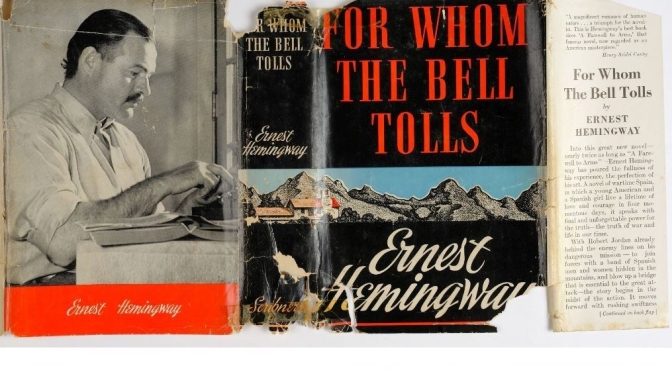
The first three chapters of Ernest Hemingway’s classic novel.
For Whom the Bell Tolls is a novel by Ernest Hemingway published in 1940. It tells the story of Robert Jordan, a young American volunteer attached to a Republican guerrilla unit during the Spanish Civil War. As a dynamiter, he is assigned to blow up a bridge during an attack on the city of Segovia.
It was published just after the end of the Spanish Civil War (1936–1939), whose general lines were well known at the time. It assumes the reader knows that the war was between a democratically elected, pro-working-class and anti-Catholic government, supported by the Soviet Union, which many foreigners like Robert went to Spain to help, and a successful, dictatorial, Catholic, pro-landowner revolt, supported by Nazi Germany and Fascist Italy. It was commonly viewed as the dress rehearsal for the Second World War. In 1940, the year the book was published, the United States had not yet entered the war, which had begun on Sept. 1, 1939, with Nazi Germany’s invasion of Poland.
The novel is regarded as one of Hemingway’s best works, along with The Sun Also Rises, A Farewell to Arms, and The Old Man and the Sea.
Ernest Miller Hemingway (July 21, 1899 – July 2, 1961) was an American journalist, novelist, short-story writer, and sportsman. His economical and understated style—which he termed the iceberg theory—had a strong influence on 20th-century fiction, while his adventurous lifestyle and his public image brought him admiration from later generations. Hemingway produced most of his work between the mid-1920s and the mid-1950s, and he won the Nobel Prize in Literature in 1954. He published seven novels, six short-story collections, and two nonfiction works. Three of his novels, four short-story collections, and three nonfiction works were published posthumously. Many of his works are considered classics of American literature.
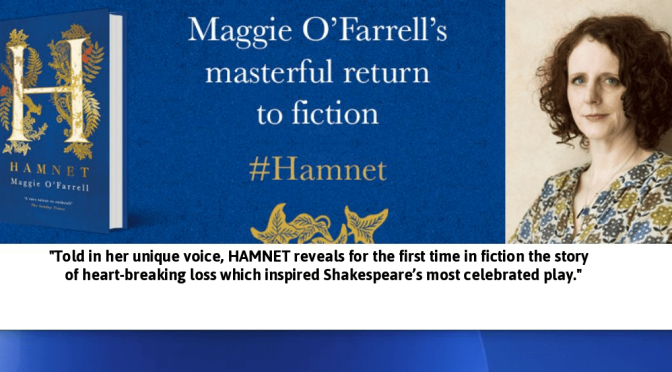
BBC Radio 4 “Books And Authors” Talks To Maggie O’Farrell on her new novel, “Hamnet”
On a summer’s day in 1596, a young girl in Stratford-upon-Avon takes to her bed with a fever. Her twin brother, Hamnet, searches everywhere for help. Why is nobody at home?
Their mother, Agnes, is over a mile away, in the garden where she grows medicinal herbs. Their father is working in London. Neither parent knows that one of the children will not survive the week.
Hamnet is a novel inspired by the son of a famous playwright. It is a story of the bond between twins, and of a marriage pushed to the brink by grief. It is also the story of a kestrel and its mistress; flea that boards a ship in Alexandria; and a glovemaker’s son who flouts convention in pursuit of the woman he loves. Above all, it is a tender and unforgettable reimagining of a boy whose life has been all but forgotten, but whose name was given to one of the most celebrated plays ever written.
Monocle 24 speaks with Gill Saunders and Margaret Timmers about their upcoming book ‘The Poster’ from Thames & Hudson in partnership with the V&A.
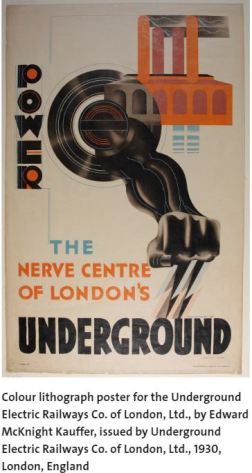
Featuring posters from the world-class collection of the Victoria and Albert Museum, this book is the perfect resource for all those who appreciate one of the most popular art forms.
Even in the digital age, the printed poster has continued to be one of the most influential and well-loved ways of informing and entertaining audiences. A powerful means of mass communication, posters are an invaluable resource for understanding the time periods in which they were produced and distributed and have often played key roles in shaping society.
Organized into seven thematic chapters, The Poster brings together more than 300 examples that offer a comprehensive history of the poster as a medium that has been used to share, sell, or incite political and social change. The text traces the poster through innovations in design, illustration, typography, and printing, as well as movements in art, including Art Nouveau, modernism, Art Deco, psychedelia, and punk.
Featuring works by A. M. Cassandre, Henri de Toulouse-Lautrec, Alphonse Mucha, Milton Glaser, Paula Scher, and Peter Gee, and many more, this book is an essential resource for graphic designers, illustrators, and anyone interested in social and political history.

 On this week’s show, Contributing Correspondent Kai Kupferschmidt talks with host Sarah Crespi about modeling coronavirus spread and the role of forecasts in national lockdowns and other pandemic policies. They also talk about the launch of a global trial of promising treatments.
 Scientists around the world are racing to develop a vaccine for COVID-19. But experts have said it could take a year to 18 months for one to hit the market. The process for testing and approving a vaccine is long and complicated.
 This week, reassessing the age of the ‘Broken Hill skull’, and unearthing evidence of an ancient forest near the South Pole.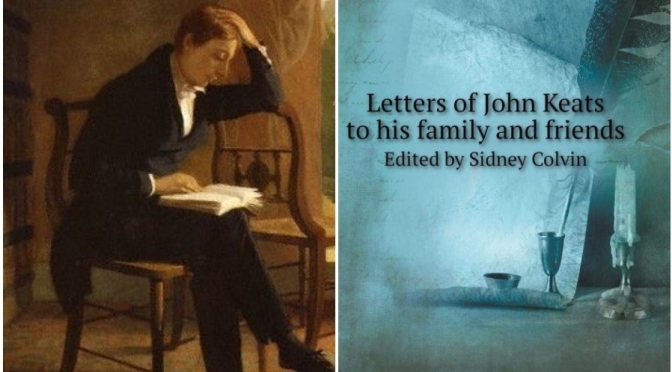

 Facing shortages of critical equipment, medical workers must make life-or-death decisions about who receives care. WSJ’s Joe Palazzolo reports from an emergency room that’s running short on ventilators, and Chris Weaver explains the plans hospitals are putting in place to decide who gets them.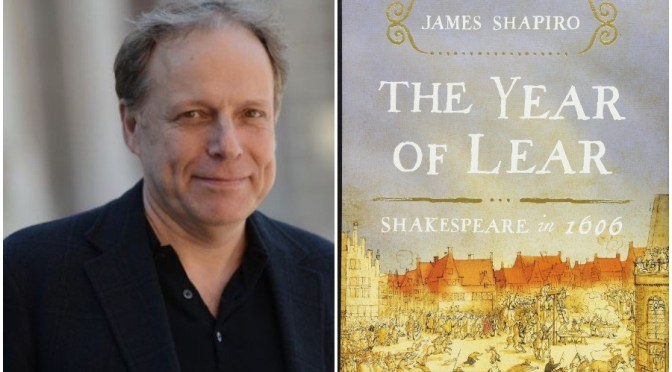
 Octavian Report “Rostrum” spoke with him about a major theme in Shakespeare’s work and life: disease. Specifically, pandemic plagues, which ravaged London repeatedly throughout Shakespeare’s career, shuttering the theaters, and which appear (obliquely and otherwise) in some of his greatest plays.

 BBC Radio 4 “Books And Authors” Talks To Maggie O’Farrell on her new novel, “Hamnet”
 On a summer’s day in 1596, a young girl in Stratford-upon-Avon takes to her bed with a fever. Her twin brother, Hamnet, searches everywhere for help. Why is nobody at home?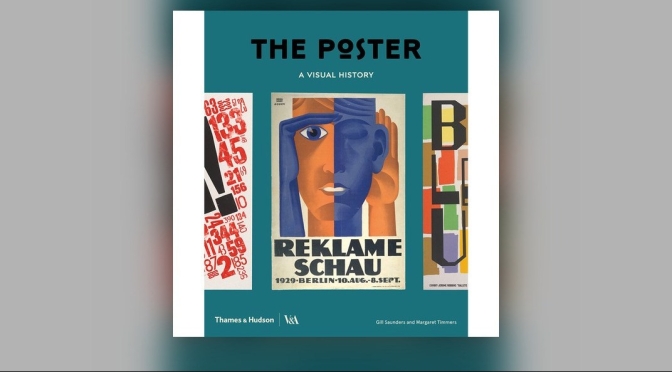
 Monocle 24 speaks with Gill Saunders and Margaret Timmers about their upcoming book ‘The Poster’ from Thames & Hudson in partnership with the V&A.
 Museum, this book is the perfect resource for all those who appreciate one of the most popular art forms.
 Boomers Daily