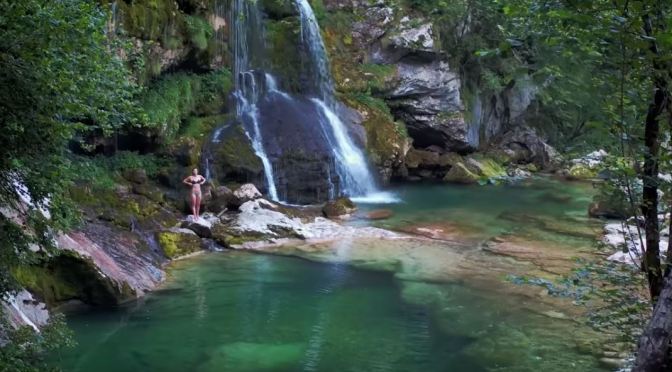
Slovenia is a country defined by water, with more than 60 rivers and streams, 300 artificial and natural lakes, and 7,500 freshwater springs – each of which is packed with minerals and nutrients.

Website: https://www.nationalgeographic.com/

Slovenia is a country defined by water, with more than 60 rivers and streams, 300 artificial and natural lakes, and 7,500 freshwater springs – each of which is packed with minerals and nutrients.
Website: https://www.nationalgeographic.com/
Director – Quentin Baillieux
Producers – Nicolas de Rosanbo and Carole Lambert
Scriptwriter – Julien Lilti
Editer – Benjamin Massoubre and Vincent Tricon
Sound designer – Xavier Dreyfuss
Line Producer – Céline Vanlint

Original score by Ali Helnwein
With the voices of :
John Fitch – Nathan Willcocks
Alfred Neubauer – Joe Sheridan
Pierre Levegh – Nicholas Mead
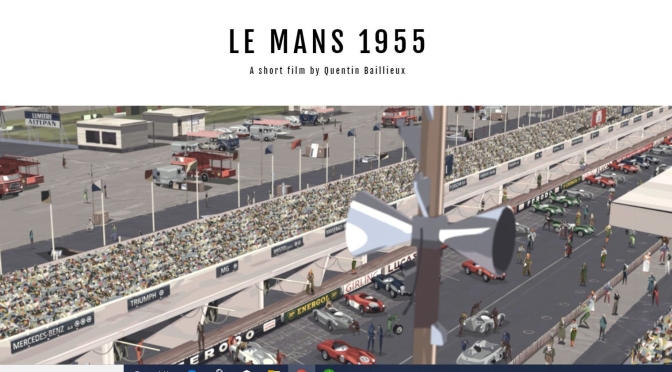
This film was inspired by a 1950s racing car exhibition I visited at the Louvre. I was struck by the beauty of the exhibited sports cars, especially a Jaguar which had competed in 1955 at Le Mans. I began researching the that event and two very contradictory photos appeared next to one another on my screen.

On one side, the image of a tragedy : people in a panic, a blazing inferno behind them. Bodies were sprawled across the stadium. The photo beside it depicted delighted drivers celebrating their victory with champagne.

Website: http://www.lemans1955.com/
The mahout (elephant keeper), the turbaned Ottoman warriors, and the crowning crescent all allude to the Eastern origins of the elephant. Within the Kunstkammer the elephant represented rulership. This automaton clock, which strikes at both the quarter hour and the hour, is driven by a movement connected to a wheel mounted on the walkway of the howdah (saddle). On the hour, the four Muslim warriors revolve around the brickwork tower. The mahout thumps his arm up and down, as though he were leading the animal, and his counterweighted eyes move back and forth as the machine travels.
Presented to Empress Maria Theresa in Vienna in 1760, this automaton was made at the height of the “century of writing.” Written communication connected scientists, dignitaries, scholars, and artists across long distances, and the act of writing was celebrated in every form. This piece is the last in a series of increasingly complicated ones that Friedrich von Knaus produced during his tenure as Austrian court machinist; he presented other examples to dignitaries such as the French king Louis XV and Duke Charles Alexander of Lorraine.
The machine writes through the hand of the small statuette seated at its top, one of the first mechanical writing figures in human form. This video shows the mechanisms inside the sphere that produce its precise movements. Up to 107 words can be preprogrammed by the arrangement of pegs on a barrel. The figure can also be set via a hand-worked control to appear to write from dictation; this technology that presaged the first typewriter.
Duke Charles Alexander of Lorraine, who bought this automaton clock in 1777, collected luxury objects made in his realm that demonstrated local technical advances. The self-moving components of this timepiece represent the height of Flemish invention in a fashionable Neoclassical style. Mechanically complex and visually impressive, this sparkling clock was a worthy addition to the duke’s collection of timepieces and scientific instruments.
This video shows the movement of the dials for hours, minutes, and seconds; days of the month; and phases of the moon, as well as that of the seven dynamic design elements. The cross-of-Lorraine pendulum swings steadily over the main dial, underneath a dancing letter M. Above the calendar dial turns a Catherine wheel, while the four dragons supporting the obelisk flap their wings and spit pearls. Another Catherine wheel spins above the moon-phase dial, and the entire obelisk is topped by a rotating planetarium. The fourth dial shows the maker’s signature.
Website: https://www.metmuseum.org/exhibitions/listings/2019/making-marvels-science-splendor
‘Nameless and Friendless’ was painted in 1857 by Emily Mary Osborn. It captures a single woman trying, and failing, to earn a living as an artist in Victorian England. In a trade traditionally occupied by men, she becomes nameless and friendless.
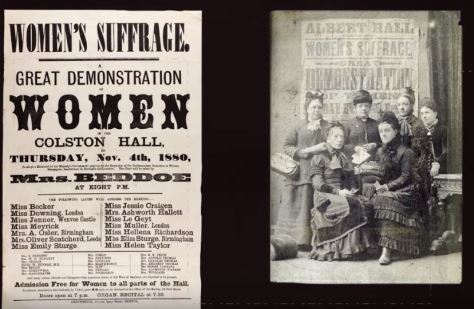
Osborn was actively involved in the campaign for women’s rights during the mid-19th century. She was supported by wealthy patrons, including Queen Victoria. But she used her position of power to help improve the lives of women like those depicted in her paintings.
Website: https://www.tate.org.uk/
Animated and Directed by: Joe Donaldson
Senior Producer: Yara Bishara
Editor: Christopher Hwisu Kim
Composer and Sound Designer: Ambrose Yu
Executive Producer: Soo-Jeong Kang

The celebrated naturalist discusses the resilience of nature and his optimistic outlook on mortality.
Filmed, Edited and Directed by: Chris McIntyre

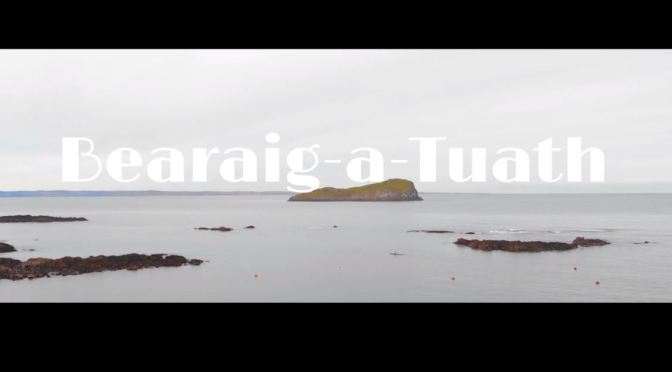
A short cinematic aerial sequence shot in North Berwick, Scotland.
Director: Natalie Labarre
Agency: Oberland
Production Co: Hornet
Executive Producer: Hana Shimizu
Development Producer: Kristin Labriola
Producer: Matt Creeden
Editor: Anita Chao
Production Coordinator: Riley Spencer
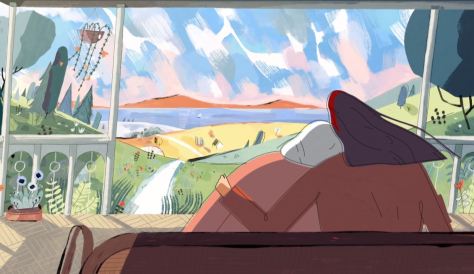
The Leukemia and Lymphoma Society (LLS) and creative agency Oberland approached Hornet to create a 45-second spot detailing how LLS can help people come to terms with the earth-shattering news of a cancer diagnosis. Hornet’s own Natalie Labarre directed the spot. In her words, it was supposed to be “a visual representation of what it’s like to have your life fall apart.” So, she made it literally fall apart with an unraveling of structures around the characters, a blurry focus, and a swirl of levitating objects. The message is that once LLS comes into the picture, these characters feel grounded again. Ultimately, the film is a heartfelt, soothing, beautifully-illustrated 2D animation that has a heavy, yet hopeful, tone.
Website: https://www.lls.org/
When Willeke Makatita approached Gijsbert Schutten and Gijs Coumou of Liberte Tiny Houses, she had one very specific request: a compact dwelling that would let her simplify her life and live as close to nature as possible. “Willeke loves walking, camping, and bushcraft,” Schutten says. “She asked for a home that would suit those passions.”
Website: https://libertetinyhouses.nl/nl_NL/tiny-house-makatita
To read more: https://www.dwell.com/article/makatita-liberte-tiny-houses-15bab0da?utm_medium=email&utm_source=postup&utm_campaign=&list=1
 Democratic presidential contenders backed the Donald Trump impeachment inquiry during the fifth televised debate on Wednesday, saying his efforts to press Ukraine to investigate the former vice-president Joe Biden was an example of his administration’s corruption. The debate came hours after a senior US diplomat gave explosive testimony that directly implicated the president in a quid pro quo deal with Ukraine.
From a Caltech online article:
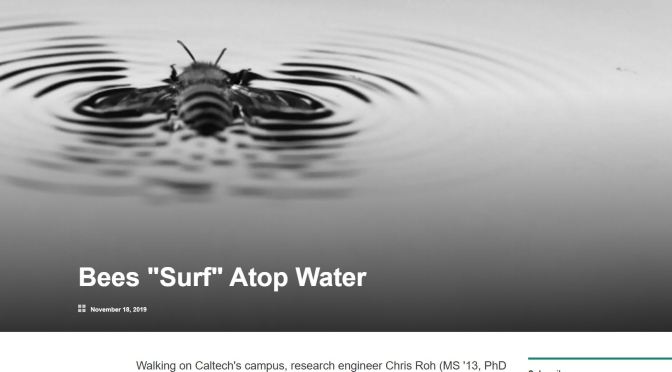
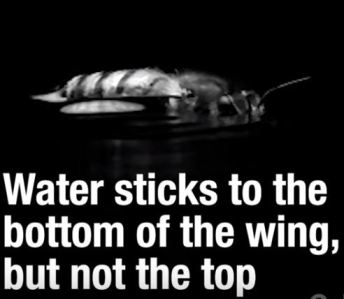 When a bee lands on water, the water sticks to its wings, robbing it of the ability to fly. However, that stickiness allows the bee to drag water, creating waves that propel it forward. In the lab, Roh and Gharib noted that the generated wave pattern is symmetrical from left to right. A strong, large-amplitude wave with an interference pattern is generated in the water at the rear of the bee, while the surface in front of the bee lacks the large wave and interference. This asymmetry propels the bees forward with the slightest of force—about 20 millionths of a Newton.
Walking on Caltech’s campus, research engineer Chris Roh (MS ’13, PhD ’17) happened to see a bee stuck in the water of Millikan Pond. Although it was a common-enough sight, it led Roh and his advisor, Mory Gharib (PhD ’83), to a discovery about the potentially unique way that bees navigate the interface between water and air.
To read more: https://www.caltech.edu/about/news/bees-surf-atop-water




 Boomers Daily