In No Time To Die, Bond has left active service and is enjoying a tranquil life in Jamaica. His peace is short-lived when his old friend Felix Leiter from the CIA turns up asking for help. The mission to rescue a kidnapped scientist turns out to be far more treacherous than expected, leading Bond onto the trail of a mysterious villain armed with dangerous new technology.
Written by JOHANNES OLSZEWSKI & CODY CHRISTENSEN
Produced by MIRKO PROHASKA & JOHANNES OLSZEWSKI
Director of Photography FELIX REICHERT
B Camera Operator & Animation VALENTIN RAPP
Production Designer BARBARA PEISL
CAST
Pilot of German ballon TIM TAYLOR
Pilot of American Ballon ZACHARY BRAMBLE
Hitchhiker Girl BARBARA PEISL
Hitchhiker Boy LEVI ALLEN
CREW
Production Supervisor LISA GHIO
Production Assistant ALEXANDER SCHULZ
Property Master RONNY BIARD
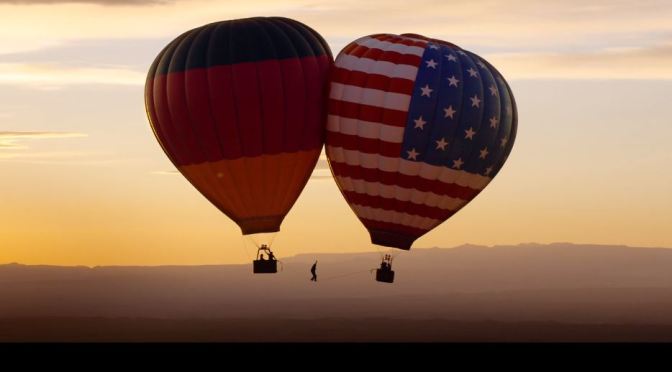
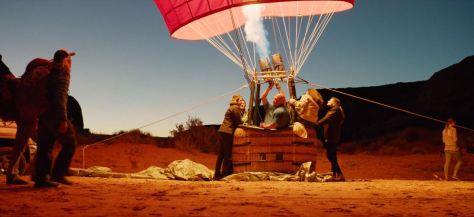
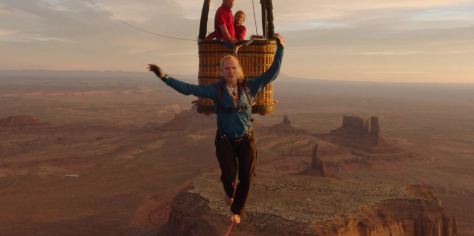
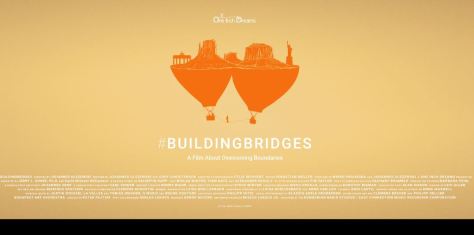
High above the sacred Navajo land of Monument Valley, two hot air balloons float, circling each other as if in a dance. One carries the German flag, the other that of the United States. A closer look reveals that the balloons are not only tethered together, but that a person is walking on this thin, connecting line.
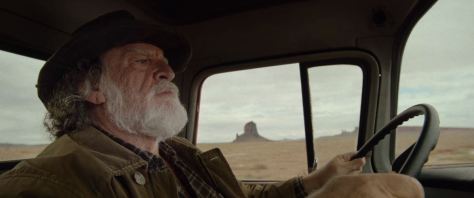
This is the sight that the protagonist of the short film #buildingbridges beholds, as he steps out of his humble Utah home and looks up at the sky. An old and lonely man, he finds his own courage through the actions of these strangers.
This balancing act in movie form by the young creative agency One Inch Dreams (oneinchdreams.com) was commissioned by the German Embassy as a tribute to German-American friendship.
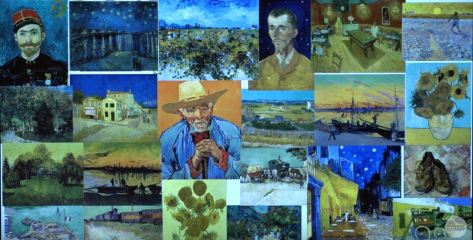
In this episode of “The Way I See It,” Janna Levin brings her celestial expertise to Vincent van Gogh’s star-filled vision, in conversation with senior curator of Drawing and Prints Jodi Hauptman. Levin helps us see how certain features of the night sky, including “turbulent air,” the light from a star, and the planet Venus, are rendered visible by Van Gogh’s brush. She also points out that her approach is not so different from Van Gogh’s: “People who observe the world, whether they are artists or scientists, are always on the cusp of what they see and then what is internal.”
On 5 October 2017, Twohey and Kantor, already respected investigative journalists, published a story in the New York Times that lit the world ablaze. The article, which detailed decades of sexual harassment and abuse perpetrated by Harvey Weinstein, launched the #MeToo movement into the mainstream and began an ongoing dialogue about the relationship between power and sexual exploitation. The article was the product of months of investigation by Twohey and Kantor, and was awarded the Pulitzer Prize for Public Service in 2018.
Director: Caspar Daniël Diederik
Producing Production Coordinator: Michael Essey
Lead Producer: Ivan Sebastian
Creative: Miriam Patience
Editor: Hani Fayed
Agency Producer: Jatinder Mahli
DOP/Camera: Ziryab Al Gabri
New film out of Saudi Arabia.. the city of Jeddah.
Saudi Arabia is changing rapidly and it is inviting the world to come and explore. By making tourist visa now widely available, the country is truly opening its doors to the travellers. It’s definitely positive development for the people as the arrival of travellers will bring more change the country for the good.
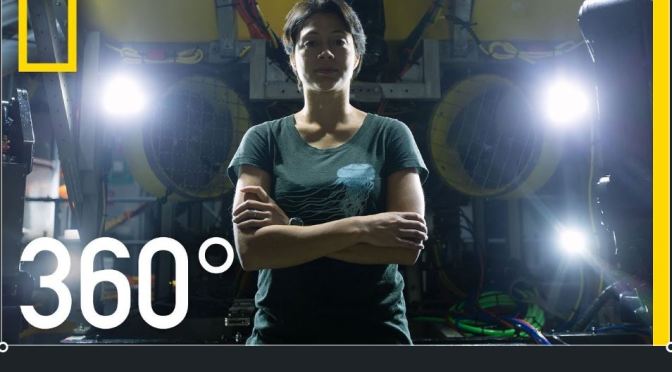
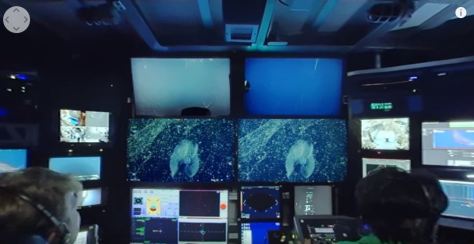
In the final installment of National Geographic’s “Into Water” 360 series, dive into the midwaters off the coast of California with bioengineer and National Geographic Explorer Dr. Kakani Katija. She conducts deep water research at Monterey Bay Aquarium Research Institute, developing technologies that can go deep below the surface to observe wildlife and collect data and specimens.
She aims to study all aspects of life in the deep ocean and see how that knowledge can translate to technology and innovation. “Into Water: California” is the final stop on an around the world 360 tour that documents the work of female Explorers who’ve dedicated their careers to water related issues.
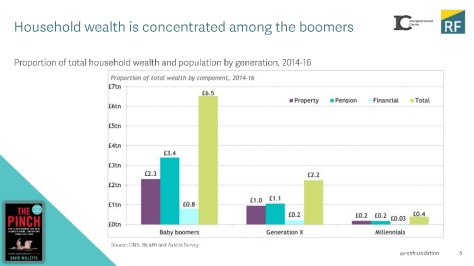
Willetts had stumbled onto one of the great divides of modern politics: young versus old. In Britain, age is now a better predictor of voting intention than social class. Overall, the Boomers voted for Brexit in 2016 and the Conservatives in 2017; their Millennial children voted Remain and Labour. The single biggest error that Theresa May, the prime minister in the lead-up to the 2017 election, made during that process was to float the idea that older people might have to contribute more to the spiraling costs of their own retirement care. The “dementia tax” prompted an immediate, ferocious response, and May backed down.
That is not an isolated example. A guiding principle of politics in Britain, and elsewhere in the West, is: What Boomers want, Boomers get. Working-age benefits, for example, have been frozen since the 2015 budget, but the state pension has consistently risen. (At this election, Britain’s two main parties have both promised to keep increasing pensions; Jeremy Corbyn’s Labour has also pledged £58 billion ($74.7 billion) to Boomer women affected by the rise in the female state pension age from 60 to 66.
The debate is also about so much more than abstract disagreements over policy and government funding. Caring for the elderly, for example, becomes wrapped up in assertions of “just deserts”—I’ve worked hard all my life and paid my taxes—and fears about money-grubbing children selling off their parents’ houses. It is also, like taxes on inheritance, a subject that prods at many people’s deep desire to pass something on to their offspring.
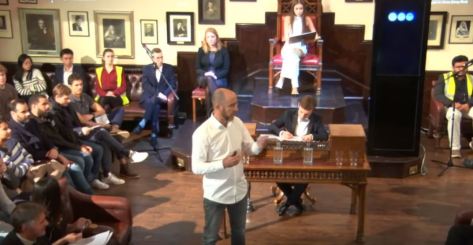
“This House Believes AI Will Bring More Harm Than Good”
This debate was run in association with IBM Research.
Proposition:
Project Debater Project Debater is designed by IBM research. It will deliver a speech based on over 1,100 arguments collected from Union members and others over the past week. It will not be taking points of information.
Sharmila Parmanand
Sharmila Parmanand is a PhD Candidate in Gender Studies at the University of Cambridge and a Gates Scholar. She has served as a debate trainer or chief judge in debating events in 45 countries. She served as a chief judge for most major global debating competitions (World Universities, World Schools, European Universities, Asian Universities, Austral-Asian Universities, North American Universities, and PanAmerican Universities).
Professor Neil Lawrence
Neil Lawrence is the DeepMind Professor of Machine Learning at the University of Cambridge and the co-host of Talking Machines. Neil’s main research interest is machine learning through probabilistic models. He focuses on both the algorithmic side of these models and their application. His recent focus has been on the deployment of machine learning technology in practice, particularly under the banner of data science.
Opposition
Project Debater
Project Debater is designed by IBM research. It will deliver a speech based on over 1,100 arguments collected from Union members and others over the past week. It will not be taking points of information.
Harish Natarajan
Harish Natarajan is a graduate of the University of Oxford and the University of Cambridge. He was a grand fnalist and 2nd best speaker at the 2016 World Debating Championships and won the European Debating Championship in 2012. Harish holds the record for most competition victories. He currently works as the Head of Economic Risk Analysis at AKE International in London.
Professor Sylvie Delacroix
Sylvie Delacroix is professor in Law and Ethics at the University of Birmingham. Her work has notably been funded by the Wellcome Trust, the NHS and the Leverhulme Trust, from whom she received the Leverhulme Prize. She has recently been appointed to the Public Policy Commission on the use of algorithms in the justice system.
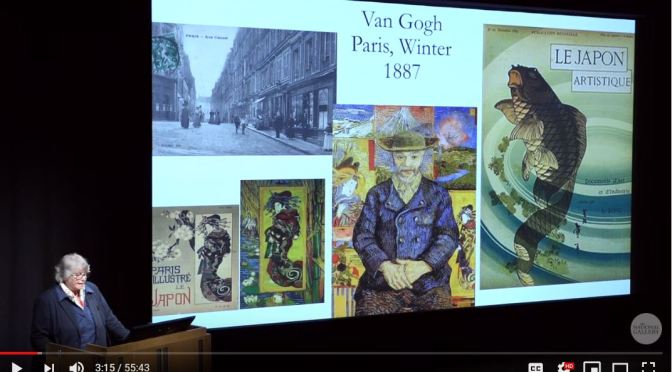
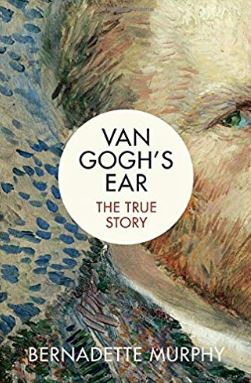
Gauguin’s stay at the Yellow House is mired in controversy. What really happened? Bernadette Murphy, author of ‘Van Gogh’s Ear: The True Story’, considers those fateful days from Gauguin’s point of view.
The Credit Suisse Exhibition: Gauguin Portraits 7 October 2019 – 26 January 2020 Book tickets online and save, Members go free: https://bit.ly/2IspPWH
The first-ever exhibition devoted to the portraits of Paul Gauguin. Spanning his early years as an artist through to his later years spent in French Polynesia, the exhibition shows how the French artist revolutionised the portrait.
Exhibition organised by the National Gallery and the National Gallery of Canada, Ottawa.
News, Views and Reviews For The Intellectually Curious


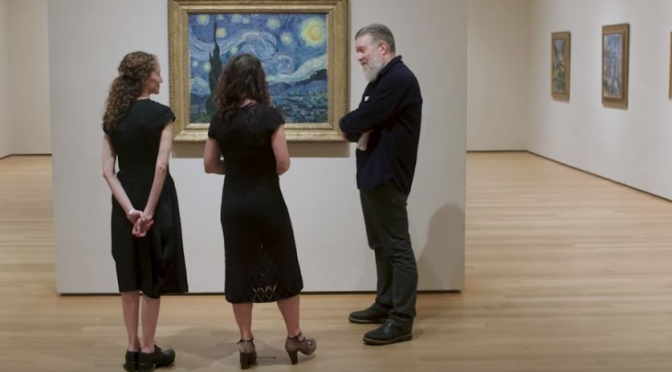
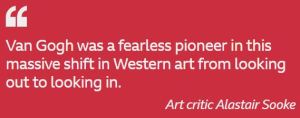 In this episode of “The Way I See It,” Janna Levin brings her celestial expertise to Vincent van Gogh’s star-filled vision, in conversation with senior curator of Drawing and Prints Jodi Hauptman. Levin helps us see how certain
  features of the night sky, including “turbulent air,” the light from a star, and the planet Venus, are rendered visible by Van Gogh’s brush. She also points out that her approach is not so different from Van Gogh’s: “People who observe the world, whether they are artists or scientists, are always on the cusp of what they see and then what is internal.”



 She aims to study all aspects of life in the deep ocean and see how that knowledge can translate to technology and innovation. “Into Water: California” is the final stop on an around the world 360 tour that documents the work of female Explorers who’ve dedicated their careers to water related issues.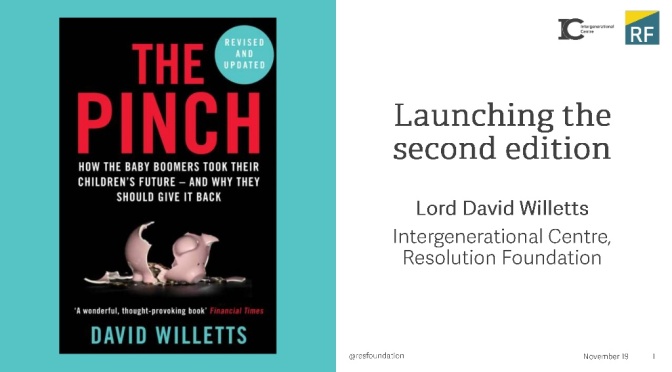

 The Credit Suisse Exhibition: Gauguin Portraits 7 October 2019 – 26 January 2020 Book tickets online and save, Members go free:
  Boomers Daily