Tag Archives: Urban Planning

Reviews: The Best 15 Books About Cities In 2023

Green Earth by Kim Stanley Robinson
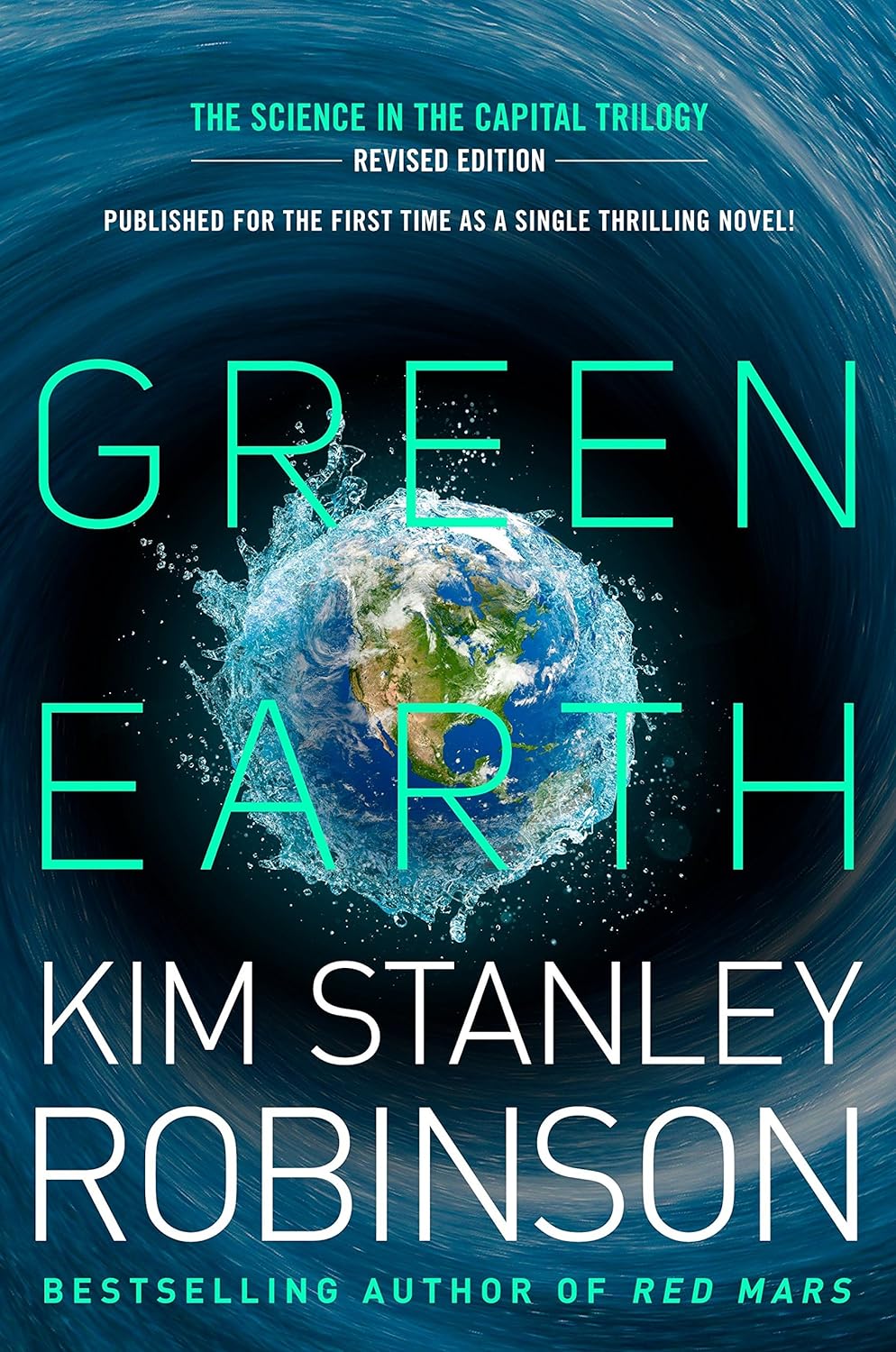
Green Earth book cover


Kim Stanley Robinson is credited with helping create the genre of climate fiction, and his book Green Earth is yet another example of that. Set in Washington, DC, Robinson draws from his own personal experience living and working in the capital city. “What I like about DC is that there is kind of an electricity in the air, a human electricity,” Robinson told CityLab. “You walk the streets, you see people from all over the world. To go to the world capital and settle there is a statement. It’s an attempt to wrest control of one’s fate.” But where the fictional part of the story begins is in its characters — when he portrays federal bureaucrats as a positive force for good.

Biourbanism: Cities as Nature by Adrian McGregor
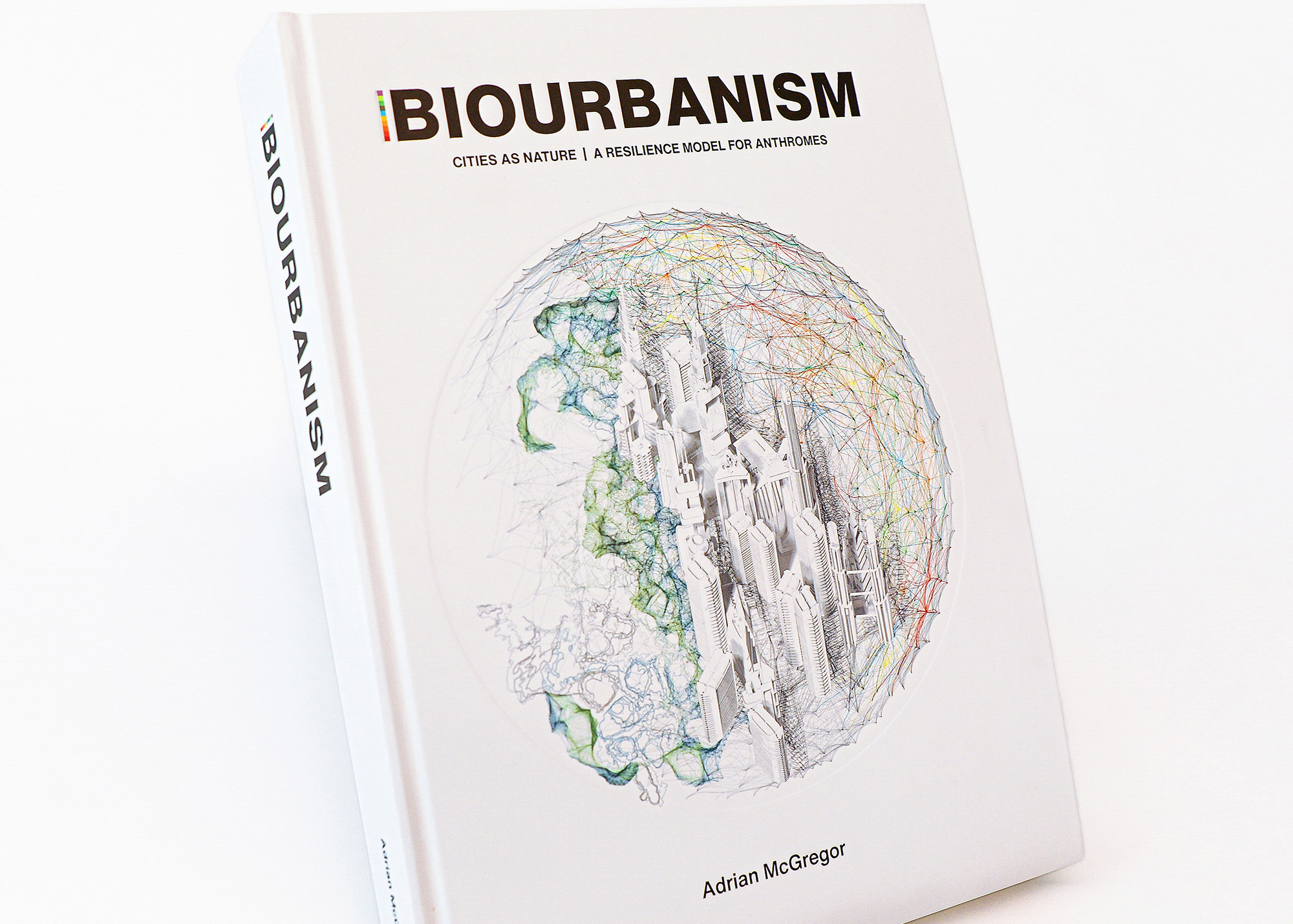
Biourbanism book ov


“If we can understand that cities are part of nature — even if they don’t really look like nature — that means we’ve got to change how we plan with them, how we work with them, and what our future looks like on spaceship Earth,” Adrian McGregor says. That’s the premise of Biourbanism: Cities as Nature, which looks at how effective urban planning and design can be achieved by viewing cities through a natural lens. McGregor sees cities as instrumental to lead the fight against the climate crisis. “There’s a policy gap between a federal government making decarbonization commitments and actual city policy,” he says. “They’re not really thinking clearly about where the emissions are coming from and therefore how to target them.”

Paved Paradise: How Parking Explains the World by Henry Grabar
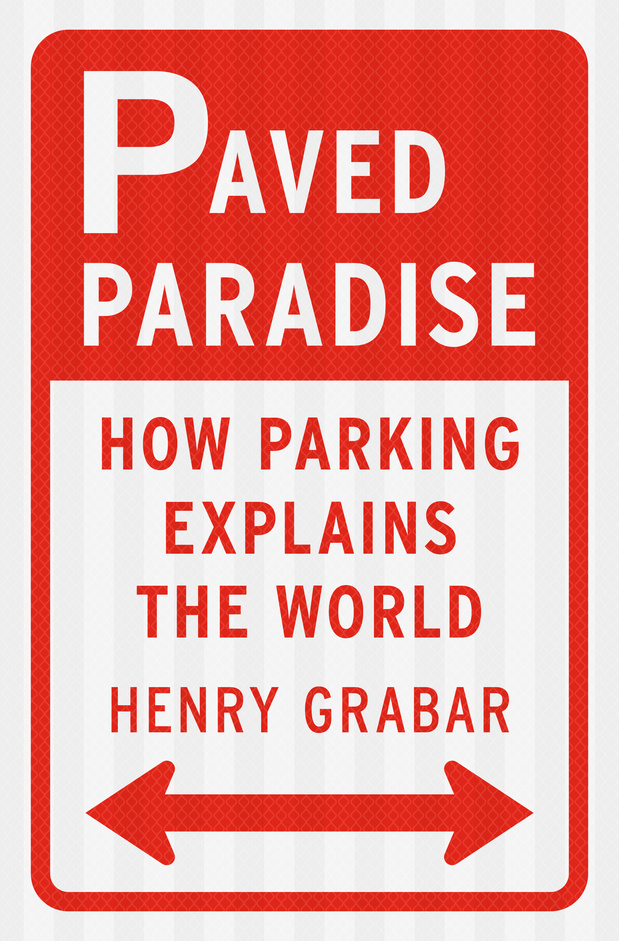
Paved Paradise book cover

Journalist Henry Grabar has a pretty simple solution for better city living: parking reform. The act of parking, for so many, is an aggravating experience. “You’re more likely to be killed over a parking space than you are to be killed by a shark,” Grabar told CityLab. In his book Paved Paradise, he argues that the key to happier residents is transforming parking policies to make them smarter and more convenient, and by undoing some of the privileges given to drivers in order to help boost multimodal transportation. “It’s very hard to overrule the instinctive feeling that parking ought to be available when I want it, where I want it, for the price I want to pay, which is zero,” Grabar said. “A lot of smart parking policy deviates from those assumptions, like charging for coveted street parking in busy locations, or trying to encourage people to park in a garage a few blocks away and then walk a bit.”

Built From the Fire by Victor Luckerson
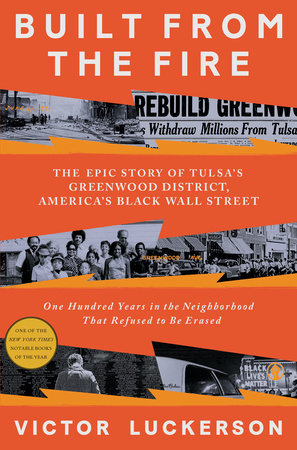
Built from the Fire by Victor Luckerson: 9780593134375 |  PenguinRandomHouse.com: Books


What happened after the Tulsa race massacre? It’s a question often lost when thinking about the violence that saw one of the wealthiest historic Black American neighborhoods burned down, and its residents killed or chased out. Built From the Fire seeks to tell the story of Greenwood from start to end, past the initial tragedy that wiped out Black Wall Street and the destructive urban renewal plans and physically divisive highways that followed. For Victor Luckerson, who moved to Tulsa and embedded himself in Greenwood’s community and archives in order to tell the story right, the policies and actions of local government officials did as much damage, if not more, to the neighborhood’s heritage than the initial conflagration. “I would say the massacre was more devastating in the short term, and urban renewal more devastating in the long term,” he says.

There Goes the Neighborhood by Jade Adia

There Goes The Neighborhood book cover

It’s not just heartbreak and bad grades that teens are facing — now, it’s gentrification too. Author Jade Adia found inspiration in the Los Angeles youth that came out to protest against police brutality after the murder of George Floyd, and wrote There Goes the Neighborhood with those young people in mind. Her debut young adult novel tells the story of 15-year-old Rhea, who devises a plan to save her best friend’s family from eviction, as gentrifiers threaten to upend her neighborhood in South Los Angeles. “I wanted to tackle the topic [of gentrification] in the most accessible way possible,” Adia told CityLab, “by putting young people and their experiences on the front lines of the conversation.”

READ MORE

Earthquake Engineering: The Golden Gate Bridge Is Preparing For ‘The Big One’

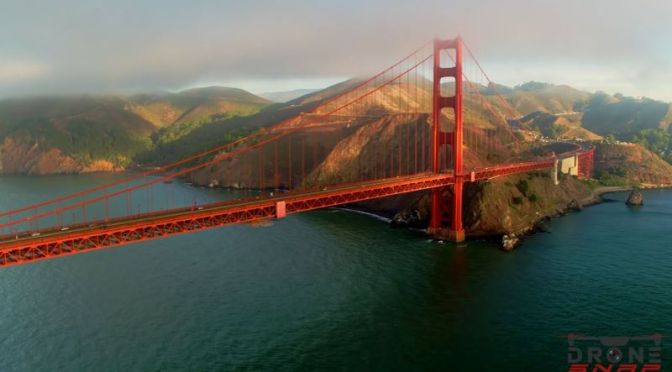
The B1M (April 26, 2023) – The Golden Gate Bridge in San Francisco is getting a huge earthquake upgrade.

IT’S the world’s most recognisable bridge and an icon of America. Defying incredible odds during its four years of construction, the Golden Gate has stood for over 80 years, and remains a critical piece of infrastructure — not just a pretty sight.

Today, it’s almost impossible to imagine San Francisco without this engineering marvel on its skyline. But that is now a very real possibility thanks to a threat that has loomed large over California for decades — a massive earthquake known as ‘The Big One’.

The iconic Golden Gate Bridge may not survive this unless it’s given some serious upgrades. Fortunately, that’s just what it’s getting with a huge seismic retrofit project that should see it stand for many more decades to come.

“It’s vitally important that we protect this icon, not just so people can come and take photos, but so our region can continue to function after a major seismic event,” Paolo Cosulich-Schwartz, director of public affairs for The Golden Gate Bridge, Highway and Transportation District, said.

Urban Views: World’s Best Public Housing In Vienna

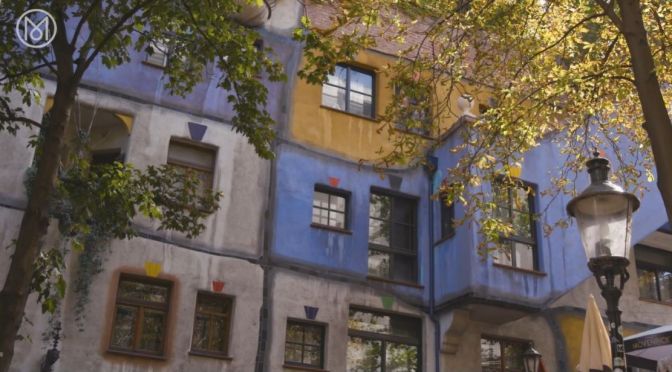
Monocle Films (December 14, 2022) – The world is urbanising fast. But how do you accommodate people in cities in a way that offers dignity, affordability and a sense of community? Vienna may have a solution. Explore the enduring legacy of the city’s ‘Gemeindebau’ apartment blocks in the latest episode of our Design Tours series.

Cities: The Skyscraper Boom In Miami, Florida

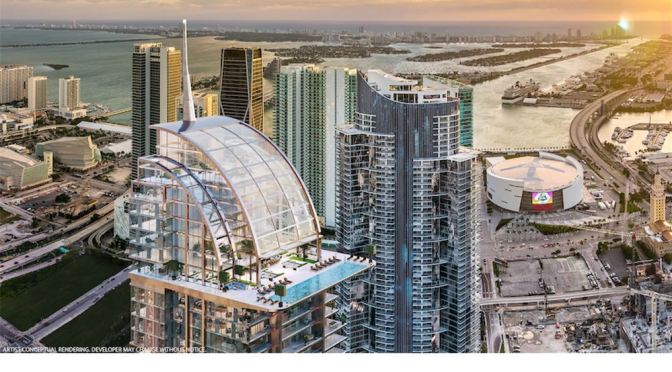
Miami’s skyscraper boom is happening on the frontlines of the climate crisis.

Miami, city, seat (1844) of Miami-Dade county, southeastern Florida, U.S. A major transportation and business hub, Miami is a leading resort and Atlantic Ocean port situated on Biscayne Bay at the mouth of the Miami River. The Everglades area is a short distance to the west. Greater Miami, the state’s largest urban concentration, comprises all of the county, which includes the cities of Miami Beach (across the bay), Coral GablesHialeah, North Miami, and many smaller municipalities and unincorporated areas; together, these make up the southern section of Florida’s “Gold Coast.” 

Analysis: Saudi Arabia’s Hyper-Planned “Line City”

The Line is a proposed smart linear city in Saudi Arabia in Neom, Tabuk, currently under construction, which is designed to have no cars, streets or carbon emissions.

 The Line is being described as a one-building vertical city outfitted with exterior mirrors, big enough to house 9 million people — along with everything they need, from parks and waterfalls to flying taxis and robot maids. There are even plans to include an artificial moon for residents to gaze upon.

With its proposed width of only 656 feet, The Line will rely primarily on its height to encompass its residents and a host of modern trappings, such as a high-speed rail to connect sections of the 106-mile city. Saudi Arabian officials claim The Line will be otherwise devoid of roads, cars or emissions and will be powered strictly by clean energy (although details have not been released). Here are a few of most notable proposed features of The Line:

  • vertically layered homes, offices, public parks and public schools.
  • year-round climate control of all indoor and outdoor spaces.
  • high-speed rail that will transport residents from end-to-end in 20 minutes.
  • a five-minute walk to all amenities.
  • accessibility to parks and natural elements within a two-minute walk.

Urban Planning: Will The Cities Of The Future Float?

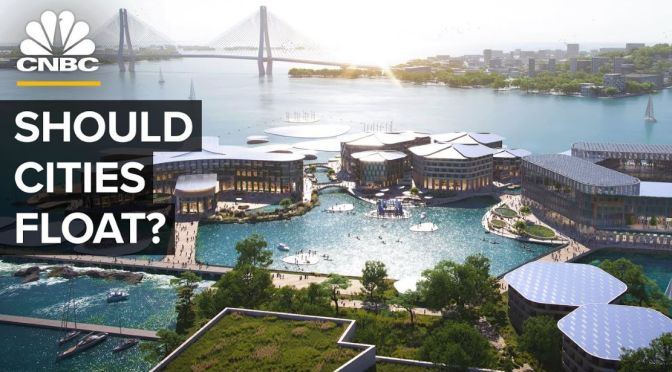
A new industry of floating infrastructure is emerging to help adapt to rising sea levels. There are two distinct approaches that are being put forth as possible solutions: retrofitting homes to be amphibious and building floating cities.

Amphibious homes can preserve the accessibility of the house and maintain the congenial front porch culture in places like Louisiana, said Elizabeth English, founder and director of The Buoyant Foundation Project. English’s design places a steel frame beneath a house, and then below that, in the crawl space, buoyancy elements. Her team then recommends adding elements to prevent lateral movement so the home will not float away while on the surface of floodwaters.

She estimated that a contractor could do such a retrofit for about $20 to $30 per square foot, but cautioned the Federal Emergency Management Agency currently discourages this type of building practice. Modern floating cities are the brainchild of architect Bjarke Ingels. He told CNBC he hopes his Oceanix City, which is currently slated to be built in the harbor near Busan,

South Korea, will be “a city that is the most resilient city you can imagine, but at the same time, the most enjoyable city that you can imagine.” “We really hope that it will be a successful project and we would like to replicate it in other parts of the world,” Maimunah Mohd Sharif, executive director of the United Nations Human Settlements Programme, told CNBC of the Oceanix development.

She said the world must look more into adaptation and hopes that the project can help mitigate or even solve the problem of sea-level rise. Would you live in a floating city or retrofit your home so it floats during floods? Watch the video above to learn more about what life could be like in these innovative climate change adaptations.

Reviews: The Top 12 Biking Cities In The U.S. & Canada

Cities in Europe, particularly the Netherlands, are known for their amazing bicycle infrastructure. Can a city in the top one percent of all bike cities in the United States compete with the best in Europe? And how much better are these top US bike cities when compared to the worst in the US?

Economic Analysis: Are Cities Or Suburbs Better?

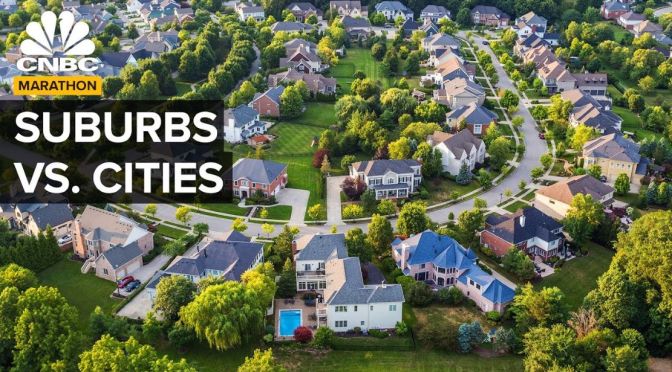
CNBC Marathon reviews why a cost-of-living crisis is unfolding across America’s housing infrastructure. CNBC explores what that means for apartments in the cities and houses in the suburbs. Inflation data shows that costs for items such as rent and groceries are increasing quickly across the Sun Belt and coastal cities.

Chapters: 00:00 Introduction 00:39 How to make the suburbs more affordable (Published April. 2022) 13:22 How suburban sprawl shapes the U.S. economy (Published Feb. 2022) 26:34 Are major cities still worth it? (Published May 2022)

Now years removed from the darkest days of the pandemic, people are asking: Is a return to the city worth it? Metropolitan regions have sprawled in recent years, raising budget concerns and quality-of-life issues for the people who remain downtown. Meanwhile the absence of commuters is slowing the recovery in leisure and hospitality. About 46% of renters in the U.S. are struggling to make ends meet, according to Harvard University researchers.

Builders say conditions for renters will get worse before they get better. A snarled supply chain, a labor shortage, and rising interest rates are worsening what some call a “throwaway” development pattern. Several real estate industry experts have ideas about how to make housing more attainable. Some of the most popular ideas include mixed-use districts and master-planned communities.

America’s suburbs are sprawling again. Over the 20th century, real estate developers built large tracts of single-family homes outside of major cities. The builders were following mortgage underwriting standards first introduced by the Federal Housing Administration in the 1930s. Over the century, those guidelines created housing market conditions that explicitly shut out many minorities. Experts say it is possible to update these old building codes to create equity while fixing some, but not all of the problems of American suburbia. CNBC Marathon brings together the best of CNBC’s coverage on the U.S. housing crisis and how life in the suburbs impacts city living.

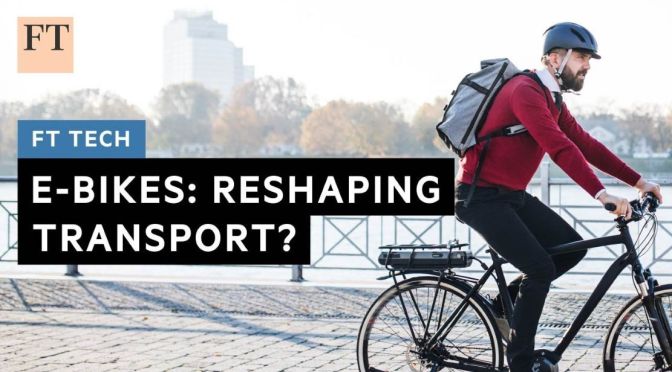
Transportation: Can E-Bikes Transform Cities?

Sales of electric bicycles, or e-bikes, as they’re better known, are booming. At the same time, innovations in battery technology have extended the range that an e-bike can travel. The FT’s Harry Dempsey explores the impact they’re having on commuting, deliveries, and the cities we live in.

Design: ‘The Line’ – A 100% Renewable Energy & Low Carbon Saudi Arabia City

No roads, cars or emissions, it will run on 100% renewable energy and 95% of land will be preserved for nature. People’s health and wellbeing will be prioritized over transportation and infrastructure, unlike traditional cities. Only 200 meters wide, but 170 kilometers long and 500 meters above sea level.

THE LINE will eventually accommodate 9 million people and will be built on a footprint of just 34 square kilometers. This will mean a reduced infrastructure footprint, creating never-before-seen efficiencies in city functions. The ideal climate all-year-round will ensure that residents can enjoy the surrounding nature. Residents will also have access to all facilities within a five-minute walk, in addition to high-speed rail – with an end-to-end transit of 20 minutes.