
Tag Archives: Travel
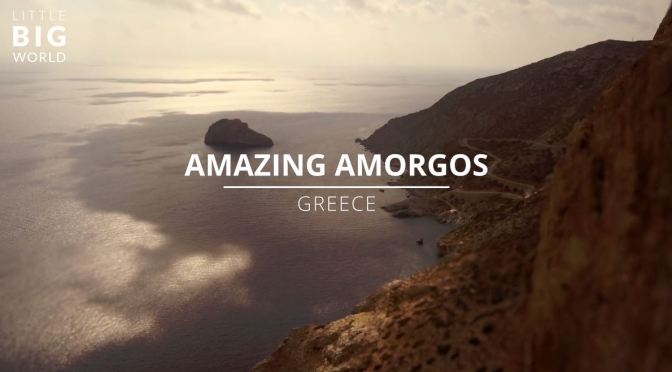
Top New Travel Videos: “Amazing Amorgos” In Greece” By Joerg Daiber
Filmed, Edited and Directed by: Joerg Daiber
I will never understand why so many people go to such an obvious Insta-tourist-trap like Santorini when there are so many amazing alternatives in Greece. Take Amorgos for instance. It’s the easternmost island in Greece’s Cyclades island group. With a land area of just 121 square kilometers, the island has a population of nearly 2000 people. It’s incredibly beautiful and no mass tourism is spoiling the fun so far.

The island was featured in Luc Besson’s film “The Big Blue.” Enjoy this trip around Amorgos and let me know what you think in the comments below. Shot by Joerg Daiber during the Yperia Film Festival in Amorgos.
Website: http://www.spoonfilm.com/

Top New Travel Videos: “Navarre – Paradise Lost” In Spain By Txema Ortiz
Filmed, Edited and Directed by: Txema Ortiz
Navarra a beautiful and wonderful place. A lost paradise.

4K timelapse done entirely in Navarra. This video shows only a small part of the many charming places that this land has, in which you can admire various areas of the Navarra geography, its contrasts and its diversity of landscapes, which make it a very beautiful place to landscape and cultural level, a place to visit because it is worth it, its landscapes, its people, its culture and its cuisine are unique.
Video made with more than 15,000 photographs and several months of work at different times of the year.
Website: https://vimeo.com/txemaortiz

Travel Video Commentary: Do “Too Many People Want To Travel”? (The Atlantic)
 Tourism has surged in recent decades, causing large-scale environmental degradation, dangerous conditions, and pricing-out locals at major tourist sites. In this episode of The Idea File, Atlantic staff writer Annie Lowrey explains over-tourism and what we can do to fix it.
Website: https://www.theatlantic.com/video/index/603451/overtourism/

Destinations: “Salesforce Park” In San Francisco Is “Floating Utopia”
 The Salesforce Transit Center is a green infrastructure that enhances public transportation, reduces traffic congestion, and serves as an economic catalyst. As San Francisco’s new downtown gateway, it greets tens of thousands of residents, commuters, and visitors daily, providing a dynamic destination while engaging, enriching, and connecting people coming and going throughout the San Francisco Bay Area.
Seventy feet above the Grand Hall, the Park runs the entire length of the Transit Center’s nearly four-block stretch. Home to 600 trees and 16,000 plants arranged in 13 different botanical feature areas, the newest public park in the San Francisco Bay Area is for the benefit and enjoyment of all…and there’s nothing else like it anywhere.
Read New Yorker article for great description: https://www.newyorker.com/news/letter-from-silicon-valley/the-floating-utopia-of-salesforce-park
Website: https://salesforcetransitcenter.com/salesforce-park/
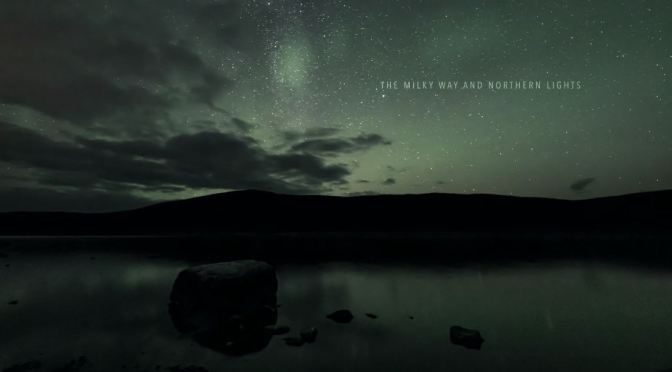
New Timelapse Videos: “The Milky Way And Northern Lights” By Timo Oksanen
Filmed, Edited and Directed by; Timo Oksanen
Music: ‘Remorse’ by The Wong Janice – music producer & cellist based in Amsterdam, NL.
Album: Cello Music for Meditation
A collection of those moments when I was able to capture both the Milky Way and the Northern Lights at the same time. Captured between October 2016 and October 2019 in Finland and Norway.

List of locations (in the order of their first appearance):
Utsjoki, Finland
Hetta, Finland
Pöytyä, Finland
Nordkapp, Norway
Skibotn, Norway
Muonio, Finland
Kolari, Finland
Lieto, Finland
Website: http://timoksanen.fi/
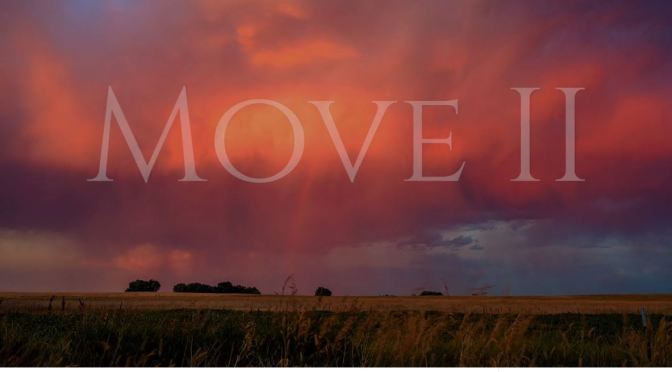
Timelapse Travel Videos: “Move II” In The USA By Aaron Keigher (2019)
Filmed, Edited and Directed by: Aaron Keigher
Original Music by: Robert Levin
“We see in order to move; we move in order to see.”
-William Gibson
There is perpetual, dynamic and never-ending motion all around us. And this motion has a rhythm to it. It is the rhythm of our life — a beat that has become so normal and day-to-day that few of us take the time to see and feel it and even fewer of us take the time to bask in it.
When we experience the world, we encounter this movement and rhythm happening at different tempos. Whether it is the movement within our own body — our heart beat, breathing, walking — or the the different speeds of the movement in the world and universe around us, the various tempos of motion are a polyphonic rhythm that create the symphony of life.

Some motion we perceive easily — the movement of people, cars, or the trees blowing in the wind. But some motion, such as the rotation of the stars or the changes in shadows and light, we, as humans, are not always aware of unless we take the time to notice. Time-lapse photography is a unique tool that can be used to help us see this movement and it can even help us see the motion we can perceive in a different way. And when we pair timelapse with dynamic polyphonic and polyrhythmic music, we can begin to feel that the rhythm of that motion deep in our soul. “Move II” is all about intertwining timelapse photography and music to see and feel that motion both in nature and in the city.
It was a true honor and privilege to collaborate with Robert Levin on the music for “Move II”. His beautiful original score blends together the rhythms and melodies of our world and perfectly captures the feeling of movement that surrounds us at all times. When I first met with Robert to begin working on the music for Move II, I knew it needed something that was unique and special in order to accentuate the movement of the universe, little did I know how perfectly he would capture that idea and deliver a magical and dynamic original score for the film.
A heartfelt thank you to Steve Bill, one of my musical mentors and a true friend over the past 20 years, for introducing me to Robert Levin and for allowing us to use his studio at Room 368 Productions to record the score for this video. Thank you to Ethan Bill for his time, talent and patience recording, mixing and engineering the music for the video. This was a huge undertaking and we could not have asked for anyone better to work with. I would also like to extend a huge thank you to all of the incredibly talented musicians who took part in the recording of the music and helped to breathe life into this film. Your talents and passion are second-to-none.
I am very excited to share with you “Move II”, a continuation of the original short-film “Move” that I released a few years ago. (vimeo.com/aaronkeigherphotography/move) Join me for a few moments to take a step back and experience the rhythm of the movement that surrounds us all.
_______________________________
Locations Include:
Acadia National Park, ME
Boy’s Ranch, Amarillo, TX
Buckeye Wind Farm, KS
Canyonlands National Park, UT
Capitol Reed National Park, UT
Chicago, IL
Colorado Canyon National Monument, CO
Dead Horse Point State Park, UT
Dinosaur National Monument, CO
Factory Butte, UT
Fantasy Canyon, UT
Goosenecks State Park, UT
Grand Canyon National Park, AZ
Havre, MT
Joshua Tree National Park, CA
Lake George, NY
Molen Reef, UT
Monument Valley Tribal Park, AZ
New York City, NY
Niagara Falls, ON, Canada
Philadelphia, PA
Red Canyon, Flaming Gorge National Monument, UT
Trona Pinnacles, CA
Woodville, ID
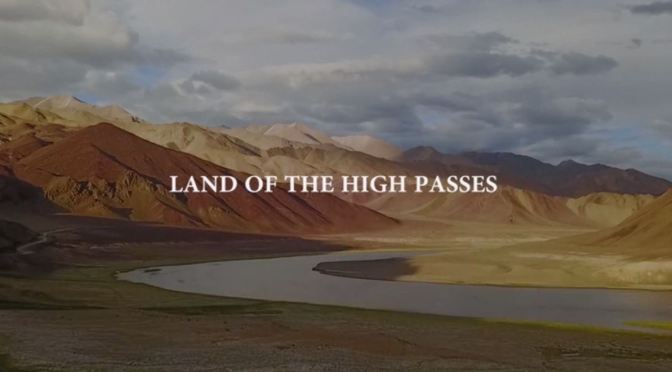
Top New Travel Videos: “Ladakh – Land Of The High Passes” (Indian Himalayas)
VINTAGE RIDES PRESENTS – A FILM BY NEOMORAL
PRODUCED BY: Josh Goraya & Jennifer Fontaine
EDITOR, COLORIST: Amit Mondal
SOUND DESIGN: Neomoral

The Himalayan terrain, beside the Great Indus, is infamous for its harsh and cold weather; oftentimes its landscapes are even unreachable to the common people. It’s a wonder really, what exactly transpires to make this place so fascinating.
Ladakh – The ‘Land of the High Passes’ – is among the most stunning parts of the Indian Himalayas. Widely known as the cold desert, it holds within itself beauty that is pristine and glorious. Stretching from peak to peak, it is an exquisite canvas of surreal art done with celestial strokes of red, ochre and purple rocks, made over thousands of years into shapes so unexpected and so phenomenal, the eye can hardly believe.
An icon of heavenly beauty, the scenery makes people either speechless or wholly expressive. Everyone gets stunned and nobody can remain indifferent.
Ladakh induces in all, a permanent high. A rush so unhinged, you struggle to find the adjectives to talk of the imprint it leaves on you.
Website: WWW.NEOMORAL.COM

Aging: 78-Year Old Author Paul Theroux Traveled To Mexico To “Feel Young”
From a BBC Travel online article:
 I think of myself in the Mexican way, not as an old man but as most Mexicans regard a senior, an hombre de juicio, a man of judgment; not ruco, worn out, beneath notice, someone to be patronised, but owed the respect traditionally accorded to an elder, someone (in the Mexican euphemism) of La Tercera Edad, the Third Age, who might be called Don Pablo or tío (uncle) in deference. Mexican youths are required by custom to surrender their seat to anyone older. They know the saying: Más sabe el diablo por viejo, que por diablo – The devil is wise because he’s old, not because he’s the devil.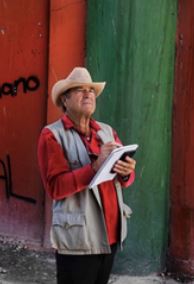
But “Stand aside, old man, and make way for the young” is the American way.
I was that old gringo. I was driving south in my own car in Mexican sunshine along the straight sloping road through the thinly populated valleys of the Sierra Madre Oriental – the whole craggy spine of Mexico is mountainous. Valleys, spacious and austere, were forested with thousands of single yucca trees, the so-called dragon yucca (Yucca filifera) that Mexicans call palma china. I pulled off the road to look closely at them and wrote in my notebook: I cannot explain why, on the empty miles of these roads, I feel young.
To read more: http://www.bbc.com/travel/story/20191203-is-travel-the-secret-to-a-long-life

Top Restaurants: Sydney’s “Firedoor” Leads Fiery “Australian BBQ” Trend
From a New York Times online review:
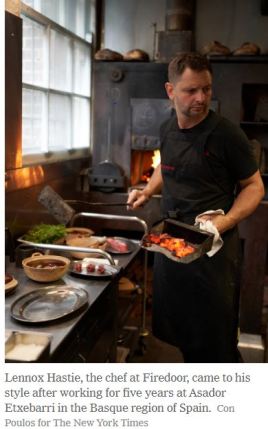 “Australian barbecue” is not, however, what Lennox Hastie, the chef at Firedoor, would use to describe his own cooking. Nor is it a term that’s been used much by anyone to describe any type of cooking. Here, the word “barbecue” is generally synonymous with the American term “cookout,” and, much like the cookout, it remains an integral part of Australia’s national identity.
Firedoor, which opened in 2015, is a prime example. 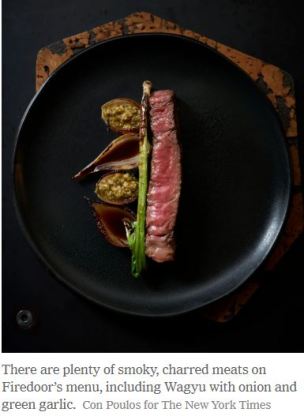 The kitchen is powered entirely by wood — there are no electric or gas ovens, burners or microwaves. Mr. Hastie came to this style after working five years at Asador Etxebarri in the Basque Country, where the chef Victor Arguinzoniz cooks local ingredients over fire using multiple types of wood. Mr. Hastie takes a similar approach, but with pointedly Australian ingredients.
One of the restaurant’s most thrilling dishes is a whole marron — a large freshwater crayfish native to Western Australia. The marron is grilled, split open and smothered in sea blite, a coastal plant related to samphire, and sunrise lime, a hybrid citrus created by crossing the native Australian finger lime with a calamondin (itself a cross between a mandarin and a kumquat). There are plenty of smoky, charred meats on the menu as well: pork chops, duck hearts and Wagyu all get their turn on one of the many grills.
To read more: https://www.nytimes.com/2019/12/05/dining/australian-barbecue.html
 Boomers Daily